Two Parks, Two Different Safari Experiences
The Ngorongoro Crater is a 264 km² enclosed caldera holding about 25,000 animals in one bowl, with the highest Big Five density in Africa and around 26 black rhinos. The Serengeti spans 14,763 km² of open plains that carry the Great Migration's 1.5 million wildebeest. Choose Ngorongoro for density, the Serengeti for scale — and ideally, do both.
264 km²
Ngorongoro crater floor
14,763 km²
Serengeti total area
$250
Crater descent fee / person
3 hrs
Drive between the parks
1Ngorongoro vs Serengeti: The Quick Answer
This is the most common question first-time Tanzania safari travelers ask us, and the honest answer is that comparing them is almost a false choice. They are fundamentally different places that do fundamentally different things. But if you are building a short itinerary and need to prioritize, the real differences matter.
Choose Ngorongoro if:
- You have 1-2 safari days
- You want guaranteed Big Five quickly
- Black rhino is a bucket-list priority
- You prefer a compact, predictable experience
Choose Serengeti if:
- You have 3+ safari days
- The Great Migration is a priority
- You want vast open landscapes
- You are a wildlife photographer
The honest recommendation for most travelers
Do both. A 5-7 day Northern Circuit safari combines Serengeti (2-3 nights) and Ngorongoro (1 full day) in one trip. This is Tanzania's most popular safari format for good reason: one day in Ngorongoro Crater plus two days in the Serengeti is the gold standard for a first Tanzania safari.
2What the Ngorongoro Crater Actually Is
Many first-time travelers think of Ngorongoro as simply another safari park. It is not. Ngorongoro is a collapsed volcanic crater, a caldera, that formed roughly two to three million years ago when a massive volcano collapsed inward on itself. The result is a near-perfect bowl: 19 kilometers across, with steep walls rising 600 meters above the floor. The rim sits at 2,300 meters above sea level; the crater floor at 1,800 meters.
Those walls create an enclosed ecosystem. Wildlife can technically leave by climbing the steep forested sides, and some does, elephants and lions occasionally move in and out, but most of the large resident population simply never leaves. There is enough food and water year-round on the 264-square-kilometer floor to support approximately 25,000 large animals permanently. This is not a place where wildlife disperses in the wet season and concentrates in the dry: the animals are always there.
Caldera diameter
19 km across
Wall height
600 m steep drop
Floor area
264 km² enclosed
Permanent residents
~25,000 large animals
Lion density
Densest in Africa
Black rhino
~26 individuals
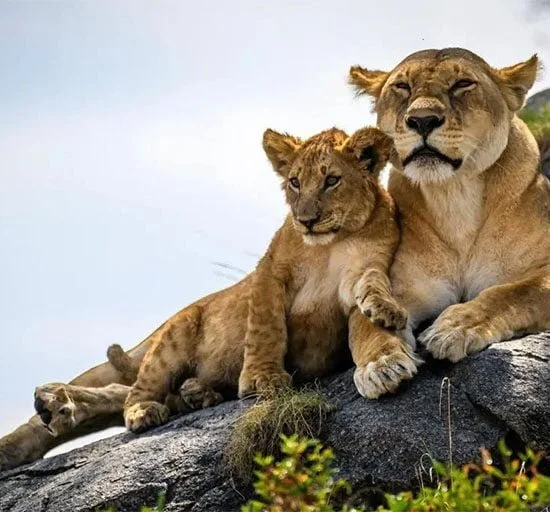
One important fact about Ngorongoro's lions: they behave differently from Serengeti lions. Because they have been in close contact with vehicles for generations, crater lions are remarkably tolerant, they will walk within a meter of your vehicle without flinching. This makes for extraordinarily close encounters, and for the intensity of wildlife interaction that many travelers say defines their Ngorongoro day.
3What the Serengeti Actually Is
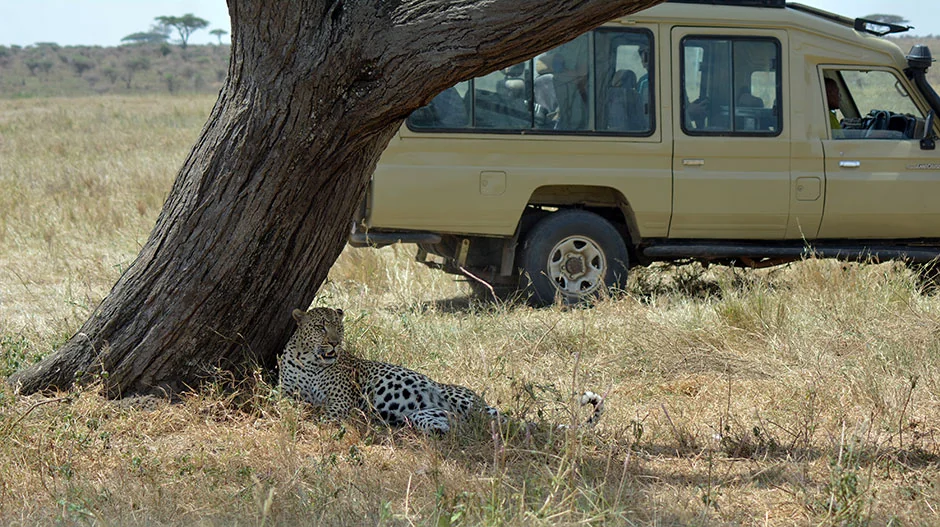
The Serengeti is not a single landscape, it is a mosaic. Across 14,763 square kilometers, it encompasses short-grass plains in the south that stretch to the horizon with nothing to break the view; acacia woodland in the central areas where leopards drape themselves over branches; the rocky granite outcrops called kopjes that erupt from the plains and create elevated perches for cheetah and lion; and riverine forest along the Seronera River and the Grumeti and Mara Rivers in the north and west.
The famous "endless plains" feeling is real, but it is specific to certain zones, particularly the southern short-grass plains around Ndutu and the Gol Kopjes area. In the central and northern Serengeti, the landscape is more varied: patches of woodland, valleys, open grassland, and the distinctive dome-topped rocky outcrops that give the park much of its photographic character.
Scale means wildlife is more dispersed than in Ngorongoro. In the dry season, animals concentrate at rivers and waterholes, and game viewing is predictably excellent. In the green season, the herds spread out across the plains and you might drive twenty minutes between significant sightings. But even in the quietest months, the Serengeti delivers on predators: it has more lions per square kilometer than almost any park in Africa, and the Seronera Valley is one of the world's most reliable locations for leopard sightings year-round.
Total area
14,763 km²
Distinct ecosystems
5+ zones
Large animal population
~3 million
Lion density
Highest in Africa
Migration wildebeest
1.5 million
Cheetah viewing
Best in Africa
4Full Comparison: 15 Key Factors
| Factor | Ngorongoro | Serengeti | Winner |
|---|---|---|---|
| Wildlife density | Exceptional, compact crater | High but spread over 15,000 km² | Ngorongoro |
| Big Five guarantee | High, all 5 seen most days | High over multiple days | Ngorongoro |
| Black rhino | ~26 visible rhinos, best in Africa | Rare, almost never seen | Ngorongoro |
| Great Migration | Resident herds only, no migration through | Primary migration destination | Serengeti |
| Predator variety | Lions, leopards, cheetahs, hyenas | All big cats + wild dogs (occasional) | Serengeti |
| Landscape drama | Crater caldera, soda lake, misty forest rim | Endless plains, kopjes, riverine forest | Serengeti |
| Best trip length | 1 full day is enough | 3-5+ days ideal | Depends on time |
| Elephant viewing | Large-tusked bulls; limited by crater floor | Outstanding, large family herds | Serengeti |
| Bird watching | 700+ species, flamingos at Lake Magadi | 500+ species, raptors, open-country birds | Ngorongoro |
| Crowd levels | Managed (vehicles on floor limited) | Low-moderate (vast space disperses crowds) | Serengeti |
| Photography | Close wildlife action, clear sightlines | Epic landscapes + migration spectacle | Depends on style |
| Accessibility from Arusha | 2.5 hrs by road | 5-6 hrs by road (or 1 hr by flight) | Ngorongoro |
| Lodge variety | Crater rim lodges with crater views | Many zones and styles; mobile camps | Serengeti |
| Value per day | Very high (guaranteed sightings) | High (deeper long-form experience) | Draw |
| Uniqueness | One-of-a-kind caldera ecosystem | World's greatest wildlife spectacle | Draw |
5Wildlife Side-by-Side
Each park has species that are uniquely accessible or behaviorally distinctive there. Here is what to expect in each.
Ngorongoro, Unique Sightings
- Black rhino: around 26 individuals on the crater floor, one of the densest, most reliable populations in East Africa.
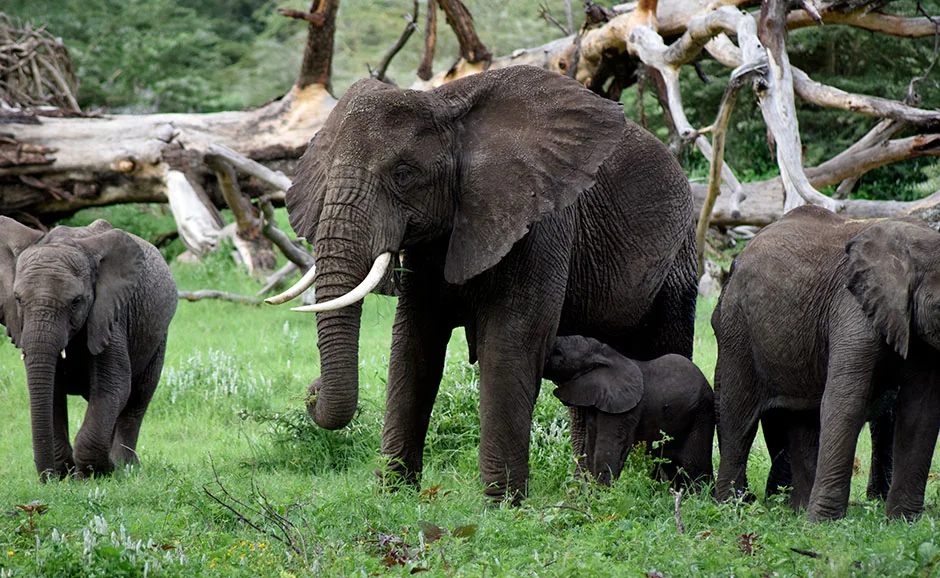
- Long-tusked bulls: Ngorongoro's male elephants are famous for their extraordinary tusk length, preserved by the crater's isolation.
- Lake Magadi flamingos: thousands of lesser and greater flamingos gather on the soda lake at the crater's center.
- Crater lions: more tolerant of vehicles, more compact in territory, and one of the highest lion densities known to science.
Serengeti, Unique Sightings
- Cheetah on open plains: the short-grass plains around Seronera and Ndutu are the best place in Africa to watch cheetah hunting.
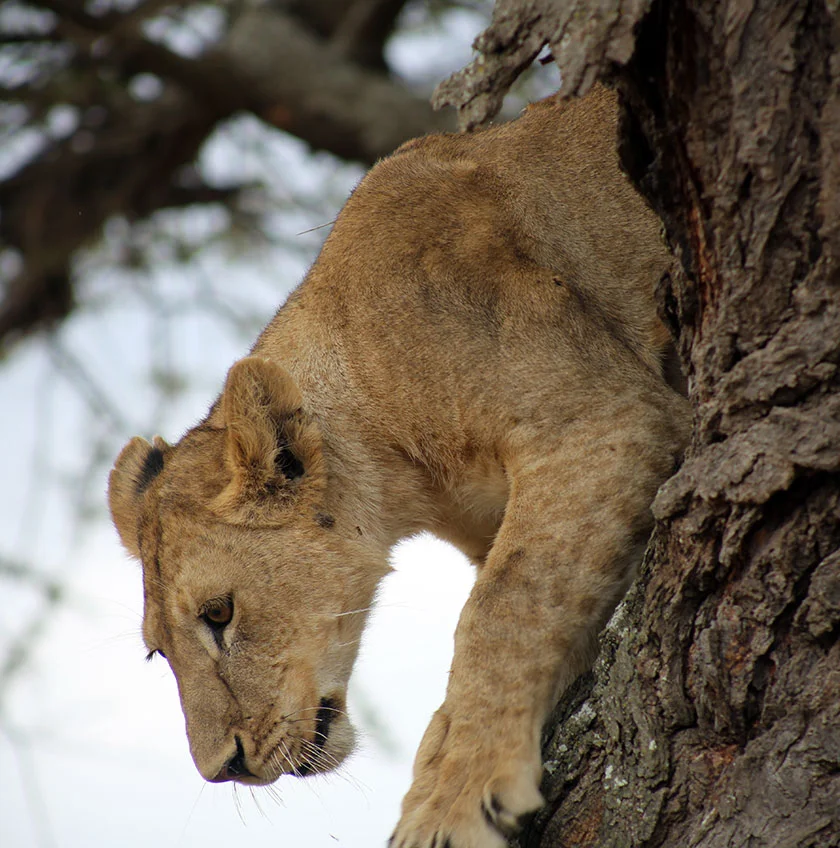
- Tree-climbing lions: in the acacia woodland of the western Serengeti, lions routinely rest in the branches of large trees.
- Migration crossings: the Mara River in the north (July-October) hosts the wildebeest crossings, among the most dramatic wildlife events on earth.
- Wild dogs: African wild dogs are occasionally seen in the southern Serengeti, more likely here than in Ngorongoro.
Dense prides, extremely close vehicle tolerance
~26 individuals, best viewing in Africa
Long-tusked bachelor bulls, memorable
Thousands on crater floor year-round
Present but dense vegetation hides them
Seen regularly on open grassland
Hundreds in the Mandusi Swamp pool
Lake Magadi, thousands at times
Highest density in Africa, multiple prides daily
Open plains = best cheetah viewing anywhere
Seronera valley, trees, rivers, reliable sightings
Large family herds, especially in woodland zones
1.5 million, migration creates spectacle
Rare but possible, southern Serengeti
Huge clans, very active at dawn
Thousands across all zones
6Who Should Prioritize Each Park
Prioritize Ngorongoro if:
Prioritize Serengeti if:
Do Both if you have 5+ days
The classic combination, 1 day Ngorongoro Crater + 2-3 days Serengeti, is Tanzania's most popular safari format for a reason. It gives you the density and guarantee of the crater alongside the scale, space, and migration of the Serengeti. The two parks are only 3 hours apart by road, so combining them adds no wasted travel time. Almost every 5-day Tanzania safari includes both.
7Best Time to Visit Each Park
| Month | Ngorongoro | Serengeti |
|---|---|---|
| Jan-Feb | Excellent, short rains end, lush crater floor, lions with cubs | Calving season in southern Serengeti (Ndutu), extraordinary predator action |
| Mar-May | Good, long rains reduce visibility, fewer tourists, lower prices | Good for predators, green Serengeti, central herds build; some roads wet |
| Jun | Very good, dry season begins, excellent predator action | Northern migration builds, first herds crossing to Mara zone |
| Jul-Aug | Outstanding, dry, dense wildlife, peak visibility | Peak crossing season, Mara River crossings, crowded but spectacular |
| Sep | Outstanding, best Big Five density, low grass | Excellent, crossings continue, central Serengeti herds return south |
| Oct | Excellent, dry season ends, spectacular golden light | Good, southern migration begins, quieter, better prices |
| Nov-Dec | Good, short rains bring green crater, fewer tourists | Southern calving buildup, migration moves to Ndutu zone |
Year-round versus seasonal. Ngorongoro's crater ecosystem buffers against seasonal swings, so it is reliably excellent in any month. Serengeti rewards careful timing: match your visit to the migration phase for the best experience. Both parks are worth visiting in any month.
8Logistics: How to Combine Both Parks
Ngorongoro and Serengeti are 3 hours apart by road via the main gate route, through some of the most scenic highland terrain in northern Tanzania. The standard approach on the classic northern circuit is: complete your Ngorongoro crater descent, then drive west through the conservation area highlands into the Serengeti via the Naabi Hill gate. Total road distance from the crater rim to Seronera is about 145 kilometers.
- 1Crater gates open at 06:00; early entry is the best strategy for clear tracks and active predators
- 2All vehicles must be out of the crater by 18:00, no exceptions, no overnight stays on the floor
- 3Only licensed 4WD vehicles are permitted on the crater floor, standard saloon cars cannot descend
- 4No picnics outside your vehicle on the crater floor, packed lunches must be eaten inside the vehicle
- 5Vehicles must stay on designated tracks, no off-road driving is permitted
- 6Crater descent slots are increasingly pre-booked in peak season (July-October), book well in advance
Small charter flights connect Kilimanjaro Airport to Seronera (central Serengeti), Kogatende (northern Serengeti), and several other Serengeti airstrips. A flight from Kilimanjaro to Seronera takes approximately 1 hour and costs $200-$300 per person per leg.
Flying into the Serengeti and driving back via Ngorongoro (or vice versa) is the most popular itinerary for travelers who want to maximize game-drive time. Ngorongoro has no airstrip; you always drive in and out of the crater.
9Sample Itineraries
3-Day Quick Safari, Ngorongoro + Tarangire
Best for: Limited time, first-timer, Big Five priority
From $1,400/person
3 days
- 1Day 1: Arrive Arusha → Tarangire National Park (elephant herds, baobabs)
- 2Day 2: Full day Tarangire → drive to Karatu (crater rim gateway)
- 3Day 3: Full Ngorongoro Crater floor game drive → Arusha departure
5-Day Northern Circuit, Best Value
Best for: First-timers, balanced experience, migration glimpse
From $2,100/person
5 days
- 1Day 1: Arrive → Tarangire National Park (afternoon game drive)
- 2Day 2: Full day Tarangire → transfer to Karatu
- 3Day 3: Ngorongoro Crater full day descent
- 4Day 4: Transfer to Central Serengeti, Seronera afternoon game drive
- 5Day 5: Full morning Serengeti game drive → Arusha by road or flight
7-Day Ultimate Northern Circuit
Best for: Migration priority, photography, ultimate experience
From $2,925/person
7 days
- 1Day 1-2: Tarangire (2 nights, elephants and baobabs)
- 2Day 3: Lake Manyara → transfer to Serengeti
- 3Day 4-5: Serengeti (2 nights, northern zone for migration, or central for predators)
- 4Day 6: Drive south → Ngorongoro Crater full day
- 5Day 7: Morning crater or early drive → Arusha departure
10Costs Compared
| Cost Item | Ngorongoro | Serengeti |
|---|---|---|
| Park/conservation entry (per person/day) | $70 | $70-$80 |
| Crater descent surcharge (per person) | $250 | N/A |
| Vehicle crater fee | $70 per vehicle | N/A |
| Typical nights needed | 1 night | 2-5 nights |
| Flight option | Road access only (no airstrip) | Multiple airstrips, flights available |
| Lodge range (per person/night) | $150-$600+ | $150-$1,500+ |
| Total cost (1 full day, all fees) | ~$400-$500/person | ~$200-$250/person |
| Total cost (5-day combined trip) | ~$2,100-$3,500/person | Included in Northern Circuit |
The $250 crater descent fee applies on top of the conservation area entry fee every time a vehicle descends to the crater floor. On a per-wildlife-sighting basis it still represents outstanding value given the density, but it makes a single Ngorongoro day more expensive than a single Serengeti day. All Masatu Tours safari prices include park fees, 4x4 vehicle, guide, accommodation, meals, and transfers.
11Photography: Which Park Wins?
Ngorongoro
Best for wildlife portraits and close-range action
- •Close-range lion hunts on open floor, less bush than Serengeti woodland
- •Flamingos and hippos in the same frame at the Mandusi Swamp
- •Black rhino, one of the rarest wildlife photographs in Africa
- •Dramatic crater rim cloud formations looking down into the bowl
- •Early morning mist over crater floor creates ethereal landscape shots
- •Less dense vegetation than Serengeti woodland means cleaner sight lines
Serengeti
Best for epic safari landscapes and migration drama
- •Cheetahs on termite mounds, the iconic safari portrait shot
- •Migration river crossings, once-in-a-lifetime images if timed right
- •Lion prides on kopjes (rocky outcrops) against vast sky
- •Predator-prey chase sequences on open short-grass plains
- •Hot air balloon safari at sunrise over the savanna (extra cost)
- •Leopard in fever tree with carcass hoisted above hyenas
12The Verdict
Our recommendation after thousands of guided safaris
If you can only choose one: Serengeti with 4+ days for the migration and open-plains scale; Ngorongoro with 1-2 days for the densest Big Five experience in Africa.
But the real answer is: do both. The Northern Circuit, Tarangire, Ngorongoro, Serengeti, is called Tanzania's greatest safari route for a reason. In 5-7 days you can experience all of them without rushing, and the contrast between Ngorongoro's intense concentration and Serengeti's vast freedom is half of what makes a Tanzania safari remarkable.
3 Days Available
Ngorongoro + Tarangire
High-density wildlife, no long drives, Big Five certainty, perfect for a first compact safari
5 Days Available
Full Northern Circuit
The gold standard, Tarangire + Ngorongoro + Serengeti covers everything without rushing
7+ Days Available
Northern Circuit + extra Serengeti nights
3 nights Serengeti gives migration and different ecosystems justice, the full experience
13Frequently Asked Questions
Plan Your Northern Circuit Safari
Tell us your dates and budget, and we'll design the perfect Ngorongoro + Serengeti combination — the most-travelled route in Tanzania's Northern Circuit. Our Moshi-based team replies within 3 hours.