Karibu kutoka Masatu Tours. After guiding hundreds of safaris, climbs, and beach escapes, we hear the same question almost every day: "When should I come?" The honest answer is that Tanzania rewards visitors in every season, but the best time to visit Tanzania depends on what you want to see, do, and spend.
This guide breaks the year down month by month: when the Great Migration crosses rivers, when the Big Five are easiest to spot, when Kilimanjaro summit views are clearest, when Zanzibar's seas are calmest, and when prices drop. Whether you're planning a first safari, a honeymoon, a climb, or a family trip, the right timing is here.
Safari Guide's Note
The single biggest mistake first-timers make is rushing to the Serengeti in July without knowing that the migration position, the park, and the camp all need to match your dates. Plan around the where of the migration, not just the when, and book the dry-season window (June–October) at least 6 months ahead if you want premium lodges.
Tanzania Quick Facts
Best Safari Months
June – October
Best Kilimanjaro Months
Sep–Oct & Jan–Feb
Best Zanzibar Months
June – October
Migration River Crossings
July – October
Calving Season (Ndutu)
January – March
Dry Season
June – October
Short Rains
November – December
Long Rains
March – May
Average Temperature
23–28°C year-round
Peak Crowds
July – August
Budget Sweet Spot
November – January
Ngorongoro Rim Nights
7–16°C year-round
Tanzania Season Calendar
Click any month for a detailed breakdown. Ratings are for Northern Tanzania (Serengeti, Ngorongoro, Kilimanjaro area).
January
Wet Season🦁 Safari
good🏔️ Kilimanjaro
good🏖️ Zanzibar
great🌧️ Rainfall
moderateFebruary
Wet Season🦁 Safari
good🏔️ Kilimanjaro
good🏖️ Zanzibar
great🌧️ Rainfall
lowMarch
Wet Season🦁 Safari
fair🏔️ Kilimanjaro
avoid🏖️ Zanzibar
avoid🌧️ Rainfall
highApril
Wet Season🦁 Safari
fair🏔️ Kilimanjaro
avoid🏖️ Zanzibar
avoid🌧️ Rainfall
very highMay
Wet Season🦁 Safari
fair🏔️ Kilimanjaro
avoid🏖️ Zanzibar
ok🌧️ Rainfall
highJune
Dry Season🦁 Safari
great🏔️ Kilimanjaro
great🏖️ Zanzibar
great🌧️ Rainfall
noneJuly
Dry Season🦁 Safari
best🏔️ Kilimanjaro
great🏖️ Zanzibar
great🌧️ Rainfall
noneAugust
Dry Season🦁 Safari
best🏔️ Kilimanjaro
great🏖️ Zanzibar
great🌧️ Rainfall
noneSeptember
Dry Season🦁 Safari
best🏔️ Kilimanjaro
best🏖️ Zanzibar
great🌧️ Rainfall
noneOctober
Wet Season🦁 Safari
good🏔️ Kilimanjaro
best🏖️ Zanzibar
ok🌧️ Rainfall
lowNovember
Wet Season🦁 Safari
good🏔️ Kilimanjaro
good🏖️ Zanzibar
ok🌧️ Rainfall
moderateDecember
Wet Season🦁 Safari
good🏔️ Kilimanjaro
good🏖️ Zanzibar
great🌧️ Rainfall
moderate| Activity | Jan | Feb | Mar | Apr | May | Jun | Jul | Aug | Sep | Oct | Nov | Dec |
|---|---|---|---|---|---|---|---|---|---|---|---|---|
| 🦁 Safari | good | good | fair | fair | fair | great | best | best | best | good | good | good |
| 🏔️ Kili | good | good | avoid | avoid | avoid | great | great | great | best | best | good | good |
| 🏖️ Zanzibar | great | great | avoid | avoid | ok | great | great | great | great | ok | ok | great |
| 🌧️ Rainfall | moderate | low | high | very high | high | none | none | none | none | low | moderate | moderate |
| 🌡️ Avg Temp | 27°C | 28°C | 27°C | 26°C | 25°C | 24°C | 23°C | 24°C | 26°C | 27°C | 27°C | 27°C |
Dry Season vs Wet Season
Tanzania has two distinct dry seasons and two rainy seasons each year, each offering a different type of experience.
☀️ Dry Season
June – October (Peak) · January – February (Short dry)
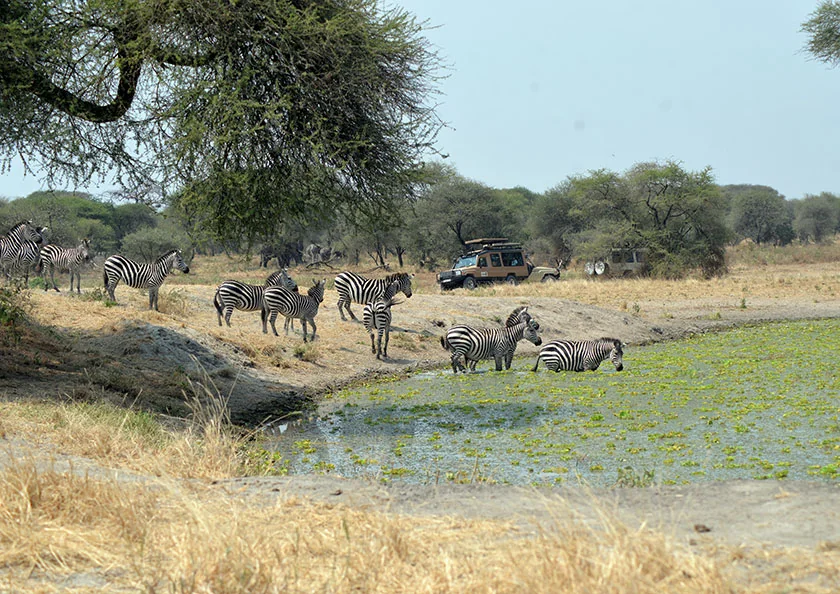
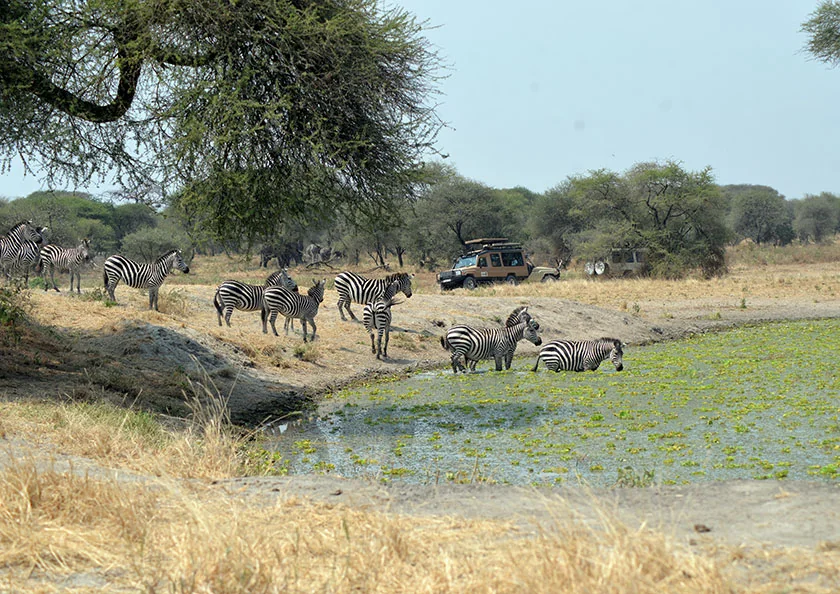
Animals at a waterhole in dry season, dust and golden grass
- Best wildlife visibility, sparse vegetation exposes animals
- Animals concentrate around water sources for easy sightings
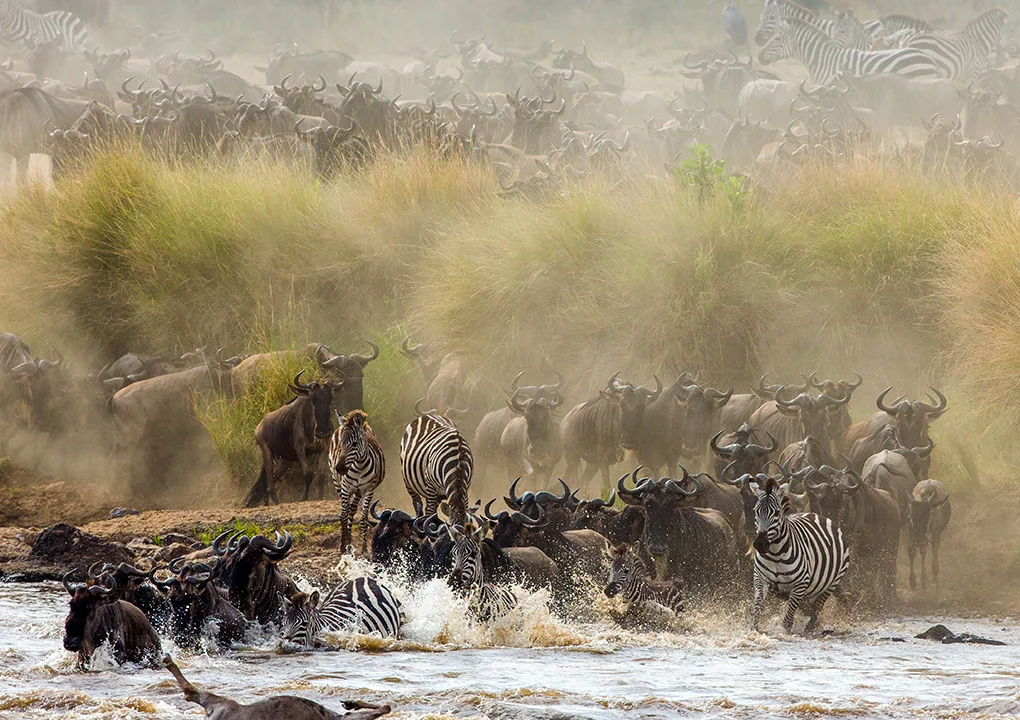
- Iconic Mara River wildebeest crossings (Jul–Aug)
- Ideal for Kilimanjaro climbs, clear summit views
- Zanzibar beaches are calm and crystal-clear
- Dusty roads, brings dramatic orange-hued sunsets
- Peak prices and advance booking essential
- Comfortable cool evenings in Serengeti and Ngorongoro
🌧️ Wet Season
Nov – Dec (Short) · March – May (Long)
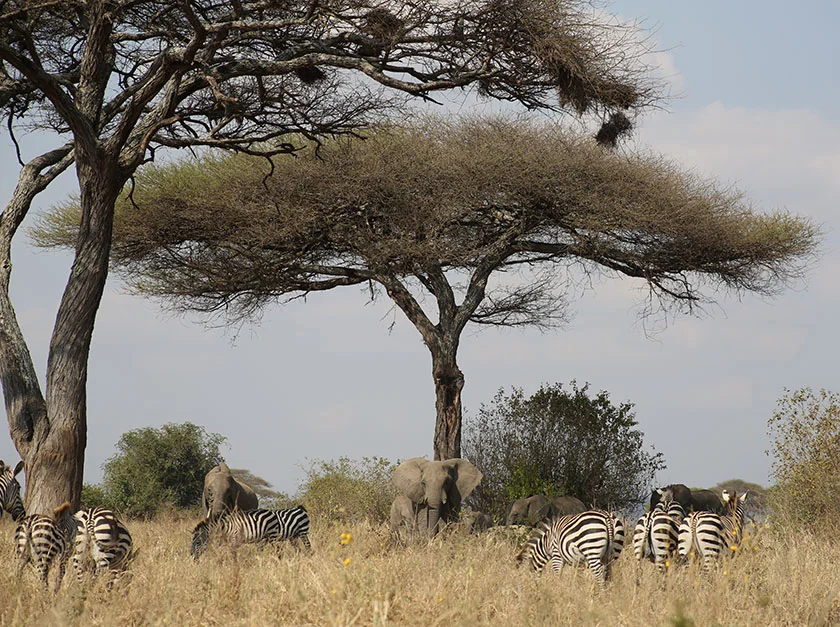
Lush green savannah after the rains, baby animals and dramatic skies
Short Rains (Nov–Dec), ✅ Still Great
- Brief afternoon showers, mornings usually clear
- Dramatic skies for photography
- 20–35% cheaper lodges and flights
- Fewer tourists, exclusive game drives
- Calving season begins in Ndutu (Dec–Feb)
Long Rains (Mar–May), ⚠️ For Specialists
- Heavy daily rain, especially March–April
- Some roads become impassable without 4WD
- Best for birdwatching, 1,000+ species active
- Massive price drops (40%+ discounts)
- Southern circuit (Ruaha, Selous) can still be good
Best Time for a Tanzania Safari
Tanzania's Northern Circuit (Serengeti, Ngorongoro, Tarangire) is superb year-round, but timing unlocks specific experiences.
July – October
- Driest months, maximum wildlife visibility
- Mara River crossings (Jul–Aug peak)
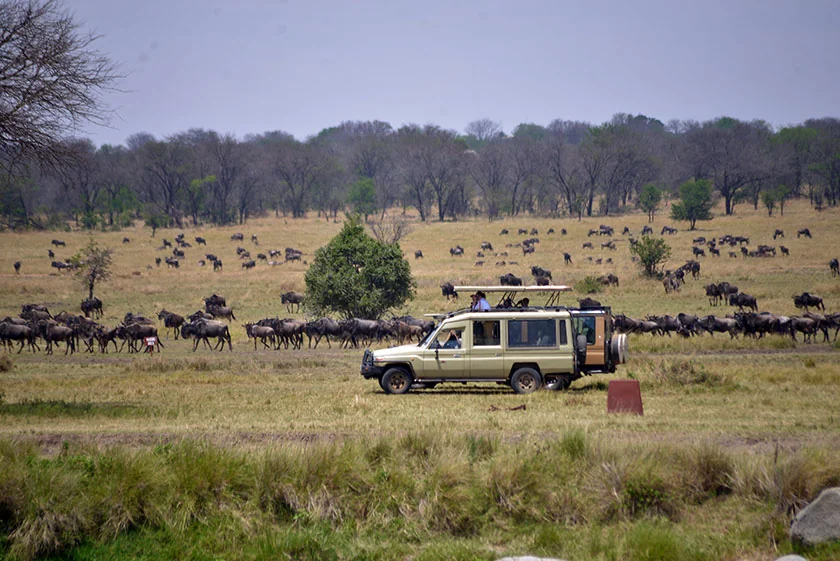
- Thousands of wildebeest in northern Serengeti
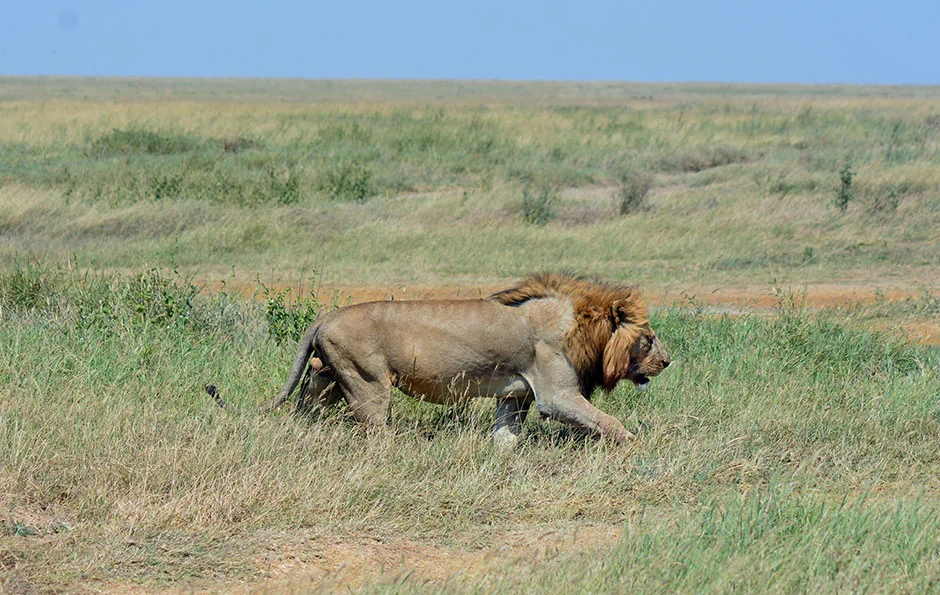
- Big Five easily spotted daily
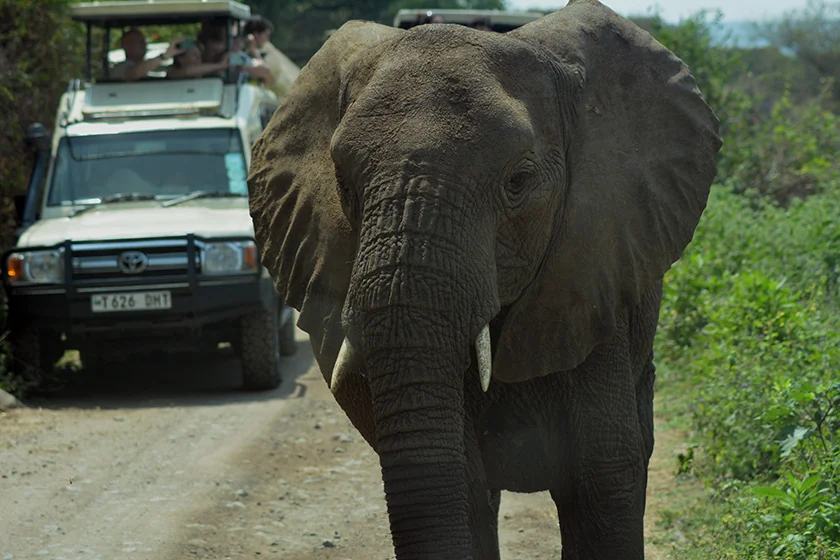
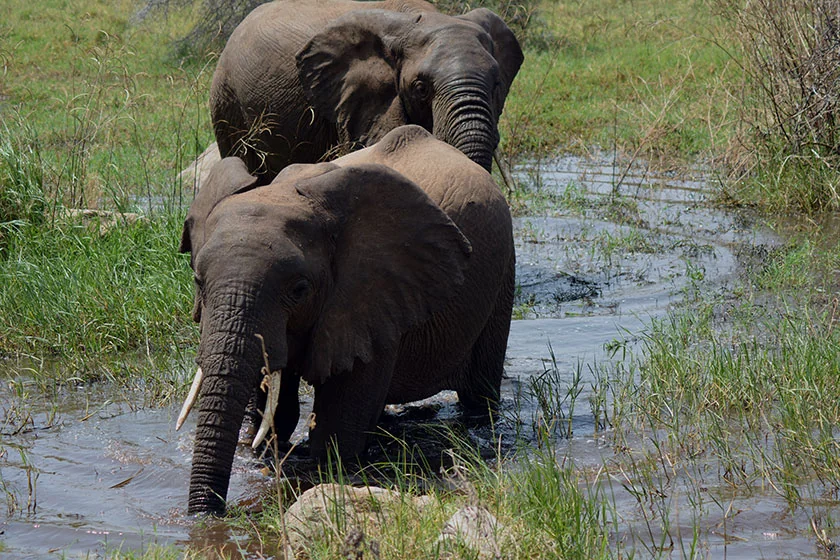
- Tarangire elephant concentrations (Sep–Oct)
- Ngorongoro floor teeming with predators
Jan – Feb & Nov – Dec
- Calving season in Ndutu plains (Jan–Mar)
- Thousands of wildebeest born, predator action intense
- Lush green landscapes ideal for photography
- Fewer tourists than peak dry season
- Short rains (Nov–Dec) barely disrupt game drives
- Good value at most lodges
March – May
- Long rains, heavy afternoon downpours
- Lush vegetation hides animals
- Lowest prices of the year (40%+ discounts)
- Best birdwatching conditions
- Some remote lodges close entirely
- Southern Tanzania (Ruaha) can still be excellent
Great Wildebeest Migration Calendar
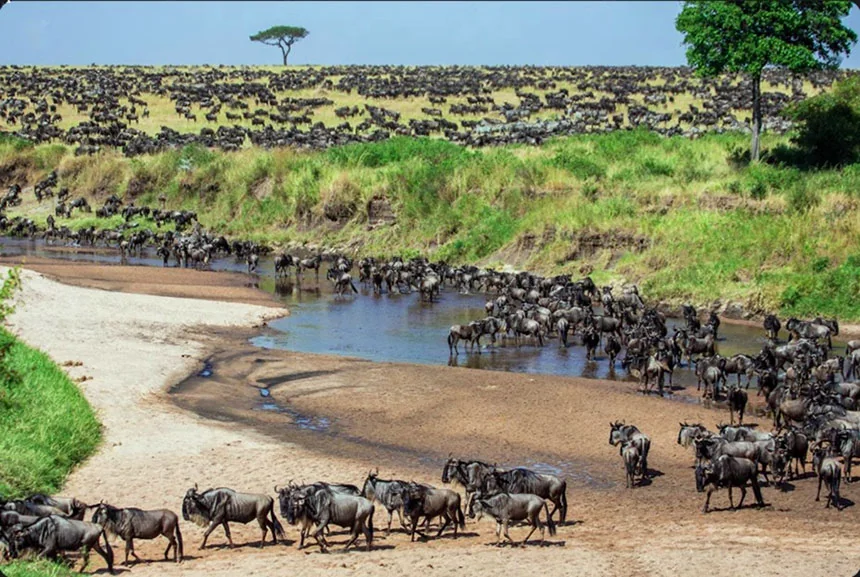
Over 1.5 million wildebeest, 250,000 zebra and 500,000 gazelle move in a giant circular route through Tanzania and Kenya all year.
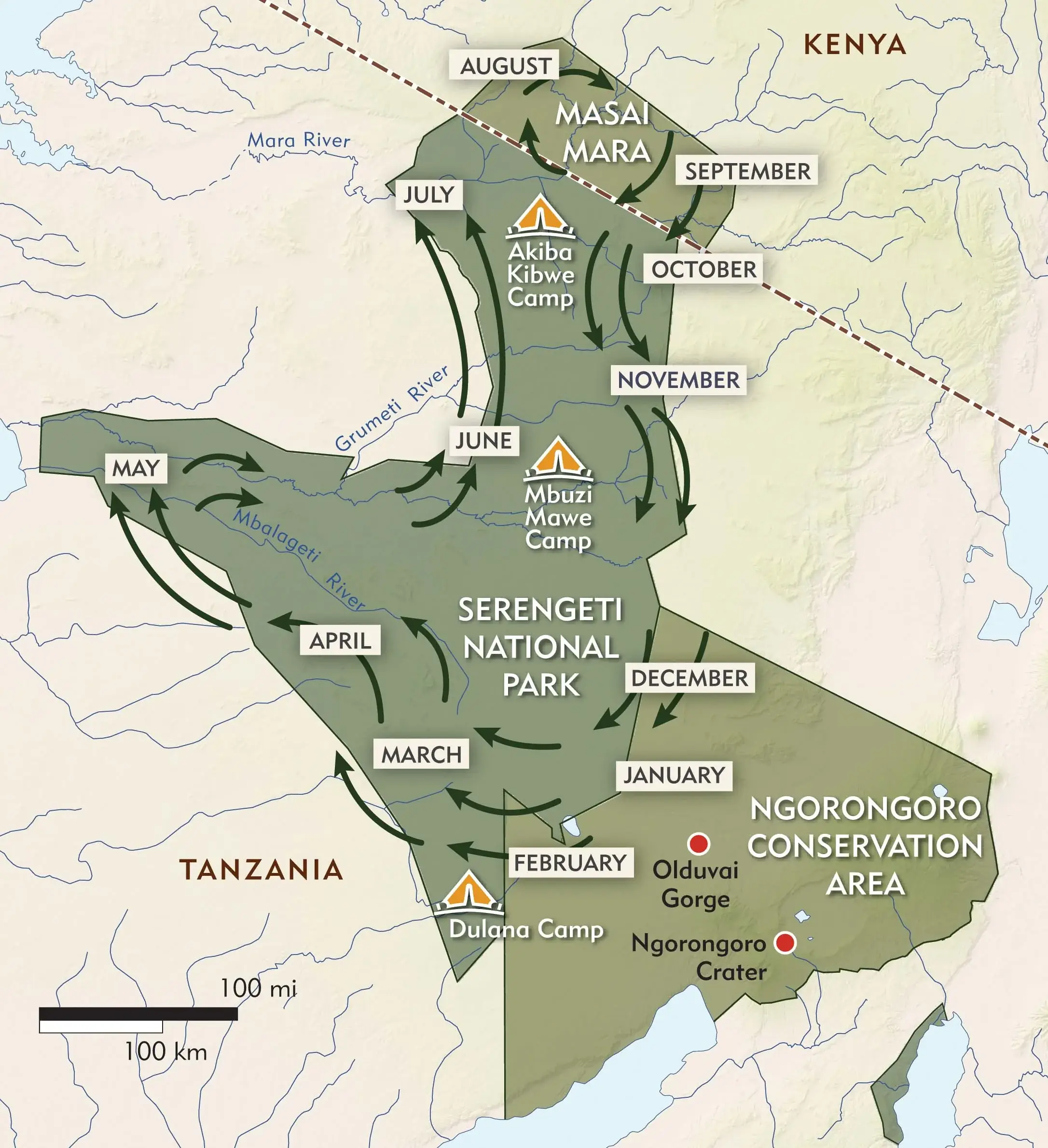
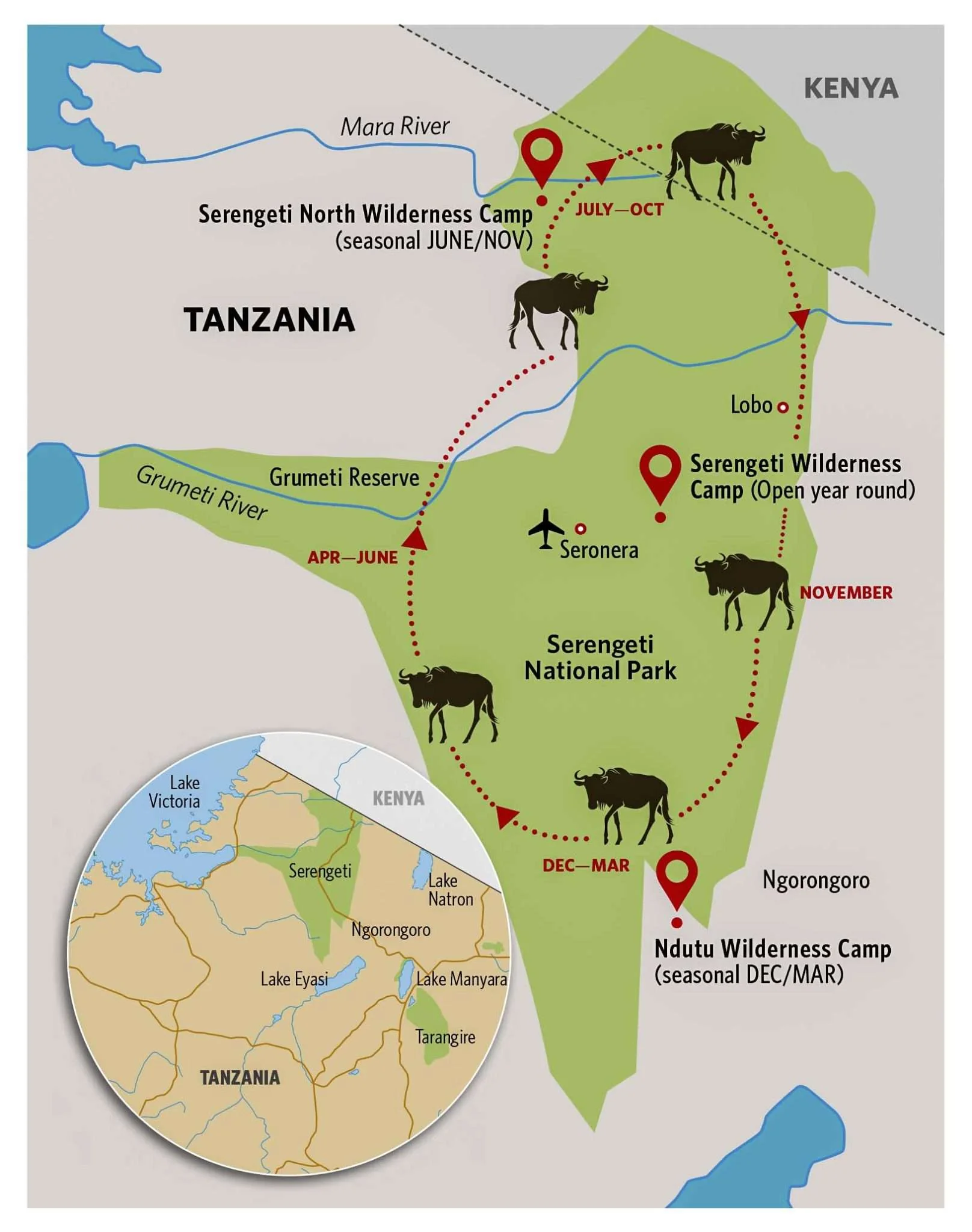
The Great Migration circular route, monthly positions through Serengeti & Masai Mara
Calving Season
Approximately 500,000 calves born. Predators gather for the feast, cheetah, lion, hyena and wild dog action is unmatched.
Northward March
Herds begin moving north through central Serengeti. Long rains reduce tourists to nearly zero. Dramatic stormy landscapes.
Grumeti Crossings
Herds reach the Grumeti River with its massive Nile crocodiles. First dramatic crossings begin here before heading north.
Mara River Crossings
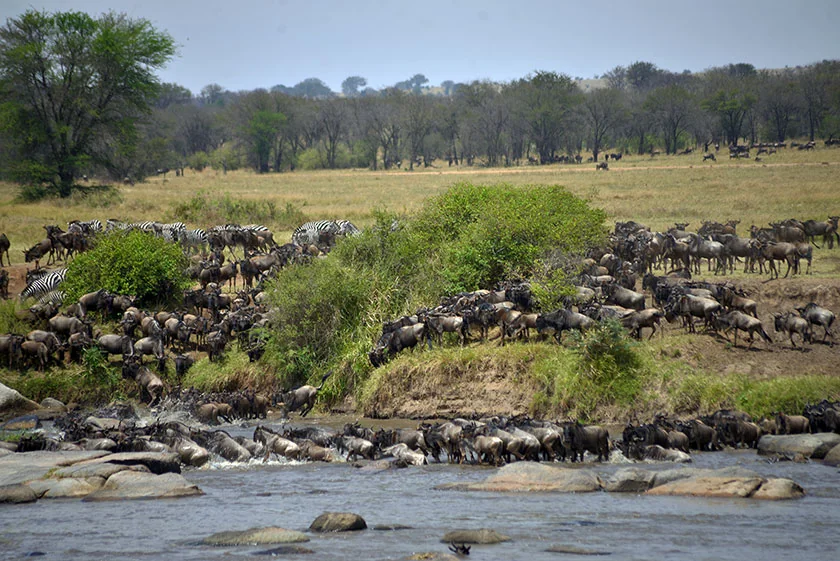
The iconic river crossings, thousands of wildebeest leap into croc-filled waters. Peak spectacle, peak season. Book far ahead.
Best Time to Climb Kilimanjaro
Kilimanjaro can be climbed year-round but weather patterns dramatically affect summit conditions and success rate.
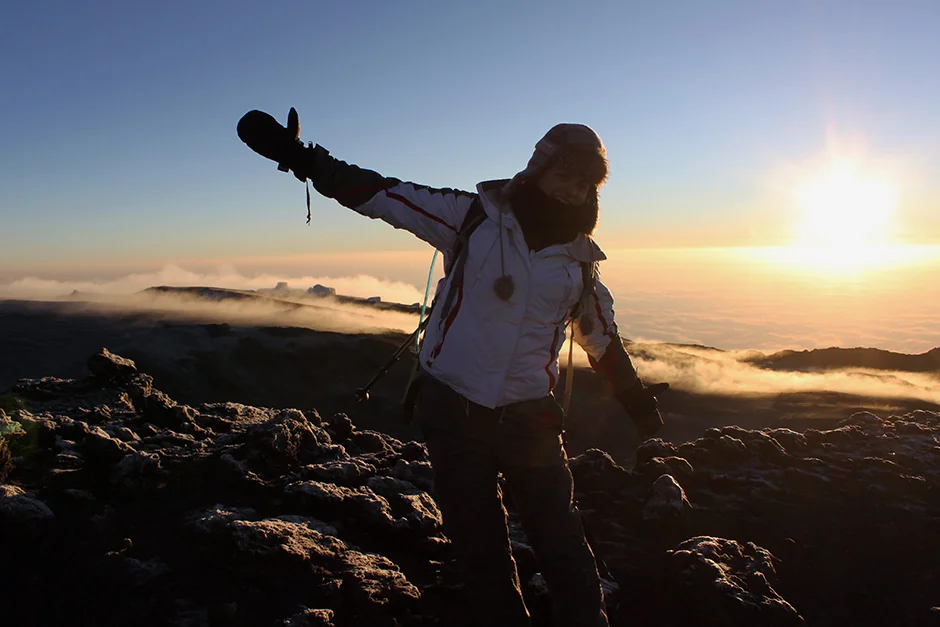
Short dry period between rain seasons. Clear skies, cold nights but good visibility. Less crowded than peak months.
Long rains soak the lower forest zones. Muddy trails, reduced visibility and cold wet conditions at all camps. Hard going.
Early dry season, clear skies but cold winds especially on the summit plateau. July-August coldest of the year (-20°C summit).
Warmest dry months. Clear summit views, excellent trail conditions. Most popular season, book early. Busiest camps.
Short rains may affect lower zones but summit is often still clear. Lighter crowds and lower prices.
Transitional, increasingly dry towards December 25th, popular for celebration climbs. Lower snow on summit.
Kilimanjaro Temperature Zones
Temperatures drop ~6.5°C per 1,000m altitude gain. Dress in layers from tropical base to arctic summit.
Best Time to Visit Zanzibar
Zanzibar enjoys warm tropical weather year-round, but wind, rain, and ocean conditions vary significantly by month.
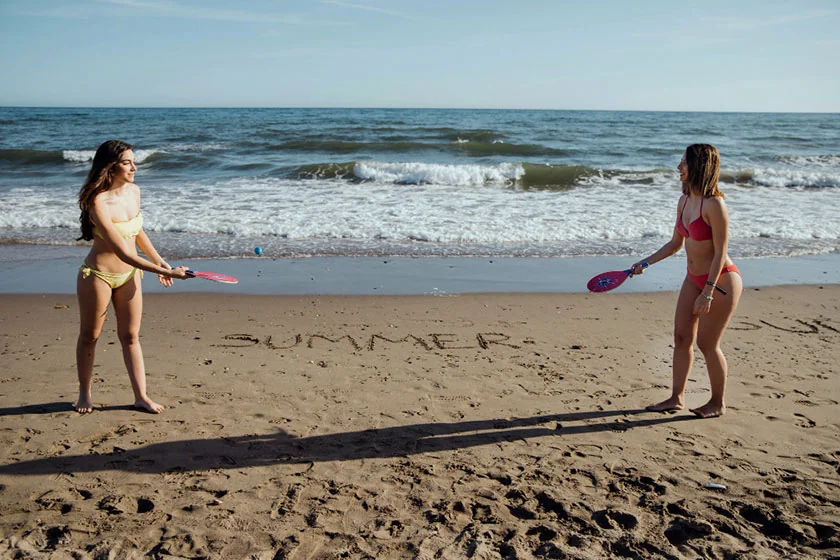
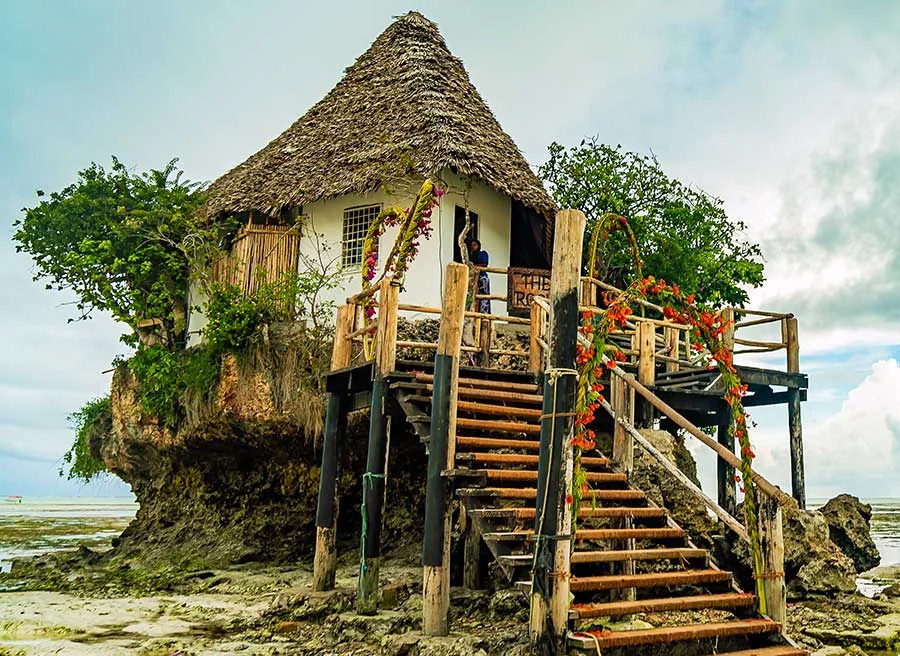
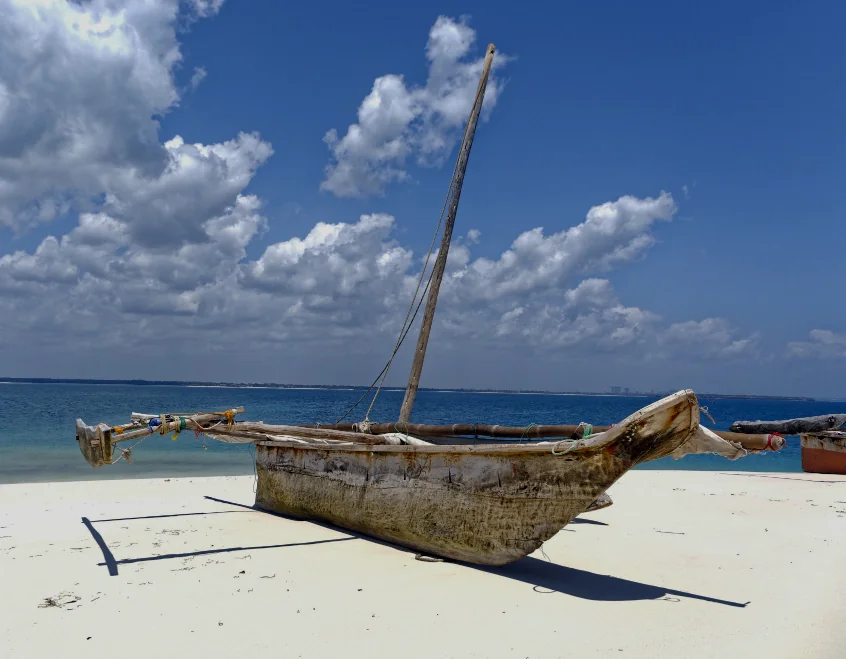
🏙️ Zanzibar Stone Town, UNESCO World Heritage Site
Southeast trade winds (Kaskazi). Strong winds 15–25 knots make for excellent kitesurfing and sailing. Clear skies, minimal rain, calm East Coast. Best diving visibility.
Short dry period. Warm seas, low tourist numbers, lower prices. North Coast and East Coast beaches both good. Whale shark season begins.
Transitional months with some rain possible. Fewer tourists and good deals. Weather is generally warm with occasional afternoon showers.
Long rains, heavy daily downpours, overcast skies, rough seas. Many beach operators close. Not ideal for a beach holiday.
Best Months by Park & Region
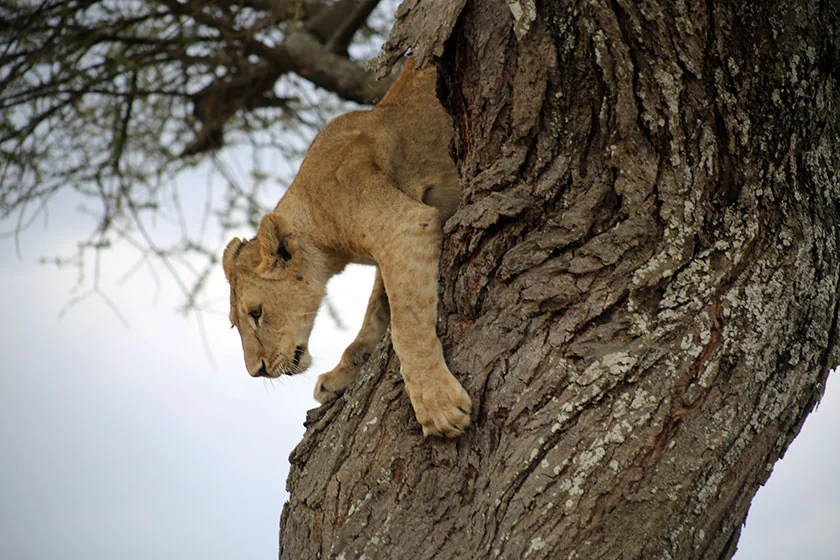
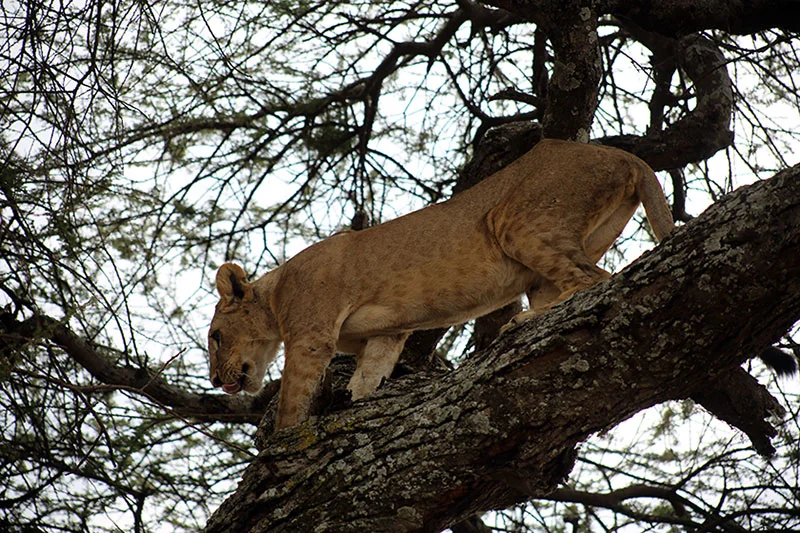
Lions on a kopje, the iconic Serengeti landscape
Serengeti National Park
Year-round wildlife but migration timing transforms the experience. Avoid March–May when some camps close.
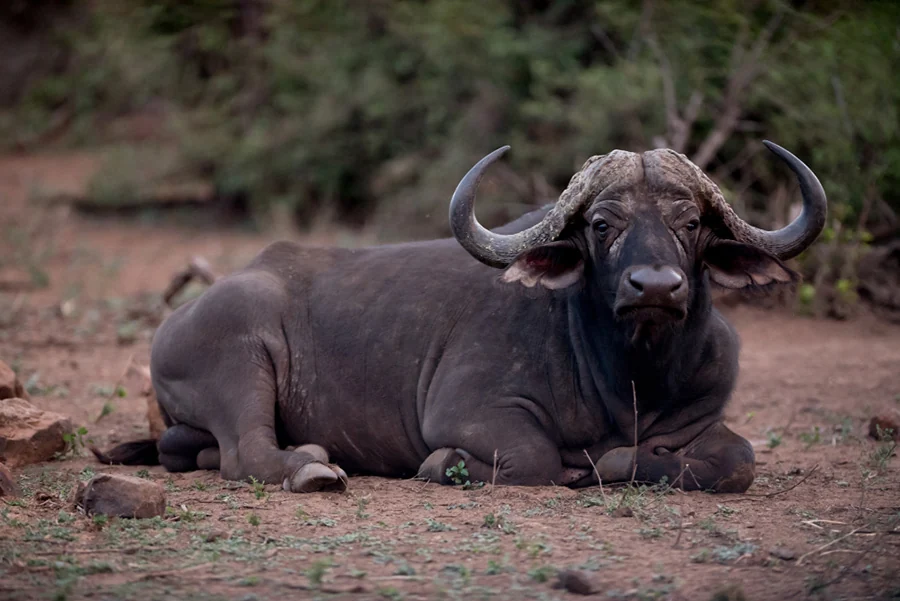
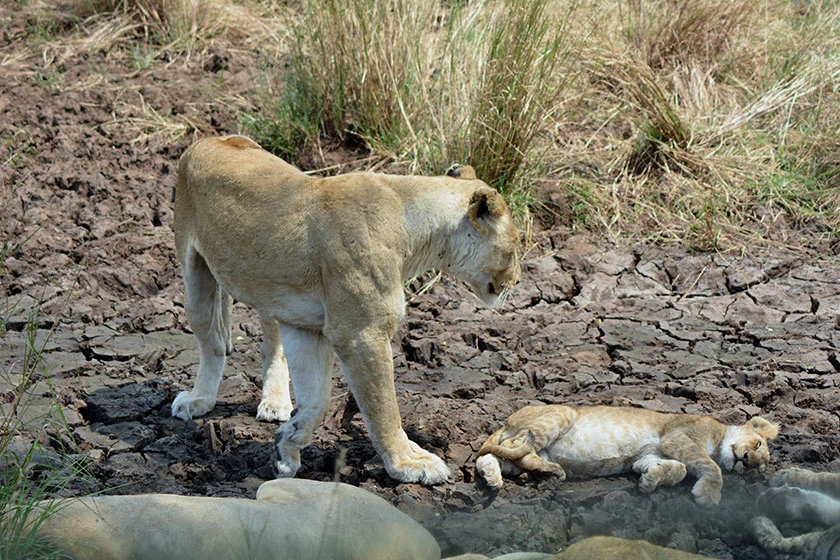
Tanzania safari in Ngorongoro Crater
Ngorongoro Crater
The crater is accessible year-round. Even in light rain, the biodiversity inside the crater wall is astounding.
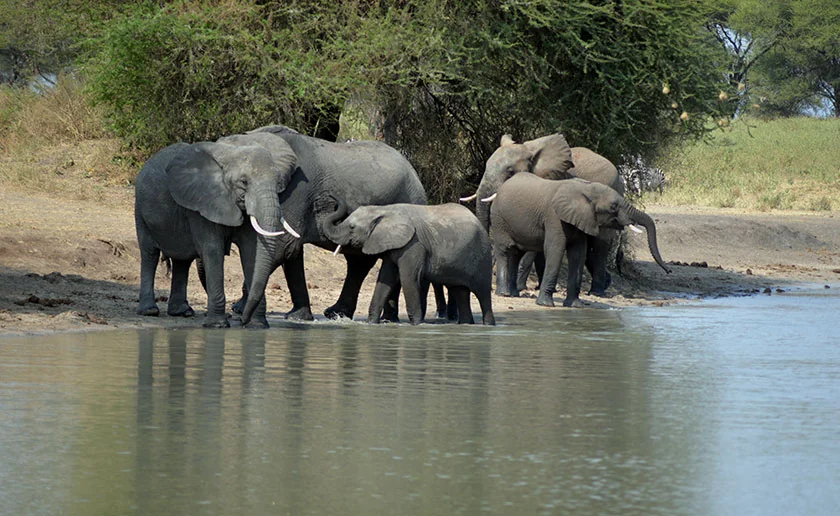
Hundreds of elephants at the Tarangire River during dry season
Tarangire National Park
The dry season September-October concentrates thousands of elephants around the Tarangire River in an extraordinary spectacle.
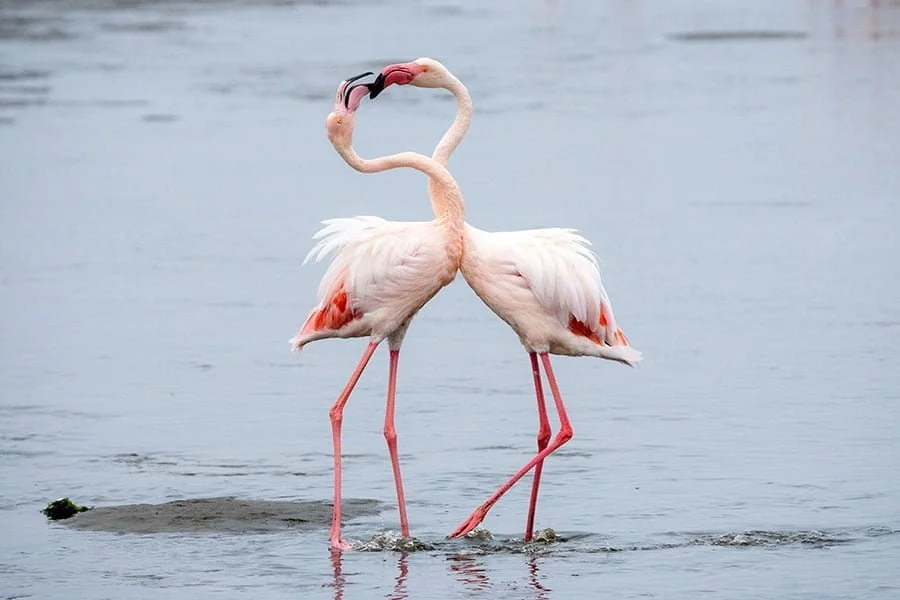
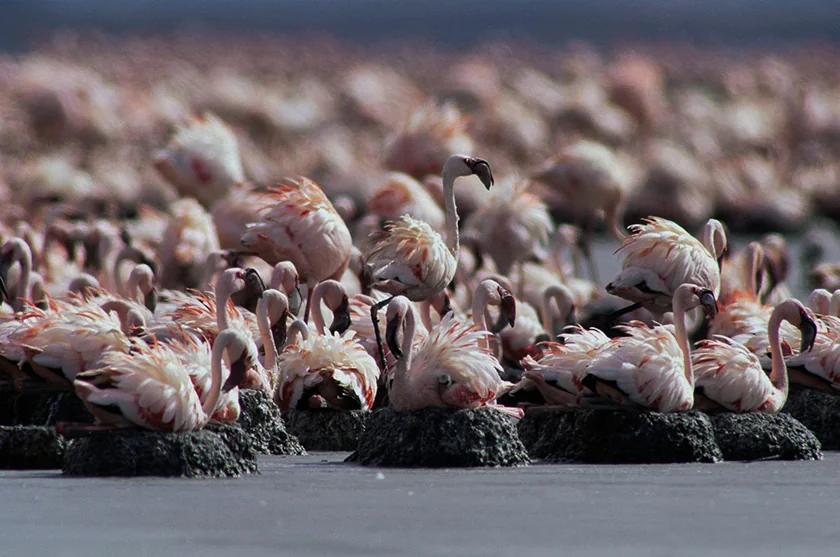
Flamingos on Lake Manyara shore, Rift Valley escarpment behind
Lake Manyara
Flamingos best November-March. Tree-climbing lions can be seen year-round. Best avoided during peak long rains.
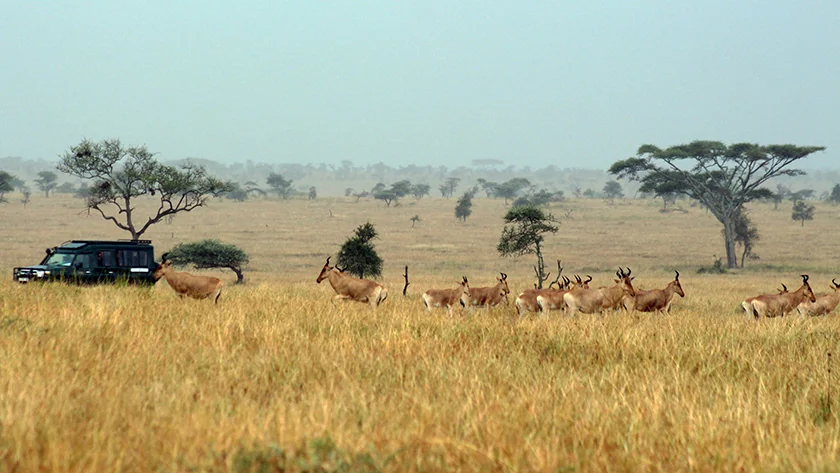
Ruaha, off-road game drive through remote wilderness and baobab trees
Ruaha National Park
Southern Tanzania's hidden gem. Ruaha's season is almost opposite to the north, peak dry season is June–November.
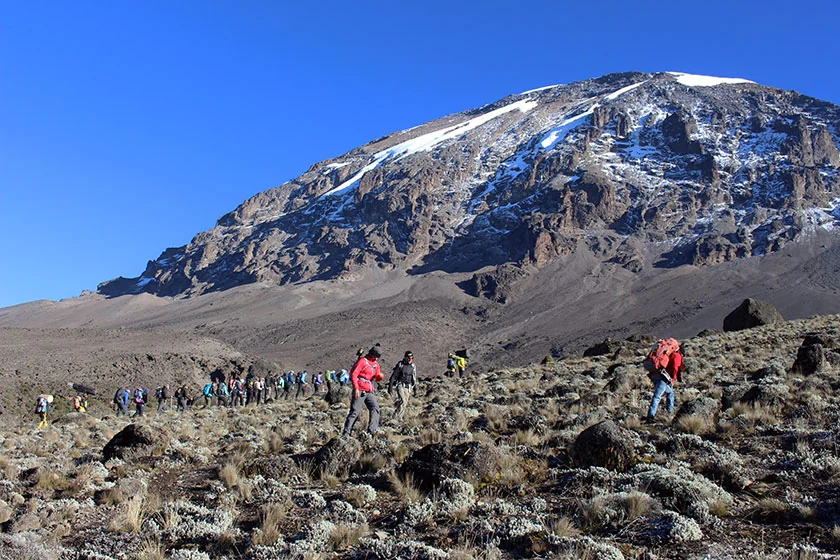
Kilimanjaro, snow-capped summit crown above the clouds at sunrise
Kilimanjaro
Two optimal windows. Warmest in Sep–Oct. Clearest blue skies and best summit photography in these months.
Best Time by Traveler Type
First-Time Safari Visitors
Maximum wildlife density. High success rate for Big Five sightings. Clear skies for photography. Everything is at its best simultaneously.
Budget Travelers
Short rains bring dramatic landscapes with 20–30% price drops. Great value with minimal trade off on wildlife quality.
Honeymoon Couples
Combine Serengeti safari with Zanzibar beach. Romantic sunsets, exclusive camps, and both circuits in perfect season simultaneously.
Kilimanjaro Climbers
Warmest, clearest and driest months. Best summit visibility and photography. Ideal for combining with a post-climb safari.
Wildlife Photographers
July–August for dramatic river crossings and dust. January–February for lush green backgrounds and newborns bathed in golden light.
Birdwatchers
Migratory species from Europe and North Africa arrive October–November. Over 1,000 species recorded including rare species absent in dry months.
Tanzania Safari Cost by Season
Prices are per person per day all-inclusive (accommodation, meals, game drives, park fees) for the Northern Circuit. International flights are excluded.
| Season | Months | Budget Tented camps | Mid-Range Lodges | Luxury Premium camps | Crowd Level |
|---|---|---|---|---|---|
| Peak Dry | Jul – Aug | $180–250 | $350–550 | $700–1,500+ | Peak |
| High Season | Jun & Sep – Oct | $150–220 | $280–450 | $550–1,100 | High |
| Shoulder / Short Rains | Nov – Jan | $120–180 | $200–320 | $380–750 | Medium |
| Calving Season | Feb – Mar | $120–170 | $190–300 | $350–700 | Low |
| Low / Long Rains | Apr – May | $80–130 | $140–230 | $280–500 | Very Low |
7-Night Northern Circuit (Budget)
Approx $1,200–1,600 pp. Shared group safari, basic tented camps, visits to Serengeti, Ngorongoro, Tarangire. Best value in Nov–Jan.
7-Night Northern Circuit (Mid-Range)
Approx $2,500–4,000 pp. Private game drives, lodge accommodation, Serengeti + Ngorongoro. Best value in shoulder months (Jun, Sep–Oct).
7-Night Luxury Safari
Approx $5,000–10,000+ pp. Exclusive premier camps, fly-in between parks, private guide, premium bush dinners. Jul–Aug commands highest rates.
Kilimanjaro Climb (7–9 days)
Approx $2,000–3,500 pp all-inclusive (guide, crew, park fees, gear). Machame Route most popular. Prices stable year-round.
3-Night Zanzibar Beach Add-on
Approx $300–1,500 pp (3 nights), depending on resort grade. Internal flight from Arusha/Kilimanjaro ~$150–250 one-way.
Park Fees (per day, USD)
Serengeti: $70 pp/day · Ngorongoro crater: $70.60 pp · Tarangire: $53.90 pp · Kilimanjaro NP gate: $73 pp/day (included in climb packages).
* Prices are estimates as of 2026 and vary by operator, route, and availability. Contact us for an exact quote tailored to your dates.
Suggested Tanzania Itineraries
Real-world trip templates to help you plan the right combination of destinations for your chosen travel window.
Classic Safari + Zanzibar Beach
Arrive, overnight at lodge, pre-safari briefing, cultural tour
Full-day game drive, elephant herds, dry season concentrations
Wildebeest herds, Big Five, sunrise game drives
Mara River crossing viewpoints (Jul–Sep), predator activity
Crater floor full day, rhino, lion, flamingos, dense wildlife
Fly to Zanzibar, beaches, Stone Town, snorkeling, dhow sunset cruise
Kilimanjaro + Safari Combo
Arrive, rest, gear check, acclimatisation hike on Kilimanjaro slopes
7-day summit bid via Machame Route, Uhuru Peak (5,895m)
Rest and recovery day, celebratory dinner
Post-climb safari, wildebeest southward trek, Big Five sightings
Crater floor game drive, overnight rim lodge
Transfer to Kilimanjaro Airport (JRO) for departure
Budget Green Season Safari
Arrive, group briefing, overnight in Arusha
Flamingos, tree-climbing lions, crater game drive
Green season photography, lush savannah, dramatic skies, fewer vehicles
Great Migration calving season, lion and cheetah hunts, newborn wildebeest
Return drive, farewell lunch, departure transfer
Family Tanzania (All Ages)
Maasai village visit, Moshi market tour, kids wildlife introduction
Gentle game drives, flamingos, family-friendly lodge with pool
Calving season, thousands of newborns, cheetah families, gentle terrain
Full crater day, picnic lunch on the floor, rhino tracking
Fly to Zanzibar, calm shallow beaches, sea turtle snorkeling, Stone Town kids tour
Visa & Entry Requirements
Tanzania requires a visa for most nationalities. The process is straightforward, here is what to organise before you fly.
eVisa (Recommended)
- Apply online before travel at immigration.go.tz
- Cost: $50 USD (single entry), $100 USD (multiple entry)
- Processing: 3–7 business days (apply 2–3 weeks ahead)
- Valid for 90 days from entry for most nationalities
- Passport must be valid for 6+ months beyond travel dates
- Accepted at all international airports and Zanzibar port
Visa on Arrival
- Available at Kilimanjaro (JRO), Dar es Salaam (DAR), Zanzibar (ZNZ) airports
- Costs the same as eVisa ($50 single / $100 multiple entry)
- Payment: USD cash or credit card accepted
- Allow 30–60 minutes at immigration, queues can be long
- Same photo requirements as eVisa apply
- Not recommended for tight connecting itineraries
Required at Entry
- Valid passport (6+ months validity)
- Approved eVisa or USD cash for visa on arrival
- Yellow fever vaccination certificate (if travelling from endemic countries)
- Return or onward travel ticket
- Proof of accommodation (hotel booking confirmation)
- Sufficient funds, typically $50 USD minimum per day
Yellow Fever Certificate
Required for travellers arriving from or transiting through yellow fever endemic countries (most of Sub-Saharan Africa and parts of South America). If arriving directly from the USA, UK, Australia or Europe you are typically exempt. Get vaccinated at least 10 days before travel. The certificate is valid for life.
East Africa Tourist Visa (multi-country)
Planning to combine Tanzania with Kenya and/or Uganda? The East Africa Tourist Visa ($100 USD, 90 days) covers all three countries and allows multiple re-entries. Apply via the Tanzania eVisa portal or Kenya's eCitizen platform. Rwanda can sometimes also be included.
Packing Guide by Season
Dry Season Essentials (Jun–Oct)
- Neutral-coloured safari clothing (khaki, olive, beige)
- Fleece or down jacket for cold mornings and evenings
- Wide-brim hat and quality sunglasses
- SPF 50+ sunscreen, sun is intense at altitude
- Dust scarf or buff for open vehicle drives
- Binoculars (8×42 minimum recommended)
- Insect repellent (DEET-based for malaria prevention)
- Lightweight hiking boots for walking safaris
- Camera with telephoto lens (200mm+ ideal)
- Reusable water bottle, stay hydrated in the heat
Wet Season Essentials (Nov–May)
- Waterproof jacket or poncho (essential)
- Quick-dry clothing layers
- Waterproof bag covers and dry bags for electronics
- Gaiters for muddy trails (Kilimanjaro lower zones)
- Waterproof boots with good grip
- Extra memory cards, lush green season = more photos
- Anti-malarial medication (higher risk during rains)
- Umbrella for Stone Town / Zanzibar walking
- Biodegradable soap and shampoo for eco-camps
- Headlamp, power outages more common during storms
Frequently Asked Questions
Still deciding when to go? These are the questions our team gets asked most often.
Conclusion
There is no single wrong time to visit Tanzania, there is only the wrong time for your trip. The dry season (June–October) delivers classic safari excellence and the migration river crossings. February and the calving season give you newborn wildlife and lush green photography. November–January balances superb game viewing with the year's best prices.
Whatever your dates, our guides build the itinerary around the wildlife, the weather, and the crowds, so you land in the right park at the right moment. Tell us when you're thinking of travelling, and we'll tell you exactly what to expect and where to go.
Plan Your Tanzania Trip with Masatu Tours
From Great Migration river crossings to Kilimanjaro summits and Zanzibar beaches, our expert team matches your dates to the perfect safari. Get a free, tailored itinerary within 24 hours.
Related Tanzania Travel Guides
Great Wildebeest Migration
Nature's greatest show, timed perfectly
Big Five in Tanzania, Complete Guide
Lion, leopard, elephant, rhino & buffalo
Serengeti Safari Guide
Explore the world's most famous ecosystem
Top 10 Zanzibar Beaches
Find your perfect stretch of sand
Kilimanjaro Packing List
Everything you need for the climb
Malaria Prevention
Stay healthy on safari
Tanzania Travel Tips
Practical advice for every visitor
Tanzania Safari 2026-2027
Plan your dream wildlife safari
Last updated: August 3, 2026. All facts verified against TANAPA, Tanzania Meteorological Authority, and current weather research.
