Tarangire: A Journey Back in Time
For us at Masatu Tours, Tarangire isn't just another stop on the northern circuit; it's a journey back in time. It's a place of raw, untamed beauty, where the horizon is punctuated by the silhouettes of colossal baobab trees and the air hums with the life of the savannah. This is the Africa of storybooks, brought to life.
The soul of Tarangire is its river. During the long dry season (from June to October), the Tarangire River becomes more than just water; it's a promise. It's a lifeline that draws wildlife from hundreds of miles around. To witness this great gathering is to understand the rhythm of the wild. First come the zebra and wildebeest, cautious but desperate. Then, drawn by the scent of both water and prey, the lions and leopards emerge from the tall grasses.
Tanzania's Best-Kept Secret
While Serengeti and Ngorongoro attract more visitors, Tarangire offers an equally spectacular but more intimate safari experience. Learn more from Tanzania National Parks Authority.
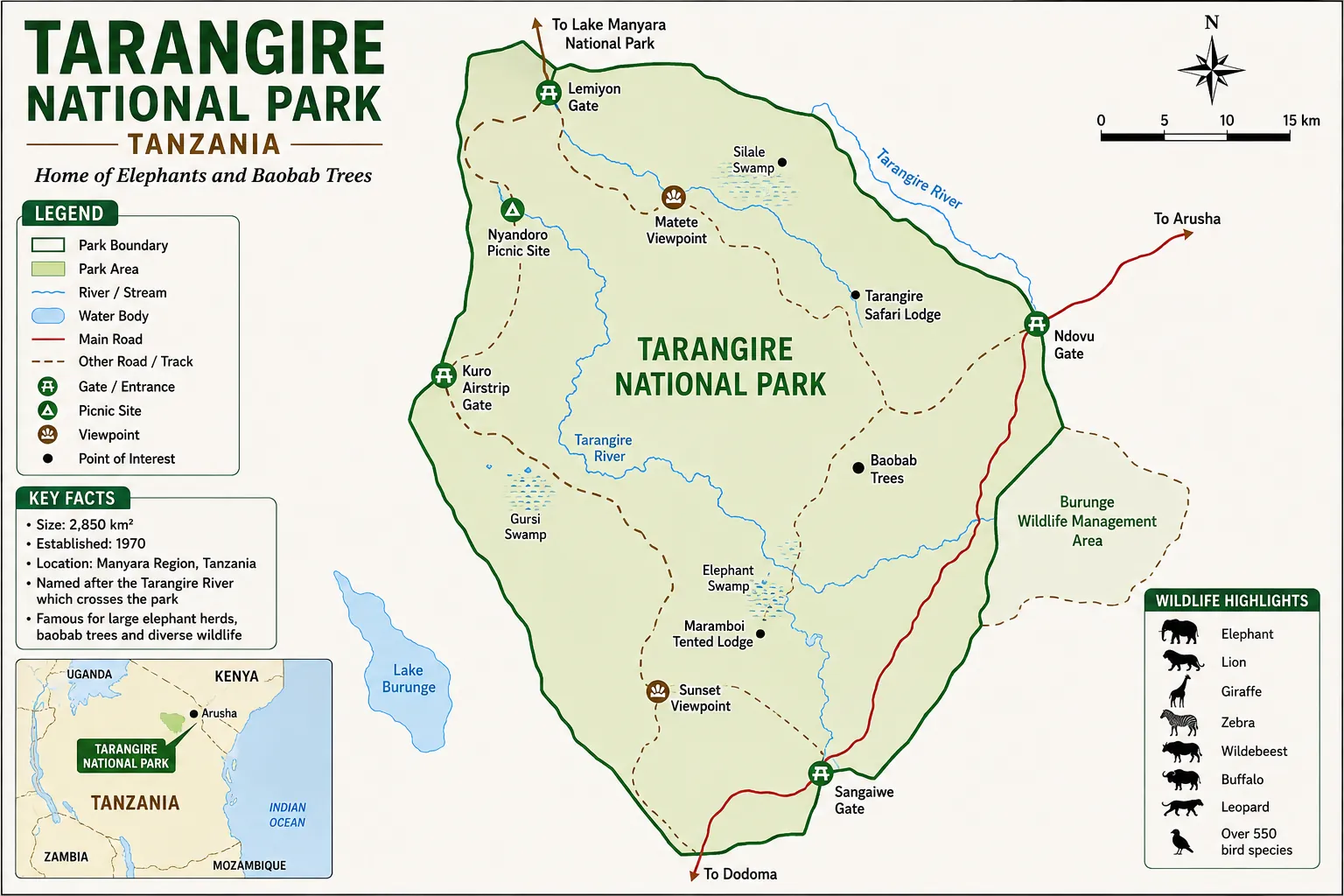
Tarangire National Park Location


Interactive map showing Tarangire National Park's location in Northern Tanzania · Open in Google Maps
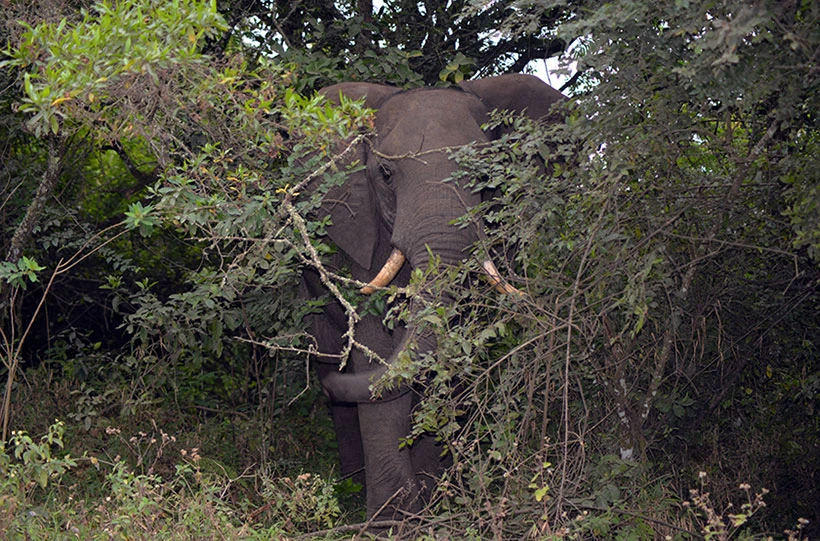
But everyone, and everything, makes way for the true kings of this land: the elephants. We've seen herds 300 strong descend on the riverbed, their ancient wisdom guiding them. They dig into the dry earth with their tusks and trunks, tapping into underground springs and creating wells that will sustain all other creatures. It's a profound display of intelligence and community, a sight that will stay with you forever.
Quick Facts
- Location: 120 km southwest of Arusha
- Size: 2,850 km² (1,100 sq mi)
- Established: 1970
- Elephants: Herds up to 300 strong
- Bird Species: 550+ species
- Famous For: Ancient baobab trees
The True Kings of Tarangire
Tanzania's Highest Elephant Density
According to the Tanzania National Parks Authority, Tarangire has "more African Elephants per square kilometer than any other national park in the country." Located about 120km southwest of Arusha City, this park is the undisputed elephant kingdom of Tanzania.

Tarangire is home to one of the highest concentrations of elephants in Tanzania. During the dry season, you may encounter herds numbering in the hundreds a sight so overwhelming and humbling that it defies description. These gentle giants are the architects of the ecosystem, creating waterholes that sustain countless other species.
The park got its name from the Tarangire River that flows through the center of the park and forms the dry season refuge for wildlife, especially elephants. This ancient waterway is the lifeline that has sustained elephant populations for millennia, and witnessing these magnificent creatures at the river is a privilege that connects you to Africa's timeless rhythms.
Why Tarangire's Elephants Are Special
- Largest herds in Tanzania, up to 300 elephants in a single gathering
- Ancient wisdom, matriarchs lead families to hidden water sources
- Ecosystem engineers, create wells that benefit all wildlife
- Close encounters, incredibly tolerant of safari vehicles
- Photographic opportunities, dramatic riverside scenes at sunset

"Standing among a hundred elephants at the Tarangire River is a moment of pure magic. The ground trembles, the air fills with their low rumbles, and you realize you're witnessing something ancient and sacred." Masatu Tours Guide
The Sights and Sounds That Define Tarangire
While the elephants are the main event, Tarangire's magic is woven from many threads. Here's what our guides love to share with our guests:
The Ancient Baobabs
These aren't just trees; they are silent storytellers. Some have stood here for over a thousand years, their massive, gnarled trunks holding the secrets of the savannah. Standing beneath one is a humbling experience, a connection to a world that existed long before us. Learn more about these incredible trees from the Royal Botanic Gardens, Kew.
The Birding Paradise
With over 550 species, Tarangire is a symphony of birdsong. You don't have to be an expert to be captivated. From the vibrant flash of a lilac-breasted roller to the comical strut of the Kori Bustard (the world's heaviest flying bird), the avian life here is spectacular.
The Silent Architects
You'll see them everywhere, towering red mounds of earth, some twice the height of a person. These are the cathedral-like homes of termites, a testament to what tiny creatures can build with time and teamwork. They're also important features for many animals who use them as lookout points.
The Lounge of the Lions
Keep an eye on the bizarre-looking Sausage Trees. Their low, shady branches are the preferred napping spots for Tarangire's lions, who often lounge there to escape the midday sun, bellies full and legs dangling. It's one of nature's most endearing sights.

When Should You Visit? A Masatu Tours Perspective
Any time in Tarangire is a good time, but the experience changes with the seasons. Here's our expert advice:
Best Time: Dry Season (June – October)
This is the classic, high-drama safari season. The vegetation is sparse, making animals easier to spot, and the river becomes the stage for incredible wildlife congregations. It's the best time for guaranteed elephant sightings and predator action.
Dry Season
June - October
Best for elephant congregations and predator viewing. Animals gather at water sources.
Shoulder Season
Nov, May
Transition months with good wildlife viewing and fewer crowds.
Green Season
November - May
Lush landscapes, migratory birds arrive, lowest prices. Great for birdwatching.
Massive Elephant Congregations
Herds of 200-300 elephants gather at the river daily
Easy Wildlife Spotting
Sparse vegetation and animals concentrated around water
Predator Action
Lions and leopards hunt at waterholes with higher success rates
Perfect Weather
Clear skies, warm days, and excellent photography conditions
The Trade-off
Peak season means more visitors and higher accommodation costs

During the dry season spectacle, thousands of zebra, wildebeest, and other herbivores migrate from the surrounding areas to the permanent waters of the Tarangire River. This creates one of the most dramatic wildlife concentrations in Tanzania second only to the famous Serengeti migration. The zebras' distinctive black-and-white stripes create mesmerizing patterns across the golden savannah landscape.
Don't discount the wetter months. The park transforms into a lush, green paradise. The crowds thin out, the dust settles, and it's a phenomenal time for birdwatching as migratory species arrive. Fewer tourists means you'll often feel like you have the park to yourself, with lower accommodation costs and more availability. Our birdwatching guide to Tarangire, Lake Manyara and the Maasai Steppe covers the full species list, the Kori Bustards and Ostriches of the open plains, and exactly when to arrive.
Green Season Highlights (November - May)
- Migratory birds arrive, bringing total species count over 550
- Lush greenery and wildflowers create stunning photography backdrops
- Fewer tourists means you'll often feel like you have the park to yourself
- Lower accommodation costs and more availability

Making the Most of Your Tarangire Adventure
A quick drive-through doesn't do this park justice. From our experience at Masatu Tours, here's how to truly connect with Tarangire:
Multi-Day Game Drives
Stay for at least two days. One day gives you a taste, but two or three days allow you to explore different areas of the park, follow the herds, and experience the changing light of dawn and dusk, when predators are most active.
Best for: Wildlife photography, elephant encounters, predator sightings
Walking Safari
Try a walking safari. There is nothing like stepping out of the vehicle and feeling the African soil beneath your feet. Led by an armed ranger, a bush walk connects you to the smaller wonders the tracks, the plants, the insects. You'll learn to read the story of the savannah in a whole new way.
Best for: Intimate wildlife encounters, learning bush skills, unique perspective
Night Game Drive
Experience a night drive. When the sun sets, a different world awakens. A night safari is your chance to find elusive nocturnal creatures like porcupines, genets, and perhaps even a leopard on the prowl. It's a thrilling addition to your adventure.
Best for: Nocturnal animals, leopard spotting, unique adventure
Hot Air Balloon Safari
Float above it all. For a truly unforgettable view, a hot air balloon safari at sunrise is pure magic. Drifting silently over the baobabs and watching the savannah wake up below is an experience that's worth every penny.
Best for: Aerial views, photography, once-in-a-lifetime experience
Masatu Tours Tip
Combine Tarangire with Serengeti, Ngorongoro Crater, and Lake Manyara for the ultimate Northern Circuit safari. Our Northern Circuit safari packages are designed for maximum wildlife viewing.
Wildlife & Birding Paradise
Beyond the famous elephants, Tarangire hosts an incredible diversity of wildlife. The park's varied habitats from riverine forests to acacia woodlands and open grasslands support a rich ecosystem.
Conservation Priority Species
According to the Tanzania National Parks Authority, Tarangire is home to several threatened and endangered species including: African wild dogs, cheetahs, pythons, ebony trees, lesser and greater kudu, Beisa oryx, and gerenuk. Conservation efforts supported by organizations like the African Wildlife Foundation are crucial for protecting these species.
Tarangire's predator population is thriving and offers spectacular viewing opportunities. Lions are frequently spotted lounging in acacia trees or hunting near the river. Leopards, though more elusive, patrol the riverine forests at dawn and dusk. The park is also one of the few places where you might encounter the critically endangered African wild dog, one of Africa's most successful yet rarest predators.
Mammals You'll Encounter
- Big Cats: Lions, leopards, cheetahs
- Herbivores: Buffalo, wildebeest, zebra, giraffe
- Antelopes: Impala, eland, oryx, lesser kudu
- Other predators: Hyenas, wild dogs, jackals
- Primates: Baboons, vervet monkeys
Star Bird Species
About 550 species of birds have been recorded in the park, which is a larger number of bird species than the famous Serengeti!
- Kori Bustard World's heaviest flying bird
- Lilac-breasted Roller Tanzania's national bird
- Yellow-collared Lovebird Endemic species
- Ashy Starling Found only in northern Tanzania
- African Fish Eagle Iconic riverside raptor
"Tarangire offers some of the most varied wildlife viewing in Tanzania. In a single day, you can see elephants, lions, leopards, and hundreds of bird species all against the backdrop of ancient baobabs." National Geographic
Conservation & Responsible Tourism
Tarangire National Park is managed by the Tanzania National Parks Authority (TANAPA), which oversees conservation efforts across the country's 16 national parks. Your visit directly supports these vital conservation initiatives.
Conservation Partners
Several organizations work alongside TANAPA to protect Tarangire's unique ecosystem:
African Wildlife Foundation (AWF)
Leading conservation organization protecting wildlife corridors and supporting anti-poaching efforts
Tanzania Wildlife Research Institute (TAWIRI)
Conducts scientific research on wildlife populations and ecosystem health
Promotes sustainable tourism practices that benefit local communities
How Your Safari Helps
Park entrance fees directly fund anti-poaching patrols, wildlife monitoring, habitat restoration, and community education programs. By choosing responsible Tarangire safari packages, you're investing in Tarangire's future.
At Masatu Tours, we're committed to responsible tourism practices that minimize environmental impact and maximize benefits to local communities. We work with local guides, support community conservation initiatives, and follow strict UNESCO guidelines for sustainable tourism.
Let's Plan Your Tarangire Story
Tarangire is more than a destination; it's a feeling. It's the feeling of being small under a giant baobab, the thrill of watching a lioness stalk her prey, and the peace of watching an elephant family drink from the river at sunset.
The Masatu Tours Difference
At Masatu Tours, we don't just take you to see the animals; we help you read the landscape and understand the stories it tells. Our expert guides have decades of experience and share their deep knowledge with passion and enthusiasm.
Getting to Tarangire
From Arusha
120 km (2-3 hours drive) Most visitors arrive via Arusha, the safari capital of Tanzania
Nearest Airport
Kilimanjaro International Airport (JRO) or Arusha Airport (ARK)
Park Fees
$50-70 per adult per day (included in Masatu Tours packages)
Recommended Duration
2-3 days for a comprehensive experience
Ready to Explore the Land of Giants?
Contact Masatu Tours today. We'll help you craft the perfect Tarangire adventure that fits your time, your budget, and your dreams. Whether you want a quick 2-day Tarangire and Ngorongoro safari, a balanced 5-day Northern Circuit package, or a longer 7-day safari itinerary, we've got you covered.
Frequently Asked Questions
Explore More Tanzania Adventures
Where to See Africa's Biggest Animals
Elephant capital and the giants that share it
Preparing Your First Safari in Tanzania
Routes, packing, costs and rules for first-timers
Tarangire Safari Packages
Compare 3-day, 5-day, 7-day, and luxury packages
Serengeti National Park Guide
Plan your Serengeti safari with expert local guides
Ngorongoro Conservation Area
Explore the world's largest intact volcanic caldera
Tanzania National Parks
Discover all of Tanzania's incredible national parks
5-Day Northern Circuit Safari
Tarangire, Serengeti, Ngorongoro & More
Plan Your Trip with Masatu Tours
Talk to a local expert about your itinerary
Serengeti vs Tarangire
Which park suits your safari goals
Tanzania Safari Seasons
Dry vs green season compared — calving, crossings and prices
Last updated: August 17, 2026. Park fees and safari prices may change, always verify current rates before booking.