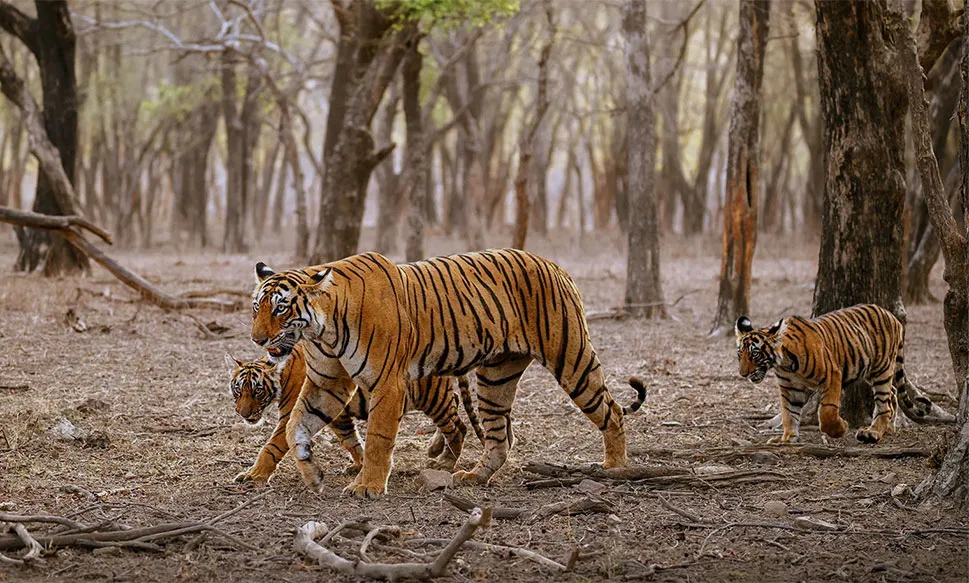
The Short Answer: No
No, tigers do not live in Africa
There are no wild tigers in Africa, and there never have been. Tigers are native to Asia, not Africa.
You can see tigers in Africa only in captivity, in some private reserves, breeding centers, and zoos (mainly in South Africa). These cats live behind fences in controlled environments and are not part of Africa's natural ecosystems.
At Masatu Tours, We Say It Straight
We do not promote or operate tiger experiences in Africa. Our safaris focus on natural, wild populations of African species and responsible conservation, the way Africa's animals are meant to be seen.
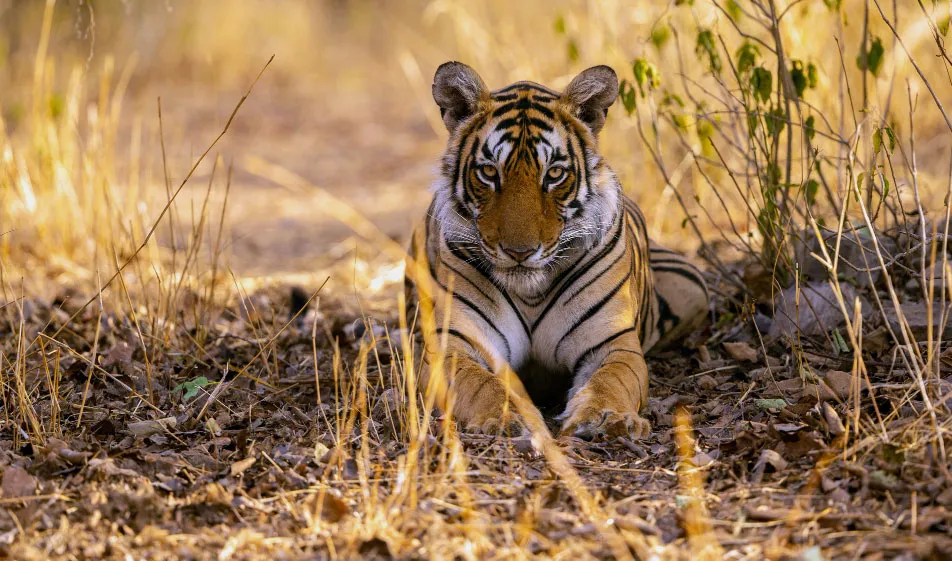
Tiger Quick Facts
Common Name
Tiger
Scientific Name
Panthera tigris
Class
Mammalia (mammals)
Continent (wild)
Asia only, never Africa
Lifespan
10–15 years (wild)
Diet
Carnivore, boar, deer, wild cattle
Size
Up to 1.83 m body length
Weight
100–300 kg, largest big cat
IUCN Status
Endangered (EN), population declining
Distribution
India ~70% of world's wild tigers
Stripes
Unique to each tiger, like fingerprints
Social Life
Solitary hunters, unlike lions
Why Do So Many People Think Tigers Live in Africa?
On safari, people often expect to see "lions, elephants, giraffes and tigers." When we ask guests which predators live in Africa, some will say tigers without hesitation. Even experienced travelers sometimes mix them up with lions or leopards.
Big Cats Look Similar
- Leopards vs jaguars, often confused
- Cheetahs lumped in with "big cats"
- Cougars/pumas mistaken for lioness
- People casually call lions "tigers"
Geography Is Not Obvious
- Tigers: Asia only
- Lions: Africa + small population in India
- Leopards & cheetahs: Africa (+ Asia)
- Jaguars & pumas: Americas
Because Africa is so rich in wildlife, many people assume that tigers must be roaming its savannas too. But they never have. Learn more about African wildlife distribution from National Geographic Animal Guide.
Why Do Not Tigers Live in Africa?
Tigers evolved in Asia, not Africa, and they stayed there.
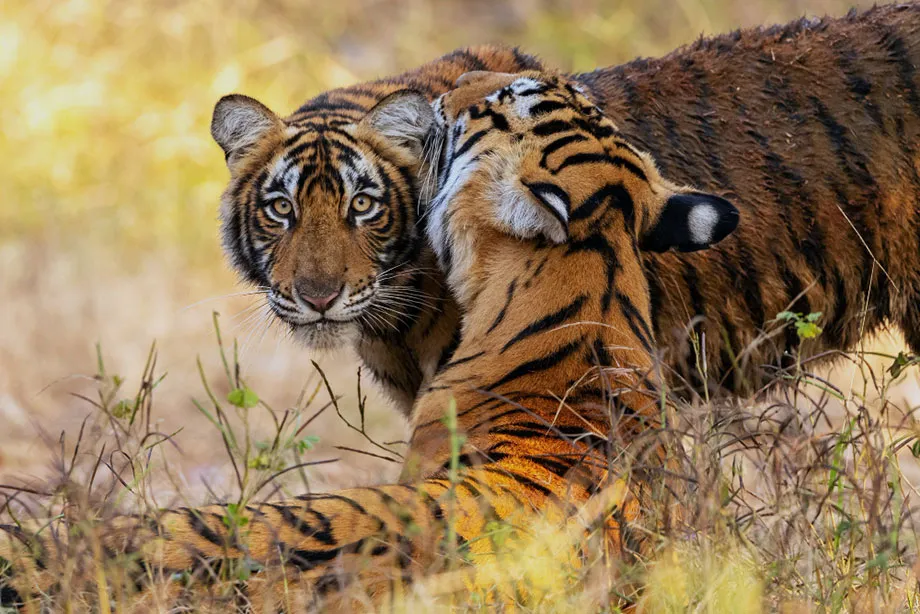
Origins of Tigers
Tigers as a species appeared in Asia around 2 million years ago during the Pleistocene (Ice Age).
Earlier big cat ancestors also seem to have appeared in Asia, not Africa, according to current DNA and fossil research from the Smithsonian Institution.
From these ancestors came tigers, and separately, the ancestors of lions and leopards that later reached Africa.
Asian Specialists From the Start
Tigers are Asian specialists from the very beginning. Their body, coat, and behavior all evolved for Asian environments, not the African savanna.
If lions reached Africa, why not tigers?
This is still an open question in science, but the most likely explanation is a combination of evolution (what tigers are adapted for), ecology (who already occupies the predator roles), and geography (physical barriers between Asia and Africa).
Evolutionary Reasons: Forest Hunters, Not Savanna Runners
Built for Dense Cover, Not Open Plains
Tigers thrive in forests, grasslands with heavy cover, mangroves, and bamboo thickets of central and southeast Asia.
- Striped camouflage, black stripes on orange and white blend perfectly into dappled light and vegetation, not open grass
- Ambush style, they rely on silence, patience, and a powerful short-distance charge
On the African savanna, this design would be a problem: open landscapes make a large, orange cat very visible. Prey can spot a tiger earlier and escape more easily.
Size: An Advantage in Asia, A Drawback in Africa
Tigers are the largest of all big cats, they regularly hunt large prey such as boar, deer, wild cattle, even moose or buffalo in some regions.
In Africa, savanna predators often need speed and endurance over longer distances. A big, heavy tiger would be less efficient than slimmer, faster hunters or cooperative prides of lions.
Not Tree Climbers, Not Group Hunters
Tigers rarely climb trees, especially compared to leopards. In Africa, climbing helps escape heat and protect kills from hyenas.
Tigers are solitary, while lions live and hunt in prides. Team hunting is a major advantage in Africa's open habitats.
Key Takeaway
Evolution prepared tigers for humid forests and dense vegetation, not African plains. Learn more about predator adaptations from WWF Tiger Conservation.
Ecological Reasons: Africa's Predator Slots Are Already Full
From an ecosystem perspective, there is no "empty job" waiting for a tiger in Africa.
Africa's large carnivore niche is already filled by:
If you suddenly released tigers into this system, they would face intense competition for prey and space, aggressive encounters with lions and hyenas, and very low chances of forming a stable population. There is simply no ecological need for another top predator in Africa's wild systems.
How Many Tigers Are Left in the World?
The Sad Reality
~100,000
Wild tigers in the late 1800s
3,000–4,000
Wild tigers remaining today
3
Subspecies extinct in the 20th century
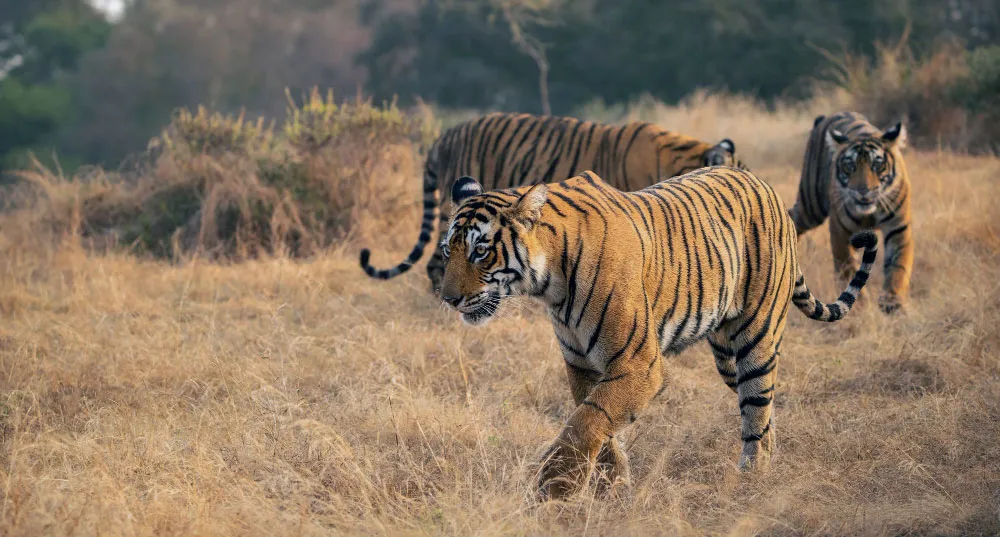
Major Threats
- Habitat loss and fragmentation
- Poaching and illegal trade
- Human–wildlife conflict
- Trophy hunting in the past
Learn more about tiger conservation efforts from Panthera Tiger Program and the IUCN Red List.
Where Do Tigers Live Today?
Wild tigers are now found (in small, often fragmented populations) in around 14 countries:
Even in these countries, tigers now occupy only about 5–6 percent of their historic range.
Can I See Tigers in Africa?
Only in Captivity
You will not see wild, free-ranging tigers on any true African safari, including those organized by Masatu Tours.
However, there are a few places in South Africa and some private zoos elsewhere on the continent that keep tigers in fenced areas: private "tiger reserves" and breeding farms, zoos and interactive wildlife attractions.
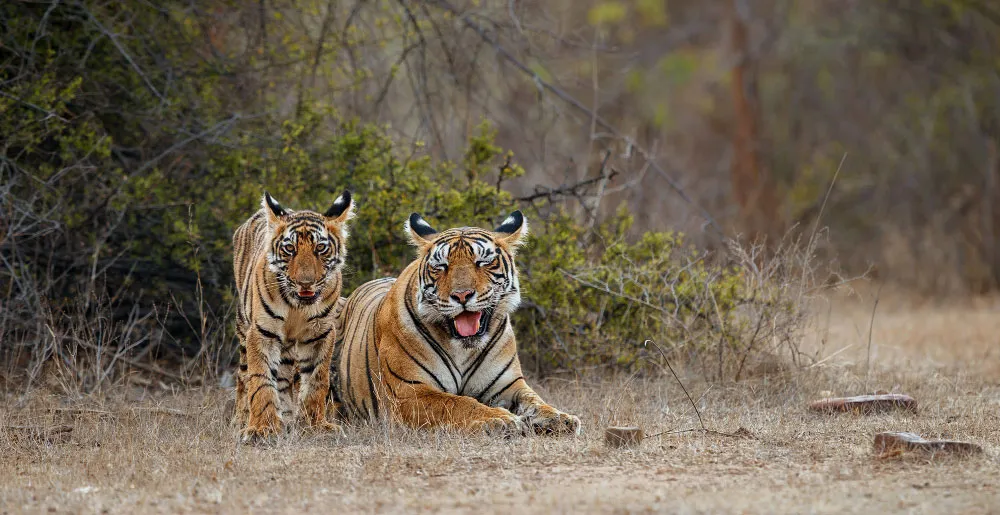
Laohu Valley Reserve
The most publicized conservation-style project is Laohu Valley Reserve in South Africa:
- Created to house critically endangered South China tigers (all zoo-born)
- Tigers live in large enclosures that simulate natural habitat
- Goal is to teach captive-bred tigers to hunt and survive in the wild
- Idea of possible future reintroduction to Asia
Ethical Issues
Some "tiger in Africa" projects and attractions:
- Charge tourists to view or interact with tigers
- Sell tigers to other facilities
- May be linked to illegal trade in tiger parts for traditional medicine markets
There is no scientific evidence that any tiger parts have medicinal or aphrodisiac value.
Example: Tourist Tigers in East Africa
On Zanzibar (Tanzania), there is an interactive zoo that keeps a Bengal tiger in a cage and markets itself as a wildlife rescue center. Despite the marketing, it is not part of any credible tiger conservation program.
What You Will Really See on Safari with Masatu Tours
While you will not see tigers in African national parks, you will have the chance to encounter:
Lions
The only truly social big cat, forming prides
Leopards
Masters of the trees and stealth
Cheetahs
The fastest land animals on Earth
Hyenas & Wild Dogs
Highly effective hunters in their own right
We Always Explain to Our Guests
Africa is lion country, not tiger country. Tigers are Asia's great cats. Lions, leopards, cheetahs, and hyenas are Africa.
You will also encounter an incredible diversity of herbivores and birdlife, from elephants and giraffes to tiny dik-diks and colorful bee-eaters. Explore our Tanzania Safari and Luxury Safari packages to see Africa's authentic wildlife.
20 Fascinating Tiger Facts
Tigers are the largest of all wild cats, males can exceed 300 kg.
No wild tiger has ever lived in Africa; the species evolved in Asia.
Tigers appeared as a species around 2 million years ago during the Pleistocene.
Each tiger's stripe pattern is unique, like a human fingerprint.
Tigers are the only big cats with stripes, leopards and cheetahs have rosettes and spots.
India is home to about 70% of the world's wild tigers.
Only 3,900–4,500 wild tigers remain, down from ~100,000 in the late 1800s.
At least three tiger subspecies went extinct in the 20th century.
Tigers are solitary hunters; lions are the only truly social big cats.
Tigers rarely climb trees, unlike leopards.
Striped camouflage works in dappled Asian forests, not open African savanna.
Tigers thrive in dense forests, mangroves, and bamboo thickets.
A big, heavy tiger would be less efficient on Africa's open plains than lions or cheetahs.
In Africa, tigers exist only behind fences, in private reserves and zoos.
Lions reached Africa; tigers stayed in Asia, geography and ecology sealed the divide.
Tigers regularly hunt boar, deer, wild cattle, and even buffalo.
Laohu Valley Reserve in South Africa houses captive South China tigers.
There is no scientific evidence tiger parts have medicinal value.
Tigers occupy only about 5–6 percent of their historic Asian range today.
Ethical African safaris show you lions, leopards, cheetahs, never caged tigers.
Frequently Asked Questions
Conclusion
The answer to "do tigers live in Africa?" is a firm no. Tigers evolved in Asia, stayed in Asia, and have never called Africa home. The African savanna already has its own apex predators, lions, leopards, cheetahs, and hyenas, each perfectly adapted to the open plains.
We do not offer or promote tiger shows, tiger petting, or tiger walks in Africa. Our focus is on ethical, wild safaris and support for genuine conservation programs. If you dream of seeing wild tigers, we are always happy to share impartial advice about responsible tiger destinations in Asia and help you understand how your tourism choices can support real conservation.
Africa's Big Cats Are Waiting
If your heart is set on Africa's big cats, join Masatu Tours for a safari that celebrates authentic African wildlife, in the right place, the vast savannas, woodlands, and wetlands where these animals truly belong.
Explore Wildlife SafarisRelated Wildlife Guides
Serval Cat, Complete Wildlife Guide
Africa's long-legged wild cat
Big Five Tanzania Guide
Lion, leopard, elephant, rhino & buffalo
Animals on Mount Kilimanjaro
Wildlife on the roof of Africa
Serengeti National Park Guide
Explore the world's most famous ecosystem
Tanzania Safari Packages
Plan your dream wildlife safari
Authentic Tanzania Safari
See Africa's real big cats in the wild
Top 10 Tourist Attractions in Africa
Iconic sights plus 3 hidden gems across the continent
Last updated: August 2, 2026. All facts verified against IUCN data and current wildlife research.
