Lake Manyara: A Jewel of the Great Rift Valley
Nestled at the base of the magnificent Great Rift Valley escarpment in Tanzania lies a jewel of biodiversity: Lake Manyara National Park. This park offers a spectacle so breathtaking it leaves even the most seasoned travelers in awe. For us at Masatu Tours, Lake Manyara represents everything magical about Tanzania's northern safari circuit.

What makes Lake Manyara truly special? Imagine a vast, shimmering alkaline lake covering 230 square kilometers (two-thirds of the park), its shores painted a vibrant pink by enormous colonies of flamingos. This is home to one of East Africa's most dazzling natural displays. Learn more from the Tanzania National Parks Authority.
Ernest Hemingway's Favorite
The legendary author Ernest Hemingway called Lake Manyara "the loveliest I had seen in Africa." When combined with Serengeti, Ngorongoro, and Tarangire, it creates the ultimate Tanzania safari experience.
But the magic doesn't stop with flamingos. Lake Manyara is a paradise for wildlife enthusiasts and bird watchers. With over 400 species of birds - more than some parks twice its size - you'll spot everything from pink-backed pelicans and crowned eagles to the ancient silvery-cheeked hornbill. The park is also home to icons of the African savanna: massive herds of buffalo, graceful Masai giraffes, majestic elephants, and the rare tree-climbing lions that have made this park world-famous. If birds are your main reason for travelling, read our complete birdwatching guide to Lake Manyara, Tarangire and the Maasai Steppe.
Why Lake Manyara Is Unique
- Extraordinary Biodiversity: Despite its compact 330 km² size, Manyara packs incredible variety - from dense groundwater forests to open acacia woodlands, alkaline lake shores to dramatic Rift Valley escarpment
- Strategic Northern Circuit Location: Only 126 km (1.5 hours) from Arusha, less than an hour from Ngorongoro, making it perfect for multi-park safaris
- Year-Round Wildlife Viewing: While dry season (July-November) is optimal, the park's diverse habitats support wildlife year-round, with green season offering lush scenery and fewer crowds
- Unique Wildlife Behaviors: Famous for tree-climbing lions (also found only in Uganda's Queen Elizabeth NP), this rare behavior is one of Africa's most sought-after wildlife sightings
The park's location at the base of the 400-meter high Rift Valley escarpment creates stunning backdrops for photography and contributes to its unique microclimate. Underground springs feed a lush evergreen groundwater forest at the northern entrance, creating a cool, cathedral-like environment that contrasts dramatically with the hot, open savannah plains further south.
Lake Manyara was originally established to protect elephant populations from poaching threats, and today large herds still roam freely through the park. Although smaller in size compared to giants like Serengeti National Park or Tarangire National Park, Lake Manyara offers equally spectacular and more intimate wildlife viewing experiences.
The Pink Paradise: Thousands of Flamingos
Did You Know?
The famous pink hue of the flamingos comes from their diet! They feast on crustaceans rich in carotene. They migrate between lakes, flocking to Manyara from June to September, transforming the landscape into a pink paradise.
The sight of thousands upon thousands of lesser and greater flamingos turning the alkaline waters pink is nothing short of spectacular. During peak season, the lake's edge becomes a living, breathing canvas of pink that stretches as far as the eye can see. The flamingos arrive in massive flocks during the dry season, creating one of East Africa's most photographed natural phenomena.

Best Flamingo Viewing Tips
- Peak Season: June to September for maximum numbers
- Best Time: Early morning or late afternoon for stunning light
- Photography: Bring a telephoto lens for close-up shots
- Location: Northern shore offers best viewing points
The Legendary Tree-Climbing Lions
Lake Manyara is also famous for a unique phenomenon: its legendary tree-climbing lions, which you might spy lounging on the branches of an acacia tree. While lions across Africa occasionally climb trees, the lions of Lake Manyara have made this behavior their trademark, and spotting them draped across sturdy branches is one of the park's most sought-after sights.

Why Do Manyara Lions Climb Trees?
Scientists and guides have several theories about this fascinating behavior:
- Escape Biting Insects: Ground-level tsetse flies are particularly bothersome during certain seasons
- Better Vantage Point: Elevated positions help spot prey and rival prides
- Cooling Breeze: Tree canopies offer shade and cooler temperatures
- Learned Behavior: Cubs learn from their mothers, passing the behavior through generations
"Spotting a pride of lions lounging 20 feet up in an acacia tree is one of those unforgettable safari moments that will stay with you forever. It's surreal, magnificent, and quintessentially Manyara." - Masatu Tours Expert Guide
Wildlife and Birding Paradise
Lake Manyara's diverse ecosystems, from groundwater forests to acacia woodlands and alkaline lake shores, create habitats for an astounding variety of wildlife. The park is particularly renowned among bird enthusiasts, with over 400 recorded species making it a true birding paradise.
Mammals You'll Encounter
- Elephants: Large herds frequent the park
- Buffalo: Huge herds, sometimes numbering hundreds
- Giraffes: Graceful Masai giraffes browsing acacia trees
- Hippos: Pool together in the lake's rivers
- Zebras and Wildebeest: Large migratory herds
- Baboons: Troops in the groundwater forest
Notable Bird Species
- Lesser and Greater Flamingos: The stars of the show
- Pelicans: Both white and pink-backed species
- Crowned Eagles: Majestic forest raptors
- Silvery-cheeked Hornbill: Ancient forest dweller
- 400+ total species: A birder's dream destination

Diverse Landscapes and Ecosystems
What makes Lake Manyara truly exceptional is its extraordinary diversity of habitats packed into a relatively compact area. As you drive through the park, you'll experience a dramatic transformation of landscapes that few other parks can match.
Ecological Wonder
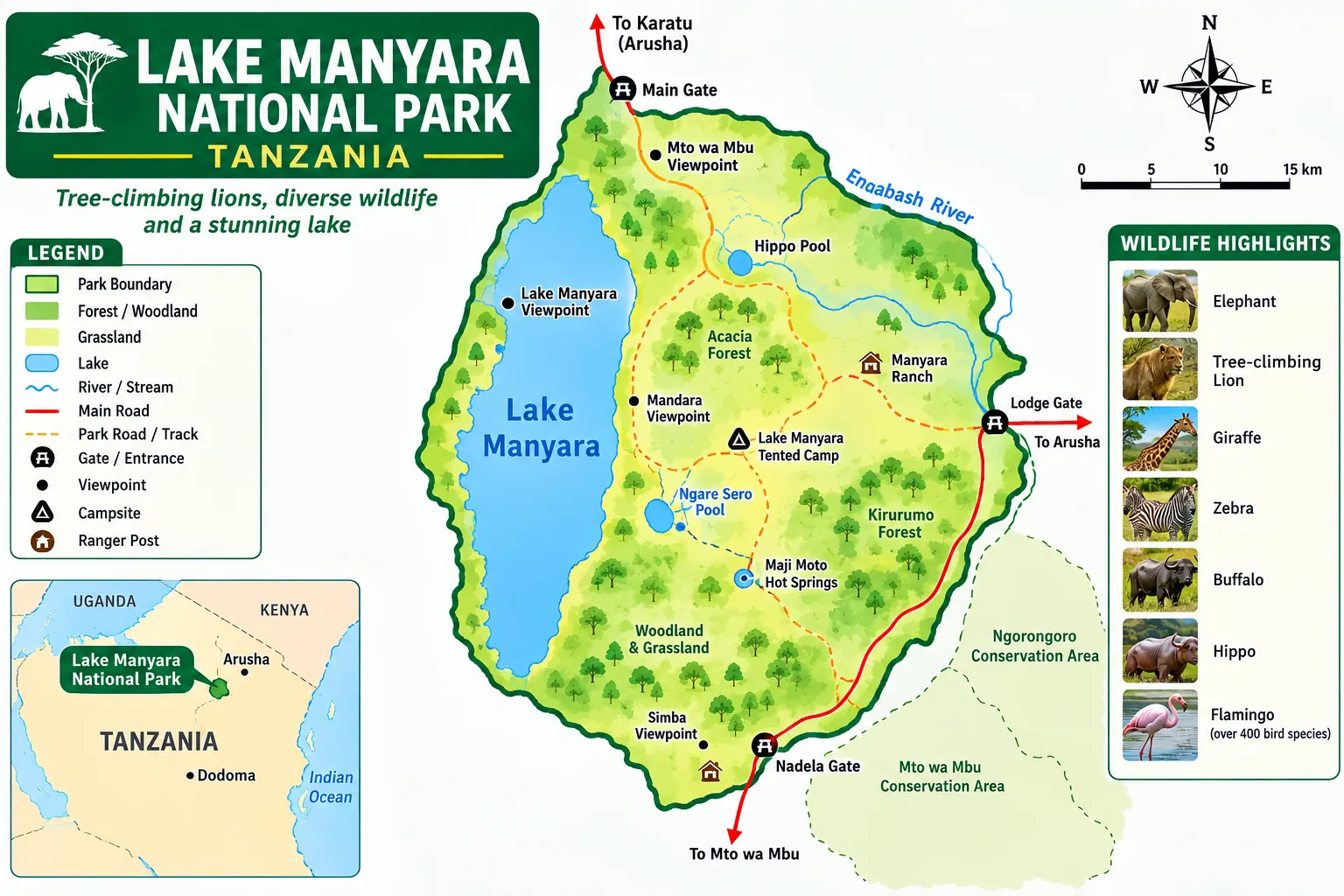
Lake Manyara is characterized by acacia woodlands, savannah grasslands, lush groundwater forests, flood plains, and the dramatic rocky escarpment of the Great Rift Valley. This diversity creates distinct micro-habitats supporting varied wildlife communities.
Evergreen Groundwater Forest
As you enter through the northern gate, you're immediately immersed in a dense, cathedral-like forest fed by underground springs. This lush environment is home to troops of baboons, blue monkeys, and forest bird species including the magnificent silvery-cheeked hornbill.
Acacia Woodlands
The park features extensive stands of umbrella acacias, fever trees, and doum palms. These woodlands provide crucial browsing for giraffes and shelter for elephants, and are where the famous tree-climbing lions are most often spotted.
Savannah Plains and Floodplains
Open grasslands stretch toward the lake, where large herds of buffalo, zebra, and wildebeest graze. During wet seasons, seasonal floodplains attract waterfowl and wading birds in spectacular numbers.
Great Rift Valley Escarpment
The dramatic 400-meter high escarpment forms a spectacular backdrop to the entire park. Its rocky cliffs and slopes are home to klipspringers (rock-jumping antelopes) and provide roosting sites for raptors.

These varied landscapes make Lake Manyara feel like several parks in one, offering constantly changing scenery and wildlife encounters as you explore. Learn more about Tanzania's diverse national parks from the Tanzania National Parks Authority.
Majimoto Hot Springs: Nature's Thermal Wonder
Along the western shores of Lake Manyara lies one of the park's hidden gems: the Majimoto Hot Springs. The name "Majimoto" translates from Swahili to mean "hot water", aptly describing these geothermal features that bubble up from deep beneath the earth's surface.
A Geothermal Marvel
The hot springs are a direct result of the volcanic and seismic activity that created the Great Rift Valley millions of years ago. Water heated deep underground emerges at the surface, creating pools of warm, mineral-rich water that contrast dramatically with the cool lake waters nearby.
Scenic Beauty
Steam rises from the springs, creating ethereal morning photography opportunities
Wildlife Attraction
Animals sometimes gather near the springs, especially during dry seasons
Geological Interest
Demonstrates the Rift Valley's ongoing tectonic activity
Cultural Significance
Local Maasai communities have traditional stories about these "sacred waters"
Important
The hot springs are for viewing only. Swimming or bathing is prohibited to protect both visitors and the delicate thermal ecosystem. The Majimoto Trail is one of the guided walking safari routes that takes you to view these springs. Learn more from the official Lake Manyara National Park page.
When to Visit Lake Manyara
Lake Manyara National Park is considered an all-year-round game park, but the dry season from July to November is optimal for wildlife viewing and flamingo concentrations. Here is the honest breakdown.
Peak Season: July to November
This is the classic, high-drama safari season. The vegetation is sparse, making animals easier to spot, and the flamingos arrive in massive flocks. It's the best time for guaranteed wildlife viewing and photography.
Dry Season
July - November
Best for flamingos, tree-climbing lions, and overall wildlife viewing. Animals concentrate around water sources.
Shoulder Season
Nov, January - February
Transition months with good wildlife viewing and fewer crowds. Migratory birds boost bird numbers.
Green Season
December - June
Lush landscapes, dramatic scenery, migratory birds arrive, lowest prices. Great for photographers.
Safari Activities at Lake Manyara
Lake Manyara offers diverse safari experiences beyond traditional game drives, allowing you to explore this unique ecosystem from multiple perspectives.
Game Drives
Explore the park's diverse habitats from the comfort of a 4x4 safari vehicle. Morning and afternoon drives offer the best wildlife viewing, with expert Masatu Tours guides interpreting animal behavior.
Canopy Walkway
Experience the treetop canopy walkway, a unique elevated trail through the groundwater forest. Get eye-level with monkeys and birds while enjoying stunning views of the lake and Rift Valley escarpment.
Bird Watching
With over 400 species, Lake Manyara is a birder's paradise. Specialized birding safaris focus on spotting rare species, from forest hornbills to waterbirds and raptors. Best months: November to April for migrants.
Cultural Tours
Visit nearby Mto wa Mbu village to experience local culture, markets, and traditional farming. Meet the diverse communities (over 120 tribes) that call this area home.

Perfect for Half-Day Safaris
Lake Manyara's compact size (only 1.5 hours from Arusha) makes it ideal for half-day excursions. Many visitors combine it with Ngorongoro Crater or Tarangire in multi-day northern circuit safaris.
Cultural Experiences: Meet the Maasai and Local Communities
No visit to Lake Manyara is complete without experiencing the rich cultural tapestry of Mto wa Mbu town, located at the park's entrance. This vibrant community is unique in Tanzania, home to members of over 120 different tribes, making it a fascinating microcosm of the country's cultural diversity.

Authentic Maasai Cultural Encounters
The Maasai people, Tanzania's most iconic pastoralist community, have lived in harmony with wildlife around Lake Manyara for centuries. Cultural visits offer deep insights into their fascinating way of life.
- Visit Traditional Manyattas: Enter authentic Maasai homesteads (bomas) built from mud, sticks, grass, and cow dung
- Traditional Dance and Song: Watch Maasai warriors perform the famous "adumu" jumping dance and join in traditional chanting
- Beadwork and Crafts: Learn about intricate Maasai beadwork and its symbolic meanings; purchase authentic handmade jewelry
- Warrior Culture: Understand the role of Maasai warriors (morani) and their traditional vibrant "shukas" in red, blue, and black
- Livestock and Pastoral Life: See how Maasai protect cattle, sheep, and goats in thorn-fenced kraals
- Fire-Making Demonstration: Watch ancient fire-starting techniques using friction between sticks
Mto wa Mbu Village Tours
Mto wa Mbu (meaning "River of Mosquitoes" in Swahili) is a bustling town where agriculture, art, and culture thrive. Guided village tours reveal the authentic rhythms of Tanzanian rural life.
- Local Markets: Explore vibrant markets selling fresh produce, spices, and traditional crafts
- Agricultural Tours: Visit banana plantations and rice paddies fed by streams from the Rift Valley escarpment
- Art and Craft Workshops: Visit local artists creating paintings, wood carvings, and Makonde sculptures
- Local Brewery Experience: Discover how communities brew traditional banana beer ("mbege")
- Authentic Tanzanian Lunch: Try ugali, nyama choma (grilled meat), and local vegetables prepared by village families
Responsible Cultural Tourism
Masatu Tours partners with local communities to ensure cultural visits benefit residents directly. Your visit supports schools, healthcare, and sustainable livelihoods. For deeper cultural immersion, consider visiting Lake Eyasi to meet the Hadza and Datooga communities.
Where to Stay: Accommodation Options
Lake Manyara offers diverse accommodation options to suit every budget and travel style, from luxurious treetop lodges to budget-friendly campsites. Whether you stay inside the park or in nearby towns, you'll wake to the sounds of Africa and spectacular Rift Valley views.
Luxury Lodges
- Lake Manyara Serena Lodge - Perched on the Rift Valley escarpment
- andBeyond Lake Manyara Tree Lodge - Exclusive treehouse suites
- Lake Manyara Kilimamoja Lodge - Boutique luxury
- Manyara Wildlife Safari Camp - Luxury tented camp
Mid-Range Options
- Lake Manyara Tortilis Camp - Comfortable tented camp with pool
- Twiga Lodge - Family-run with personal touch
- Kirurumu Tented Lodge - Scenic Rift Valley views
- Migunga Tented Lodge - Modern facilities
Budget and Camping
- Nsya Lodge - Basic but clean rooms near park entrance
- Jambo Rooms - Simple accommodation in Mto wa Mbu
- Eco Boma Camp - Budget camping with basic facilities
- Public Campsites - TANAPA-run campsites inside the park
Let Masatu Tours Handle Your Accommodation
We work with all accommodation levels and can secure the best rates for our clients. Our Lake Manyara safari packages include carefully selected lodges that match your budget and preferences. Contact us for personalized recommendations.
Getting to Lake Manyara National Park
Lake Manyara's strategic location in northern Tanzania makes it easily accessible and a perfect addition to any northern circuit safari. The park is conveniently positioned between Tarangire and Ngorongoro.
From Arusha
126 km west of Arusha, approximately 1.5 to 2 hours drive. Excellent tarmac highway through Mto wa Mbu town to the northern gate.
From Ngorongoro Crater
Less than 1 hour drive (40-50 minutes). Many safaris visit Manyara and Ngorongoro on the same day or consecutive days.
From Serengeti
Approximately 190 km, 4-5 hours drive through Ngorongoro. Many northern circuit safaris route through Manyara.
From Kilimanjaro Airport
Approximately 170 km, 2.5-3 hours drive. Direct transfers available from Kilimanjaro International Airport (JRO).
Lake Manyara National Park Location


Interactive map showing Lake Manyara National Park's location in Northern Tanzania · Open in Google Maps
Entrance Fees and Pricing
To access Lake Manyara National Park, visitors are required to pay entrance fees that support park conservation, anti-poaching efforts, and community development. Fees vary by nationality and age, with proof of identification required at park gates.
Current Entrance Fees (2025-2026)
Fees are subject to change by TANAPA. Masatu Tours packages include all park fees, so you don't need to worry about payments or currency exchange at gates.
Non-Residents (International Visitors)
East African Residents
Payment Methods and Important Notes
- Accepted Payments: Credit cards (Visa/Mastercard) accepted at gates. USD cash also accepted.
- Proof of Identification: Passports required for non-residents. Residency permits for residents.
- 24-Hour Validity: Park fees are valid for 24 hours from entry time, allowing full-day game drives.
- No Cash Needed with Masatu: All park fees are pre-paid and included in your safari package.
For the most current fee information, visit the official Tanzania National Parks Authority website or contact Masatu Tours for complete pricing.
Conservation and Sustainable Tourism
Lake Manyara National Park is managed by the Tanzania National Parks Authority (TANAPA), which works tirelessly to protect this unique ecosystem and its inhabitants. The park faces conservation challenges including habitat fragmentation and human-wildlife conflict in surrounding areas.
Conservation Initiatives
- Groundwater Forest Protection: This rare ecosystem supports unique biodiversity and requires special conservation efforts
- African Wildlife Foundation (AWF): Supports community conservation and wildlife corridor protection
- Community Partnerships: Revenue sharing with local communities promotes conservation support
At Masatu Tours, we're committed to responsible tourism practices. We work exclusively with lodges and camps that follow sustainable practices, employ local staff, and contribute to community development projects. Your safari helps fund conservation efforts and provides economic incentives for wildlife protection.
Planning Your Lake Manyara Adventure
Ready for an unforgettable Tanzanian adventure? Let us at Masatu Tours plan your perfect journey. We're based right here in Tanzania and are always here to help.
The Masatu Tours Difference
Our expert guides are passionate about Lake Manyara's unique ecosystem. We'll help you spot tree-climbing lions, identify hundreds of bird species, and understand the fascinating ecology of the Great Rift Valley. Book with a locally-owned, Tanzania-based company that truly cares.
Ready to See the Pink Paradise?
Contact Masatu Tours today to create your perfect Lake Manyara safari. Whether it's part of our 3-day safari, 5-day package, 7-day Northern Circuit itinerary, we'll craft an unforgettable experience just for you.
Frequently Asked Questions
Explore More Tanzania Adventures
Lake Manyara Safari Packages
Compare 3-day, 5-day, 7-day, and luxury packages
Preparing Your First Safari in Tanzania
Routes, packing, costs and rules for first-timers
Serengeti National Park Guide
Plan your Serengeti safari with expert local guides
Ngorongoro Conservation Area
Explore the world's largest intact volcanic caldera
Tarangire National Park Guide
Elephants, baobabs, and ancient wilderness
5-Day Northern Circuit Safari
Manyara, Serengeti, Ngorongoro & More
Plan Your Trip with Masatu Tours
Talk to a local expert about your itinerary
Last updated: August 17, 2026. Park fees and safari prices may change, always verify current rates before booking.