Discover the Iconic Serengeti National Park
There are places in Africa that change you. The Serengeti is one of them. Spread across 14,763 square kilometers of untamed savanna in northern Tanzania, this is not just a national park. It is a living, breathing ecosystem where millions of animals have roamed freely for millennia, where predator and prey play out the oldest drama on Earth, and where the horizon stretches so far it makes you feel both tiny and infinite at the same time.
Renowned as one of Africa's premier safari destinations, the Serengeti offers an unmatched wildlife viewing experience. The park is home to the famous Big Five, elephants, lions, buffaloes, rhinoceroses, and leopards, as well as countless other magnificent creatures including giraffes, hippos, crocodiles, cheetahs, and hyenas.
UNESCO World Heritage Site
Together with the Ngorongoro Conservation Area and Mount Kilimanjaro, the Serengeti was recognized as part of the UNESCO World Heritage List in 1979, celebrating its outstanding universal value and exceptional natural beauty.
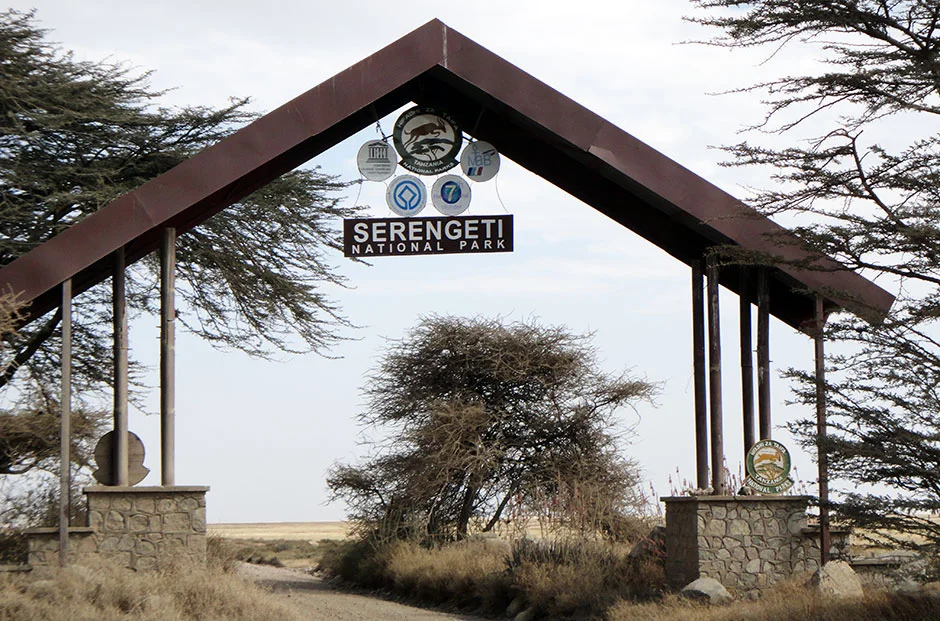
It is here that the legendary Great Migration of wildebeests and zebras takes place, the largest movement of land mammals on Earth. With over 70 species of large mammals and 500 bird species, the Serengeti is truly a must-visit wildlife area for any nature enthusiast or safari adventurer.
Why the Serengeti is Extraordinary
- Highest concentration of predators in Africa: lions, leopards, and cheetahs
- 1.5 million wildebeest participate in the Great Migration annually
- Year-round wildlife viewing, exceptional safari opportunities every month
- Endless plains stretching 14,763 km² of pristine African savanna
- One of the few places to see the rare Eastern black rhinoceros
The Masatu Tours team has visited nearly all national parks in Southeast Africa. We can confidently say that the safari experience in the Serengeti is truly unmatched due to its vast number of animals and breathtaking landscapes.
Where is the Serengeti Located?
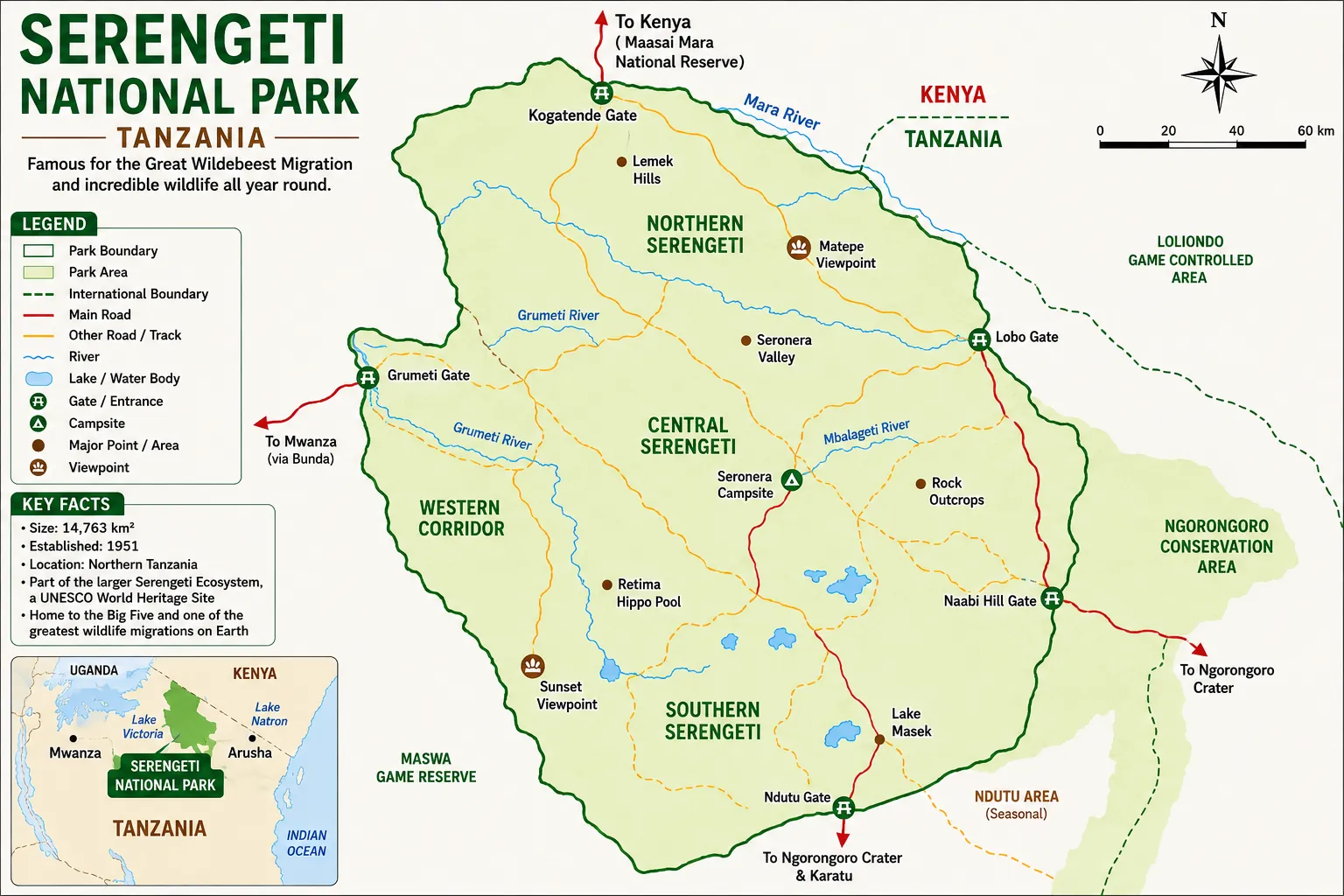
The Serengeti National Park sits in northern Tanzania, stretching over 1,500,000 hectares of wild savanna. It lies to the east of Lake Victoria, Africa's largest lake, near the border with Kenya. To the north, it borders Kenya's Maasai Mara National Reserve, creating a continuous ecosystem. To the east lies the Ngorongoro Crater and Conservation Area.
Is Serengeti in Kenya or Tanzania?
The Serengeti National Park is located entirely in northern Tanzania. The larger ecosystem extends into Kenya's Maasai Mara National Reserve, but the park itself is 100% Tanzanian.
Northern Border
Maasai Mara National Reserve (Kenya), where migration herds cross the Mara River
Eastern Border
Ngorongoro Conservation Area, home to the world's largest intact volcanic caldera
Western Border
Lake Victoria region, Africa's largest lake, bordered by Tanzania, Kenya, and Uganda
Greater Ecosystem
30,000 km² total area when including surrounding conservation zones and wildlife corridors


Interactive map showing Serengeti National Park's location in Northern Tanzania · Open in Google Maps
Best Time to Visit the Serengeti
The Serengeti offers exceptional wildlife viewing year-round, making it a destination that rewards visitors in every season. However, different months offer unique experiences depending on what you want to see and do. Here is the honest breakdown.
Peak Season: June to October
The dry season offers the best overall wildlife viewing, with animals congregating around water sources. This is also when the dramatic Mara River crossings occur (July-September).
Dry Season
June - October
Best for river crossings and predator viewing. Animals gather at water sources.
Shoulder Season
Jan-Feb, Nov
Calving season, fewer crowds, great value. Over 400,000 calves born.
Green Season
March - May
Lush landscapes, newborn animals, lowest prices. Great for photographers.
January - February: Calving season in the southern Serengeti. Over 400,000 wildebeest calves are born in a concentrated 2-3 week period, attracting predators from across the ecosystem. The short rainy season ends, and the weather becomes clear and hot.
The Great Wildebeest Migration
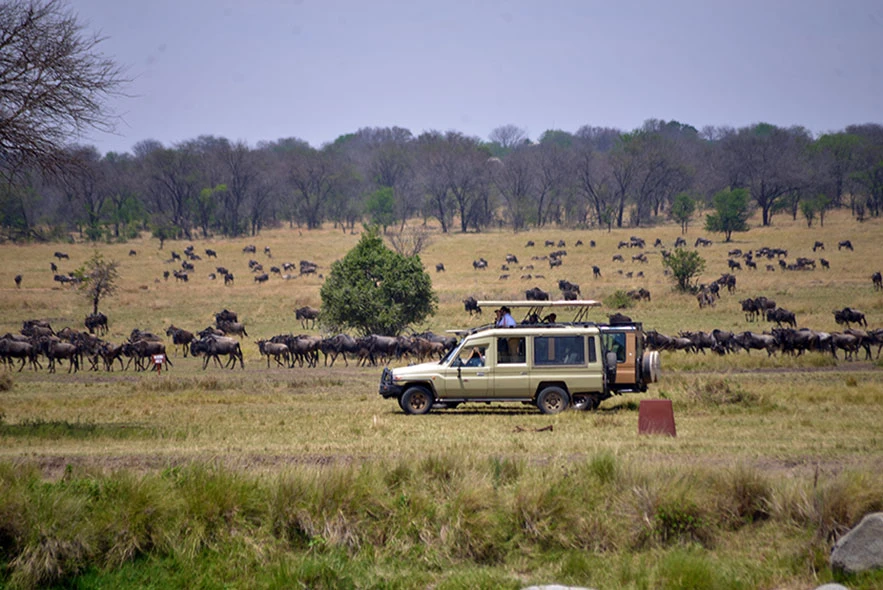
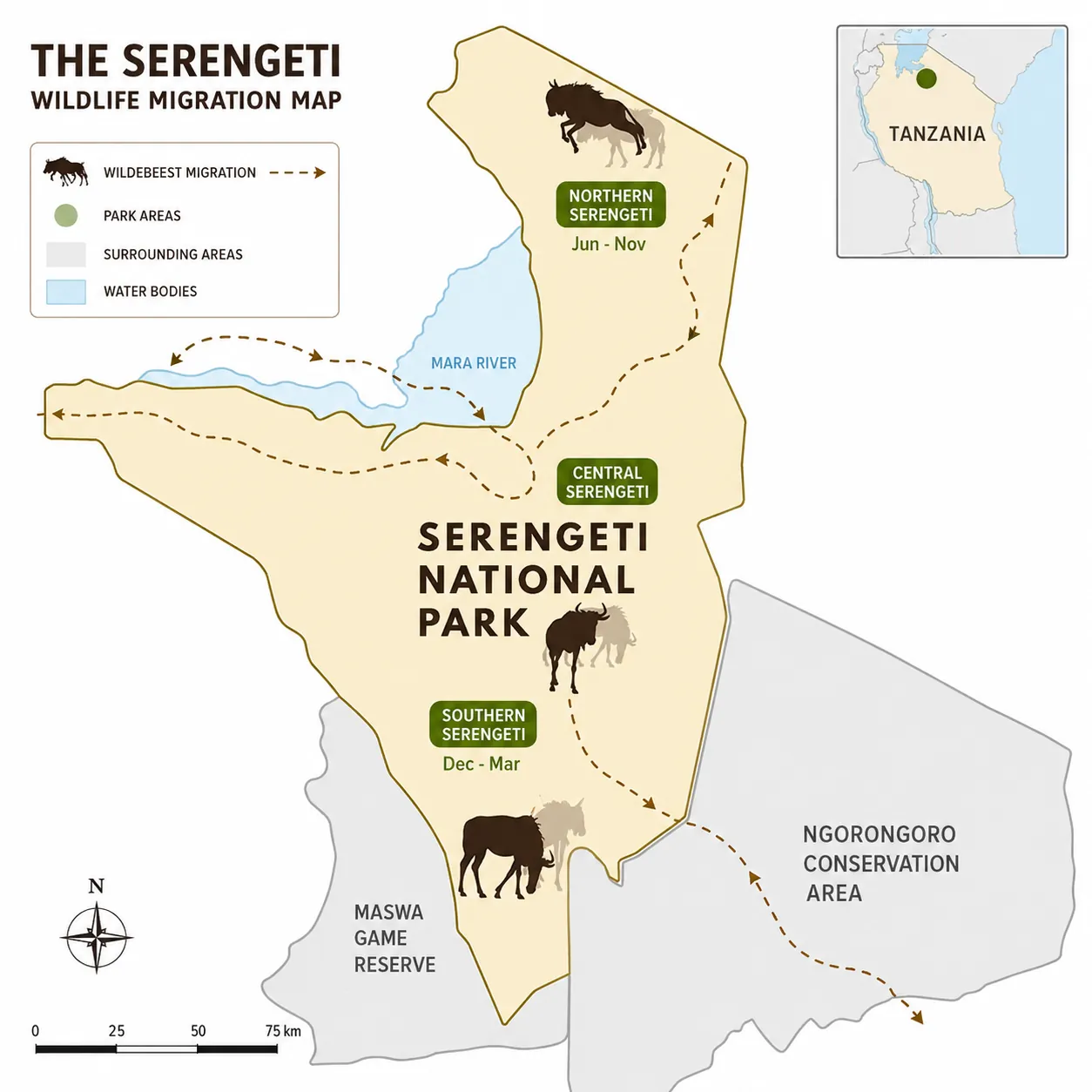
The Great Migration is a yearly event where 1.5 million wildebeest, along with hundreds of thousands of zebras, gazelles, and other ungulates, gather into one enormous herd and traverse the national park in pursuit of greener pastures. This is the largest gathering of large mammals on the planet, and it has been happening for millions of years.
January - March: Calving Season
Southern Serengeti plains, 400,000+ calves born in 2-3 weeks
April - May: Western Movement
Migration moves toward Western Corridor and Grumeti region
June - July: Grumeti Crossing
Dramatic river crossings with Nile crocodiles up to 6 meters long
August - October: Mara River Crossing
Most dramatic stage, thousands of animals cross daily into Kenya
November - December: Return South
Herds journey back to southern plains for calving season
Starting from the south and moving clockwise to the north, the migration peaks with the dramatic crossings of the Grumeti and Mara rivers, where wildebeest must brave crocodile-infested waters and steep banks. These crossings are among the most spectacular wildlife events on Earth.
Experience the Migration
Learn more about the Great Migration and discover the best times and places to witness this natural wonder.
Main Attractions of the Serengeti
The Serengeti is one of the largest safari parks in Africa. To visit the main locations, travelers typically need 3-4 days minimum. Here are the key places you need to visit to fully experience the Serengeti.
Central Serengeti and the Seronera River Valley
This is the most popular place in the Serengeti. Here, you can see practically all the animals year-round, making it the heart of safari activity. The Seronera River Valley is where most safari lodges are located.
Highlights: Leopards in acacia trees, resident lion prides, year-round game viewing, kopjes (rock outcrops) with stunning views
Western Corridor and Grumeti
The western part of the park is characterized by open savanna landscapes. Here you can see all the iconic African animals. The Grumeti and Mbalageti rivers are home to massive populations of hippos and Nile crocodiles.
Highlights: Grumeti River crossings (June-July), hippo pools, crocodile sightings, fewer crowds than central Serengeti
Northern Serengeti: Kogatende, Lobo, and Lamai
The final stage of the Great Wildebeest Migration happens in the northern part of the Serengeti when large herds cross the wide Mara River. This area is very picturesque and a must-visit during a safari, especially from August to October.
Highlights: Dramatic Mara River crossings, remote wilderness, excellent predator viewing, stunning landscapes near Kenya border
Activities in the Serengeti
A classic safari in the park can be enhanced with unique experiences in the savanna. Here are the top activities that travelers can enjoy in the Serengeti.
Hot Air Balloon Safari
Drone use is prohibited in the Serengeti, making hot air balloon flights the only way to view the savanna from a bird's eye perspective.
Bush Breakfast & Dinner
Most lodges can arrange breakfast or dinner right under the open sky in the Serengeti, allowing you to enjoy fine dining in one of the most scenic spots on Earth.
Night Safaris
While prohibited within the park itself, night safaris are allowed in neighboring private reserves like Ikoma, offering a chance to see nocturnal animals.
Wildlife in the Serengeti
The Serengeti is home to more than seventy species of large mammals, making it the best place on the continent to see all the famous African animals. The populations of many species here are significantly higher than in other well-known national parks.
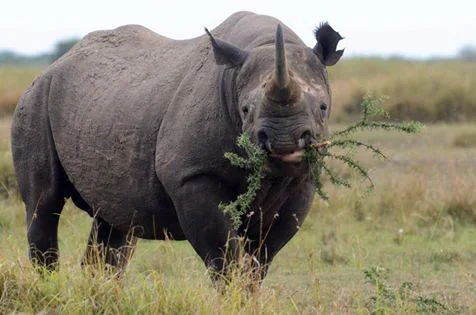
Eastern Black Rhinoceros
The Serengeti is one of the few places where you can spot Africa's rarest animal. Special permits and guided visits to the Moru Kopjes rhino sanctuary are available.
Elephant
~7,000 individuals (Common)
Lion
~3,000 individuals (Common)
Black Rhino
Protected colony (Rare)
Leopard
High density (Rare sighting)
Buffalo
~60,000 individuals (Common)
Cheetah
Highest density in Africa
Important: The Serengeti is a vast park. Animals are constantly on the move, and sometimes you can travel 30 minutes on a game drive without major sightings. Your experienced safari guide will coordinate with colleagues via radio to locate where animals have recently been sighted.
How Much Does a Serengeti Safari Cost?
The cost of a vacation in the Serengeti depends on many factors, including the season, choice of accommodation, length of stay, and activities included. The national park charges entry fees, which are typically included in the cost of safari packages.
Mid-Range Safari
$400-600Per person per day with reliable tour operator
- Comfortable lodges or tented camps
- All meals and game drives included
- Professional safari guide
- Park fees and taxes included
Budget Safari
$250-400Per person per day for basic accommodations
- Public campsites or basic lodges
- Shared safari vehicles
- Simple meals provided
Luxury Safari
$800+Per person per day, no upper limit
- Exclusive luxury lodges (Four Seasons, andBeyond)
- Private game drives and guides
- Gourmet dining and premium amenities
- Some lodges charge $1,500+ per night
Park Entry Fees
Serengeti National Park charges approximately $70 per adult per day (non-residents). These fees support conservation efforts and are included in most safari packages.
Wildlife Conservation in the Serengeti
There are a number of wildlife conservation projects and initiatives actively working to protect the Serengeti's unique ecosystem. Organizations like the African Wildlife Foundation and the Serengeti Official are at the forefront of conservation efforts.
Moru Kopjes Rhino Conservation
The Serengeti is one of the few places where black rhinos, Africa's rarest large mammal, can be seen. Due to intense poaching at the beginning of the century, the rhino population decreased dramatically.
1960s: About 70,000 individualsEarly 1990s: Only 2,400 rhinos left in the wildToday: About 5,000 rhinos in Africa (partial recovery)
Serengeti De-Snaring Program
Annually, poachers set thousands of traps and snares in the Serengeti, threatening wildlife populations. To combat this, a dedicated de-snaring program was founded.
Patrol & Remove Traps
Staff and rangers patrol the park regularly to collect traps and snares
Rescue Ensnared Animals
Veterinary teams assist animals caught in snares and provide medical treatment
Apprehend Poachers
Rangers detain poachers when spotted and hand them over to police
Frequently Asked Questions
Explore More Tanzania Adventures
Where to See Tanzania's Biggest Animals
Elephants, giraffes & the safari giants, where to find them
Preparing Your First Safari in Tanzania
What to know before your first Serengeti safari
Serengeti Safari Packages
Compare 3-day, 5-day, 7-day, and luxury packages
Great Wildebeest Migration
Learn about the greatest wildlife show on Earth
Climb Mount Kilimanjaro
Summit Africa's highest peak with expert guides
Serengeti Safari Guide
Complete guide to planning your Serengeti trip
5-Day Serengeti Safari
Serengeti, Ngorongoro & More
Plan Your Trip with Masatu Tours
Talk to a local expert about your itinerary
Serengeti vs Tarangire
Which park suits your safari goals
Tanzania Safari Seasons
Dry vs green season compared — calving, crossings and prices
Last updated: August 17, 2026. Park fees and safari prices may change, always verify current rates before booking.
