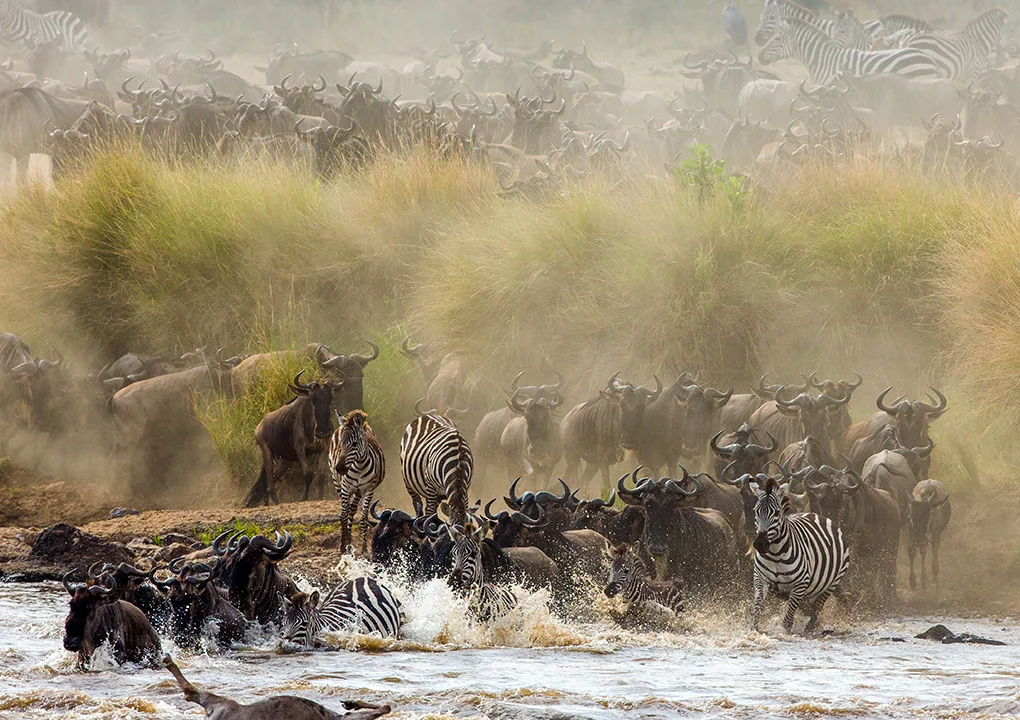
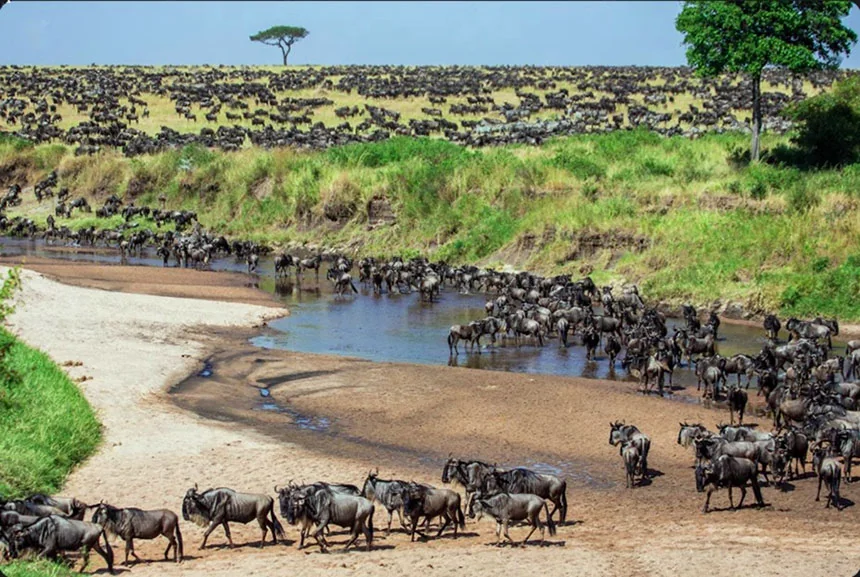
The Great Migration is often called the "World Cup of Wildlife" and the "Greatest Show on Earth." It involves approximately 1.5 million wildebeest, 200,000 zebras, 350,000 Thomson's gazelles, and thousands of other animals making an 1,800-mile circular journey each year across the Serengeti-Mara ecosystem. The herds are on the move year-round, with the most dramatic river crossings occurring July–September and the calving season peaking January–February. September is one of the strongest months to catch them — see our guide to a Tanzania safari in September for where the herds are, week by week.
Imagine nearly two million animals sweeping across the vast plains of East Africa, a breathtaking spectacle unlike any other on Earth. This ancient migration follows a centuries-old pattern dictated by the African rains and the growth of new grass. The herds travel from Tanzania's Serengeti National Park to Kenya's Masai Mara Reserve and back again in a continuous clockwise circle, covering approximately 800 kilometres (500 miles).
Safari Guide's Note
The migration is not one single herd, it splits into groups stretching over tens of miles. Exact timing shifts by a few weeks each year depending on rainfall. That is why we always recommend a minimum of three days in any crossing region, and why working with guides who track the herds daily makes all the difference.
Great Migration Quick Facts
Animals on the Move
~2 million (1.5M wildebeest, 200K zebra, 350K gazelle)
Ecosystem
Serengeti-Mara, Tanzania & Kenya
Route Length
~800 km (500 miles) circular journey
Timing
Year-round, continuous clockwise cycle
Calving Season
Late January–February, Ndutu plains
Mara Crossings
July–September (peak August)
Grumeti Crossings
June–July, Western Corridor
Calves Born
Up to 8,000 per day at peak
UNESCO Status
Serengeti, a World Heritage Site
Book Ahead
9–12 months for peak season
What Is the Great Wildebeest Migration?
The Great Wildebeest Migration takes place in East Africa, specifically in the Serengeti-Mara ecosystem, the oldest and last of its kind remaining on the planet. Stretching from northern Tanzania to southern Kenya, it encompasses protected wildlife zones like Serengeti National Park, the Ngorongoro Conservation Area, and on the Kenyan side, the Masai Mara Reserve.
This ecosystem covers about 40,000 square kilometers (approximately 15,500 square miles) and is home to several million animals, including wildebeest, Thomson's gazelles, zebras, buffaloes, giraffes, elephants, hippos, lions, leopards, cheetahs, hyenas, and many others. It is a living model of the complex interactions between wildlife and their environment: drought forces mammals to leave their habitats, storm fronts guide them toward fresh grass and water, and the lush plains provide ideal conditions for raising newborn calves.
Tanzania (70% of the year)
- Serengeti National Park (14,763 km²)
- Ngorongoro Conservation Area (8,292 km²)
- Grumeti & Ikorongo-Grumeti Game Reserves
Kenya (30% of the year)
- Masai Mara National Reserve (1,510 km²)
- Mara Triangle Conservancy
- Surrounding community conservancies
UNESCO World Heritage Site
In 1981, UNESCO designated Serengeti National Park as a World Heritage Site, recognizing its outstanding universal value as the site of the world's largest and least altered animal migration system.
Serengeti Migration Month-by-Month
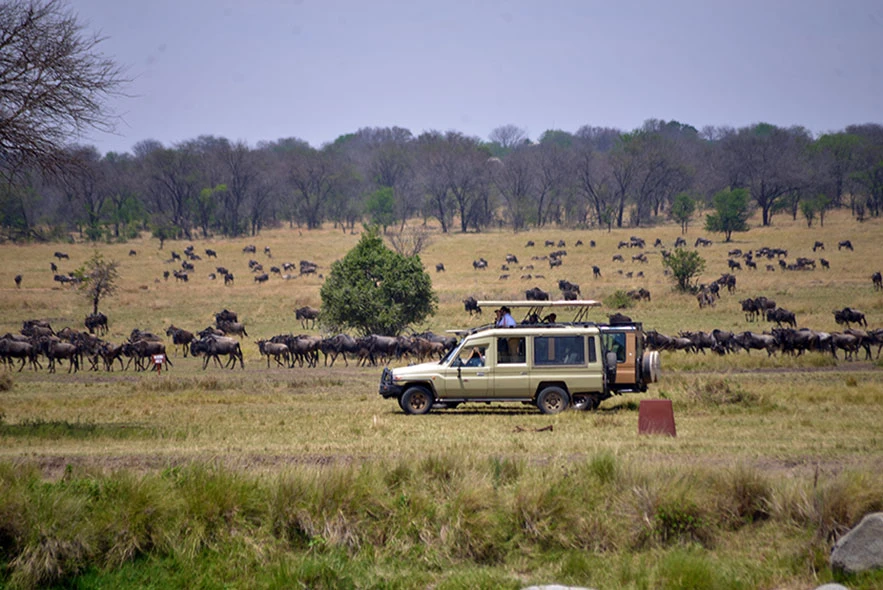
The Serengeti Wildebeest Migration is simultaneously a pursuit of life and a flight from death, a perpetual cycle in every sense. The herds move clockwise along the borders of the Serengeti-Mara, journeying for 12 months each year. UNESCO calls it one of the "most impressive natural events" on the planet, visible even from space.
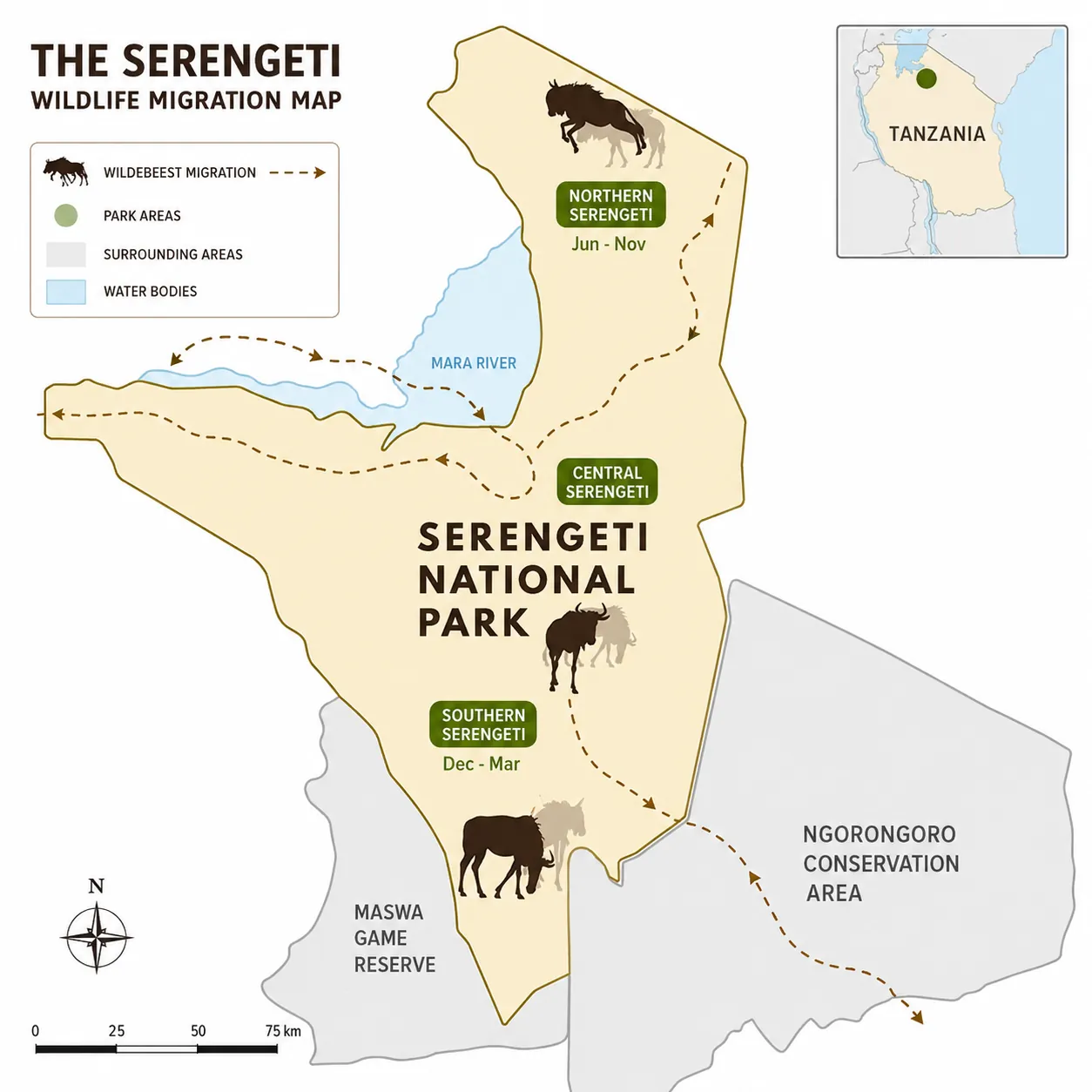
January–March · Calving Season
Southern Serengeti, Ndutu plains
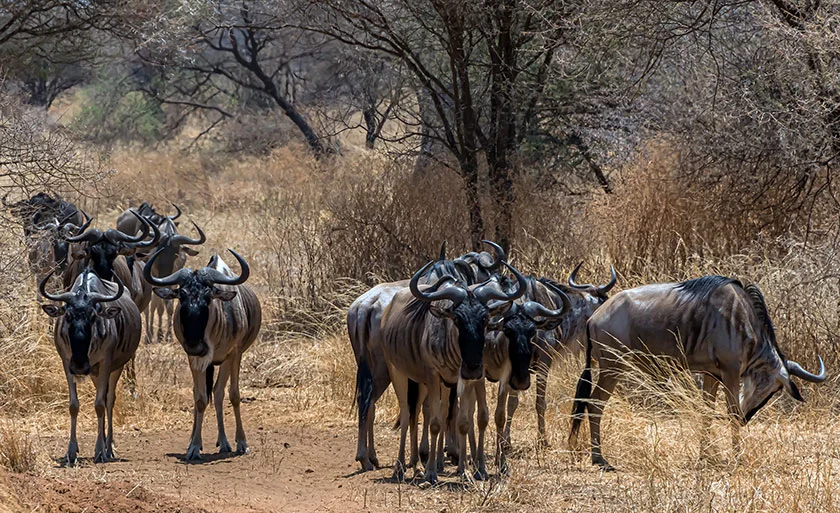
Herds arrive in the southern Serengeti plains, particularly in the Ndutu region within the Ngorongoro Conservation Area. The nutrient-rich volcanic plains are lush with fresh, protein-packed grass, perfect for nursing mothers.
- Approximately 8,000 calves are born daily at peak calving (late January to mid-February)
- Over 400,000 calves are born within a 2–3 week period
- Newborn calves can stand and run within minutes of birth
- Synchronized births overwhelm predators, boosting calf survival
The abundance of newborns attracts large numbers of predators. A Big Five safari during calving season is unforgettable.
April–May · Moving Northwest
Central Serengeti, Seronera Valley
As the southern plains dry up after the long rains, the herds begin their journey northwest through the Moru Kopjes and Seronera Valley.
- The rut (mating season) begins in May
- Daily travel can reach 40 kilometres
- Excellent predator-prey interactions across the central plains
Their destination is the Western Corridor, where they will face their first major obstacle, the crocodile-infested Grumeti River.
June–July · Grumeti River Crossing
Western Corridor, Tanzania
The first dramatic river crossings occur at the Grumeti River. Herds gather along the southern banks, sometimes waiting days before a few brave individuals take the plunge, triggering a mass crossing.
- Giant Nile crocodiles (up to 6 metres) lie in wait
- Drowning is a bigger threat than crocodiles, panic causes stampedes
- Multiple crossing points along the river's 80 km length
- Far fewer vehicles here than at the Mara, a more intimate experience
August–October · Mara River Crossing (The Climax)
Northern Serengeti / Masai Mara border
The most dramatic and photographed stage of the migration, crossing the mighty Mara River into Kenya's Masai Mara. This is the migration's climax, with thousands of animals risking everything to reach the lush grasslands on the northern banks.
- 50+ crossing points along the Mara River
- Up to 3,000 animals can cross in a single event
- Crossings can occur multiple times daily during peak season
- Late July through September offers the highest crossing probability
Consider a Serengeti balloon safari for a breathtaking aerial perspective of herds gathering at crossing points.
November–December · Return Journey
Eastern Serengeti, Loliondo
Following the short rains (typically October–November), the herds begin their journey south, returning to Tanzania along the Serengeti's eastern boundary through the Loliondo area.
- Southbound Mara crossings are equally dramatic
- By December, pregnant females arrive in the southern plains
- Fewer tourists, a more intimate safari experience
Timing shifts every year
Many sources claim the mammals of the Great Migration move as one massive herd numbering over two million animals. In reality, they split into groups at different stages of the migration, stretching over tens of miles. Exact dates vary by a few weeks each year depending on rainfall, so always confirm with your operator.
The Great River Crossings
Two major rivers define the journey: the Grumeti in Tanzania's Western Corridor (June–July) and the Mara in the northern Serengeti (July–September). Each presents unique challenges and unforgettable wildlife spectacles.
| Feature | Grumeti River | Mara River |
|---|---|---|
| Timing | June–July | July–September (peak August) |
| Location | Western Corridor, Tanzania | Northern Serengeti / Masai Mara border |
| Character | Narrow but deep, quieter crossings | Wide, steep muddy banks, strong currents |
| Crossing points | Several along 80 km of river | 50+ documented crossing points |
| Biggest danger | Giant crocodiles and drowning | Stampede, crushing, giant crocodiles |
| Crowds | Fewer vehicles, intimate | Busy in peak season, world-famous |
Planning Your Crossing Visit
River crossings are natural events, they cannot be scheduled. Herds may wait days before crossing. For the best chances, plan at least 3 full days in the crossing region. Book 9–12 months ahead for peak July–September. The Kogatende area (northern Serengeti) offers the highest concentration of Mara crossing points.
Best Places to See the Great Migration
The "best" time and place depend entirely on the experience you are seeking. The most iconic moments are the dramatic river crossings from late July through early September, or the calving season from late January through Februaryin Ndutu, Tanzania.
Peak Season (July–September)
- Dramatic Mara River crossings
- Excellent predator viewing
- Highest prices (30–50% premium)
- Crowded (most of the annual visitors)
Shoulder Season (Jan–Feb, May–June, Nov)
- Calving season (Jan–Feb) is spectacular
- Fewer vehicles, intimate experiences
- Better value (20–40% lower prices)
- Some rain in April–May (green season)
Best for Crossings
July–October
Mara River crossings, timing unpredictable
Best for Calving
Late Jan–February
8,000 births daily, open plains, predators
Best Value
May–June, November
Fewer crowds, lower prices, superb viewing
Planning Your Migration Safari
Tourism is the economic engine that makes conservation financially viable. The Serengeti ecosystem generates over $450 million annually in tourism revenue, supporting nearly 100,000 jobs in Tanzania and Kenya. This economic impact provides powerful incentives to protect the migration rather than convert land to agriculture.
Park Fees Fund Protection
$60–70 per person daily conservation fees fund ranger salaries, anti-poaching patrols, and veterinary services. Serengeti employs over 500 rangers covering 14,763 km².
Community Benefits
Wildlife Management Areas channel 60–80% of tourism revenue to local villages. Communities that benefit from wildlife tourism are 5x more likely to support conservation.
Employment Opportunities
Safari lodges and operators employ guides, chefs, drivers, and managers, with wages 3–5x higher than agricultural work, reducing incentives for poaching.
Education & Research
Tourism revenue funds 30+ research projects annually, including population monitoring and climate studies that inform management decisions.
Your Safari Makes a Difference
A typical 7-day migration safari generates approximately $500–700 in direct conservation fees, supports 15–20 local jobs, and contributes to community development. Going on a Great Wildebeest Migration safari in Tanzania with Masatu Tours directly supports conservation and local communities.
Pro Tips for the Best Experience
The migration is a natural phenomenon, not a scheduled event. Exact timing varies by 2–3 weeks annually based on rainfall. Work with experienced safari operators who monitor herd movements in real-time.
Book 9–12 months in advance: for peak season (July–September)
Stay mobile: consider a 7–10 day safari to follow the herds
Northern Serengeti (July–Oct): best for Mara crossings (Kogatende, Lamai)
Southern Serengeti (Jan–March): best for calving (Ndutu, Kusini)
Grumeti region (May–June): far fewer vehicles, excellent predator viewing
Threats to the Migration
- Land conversion has removed over 1,200 km² of migration corridor since 2000
- An estimated 40,000–80,000 wildebeest are poached each year for bushmeat
- The Mara River's dry-season flow is down 30% since 1970
Conservation Success Stories
- Wildebeest recovered from 250,000 to 1.5 million after rinderpest was eradicated
- Wildlife Management Areas now cover 4,500 km², sharing revenue with 200,000+ people
- Tanzania-Kenya joint management coordinates protection across the ecosystem
How to Be a Responsible Safari Tourist
Choose eco-certified operators, stay 25+ metres from animals, never leave vehicles except in designated areas, avoid off-road driving, support community-owned camps, and never buy wildlife products. Every safari visitor becomes an ambassador for the migration.
Explore Safari PackagesFrequently Asked Questions
Experience the Greatest Show on Earth
The Great Wildebeest Migration is truly circular and never-ending, there is no distinct beginning or end. As some herds arrive in the south, others are still completing their journey from the north, creating a perpetual motion of life across the Serengeti-Mara ecosystem.
Tanzania offers some of the finest migration viewing on Earth, from the calving plains of Ndutu to the thundering crossings of the Mara River. The decisions we make today, where we spend our tourism dollars and how we interact with wildlife, will determine whether future generations can witness the thunder of a million hooves crossing the Serengeti.
Plan Your Migration Safari
Ready to follow the herds? Our expert guides track the migration daily and build itineraries timed to the herds' exact location. Talk to a safari expert today and start planning your once-in-a-lifetime adventure.
Related Migration Guides
Serengeti Migration Month by Month
Where the herds are, every month
Complete Serengeti Safari Guide
Plan the perfect Serengeti adventure
Serengeti National Park Guide
Explore the world's most famous ecosystem
Ngorongoro Crater Guide
The crater's wildlife, full guide
Big Five in Tanzania
Lion, leopard, elephant, rhino & buffalo
Serengeti Balloon Safari
See the migration from the air
7-Day Great Migration Safari
Our best-selling migration itinerary
Tanzania Safari Packages
Compare 2 to 7-day itineraries
How Many Days in Tanzania
3, 5, 7, 10 or 14 days — what each length includes and costs
Last updated: August 9, 2026. All facts verified against IUCN data and current wildlife research.
