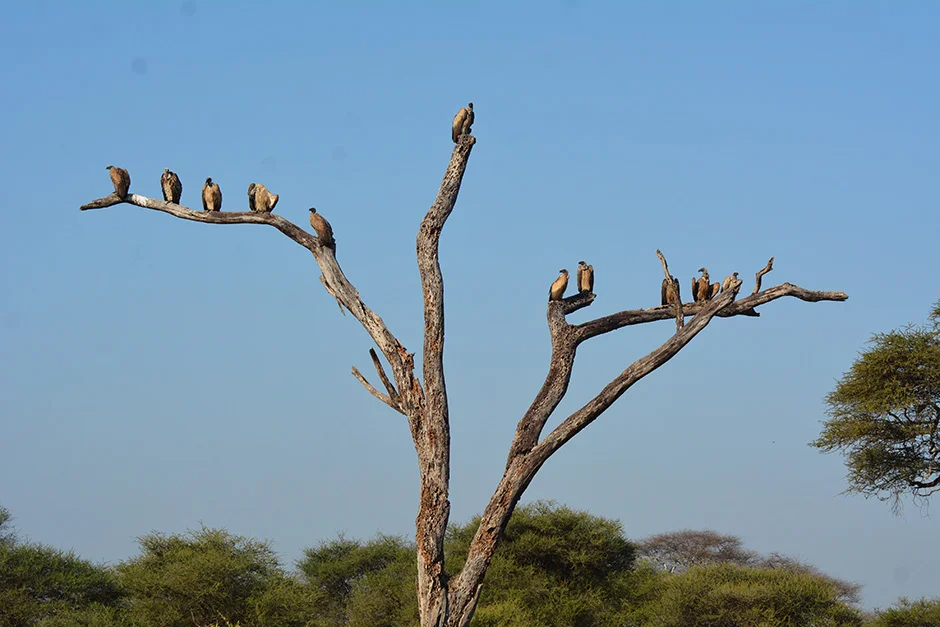
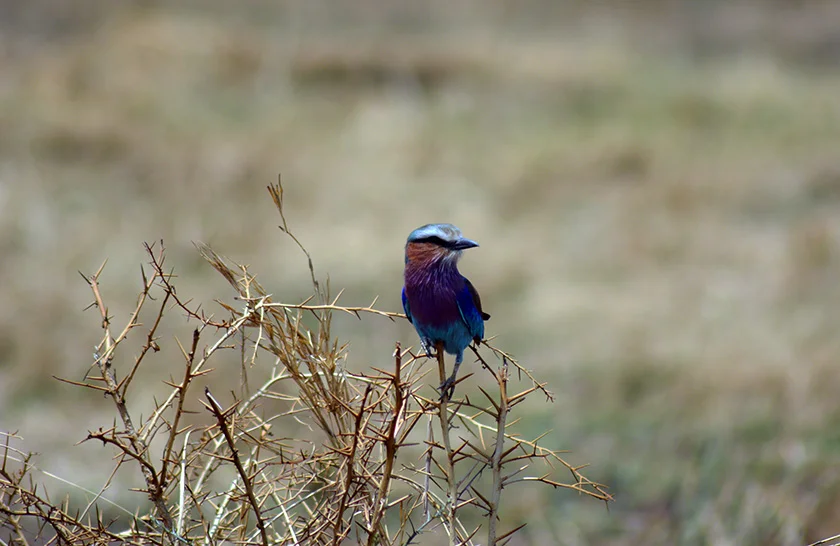
Picture this: the sun is still low over Lake Manyara, the water is glassy pink with thousands of flamingos, and a lilac-breasted roller has just landed on the branch next to your safari car. That is a Tuesday for us. Tanzania quietly holds more than 1,100 bird species, roughly 11% of everything on the planet, within an area about the size of France and Spain combined.
The reason is geography. Tanzania sits where East and Central African habitats meet, and its land climbs from sea level to the 5,895 m summit of Kilimanjaro. Coastal forests, alkaline lakes, acacia savanna, montane rainforest, and miombo woodland all fit inside one country. Each habitat brings its own birds, which is why a single safari can stack up hundreds of species without ever feeling rushed.
Safari Guide's Note
The travellers who see the most birds are rarely the ones with the most expensive binoculars. They are the ones who visit a couple of different habitats, travel early in the morning, and tell their guide they care about birds. We adjust the pace and the stops, and suddenly the list grows fast.
Tanzania Birdwatching Quick Facts
Total Species
1,100+ recorded birds
Endemic Species
36 found nowhere else
Near-Endemics
62 primarily Tanzanian
World's Share
About 11% of all birds
Top Park
Serengeti, 500+ species
Migrant Visitors
100+ Palearctic species
Dry Season
June to October
Wet Season
November to May
Key Habitats
Lakes, savanna, montane forest
Keen Birders
200-300 species in a week
Photography
Best at dawn and dusk
Altitude Range
Sea level to 5,895 m
Why Tanzania Is a Birdwatcher's Paradise
Tanzania is one of the most bird-diverse countries on the planet per square kilometer, and that is not marketing talk. It holds about 11% of the world's bird species within just 2% of Africa's land area. For comparison, birders travel to much of South America for numbers like these, and Tanzania delivers them with the Big Five thrown in.
The secret is habitat variety. The alkaline lakes of the Rift Valley pull in huge waterbird flocks. The Eastern Arc Mountains are among the oldest forest blocks in Africa, isolated long enough to evolve their own endemic species. The vast savannas hold raptors and ground birds, and the southern miombo woodlands host birds you simply cannot see anywhere else. You are not birding one country, you are birding several in one trip.
1,100+
Recorded bird species
36
Endemic species
~11%
Of the world's birds
200-300
Species in a week for keen birders
Top Birding Locations in Tanzania
You can plan a whole trip around any one of these parks, but the magic happens when you combine a few. Here is what each of the northern circuit favourites gives you.
Serengeti National Park
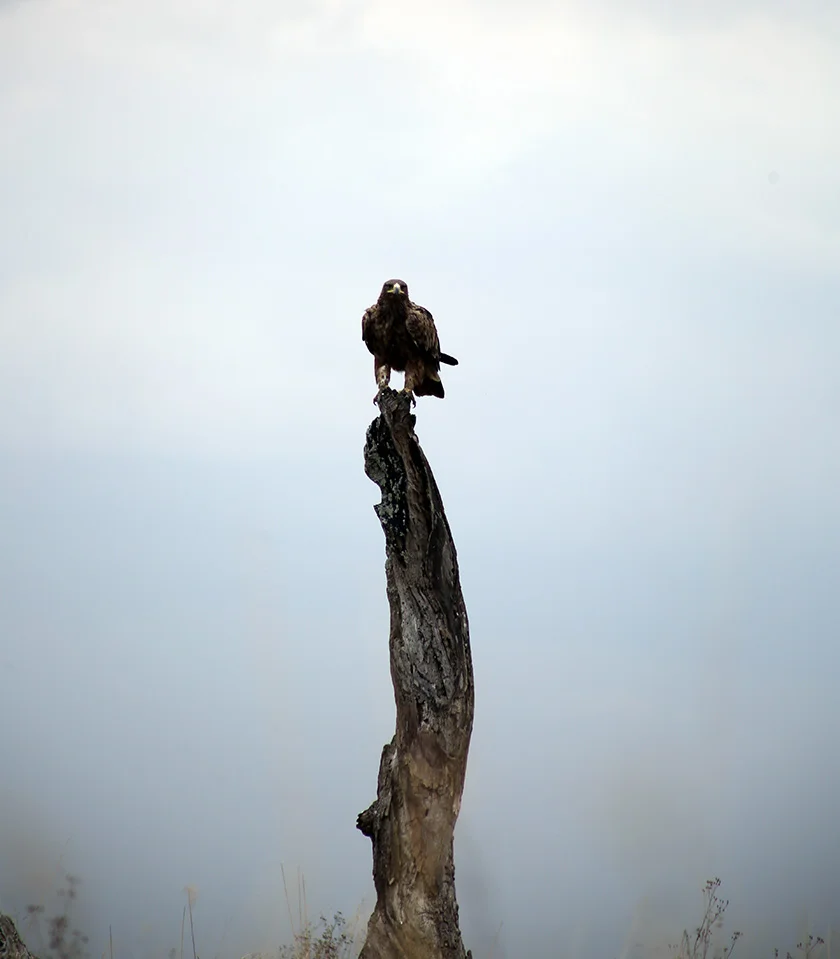
Over 500 species across the endless plains. Watch Secretary Birds stalk the grass, Martial Eagles survey from the acacias, and Kori Bustards strut in the open. The resident vulture flocks follow the Great Migration year-round.
Ngorongoro Crater
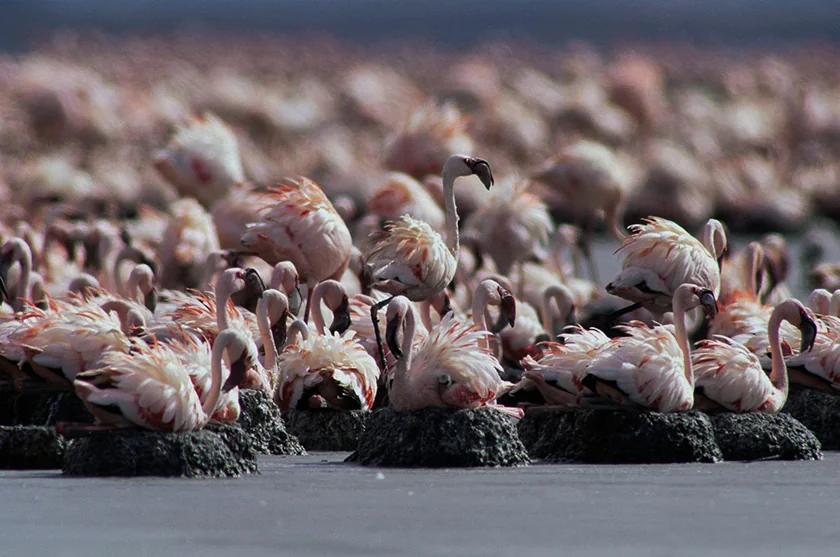
A contained paradise with 400+ species. Lake Magadi regularly turns pink with flamingos, Grey Crowned Cranes dance in the grasslands, and the crater walls give you the rare chance to see eagles at eye level.
Lake Manyara National Park
A compact waterbird haven with 380+ species. The shallow alkaline lake pulls in huge flocks of pelicans, storks, and ibises, while the groundwater forest shelters silvery-cheeked hornbills and other forest specialists. The tree-climbing lions are a bonus.
Tarangire National Park
Tanzania's highest bird density, with 550+ recorded species. In the dry season the Tarangire River draws spectacular concentrations. Watch for the endemic ashy starling and yellow-collared lovebirds flashing through the baobabs.
Arusha National Park
The easiest mountain birding in Tanzania, minutes from Arusha town. Momella Lakes host flamingos, while the forested slopes of Mount Meru hide Narina Trogons, Hartlaub's Turacos, and Bar-tailed Trogons.
Ruaha National Park
Tanzania's largest park mixes miombo woodland specialists with savanna birds. The Great Ruaha River valley is where East and Southern African avifauna meet, and where you chase racket-tailed rollers and pale-billed hornbills.
Endemic & Special Species
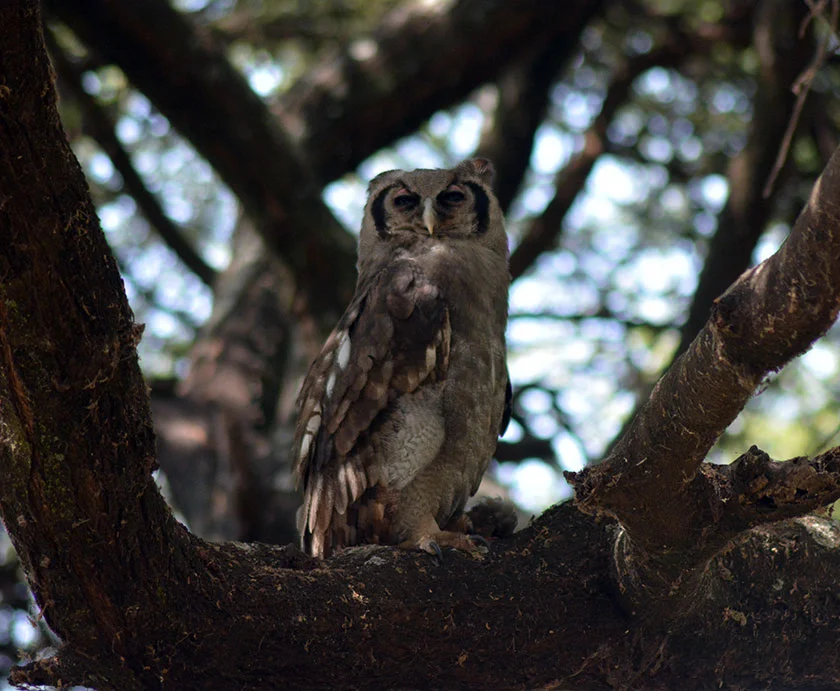
Endemic birds are the reason serious twitchers book a flight to Tanzania. These 36 species evolved in isolation, many of them locked onto a single mountain range or forest patch. Seeing even half of them takes you across the country and straight into Tanzania's wildest corners, which is exactly how it should be.
Rufous-tailed Weaver (Histurgops ruficauda)
Endemic to central Tanzania's acacia woodlands. Males flash a rufous tail during courtship displays. Best seen in Ruaha and Tarangire during the November to April breeding season.
Ashy Starling (Lamprotornis unicolor)
A subdued grey-brown starling, a break from the glossy iridescent family. It is common around Tarangire, where it feeds on insects and fruit in the dry woodland.
Usambara Weaver (Ploceus nicolli)
The headline rarity, critically endangered and confined to two forest patches in the Usambara Mountains. Males have golden heads and black masks. This one takes a dedicated montane forest trip.
Beesley's Lark (Chersomanes beesleyi)
Only recently recognized as a full species, this lark inhabits the grasslands of the Serengeti-Mara ecosystem. Cryptic plumage, and a distinctive song flight at dawn.
Tanzania Red-billed Hornbill (Tockus ruahae)
Split from the Southern Red-billed Hornbill, this species forages on the ground in southern Tanzania's miombo woodlands. Easy to see in Ruaha, once you know its call.
Usambara Double-collared Sunbird (Cinnyris usambaricus)
An iridescent green mountain endemic with a red chest band. Found around flowering gardens and forest edges in the Usambara and Uluguru Mountains, often easier to see than its rarity suggests.
Why Your Visit Matters
Many Tanzanian endemics are threatened by habitat loss. When you book a responsible birding safari, your park fees, guide wages, and lodge revenue directly fund the protection of these irreplaceable species and the communities around them.
Tanzania's Birding Habitats
Every habitat has its own cast of characters. Understand the habitat and you will know which birds to expect, and where to look for them.
Savanna & Grasslands
The open north holds ground birds, seed-eaters, and raptors that hunt from the sky.
- Secretary Birds and Kori Bustards
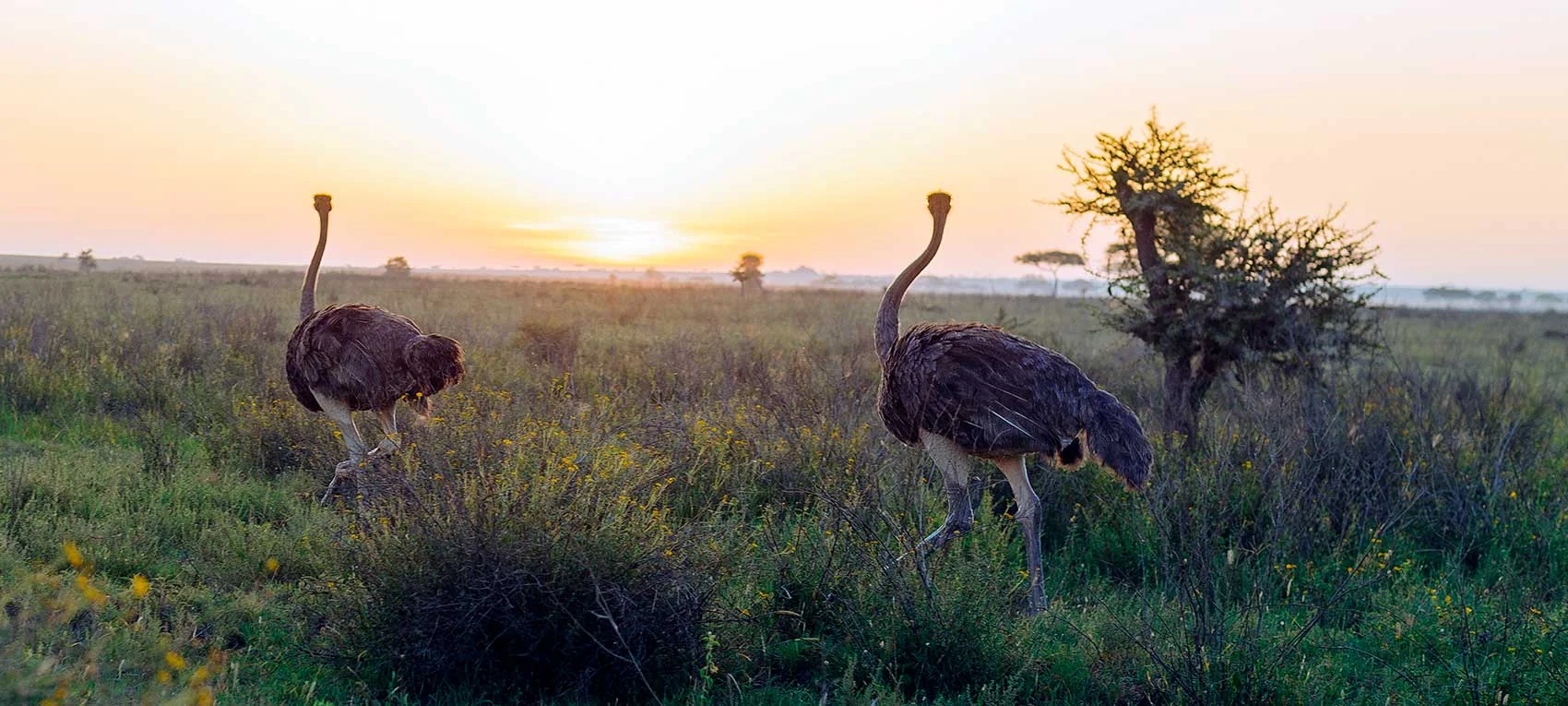
- Ostriches and grassland larks
- Eagles and vultures riding the thermals
Montane Forests
The Eastern Arc and volcanic highlands hold the country's rarest forest specialists.
- Sunbirds, turacos, and trogons
- Silvery-cheeked hornbills
- Endemic weavers and akalats
Wetlands & Lakes
Alkaline lakes and freshwater swamps pull in enormous waterbird concentrations.
- Flamingos, pelicans, and herons
- Ducks and waders by the dozen
- African fish eagles and kingfishers
Miombo Woodlands
Southern Tanzania's Brachystegia woodlands are home to species adapted to the seasonal cycle.
- Miombo rock-thrush and racket-tailed roller
- Stierling's barbet and Böhm's bee-eater
- Pale-billed hornbill
Best Time to Go Birdwatching
Honest answer: every season works. The dry season makes birds easier to see, and the wet season makes them more spectacular. Here is the trade-off in plain terms.
Dry Season
June to October
- Birds crowd around shrinking water sources
- Short grass means far easier spotting
- Peak raptor season
Wet Season
November to May
- European migrants arrive (November to March)
- Peak breeding, with full plumage and song
- Lush scenery and flowering trees
Year-Round
All Seasons
- Residents and endemics are always present
- Every month delivers excellent birding
- Combine with a classic wildlife safari
Migration Timing
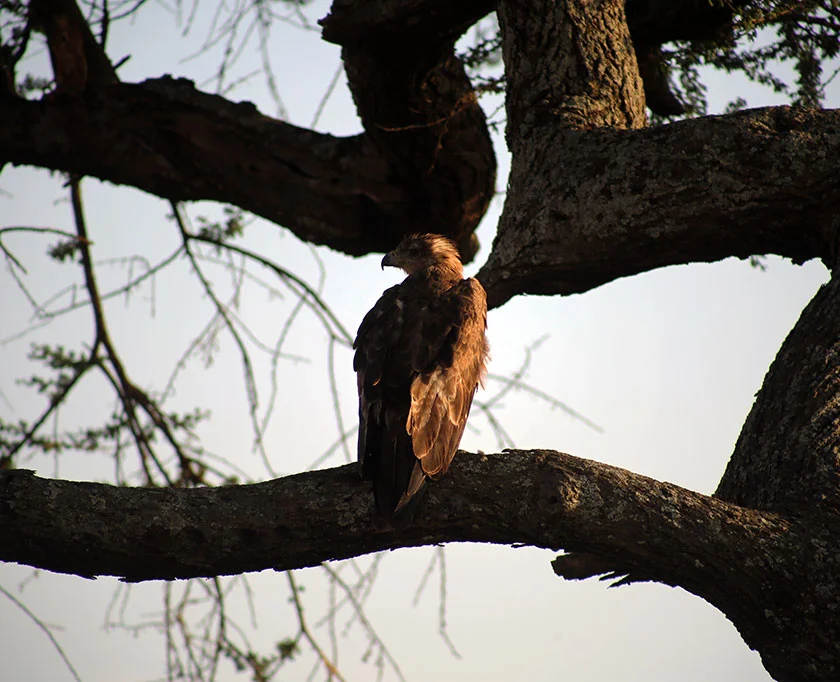
From November to April, Tanzania welcomes more than 100 Palearctic migrant species escaping the European and Asian winter. White storks, barn swallows, and whole waves of raptors pass through on their way south, then back again.
Gear & Field Tips
Essential Gear Checklist
- 8x42 or 10x42 binoculars, the only must-have
- "Birds of East Africa" or the Merlin Bird ID app
- Camera with a 300-600mm lens for photography
- Waterproof notebook for your sightings
- Neutral clothing, olive, tan, or brown, never bright
Field Strategies That Work
- Go early, birds peak 6:00-10:00 AM and 4:00-6:00 PM
- Listen first, 80% of birds are found by sound
- Move between habitats instead of lingering in one
- Patience at water sources and fruiting trees pays off
- Trust your guide's ears, they know every call
Photography Tips for Birders
Shoot in the golden hours with a fast shutter speed, 1/2000s or quicker for birds in flight, and an aperture around f/5.6-f/8 to keep the whole bird sharp. Never crowd a nest, never use playback to lure birds within touching distance. A great photo is never worth a stressed bird.
Conservation & Responsible Birding
Tanzania's birds face real pressure, from habitat loss and wetland drainage to climate change and disturbance at nesting sites. The good news is that the people who visit responsibly are part of the solution. Park fees, guide employment, and lodge revenue all flow back into protecting the places birds need to survive.
Threats
- Forest clearance in the Eastern Arc Mountains
- Drainage of wetlands for agriculture
- Climate-driven shifts in rainfall and lake levels
- Disturbance at nesting and roosting sites
Protections & How You Help
- National parks and reserves cover huge key habitats
- TANAPA rules limit vehicles and protect nesting zones
- Community conservation programs link villages to wildlife income
- eBird sightings from visitors support real research
Birding Ethics, the Short Version
- Keep at least 10 meters from birds, and never approach nests
- Limit playback to 30 seconds, and avoid it in breeding season
- Stay on roads and trails, the birds come first
- Log your sightings on eBird to support research
- Travel with operators who employ local guides and support communities
Frequently Asked Questions
Plan a Birding Safari in Tanzania
You do not have to choose between birding and a classic safari, and you should not. The same parks hold the Big Five and more than 1,100 bird species. On a Masatu Tours safari, your guide simply balances game drives with focused birding stops, so nobody misses out.
Where to Go
A 5 to 7-day northern circuit covers Tarangire, Ngorongoro, the Serengeti, and Lake Manyara, which stacks up hundreds of species. Add Arusha National Park or the Eastern Arc forests if endemics are the goal.
How to See More
Start early, ask for birding-focused stops, and tell your guide your target species in advance. We plan routes around water sources at dawn, which is where the action is.
When to Book
Year-round is genuine, not a sales line. Book June to October for easy viewing and photography, or November to April for migrants and breeding plumage. Let us know which matters to you.
Responsible Viewing
Every Masatu safari stays on designated roads, keeps respectful distance, and never harasses wildlife. Ethical observation keeps Tanzania's birds wild, and wild is how you want to see them.
Experience Tanzania's Birds with Masatu Tours
Pick a safari, any safari, and tell us you love birds. Our guides know the calls, the nesting trees, and the lakes where the flamingos gather. We will build your route around the birds and still get you the wildlife you came for.
Conclusion
Tanzania is one of the finest birding destinations on Earth, and it is remarkably approachable. You do not need to be a hardcore twitcher to enjoy it. A morning at Lake Manyara with a good guide and a decent pair of binoculars will leave you with a list that would take a year of weekends back home.
The endemic hunters will chase their 36 species across the Eastern Arc and southern woodlands. Everyone else can simply enjoy the spectacle, the flamingos, the rollers, the raptors, and the sheer volume of life. Either way, the birds of Tanzania will do the heavy lifting. You just have to show up early.
Plan Your Birding Safari
Ready to see Tanzania's birds in their natural habitat? Our expert-led safaris pair the Big Five with 1,100+ bird species, guided by people who know the bush by ear. Talk to a safari expert today and start building your list.
Talk to a Safari ExpertRelated Birding & Wildlife Guides
Serengeti National Park Guide
Explore the ecosystem that holds 500+ bird species
Birdwatching at Manyara, Tarangire & the Maasai Steppe
400-600 species on Tanzania's densest short birding circuit
Ngorongoro Crater Guide
Flamingos, crowned cranes, and the world's largest intact caldera
What to Take on Safari
Packing list from the guides who live in Tanzania
Big Five in Tanzania
Lion, leopard, elephant, rhino & buffalo, complete guide
Serval Cat Guide
Africa's long-legged wild cat, complete guide
Great Wildebeest Migration
Understand the world's greatest wildlife spectacle
Ultimate Safari Packing List
A printable checklist for your Tanzania safari
Tanzania Safari Packages
Plan your dream wildlife and birding safari
Last updated: August 11, 2026. Species counts verified against BirdLife International and current eBird records for Tanzania.
