Masatu Tours•Lemosho Route 8 Days: Price, Itinerary & What to Expect

    Lemosho is Kilimanjaro's most scenic western route, combining remote rainforest, the sweeping Shira Plateau, and the highest summit success rates on the mountain. This guide covers realistic pricing, the day-by-day progression, and what separates Lemosho from every other route.

    Compare Lemosho with other routes on our route comparison page and check the packing checklist.

    4.9 Rating
    12 min read
    Updated Jun 2026

    Typical Price

    $2,200–$4,200+

    per person; solo climbers pay $300–$600 more

    Duration

    8 days / 7 nights

    on the mountain; most operators include a Moshi hotel night

    Success Rate

    ~90%+

    with a quality operator on the 8-day format

    Why Lemosho?

    Most Kilimanjaro routes approach from the south or east, using gates less than 90 minutes from Moshi that see heavy traffic. Lemosho enters from the southwest via Lemosho Glades, a remote trailhead surrounded by pristine montane forest that sees a fraction of the footfall of Machame or Marangu gates. The first two days feel genuinely wild: colobus monkeys in the canopy, the trail to yourself, silence broken only by birds and the sound of your own footsteps on the forest floor.

    Days 2 and 3 traverse the Shira Plateau, an ancient volcanic caldera eroded into a high, open landscape at 3,500–3,840 metres. This crossing is unique to Lemosho (and the similar but shorter Shira Route) and provides something that cannot be replicated on eastern routes: two full days of acclimatization at moderate altitude before the serious climbing begins. Your body is doing meaningful physiological adaptation while you walk relatively gentle terrain with full views of the summit cone above you.

    From Barranco Camp on Day 5, Lemosho joins the same trail as Machame. The two routes are identical from that point to Uhuru Peak and back down via Mweka. The advantage Lemosho carries into those final days is the extra acclimatization banked on the plateau. Climbers on Lemosho typically arrive at Barafu Base Camp with measurably better physiological adaptation than those who took a shorter approach, and that difference shows on summit night.

    What Makes Lemosho Different

    The Shira Plateau crossing

    No other popular route gives you two full days crossing a high-altitude plateau at 3,500–3,840 metres. The scenery is extraordinary, Kibo's summit cone dominating the sky, the plains of Africa dropping away on both sides, and your body is acclimatizing the entire time without the physical stress of steep climbing.

    Remote, quiet trailhead

    Lemosho Glades is the most remote trailhead on the mountain. The first day feels genuinely wild: fewer groups, more space, a sense of being in actual wilderness rather than a well-trodden tourist corridor. Colobus monkeys in the canopy are the soundtrack to Day 1.

    Superior acclimatization profile

    Three days between 2,100m and 3,840m before the Lava Tower push gives your body a slow, gradual introduction to altitude. The result is consistently the highest summit success rates of any standard Kilimanjaro route, above 90% with reputable operators.

    Crater Camp option

    Some operators offer an optional night at Crater Camp (5,730m) inside the volcanic caldera. Sleeping at the edge of the glaciers with the summit above you is one of the most extraordinary experiences available on Kilimanjaro, though it adds cost and acclimatization demands.
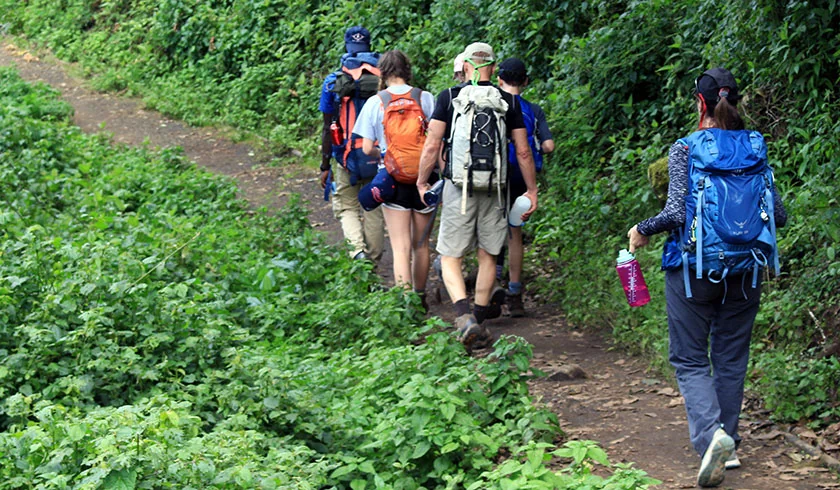
    Day one on the Lemosho route through the montane rainforest

    The Lemosho trail begins in pristine montane rainforest, colobus monkeys, moss-draped trees, and the remote western approach

    Section: Lemosho Glades → Mti Mkubwa
    Altitude: 2,100m → 2,650m
    Zone: Montane rainforest
    Day: 1, 7 km / 3–4 hrs

    Day-by-Day Itinerary

    Day 1: Lemosho Gate → Mti Mkubwa / Big Tree Camp

    2,100m → 2,650m7 km3–4 hrs
    The Lemosho trailhead sits on the mountain's remote western flank, and the difference from the busier eastern gates is immediate. The first hours are through ancient montane forest, giant podocarpus trees draped in moss, shafts of light through the canopy, and the sound of colobus monkeys overhead. Day 1 is intentionally short. Use it to settle in, find your pace, and resist the urge to push. The porters will arrive at Big Tree Camp well before you do. Eat a full dinner and sleep as early as possible.

    Day 2: Mti Mkubwa → Shira 1 Camp

    2,650m → 3,500m8 km4–6 hrs
    The forest thins and the heather zone opens up. Views that were blocked by trees for 24 hours now extend across the western plains. This is a longer, more demanding day than Day 1, the trail climbs consistently as you transition from forest to open moorland. By the time you reach Shira 1, the horizon has expanded in every direction and Kibo is becoming visible above the cloud line. The Shira Plateau is one of the most dramatic environments on any Kilimanjaro route.

    Day 3: Shira 1 → Shira 2 Camp

    3,500m → 3,840m5 km3–4 hrs
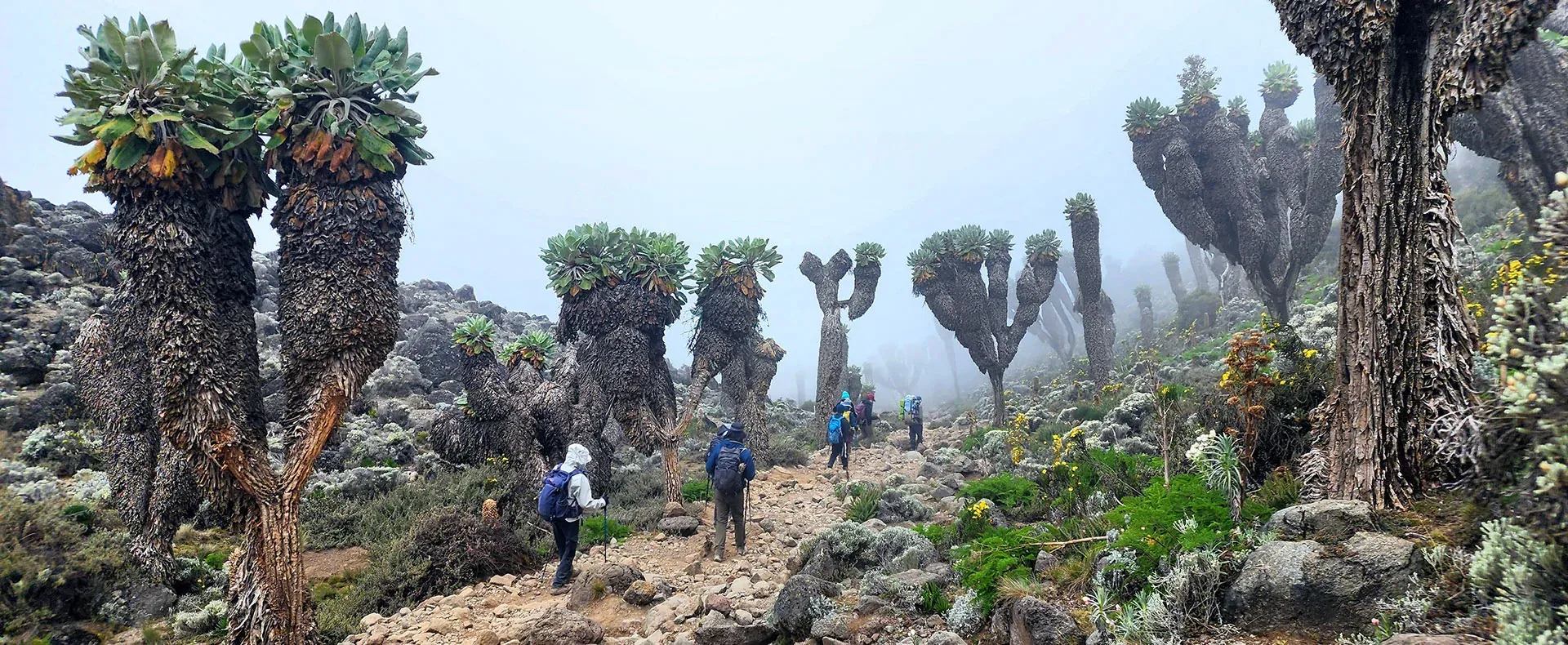
    A shorter day that crosses the full width of the Shira Plateau, an ancient, eroded volcanic caldera that feels like walking on the roof of Africa. The terrain is open and windswept, with the summit cone of Kibo now dominating the eastern skyline. The extra day on the plateau that Lemosho provides over Machame is not filler, it is an acclimatization asset. Your body is adapting at 3,500–3,840m with minimal physical stress, building the physiological reserves you will need later. Expect cool temperatures and strong winds even in the dry season.

    Day 4: Shira 2 → Barranco Camp via Lava Tower

    3,840m → 4,630m → 3,963m10 km6–8 hrs
    The most important day on the mountain. The route climbs to Lava Tower (4,630m), a dramatic volcanic plug where you stop for lunch and a genuine rest. This is well above your sleeping altitude and the altitude exposure is intentional, the body responds by producing more red blood cells and stimulating other acclimatization responses. How you feel at Lava Tower is a preview of summit night. Some headache and reduced appetite here are normal. Then the trail drops back down to Barranco Camp (3,963m), which you will reach feeling tired but often surprisingly well.

    Day 5: Barranco → Karanga Camp

    3,963m → 4,030m5 km4–5 hrs
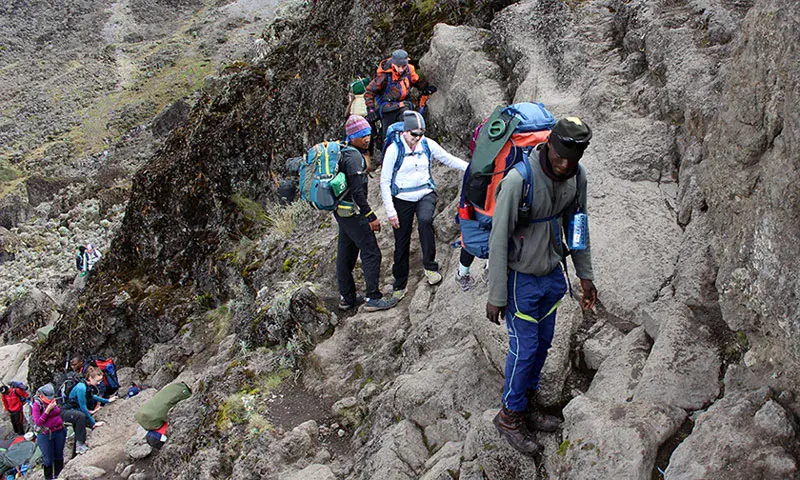
    The day begins with the Barranco Wall. From camp, it looks like a sheer cliff, a 300-metre wall of dark rock with a queue of headlamps threading up it in single file at dawn. The reality is more manageable. There are excellent handholds throughout, your guide leads the best line, and most climbers move through it in 1–2 hours without needing ropes or technical skill. Above the wall, the trail crosses a broad valley before climbing to Karanga. Net elevation gain is modest, but cumulative altitude fatigue makes this feel harder than the numbers suggest.

    Day 6: Karanga → Barafu Base Camp

    4,030m → 4,600m4 km4–5 hrs
    The shortest walking day of the climb, but one of the most important. Arriving at Barafu (4,600m) early gives you a full afternoon to rest before the midnight summit departure. The alpine desert is barren and windswept. The summit cone is the only thing on the horizon. Eat your dinner, all of it, even if altitude has suppressed your appetite. Drink consistently. Lay out your summit kit tonight so you are not fumbling with gear in the dark at midnight.

    Day 7: Barafu → Uhuru Peak → Mweka Camp (Summit Night)

    4,600m → 5,895m → 3,100m~17 km total5–7 hrs up, 3–5 hrs down
    Midnight departure. Temperatures at the summit rim: -15°C to -25°C with wind chill. The first three hours are a slow grind up steep scree in darkness, cold, quiet, one step at a time. Your guide sets the pace: slow enough to sustain for the next 5–7 hours. Stella Point (5,739m) arrives at first light, often with a pink glow across the glacier walls. From Stella to Uhuru is another 45 minutes along the crater rim. Sign the register, take your photograph, and allow yourself a moment before the long descent to Mweka Camp (3,100m).

    Day 8: Mweka Camp → Mweka Gate

    3,100m → 1,650m10 km3–4 hrs
    The final morning. The descent through recovering rainforest is a contrast to everything above, green, warm, alive. You collect your summit certificate at Mweka Gate and transfer back to Moshi. Most groups arrive in town by early afternoon. The climb is done. Eight days of your life spent on one of the most remarkable mountains on earth, and Uhuru Peak at dawn to show for it.
    Climbers ascending the Barranco Wall on the Lemosho route

    The Barranco Wall (3,963m), a 300-metre scramble that looks steeper from camp than it feels on the rock

    Feature: Barranco Wall
    Height: 300m scramble
    Difficulty: Hands-and-feet, no ropes
    Time: 1–2 hours

    Cost Breakdown for 2026

    Lemosho is priced slightly higher than Machame because of the extra day on the mountain, one additional day of park fees, crew wages, and food. Here is how the pricing tiers break down.

    Value

    $2,200–$2,800

    Smaller operators offering group departure dates with shared vehicle transfers. Food is sufficient; crew experience varies. A reasonable choice if you research the operator carefully and join a departure with at least 4–6 climbers.

    Mid-Range
    Recommended

    $2,800–$3,500

    Reputable operators with experienced guide teams, private vehicle transfers, quality mountain food, reliable safety equipment, and fair crew wages. Private group options typically available within this band. This is where the experience aligns with what the route deserves.

    Premium

    $3,500–$4,200+

    High-end operators with private group setup, enhanced camp meals, satellite communication, better crew ratios, and gear rental options. Solo climbers booking at this tier get close to a private guiding experience.

    What Is Included and What Is Not

    Included in a standard Lemosho package

    • TANAPA park fees (conservation, camping, and rescue fees)
    • Full mountain crew: licensed lead guide, assistant guide(s), cook, and porters
    • All mountain meals (breakfast, lunch, dinner) and hot drinks
    • Tents, sleeping mats, and dining tent
    • Safety equipment: supplemental oxygen, pulse oximeter, first-aid kit
    • Moshi–gate–Moshi transfers
    • Summit certificate at Mweka Gate

    Not included, budget separately

    • International flights and Tanzania visa ($50–$100)
    • Travel insurance with high-altitude evacuation coverage
    • Personal climbing gear (sleeping bag, boots, layers) or gear rental
    • Crew tips ($200–$350 per person is standard)
    • Snacks, energy gels, or alcoholic drinks
    • Pre/post-climb hotel accommodation in Moshi

    Who Lemosho Suits Best

    First-time Kilimanjaro climbers

    Lemosho is one of the best choices for first-time climbers. The 8-day format allows more gradual acclimatization than shorter routes, and the first two days on the remote western approach are relatively gentle. You do not need prior high-altitude or technical climbing experience.

    Climbers prioritising summit success

    With success rates consistently above 90% on the 8-day format, Lemosho gives you the best statistical chance of standing on Uhuru Peak. The extra day on the Shira Plateau produces measurable physiological advantages that translate directly into better summit outcomes.

    Those who value scenic quality

    If the quality of the experience matters as much as the destination, Lemosho delivers the most varied and visually striking terrain of any route. The rainforest start, the open plateau, the Barranco Wall scramble, and the long alpine desert approach to Barafu, each section is distinct and memorable.

    Climbers with schedule flexibility

    If your travel window can accommodate 8 days on the mountain (plus travel to and from Tanzania), Lemosho's extra acclimatization day is straightforward value. For climbers who have waited years for this trip, one additional day represents a small investment with outsized returns in both experience and success probability.

    Is Lemosho Worth the Extra Cost?

    Compared to Machame, Lemosho costs roughly $200–$400 more per person and adds one full day to your trip. The question most climbers ask is whether that difference is worth it.

    If acclimatization and summit probability are the primary factors, Lemosho's extra day on the Shira Plateau produces measurably better physiological preparation for the high-altitude push. The route's consistent 90%+ success rates with reputable operators reflect that advantage. If budget is the binding constraint, Machame's 7-day format with a quality operator still delivers strong results for prepared climbers.

    Beyond summit probability, Lemosho offers a genuinely different experience on Days 1–3. The remote start, quieter trails, and crossing of the full Shira Plateau are memorable in ways that the busier Machame Gate approach is not. If you are spending 8 days on this mountain, the quality of those early days matters.

    The final section from Barranco to Uhuru Peak is identical on both routes. The extra cost of Lemosho is essentially the cost of a better start and more acclimatization time. For most climbers who have the schedule flexibility and can absorb the price difference, it is money well spent.

    5 Practical Tips for Lemosho Climbers

    1

    Day 1 feels almost too easy, use that to your advantage

    The short, gentle first day through the forest is intentional. Many climbers arrive at Mti Mkubwa Camp with energy to spare and want to push further. Do not. Use the afternoon to hydrate, eat a full meal, and sleep early. The mountain gets progressively more demanding each day, and a rested start compounds across the entire 8 days.

    2

    The Shira Plateau is exposed and windy, keep your shell accessible

    Days 2 and 3 on the plateau are open terrain at 3,500–3,840 metres with no shelter from wind. Temperatures can drop quickly even midday. Do not bury your windproof jacket in the bottom of your daypack. Keep it accessible in the top pocket. Stopping to dig through your bag at 3,700m in a cold wind is an easy way to lose body heat and morale.

    3

    Day 4 at Lava Tower is the most important day, take it seriously

    How you feel at 4,630m on Day 4 is the most accurate preview of how you will handle summit night. Some headache and reduced appetite at Lava Tower are normal and do not predict problems later. What matters is how you respond: eat anyway, drink consistently, rest before the descent to Barranco. Climbers who push through Lava Tower too quickly miss the acclimatization benefit entirely.

    4

    The Barranco Wall looks intimidating, it is more manageable than it appears

    From camp at dawn, the wall looks vertical. The reality is more manageable: good handholds throughout, an established line, no ropes or exposed drops, and your guide leading through every section. Take your time, keep three points of contact, and trust the process. Most climbers are surprised at how quickly they move through it.

    5

    At Barafu, eat dinner even if you have no appetite

    By Day 6 at Barafu (4,600m), altitude has likely suppressed your appetite. Eat anyway. You depart for the summit in hours and the ascent burns approximately 1,000 calories. Going into summit night under-fuelled is one of the most common reasons climbers turn around. Eat your full dinner, drink 1–2 litres of water before bed, and set two alarms.

    Ready to plan your Lemosho climb?

    Get a transparent line-by-line quote with all inclusions, park fees, crew wages, safety equipment, confirmed before you book.

    Frequently Asked Questions

    With a reputable operator on the 8-day format, Lemosho consistently produces summit success rates above 90%. The extra acclimatization day compared to Machame, combined with the gradual elevation gain across the first three days on the Shira Plateau, gives your body more time to adapt before the high-altitude push. Success rates vary by operator quality and individual preparation, but Lemosho's profile is widely regarded as one of the most acclimatization-friendly of all Kilimanjaro routes.

    Continue Planning Your Climb

    Deborah - Travel Expert
    Personal Travel Expert

    Ready to plan your dream adventure?

    Reply in 3hrs
    Free consultation