Quick facts
- Kichagga is a Bantu dialect continuum spoken by Chagga communities around Mount Kilimanjaro.
- Named varieties include Kivunjo, Kimarangu, Kirombo, Kimachame, Kisiha, Kikibosho, Kiuru, Kioldimoshi and Kingassa.
- Slopes, rivers, clan networks and historic chiefdoms all help explain local differences.
- Swahili and English contact is normal in a multilingual Tanzania and shapes vocabulary and code-switching.
- Older and younger speakers often have different repertoires; both are legitimate forms of Kichagga.
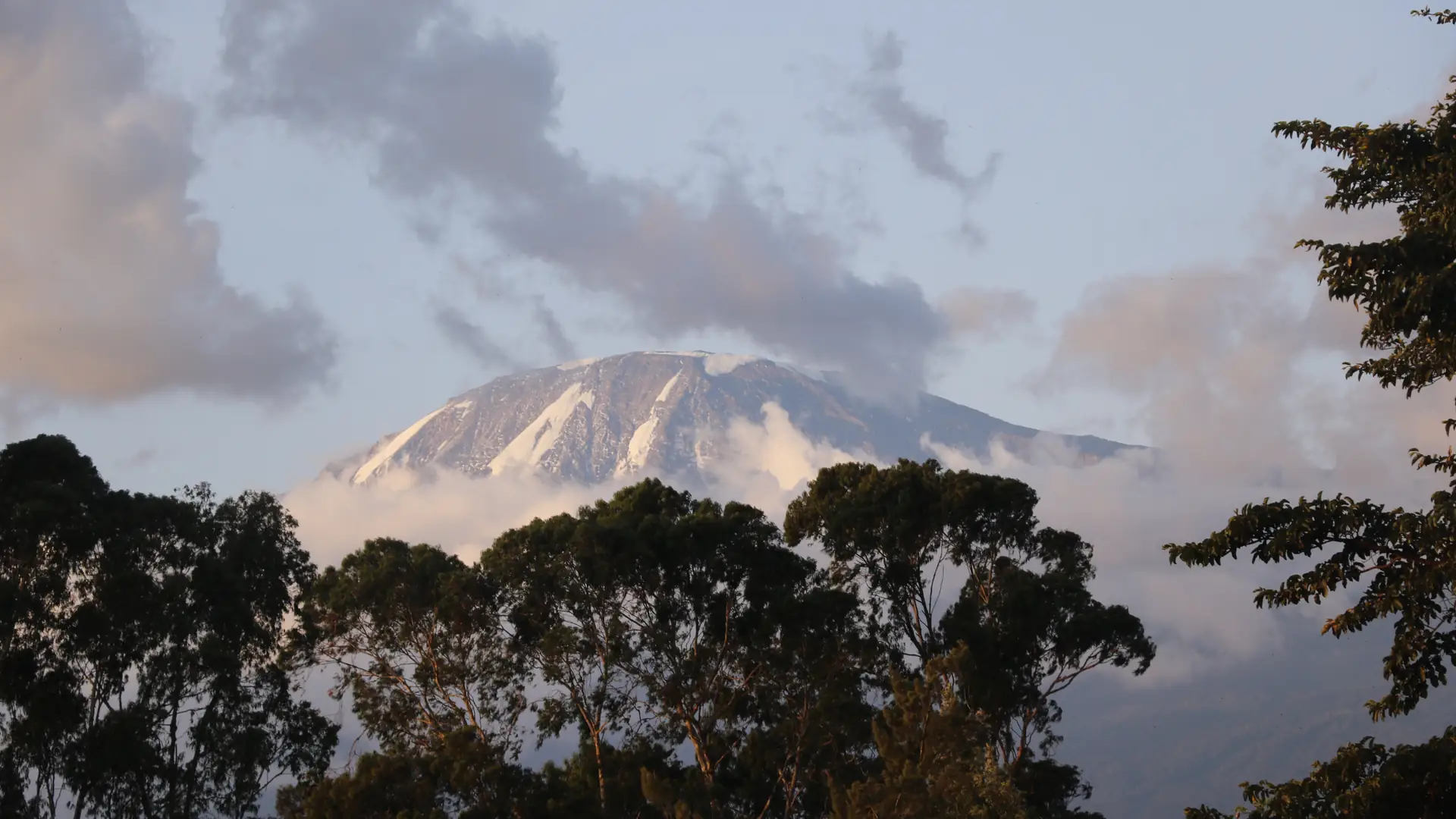
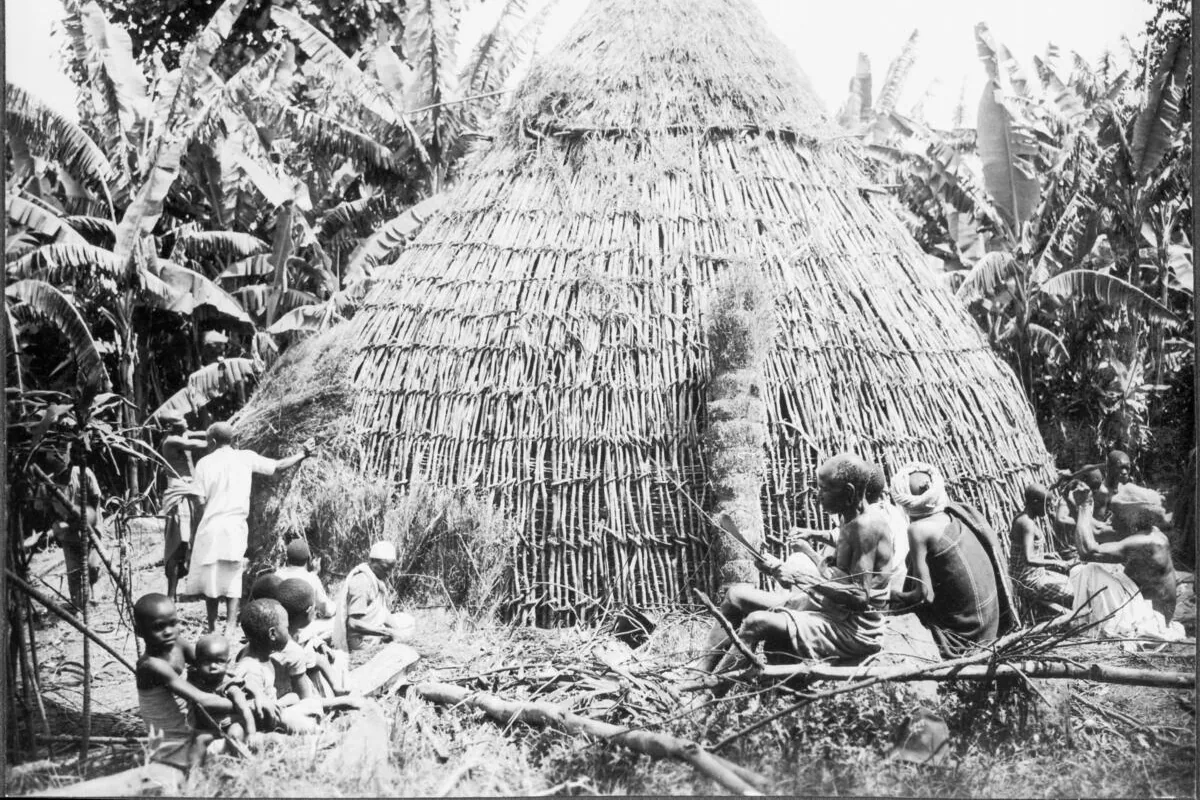
- Historical photographs illustrate settings, but they do not prove specific linguistic facts.
Why Language Variation Matters
A language does not change in a vacuum. It changes as people move, trade, marry, worship, study, argue and tell stories. On Kilimanjaro, those everyday activities have taken place in a landscape of distinct slopes, historic kingdoms and strong local identities. The result is Kichagga: a closely related cluster of varieties with recognisable regional and social patterns.
This guide is an editorial overview, not a dialect survey or a claim that every speaker follows the same rule. It brings together the kinds of sources linguists and historians consider when they ask why a language varies: where people live, how they are connected, what institutions shape prestige, which other languages they use and how speech changes across a lifetime.
For a broader introduction to the people and places behind the language, see our Chagga people guide and where Kilimanjaro is located. Then use the sections below to see how each factor contributes to variation.
How to read the images
Background of the Chagga
Who speaks Kichagga?
Kichagga, also written Kichaga or Chaga, is a Bantu dialect continuum spoken by the Chagga people on and around Mount Kilimanjaro in northern Tanzania. It is not a single uniform code with neat borders. Communities on different parts of the mountain share a great deal, while local varieties keep their own words, pronunciations and patterns.
Sources commonly list varieties such as Kivunjo, Kimarangu, Kirombo, Kimachame, Kisiha, Kikibosho, Kiuru, Kioldimoshi and Kingassa. You will also see broader groupings such as West Kilimanjaro, Central Kilimanjaro and Rombo. These are useful maps, but they do not mean that every speaker in one area talks in exactly the same way.
The word “Chagga” is an outside label that became standard in Swahili and English. Local identities have often been tied to a kingdom, clan, neighbourhood or homestead cluster. That history matters: language variation follows the same social lines as everyday life.
Key idea
Geographical Location
A mountain divided into neighbourhoods
Kilimanjaro creates unusual linguistic geography. The cultivated slopes, forest boundaries, rivers and ridges divide communities that are physically close but socially distinct. A variety associated with Marangu, Machame, Moshi, Kibosho or Rombo can carry a strong local identity even when speakers live only a short walk apart.
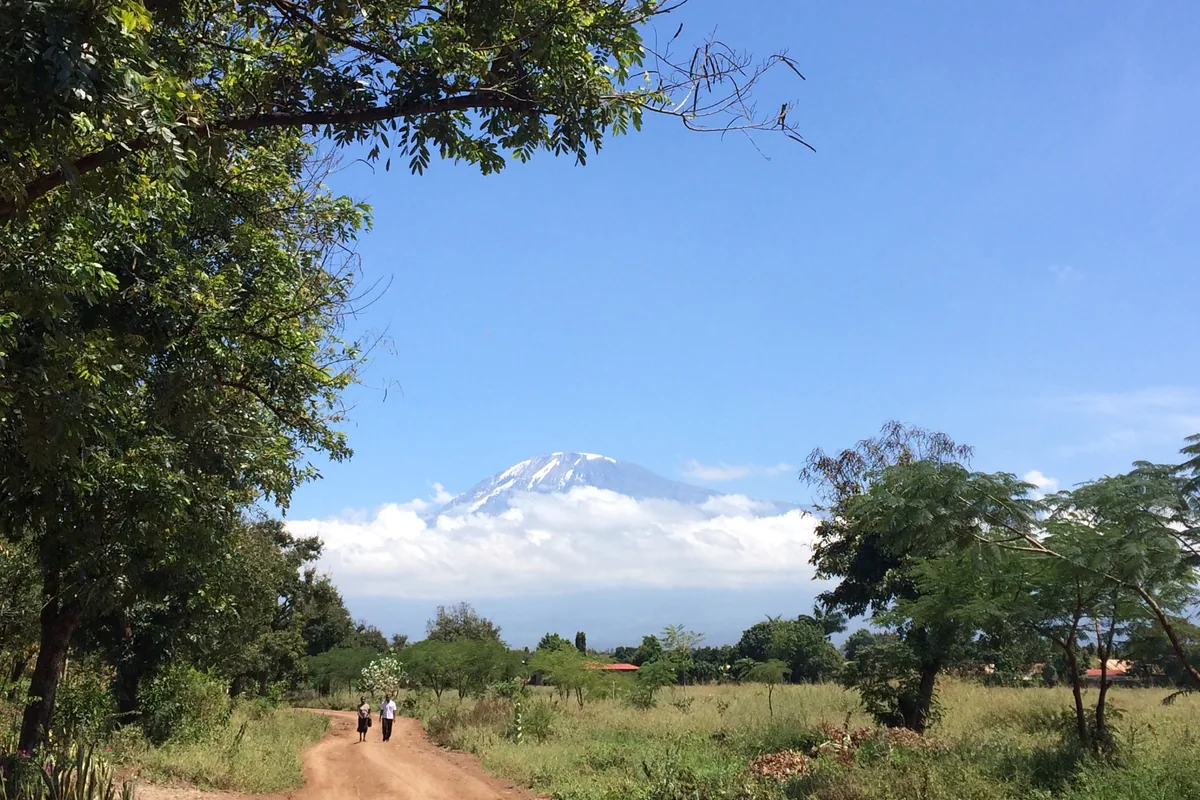
The mountain's fertile slopes supported dense, settled farming communities. Banana groves, terraces and homesteads encouraged long-term local networks, while rivers and forest belts made some routes easier than others. Everyday contact was therefore intense in some directions and thinner in others.
Geography is not destiny. Markets, schools, churches, mosques, roads and towns all move people and words around. But the older settlement pattern helps explain why a language can be both shared and locally varied in a relatively small area.
Key idea
Historical Origins
Layers of settlement and memory
Chagga origins are not a single story. Chagga communities are Bantu-speaking, and oral traditions remember different clans, migrations and founding lineages. Nineteenth-century visitors recorded conflicting accounts from different rulers, which is a reminder that local history was diverse before outsiders tried to summarise it.
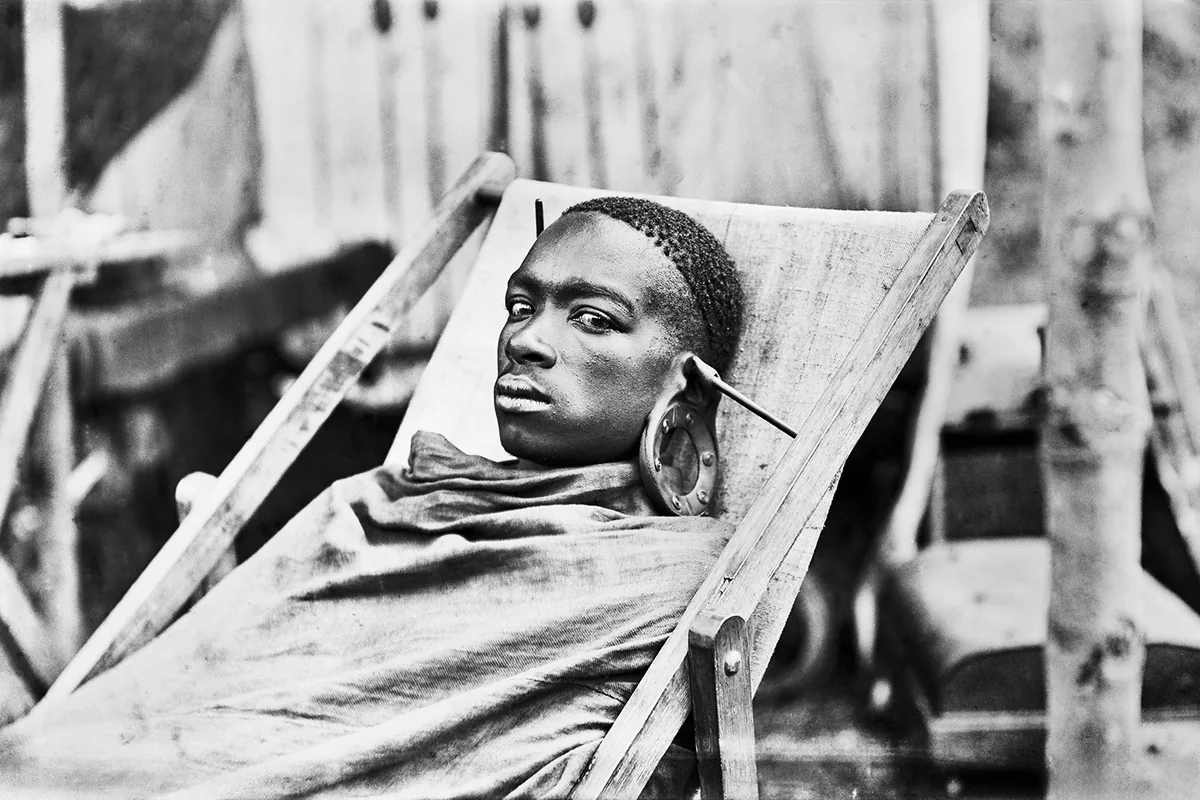
Some traditions link particular clans to places beyond the mountain; others describe lineages that were already established on the slopes. These accounts are valuable historical evidence, but they should be read as oral traditions rather than reduced to a simple one-way migration story.
A language carries those layers. Older vocabulary, names for places and kinship terms can remain in one area while neighbouring communities choose different forms. In a few pockets, distinctive local speech has been noted as especially conservative or hard for outsiders to follow.
Key idea
Historical and Political Factors
Kingdoms, missions and the state
Before colonial rule, Kilimanjaro contained numerous autonomous Chagga kingdoms, often called umangi. Rulers competed, formed alliances and sometimes promoted their own courtly styles. Later, German and British administration, mission education and the growth of a Tanzanian state changed which varieties had public authority.
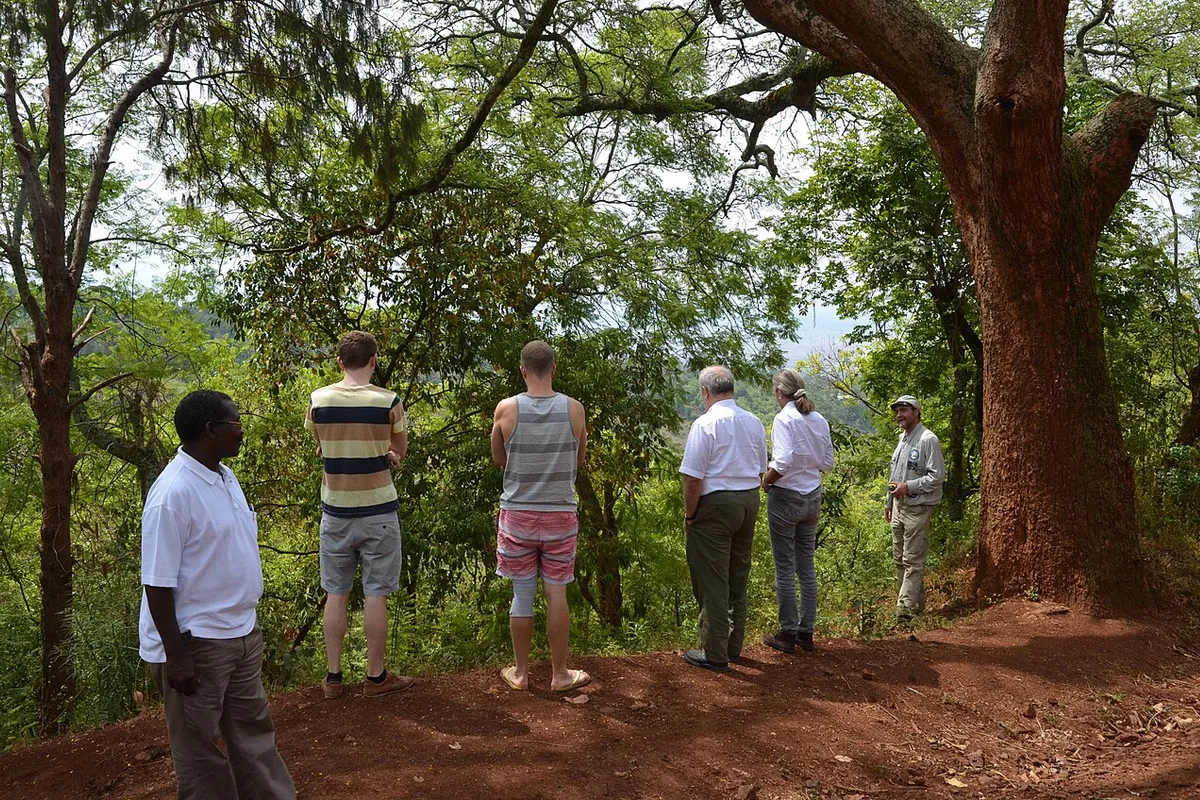
Accounts describe Machame in the west and Marangu in the centre as influential centres whose speech could be extended to nearby chiefdoms. Political reach gave some local forms a wider audience. It did not erase other varieties, but it helped create hierarchies of prestige.
Chief Meli's grave and the tree associated with his execution in Old Moshi are a stark reminder of nineteenth-century conflict and colonial violence. Political upheaval changes where people live, which institutions speak for them and which language varieties appear in records. The photograph is a historical site, not an image of linguistic behaviour.
Key idea
Contact with Other Languages
Swahili, English and neighbours
Kichagga has never been isolated. Swahili has long served as a lingua franca in Tanzania, and English is prominent in education, government and tourism. Chagga communities have also had contact with neighbouring and trading peoples, including Pare, Maasai, Kamba and Meru speakers.
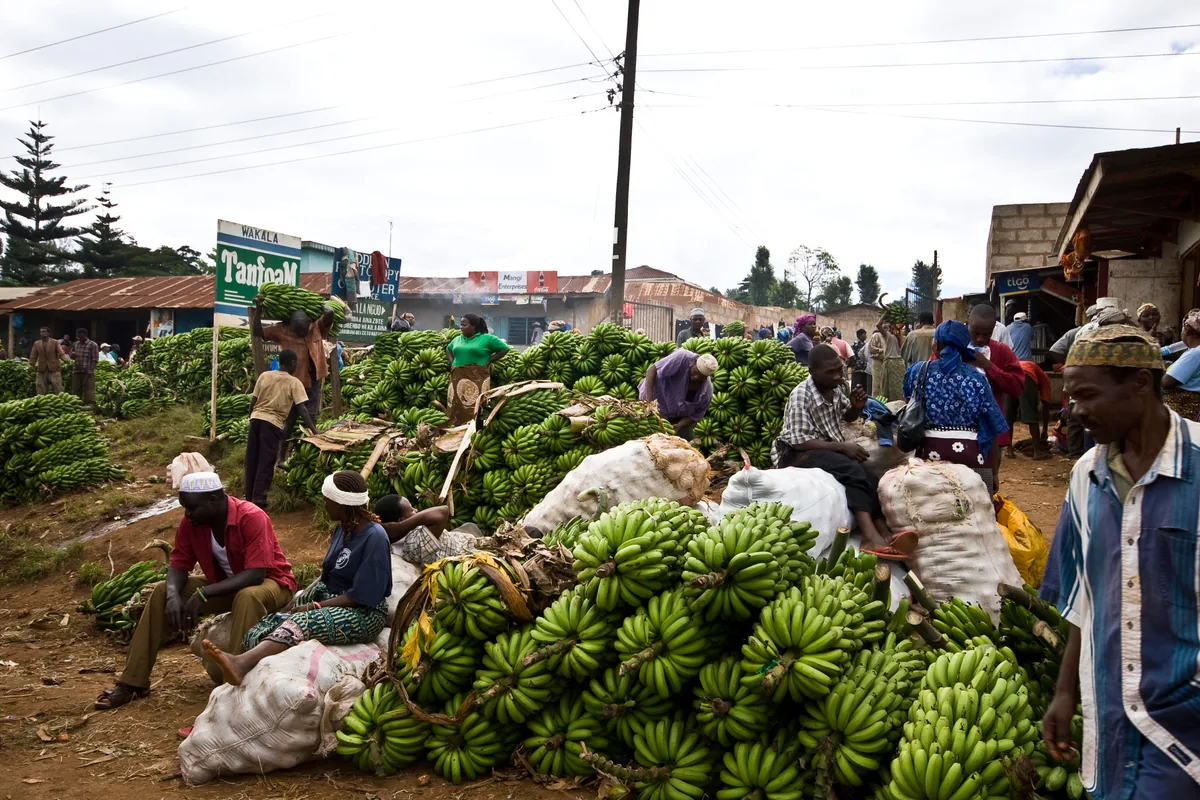
Contact produces borrowing, translation habits and code-switching. A speaker may use a Kichagga grammatical frame with a Swahili or English word, or choose Swahili for a market transaction and Kichagga at home. This is normal multilingual behaviour, not a sign that one language is incomplete.
The direction and amount of borrowing vary by setting. A farmer discussing a new crop, a student explaining a science topic and a guide speaking with visitors will each draw on different vocabulary. Over generations, some borrowed forms become naturalised and may no longer feel foreign.
Key idea
Generational Differences
What changes across a lifetime
Generational difference is one of the most visible sources of variation. Older speakers may keep vocabulary, idioms and pronunciations that younger speakers hear as old-fashioned. Younger speakers may mix in more Swahili and English, especially where school, work, social media and city life shape daily routines.
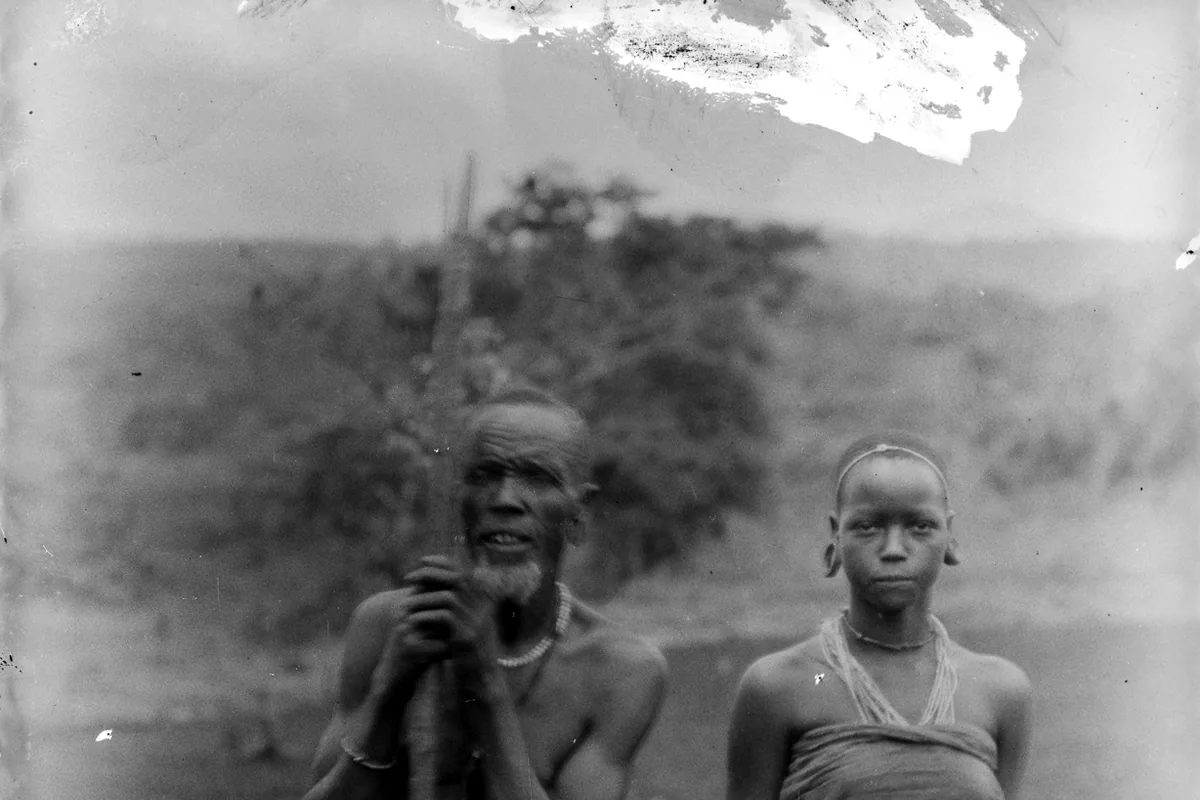
Change does not happen because one generation is careless. It happens because children learn language from a slightly different mixture of input than their parents did: different schools, different peers, different media and different opportunities to travel.
A family can therefore show several layers at once: a grandparent's local form, a parent's more mixed everyday speech and a young adult's urban style. All can be legitimate Kichagga. Whether a form is regarded as “proper” depends on the community and the setting.
Key idea
Sources of Variation at a Glance
Use this summary to see how the different forces overlap. A single word or pronunciation can reflect several of them at once.
| Source | Typical effect | What to listen for |
|---|---|---|
| Geography | Local networks along slopes and valleys | Place names, older local words, distinctive pronunciation |
| History | Layered settlement and clan memory | Kinship terms, inherited vocabulary, conservative pockets |
| Social life | Work, ceremony and neighbourhood contact | Shared jargon, greetings, styles associated with respected people |
| Politics | Chiefdoms, missions and state institutions | Prestige forms, wider regional variants, written conventions |
| Language contact | Swahili, English and neighbouring languages | Loanwords, translation patterns, code-switching |
| Generation | Different schools, peers and media | New vocabulary, mixed styles, older forms heard as traditional |
These are patterns to investigate, not fixed rules for every speaker. Individual repertoires are shaped by family, location, education and experience.
Frequently Asked Questions
It is usually described as a Bantu dialect continuum. That means the varieties are closely related and connected by gradual differences, but some are distinct enough that speakers may identify them by name. Sources group them in different ways, so a single neat count can be misleading.
Commonly listed varieties include Kivunjo, Kimarangu, Kirombo, Kimachame, Kisiha, Kikibosho, Kiuru, Kioldimoshi and Kingassa. You may also see broader labels such as West Chaga, Central Chaga and Rombo, which group varieties by area rather than by every local name.
Swahili is a national lingua franca and appears in education, administration, trade and public life. Speakers borrow words and switch codes for practical reasons. The result can sound mixed in conversation while Kichagga grammar and local identity remain intact.
Many are closely related, but intelligibility is not uniform. It depends on the specific varieties, the speaker's exposure and the topic. Some local forms are notably distinctive, so familiarity with one Kichagga variety does not guarantee effortless understanding of every other one.
Many do, but repertoires differ. Younger speakers may use more Swahili or English in school, work and online spaces, and may prefer different words for modern concepts. This is a normal pattern of language change rather than a simple loss of fluency.
No. The archive images on this page identify people, places and activities. They help illustrate the social settings in which language is used, but they are not recordings of speech and should not be treated as evidence of a specific word, accent or grammar point.
Prestige often follows institutions and history. A variety associated with a powerful chiefdom, a respected family, a mission school or a growing town may gain wider use. Prestige is social, not a measure of linguistic quality.
Start with general references on Chaga languages and the Chagga people, then look for academic work on Bantu linguistics, Kilimanjaro history and Tanzanian multilingualism. Local libraries, archives and language organisations are better sources than unsourced word lists online.
Conclusion
Variation in Kichagga is not noise. It is the result of identifiable forces working together: mountain geography, layered history, dense social networks, political authority, contact with other languages and the everyday creativity of different generations. Each force leaves a trace, and none acts alone.
The most useful question is therefore not “Which version is correct?” but “Who uses this form, where, with whom and in what setting?” That approach treats Kichagga as a living language shaped by real communities rather than as a list of errors or a frozen relic.
Keep exploring
More Kilimanjaro & Culture Guides
The Chagga Tribe
History, homesteads and life on Kilimanjaro
Read GuideCleaning Up Kilimanjaro
Conservation and responsible trekking
Read GuideWhere Is Kilimanjaro?
Location, region and nearby towns
Read GuideKilimanjaro Facts
Geology, glaciers, wildlife and history
Read GuideSafari Lodges & Resorts
Where to stay before or after the mountain
Read GuideBest Time to Climb
Seasons, weather and route conditions
Read GuideGeneral reference sources
- Chaga languages: Bantu dialect continuum and variety names
- Chagga people: Kilimanjaro settlement, kingdoms and history
- Wikimedia Commons: Chaga people photograph category
These references provide orientation. For academic citation, consult specialist Bantu linguistics, Tanzanian sociolinguistics and Kilimanjaro historical archives.
Image credits and licensing
All photographs are genuine, licensed images from Wikimedia Commons. Local files were cropped, resized and converted to WebP; the social image also has an added text overlay and colour treatment. Adapted versions carry the same license as their source where required.
- Hero and social image: “Mlima Kilimanjaro” by Alfred Shauri, CC BY-SA 4.0, via Wikimedia Commons.
- Background section: “Chagga building a house ca.1911” by Mnazini (Commons uploader; historical photograph noted as Wilhelm Guth), CC0, via Wikimedia Commons.
- Geographical Location section: “The road to Kilimanjaro” by Sophie Diarra, CC BY-SA 4.0, via Wikimedia Commons.
- Historical Origins section: “Marealle sitting c.1887” by Mnazini (Commons uploader; photograph by Hans Meyer), CC0, via Wikimedia Commons.
- Social Interaction section: “Chagga men harvest dance c.1910s” by Mnazini (Commons uploader; historical photograph associated with Wilhelm Guth), CC0, via Wikimedia Commons.
- Historical and Political Factors section: “Commemoration at the grave of Chief Meli in Old Moshi” by Dr. Wolfgang PFÄFFL, CC BY-SA 4.0, via Wikimedia Commons.
- Contact with Other Languages section: “Rombo - Tanzania Bananna market.jpeg” by Runjiv, CC BY-SA 4.0, via Wikimedia Commons.
- Generational Differences section: “Chagga elder and maiden c.1900s” by Mnazini (Commons uploader; photograph by Fritz Techmer), CC0, via Wikimedia Commons.
- Conclusion section: “Mount Kilimanjaro,Moshi.jpg” by Erasmus Kamugisha, CC BY-SA 4.0, via Wikimedia Commons.
This article is a general editorial guide. It does not assign a single origin or status to every Kichagga variety, and historical captions should not be read as evidence of specific speech forms.

Social Interaction
Contact in ordinary life
Language changes most reliably through use. Harvest work, house building, markets, initiation, music, worship, family visits and neighbourhood disputes all bring people together. Repeated contact spreads forms; occasional contact preserves local distinctiveness.
Ceremonies and work parties create dense face-to-face interaction. They also create shared vocabulary for tools, stages of work, praise, joking and ritual. A dance or a building bee does not “cause” a sound change by itself, but it provides the setting in which words and styles circulate.
Social networks also decide whose pronunciation sounds prestigious. A form used by respected elders, a successful chiefdom, a popular preacher or a well-connected trading family can travel further than one used in an isolated homestead.
Key idea