
01 — Overview
Tanzania's Most Walkable National Park
Arusha National Park covers just 552 km², yet it packs in three distinct landscapes: the open grasslands of the Mini Serengeti, the deep forest and crater of Ngurdoto, and the seven alkaline Momella Lakes beneath Mount Meru. Because it is only 40 km from Arusha, it works as a full day trip — and unlike most Tanzanian parks, you can explore much of it on foot. It is also one of the few places in the north where you can canoe among flamingos.
Walk With Rangers
Guided walks through grassland and forest, escorted by armed TANAPA rangers.
Seven Momella Lakes
Shallow soda lakes that shift from green to turquoise, alive with flamingos.
Mount Meru
Africa's fifth-highest peak at 4,566 m rises straight out of the park.
400+ Bird Species
Forest specialists, raptors and seasonal migrants make this a birding favourite.
02 — Experiences
Six Ways to Experience the Park
Arusha National Park is small enough to combine several experiences in one day. Walk in the morning, canoe after lunch and still be back in town for dinner — or add a Mount Meru trek for a bigger adventure.
Guided Walking Safaris
Arusha is Tanzania's most walkable national park. Set out on foot with an armed park ranger through open grassland and montane forest, tracking buffalo, giraffe and bushbuck at eye level rather than through a windscreen.
- 2–4 hour guided walks
- Armed ranger escort throughout
- Gentle stroll or longer hike
2–4 hours · Signature experience
Canoeing the Momella Lakes
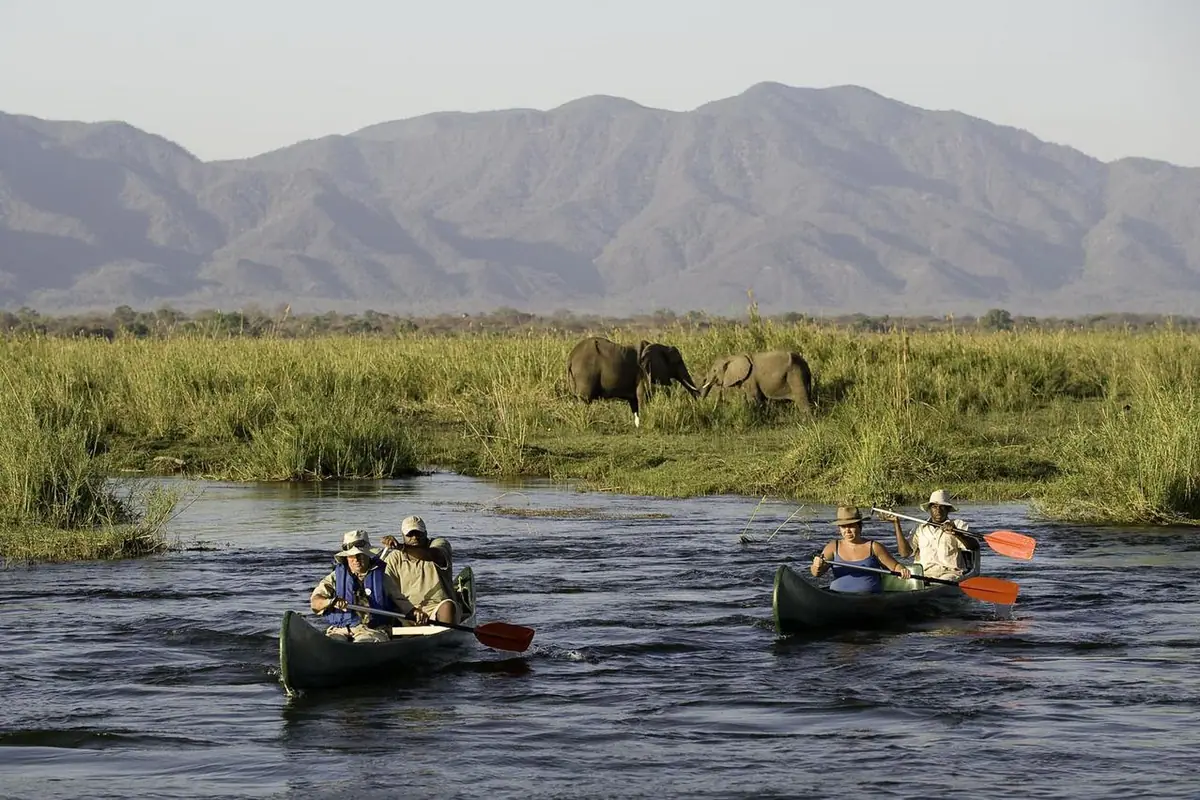
Trade the vehicle for a stable canoe on one of the shallow alkaline Momella Lakes. Paddle quietly past flamingos, waterbuck and hippos while Mount Meru rises above the water — one of the few places in Tanzania where you can do this.
- Flamingos and waterbirds
- No experience needed
- About 1–2 hours on the water
About 2 hours · On the water
Game Drives
Circle the lakes and crater rim by vehicle with a guide who knows the quiet tracks. The open grasslands of the Mini Serengeti are especially good in the early morning for zebra, warthog, buffalo and the occasional elephant.
- Half-day or full-day drives
- Mini Serengeti grasslands
- Good for all ages and mobility levels
Half or full day · Wildlife
Ngurdoto Crater Viewpoints
Known as the Little Ngorongoro, this 3 km-wide forested caldera is fully protected, so you view it from the rim. Look down on buffalo, warthog and antelope in the crater floor while colobus and blue monkeys move through the canopy around you.
- Rim viewpoints and photography
- Buffalo and antelope below
- Colobus monkeys in the forest
About 45 min · Scenery
Mount Meru Trekking
Africa's fifth-highest peak at 4,566 m dominates the park skyline. The 3–4 day trek to Socialist Peak passes through rainforest, moorland and alpine desert, with a steep final push and superb views of Kilimanjaro on a clear morning.
- 3–4 day summit trek
- Excellent Kilimanjaro preparation
- Armed ranger on the mountain
3–4 days · Trekking
Birdwatching
More than 400 species have been recorded here. Flamingos gather on the soda lakes, while silvery-cheeked hornbills, crowned eagles, bar-tailed trogons and Narina trogons inhabit the forest. Migrants arrive from Europe and North Africa in the wet season.
- 400+ recorded species
- Flamingo flocks at the lakes
- Best from November to April
All day · Birding
03 — Itinerary
Your Arusha National Park Day, Step by Step
A sample full-day itinerary. Pickup is included from Arusha hotels, with Kilimanjaro Airport and Moshi on request — where you stay changes your start time, so we have set out the options below.
Arusha city hotels
Recommended- 40 km to Ngongongare Gate
- Pickup 6:30 AM · return about 5:00 PM
Arusha is the natural base for this park — only 45 minutes from the gate. Staying in town gives you a civilised start, time for a full walking safari and canoe trip, and an early evening back at your lodge.
Kilimanjaro Airport (JRO)
About 1 hour- 60 km to the gate
- Pickup 6:00 AM · return about 5:30 PM
Ideal if you are arriving or departing the same day. We can time the pickup around your flight, store luggage in the vehicle and have you back at JRO with a comfortable buffer before departure.
Moshi hotels
About 1 hr 45 min- About 90 km to the gate
- Pickup 5:30 AM · return about 6:00 PM
Moshi works well if you are already based there before or after a Kilimanjaro climb. It makes a longer day, but the drive around the mountain is scenic and the park is still an easy add-on.
Our recommendation
Stay in Arusha if you can. The gate is only 45 minutes away, so you get a 6:30 AM start, a full morning walk and still have the afternoon for canoeing. Kilimanjaro Airport is about an hour and Moshi roughly 1 hr 45 min — both work if you are already there, but Arusha keeps the day relaxed.
Your day, step by step
Eight stops from pickup to drop-off, with the time each one usually starts.
- 6:30 AM45 min driveStep 01
Pickup — Arusha Hotels
We collect you from your hotel or lodge in Arusha and drive north-east through Usa River towards the park. JRO and Moshi pickups start earlier — see the options above.
Arusha 6:30 AMJRO 6:00 AMMoshi 5:30 AM - 7:15 AM30 minStep 02
Ngongongare Gate & Permits
Your guide handles the park entry and walking-safari permits while you stretch your legs. The gate sits below Mount Meru, and the forest begins almost immediately.
- 7:45 AM2 hoursStep 03
Walking Safari — Mini Serengeti
Set off on foot with an armed ranger across the open grasslands near Momella Gate. Zebra, warthog, giraffe and buffalo are common in the early light, and your ranger explains how to read tracks and behaviour.
- 9:45 AM30 minStep 04
Fig Tree Arch
Stop at the park's most photographed landmark, a massive fig tree that has grown into a natural arch wide enough to drive through. Your guide will show you the best angle and tell you how the tree formed.
- 10:30 AM45 minStep 05
Ngurdoto Crater Rim
Walk a short rim trail and look down into the Little Ngorongoro. The crater floor is closed to visitors, which keeps it a quiet sanctuary for buffalo, warthog and antelope, with colobus monkeys in the surrounding forest.
- 12:00 PM1 hourStep 06
Picnic Lunch at Momella
Rest at a picnic site near the lakes with a packed lunch and cold water. Dietary needs can be arranged in advance — tell us when you book. Keep an eye on the trees for hornbills and monkeys.
- 1:00 PM2 hoursStep 07
Canoe Safari — Momella Lakes
Paddle a stable canoe on one of the seven Momella Lakes. Flamingos feed in the shallows, hippos watch from a distance and the view back to Mount Meru is the best in the park. Life jackets and a guide are provided.
- 4:00 PM45–60 min driveStep 08
Return to Arusha
Leave the park in the late afternoon and drive back to Arusha, arriving around 5:00 PM. JRO and Moshi drop-offs are arranged on the same day with a slightly later finish.
04 — Nearby Attractions
More to Add Around Arusha
The park sits at the centre of Tanzania's northern circuit, with Kilimanjaro to the east and the Rift Valley parks to the west. Most guests pair the day trip with one of these.
Mount Meru
Inside the park
A 3–4 day trek to 4,566 m, with rainforest, moorland and a dramatic crater-rim summit ridge.
View TrekMount Kilimanjaro
About 1.5 hours away
On clear mornings the summit is visible from the park. Use Arusha as your base before or after the climb.
View MountainTarangire National Park
About 2 hours away
Baobabs, big elephant herds and quiet river valleys — the classic next stop on a northern safari.
View Park05 — Getting There & Practical Tips
Getting There, What to Bring & What to Expect
Location & Access
- Where: Arusha Region, between Arusha city and Kilimanjaro
- 40 km / 45 min from Arusha · 60 km from JRO · about 90 km from Moshi
- Main gate: Ngongongare, with Momella Gate used for the lakes and walking trails
- Park entry and ranger fees are included in our day trip
What to Bring
- Closed walking shoes with grip
- Long trousers and neutral colours
- Sunhat, sunscreen and insect repellent
- Light rain jacket for the forest
- Binoculars and a camera with a zoom lens
- Reusable water bottle and small notes for tips
Practical Tips
- Walk early: wildlife is most active before 10 AM
- Stay with your ranger at all times on foot
- Ask before photos of people at the park gates and villages
- Bring a dry bag for canoeing — splashes are part of the fun
- Don't swim in the lakes — they are alkaline and home to hippos
Safety on Foot
- Walking safaris are only permitted with an armed TANAPA ranger.
- Keep a calm, quiet distance from buffalo and elephants — your ranger will direct you.
- Never leave the trail or the group to get a closer photograph.
- Wear muted colours and avoid strong perfume or rustling bags near wildlife.
Park Fees & Canoeing
- Non-resident park entry is roughly $50–60 per person per day, plus VAT and ranger fees.
- The walking-safari ranger fee is about $20 per person and is included in our price.
- Canoeing is booked in advance and runs subject to lake conditions and water levels.
- Fees change periodically — we confirm the current rate in your quote before booking.
06 — Best Time to Visit
Best Time to Visit Arusha National Park
The park is open all year, and each season has a clear advantage. The dry months are best for walking and mountain views; the green season is best for birds, waterfalls and quiet trails.
Jun – Oct (Best)
Cool, dry days, shorter grass and the clearest views of Meru and Kilimanjaro — the most comfortable season for walking safaris.
Nov – Feb
Short rains turn the park green and bring migratory birds. Fewer visitors, dramatic skies and excellent photography light.
Mar – May
Long rains mean lush forest, full waterfalls and the lowest rates. Some tracks get muddy, so walking routes may be adjusted.
Any Month
Wildlife is resident and the park is close to Arusha, so it works even on a short stopover. Mornings are always best.
Note: the Momella Lakes rise and fall with the rains, which changes where flamingos gather and whether canoeing runs. Your guide will confirm conditions before you travel, and we will offer a walking or game-drive alternative if the water is unsuitable.
07 — Location & Map
Find Arusha National Park
Arusha National Park lies between Arusha city and Kilimanjaro, about 40 km north-east of town. The Ngongongare Gate is the main entrance, while Momella Gate serves the lakes and the start of the walking trails. Transfers from your hotel are included.
Interactive map of Arusha National Park in Northern Tanzania · Open in Google Maps ↗
08 — History & Conservation
A Century of Protection at the Foot of Meru
Long before it became a national park, the forests and crater of this area were recognised as special. The land was shaped by volcanic activity, then by colonial game laws, and finally by Tanzanian conservation — a story that explains why the park feels so green, quiet and carefully protected today.
How the Park Grew
- 1876: the Meru forests and Ngurdoto area are first described by European explorers.
- 1907: the area around Mount Meru is set aside as a game reserve under German colonial rule.
- 1960: Ngurdoto Crater National Park is gazetted to protect the crater and its forest.
- 1967: the Momella Lakes and Mount Meru are added, and the enlarged reserve becomes Arusha National Park.
Conservation Today
- Managed by TANAPA, with rangers patrolling the forest, crater rim and mountain trails.
- The Ngurdoto crater floor is closed to visitors, keeping it an undisturbed wildlife sanctuary.
- Walking safaris are licensed and ranger-led, limiting impact on the grasslands and forest.
- Local guides, drivers and porters earn directly from responsible tourism in the park.
09 — Gallery
A Glimpse of Arusha National Park
Forest walks, lake canoes and quiet wildlife encounters — a closer look at the day that awaits beneath Mount Meru.
 Tap to enlarge01
 Tap to enlarge02
 Tap to enlarge03
 Tap to enlarge04
 Tap to enlarge05
10 — Reviews
What Our Guests Say
"We had already done the big parks, but walking in Arusha was the day we talked about most. Our ranger read the bush like a book, and canoeing past flamingos with Mount Meru behind us was unforgettable."
— Hannah & Mark, United Kingdom
"Perfect day trip from Arusha. We were picked up at 6:30, walked the Mini Serengeti, saw buffalo and giraffe up close, then had lunch by the lakes. The guide was excellent and the pace was relaxed."
— Luca B., Italy
"Our children loved the canoe and the fig tree arch. It is a compact park, which meant no long drives between sightings, and we were back at the hotel in time for dinner. Great value for a family."
— The Nguyen family, Australia
11 — Tour Details
What's Included & Excluded
Included
- Hotel pickup and drop-off in Arusha (JRO and Moshi on request)
- Professional English-speaking guide and private 4x4 vehicle
- Arusha National Park entry fees and government taxes
- Armed park ranger for the walking safari
- Guided canoe safari on the Momella Lakes with life jackets
- Picnic lunch and bottled water
- All park permits and walking-safari fees
Excluded
- ✕Tips and gratuities
- ✕Personal expenses and souvenirs
- ✕Alcoholic beverages and soft drinks
- ✕Travel insurance
- ✕Accommodation before or after the day trip
- ✕Mount Meru trekking fees and multi-day mountain equipment
Practical Info
- Duration: About 8–10 hours including transfers
- Departure: Arusha 6:30 AM / JRO 6:00 AM / Moshi 5:30 AM on request
- Location: Arusha National Park, Arusha Region, Tanzania
- Group Size: Small groups of 2–10; private tours available
Good to Know
- Difficulty: Easy to moderate — 2–4 hours walking on mostly flat ground
- Safety: armed TANAPA ranger on every walking safari
- Canoeing: stable canoes, life jackets and a guide; no experience needed
- Best light: early morning for wildlife and mountain views; afternoons for the lakes
- Cancellation: free reschedule with reasonable notice for weather or unforeseen circumstances
Price Per Person
Rates are per person for a private day trip from Arusha and depend on group size. They include park entry, the walking-safari ranger, canoeing, lunch, guide and transport. JRO and Moshi pickups may add a transfer supplement. Mount Meru treks are quoted separately — contact us for a full mountain itinerary.
1 Person
$280
per person
2 People
$200
per person
3–4 People
$170
per person
5–6 People
$150
per person
7+ People
$140
per person
12 — Combine With
Build a Bigger Northern Adventure
Arusha National Park is a day visit, so it slots neatly into a longer trip. Add a Kilimanjaro climb, a Mount Meru trek or the classic northern-circuit parks — or let us build the whole route around your dates.
Mount Meru Trek
A 3–4 day climb from the same park, through rainforest and moorland to Socialist Peak at 4,566 m.
View TrekMount Kilimanjaro
Warm up on Meru, then take on Africa's highest peak — Arusha is the perfect base for both.
View MountainNorthern Circuit Safaris
Add Tarangire, Ngorongoro and the Serengeti to your Arusha day for the full Tanzania safari.
View ToursLooking for a shorter version? Our Arusha National Park day trip covers the same highlights with a focus on transfers and timing.
13 — FAQ
Frequently Asked Questions
How far is Arusha National Park from Arusha?
The main Ngongongare Gate is about 40 km from Arusha city, roughly 45 minutes by road. Kilimanjaro International Airport is about 60 km away, and Moshi about 90 km. We include pickup and drop-off from Arusha hotels in the day trip, with JRO and Moshi available on request.
Can you walk inside Arusha National Park?
Yes — walking is the park's signature experience. Walks last 2–4 hours and are led by an armed TANAPA ranger, usually through the Mini Serengeti grasslands, the forest at the foot of Mount Meru or along the crater rim. The ranger fee is included in our day trip, and routes can be shortened for families or anyone who prefers a gentler pace.
What animals will I see in Arusha National Park?
Common sightings include Masai giraffe, Cape buffalo, zebra, warthog, bushbuck, duiker, blue monkey and black-and-white colobus. Elephants are present but less common, and leopard is shy and rarely seen. The park is not a Big Five destination — there are no lions or rhinos — but the walking and birdlife make up for it.
How much does a day trip to Arusha National Park cost?
A private day trip from Arusha typically costs $140–280 per person depending on group size, including park fees, ranger, canoe safari, lunch, guide and transport. Solo travellers pay the most; groups of seven or more pay the least. Mount Meru treks are priced separately as a 3–4 day climb.
Is Arusha National Park worth visiting?
Yes, especially if you want a break from long safari drives. It is compact, green and varied — grasslands, montane forest, crater rim, seven soda lakes and Mount Meru — and it is the best park in northern Tanzania for walking and canoeing. It also pairs easily with a Kilimanjaro climb or a longer northern-circuit safari.
What is the best time to visit Arusha National Park?
June to October is the driest and most comfortable season for walking, with clear views of Mount Meru and Kilimanjaro. November to April is greener and better for birds, with migratory species arriving, but expect afternoon showers. The park is open and accessible year-round.
Do I need malaria tablets for Arusha National Park?
Arusha is in a malaria-risk area, so most travellers take prophylaxis. Consult your doctor or travel clinic before you go, use insect repellent in the evenings and sleep under a net. The park is high enough to be cooler than the coast, but mosquitoes are still present.
Is the walking safari suitable for children?
Yes, for most children aged six and up. The Mini Serengeti route is mostly flat and the ranger sets a gentle pace, with plenty of stops to look at tracks and wildlife. Tell us in advance if you would like a shorter walk or a vehicle-based alternative for younger children.
14 — Book This Tour
Book Your Arusha National Park Safari
Contact us to check availability, confirm pickup in Arusha, JRO or Moshi, or add the park to a longer safari. We will confirm the walking safari, canoe booking and the day's timing before you pay.
Book Online
Send a booking request with your dates and group size.
