Quick Answer
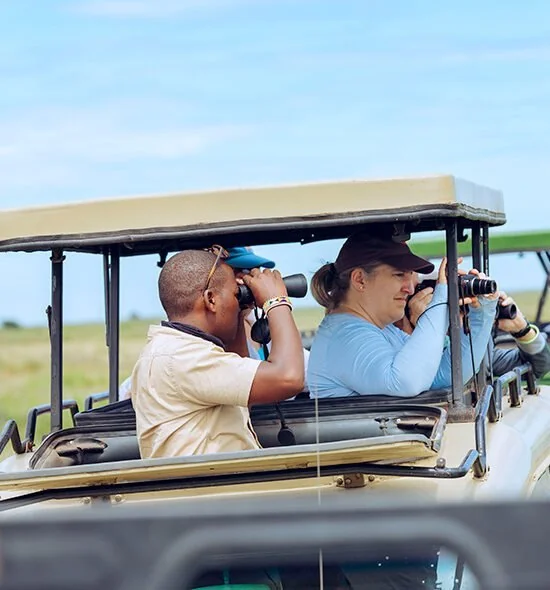
Yes, Tanzania is one of the world's great family safari destinations, and thousands of families travel here safely every year. The experience can be genuinely transformative for children — a lion hunt, an elephant herd drinking, a leopard in a tree is the kind of memory that shapes a childhood.
The key variables are age of your children (park rules and practical tolerances differ hugely between a 5-year-old and a 12-year-old), park choice (some parks work far better with children than others), and operator experience with family groups. Get these three right and a Tanzania family safari is one of the most rewarding trips you will ever take.
Family Safety at a Glance
Min Age
5–7 (by policy)
Ideal Age
8–12 years
Top Parks
Ngorongoro, Tarangire
Vehicle
Private, essential
Best Season
June – September
Malaria
Prophylaxis essential
Drives
Short & structured
Evacuation
AMREF cover
First-timers
Northern Circuit
Family Safety Overview
Tanzania safari safety for families is multi-dimensional. The wildlife itself is generally not a threat as long as standard rules are followed — most incidents in national parks involve people who stepped out of vehicles or ignored guide instructions. The more practical daily concerns for families are health preparation, sun exposure, vehicle comfort, and managing energy and patience across long drive days.
Vehicle Safety
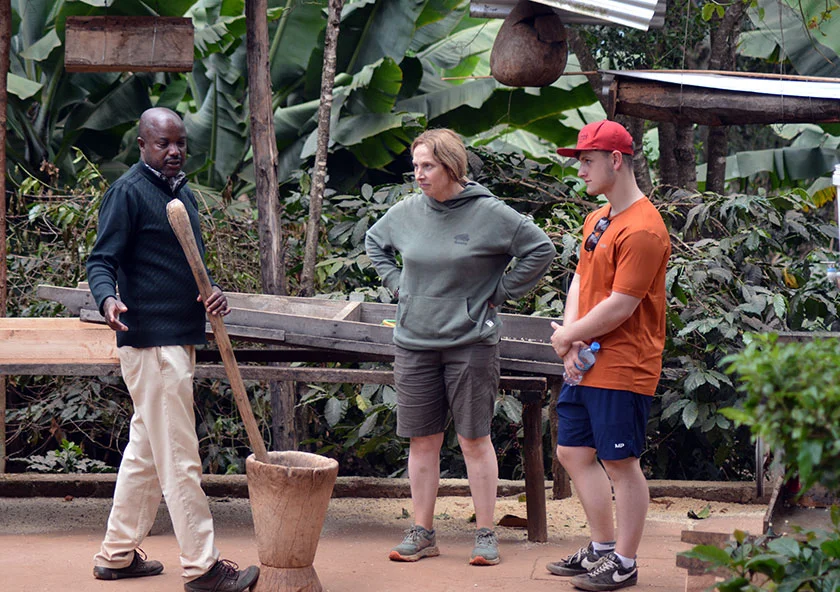
Use a well-maintained 4WD Land Cruiser with an experienced, licensed guide. The vehicle is your safety envelope throughout the safari. Ensure seatbelts are available for children and a working pop-top roof hatch for safe game viewing.
Health Safety
Malaria prophylaxis, sun protection, hydration, and stomach hygiene are the four pillars of family health on safari. Tanzania's equatorial sun at altitude is genuinely harsh — SPF 50+ applied consistently is essential even on overcast days.
Pace Control
Private safari is the single most important logistical decision for families. On a private vehicle your guide builds the day around your children's needs — early returns, extended stops, flexible meals, and toilet breaks whenever required.
Age-by-Age Suitability Guide
Age matters more on a Tanzania safari than almost any other type of family holiday. Tanzania National Parks Authority (TANAPA) rules set a general minimum of 7 years for most game parks, with 7–12 at operator and park discretion. But beyond rules, children's tolerance for long drives and their ability to enjoy the experience vary enormously by age.
| Age Range | Suitability | Best Approach |
|---|---|---|
| Under 5 | Not recommended for most game parks | Park rules restrict access; Ngorongoro crater may be an exception with some operators; Zanzibar beach component works well |
| 5–7 years | Possible with restrictions, check in advance | Some operators and parks allow it; child's temperament matters; shorter drives, private vehicle essential |
| 8–12 years | Excellent, the ideal safari age | Old enough to understand and remember every sighting; young enough to be genuinely thrilled; full game drives possible |
| 13+ years | Treat as adults for most purposes | Longer routes, migration-focused plans; some operators offer youth-specific experiences; walking safaris possible at 16+ |
Under 5: Wait if possible
Park rules aside, a 3-year-old on a 3-hour drive through featureless savanna is not a rewarding experience for anyone. If you have children under 5 and want Africa now, consider building the trip primarily around Zanzibar's beaches, the sea, and Stone Town — all wonderful for young children. Ngorongoro Crater is sometimes cited as an exception where very young children can visit in vehicles, but confirm this with your operator first.
5–7 Years: Possible with careful planning
Some operators and parks allow children aged 5–7 with advance confirmation. The critical question is your child's temperament: can they sit quietly for 2–3 hours? Handle early 06:30 starts? Stay patient during stretches without sightings? Children who are naturally curious and calm tend to do well. Choose compact, wildlife-dense parks (Ngorongoro, Tarangire) over vast open plains, and keep drive days short.
8–12 Years: The ideal safari age
Eight to twelve is genuinely the sweet spot. Children this age understand what they are seeing — predator-prey dynamics, elephant herd structures, why the wildebeest migrate — and are still young enough to be genuinely, unbridled thrilled by every sighting. Full game drives are manageable. Educational guiding resonates. This is the age to go.
13+ Years: Essentially adults
Teenagers can do everything adults can on a Tanzania safari, and their engagement is typically higher than parents expect. Walking safaris are available from around 16 with experienced guides. Migration-focused itineraries and longer routes all work well. The main challenge is managing expectations — most teens settle wonderfully into bush time by day three.
Best Parks for Families
Not all parks are equal for family safari. The key criteria are high wildlife density (more sightings per hour of driving), shorter distances between points of interest, and accessible viewing conditions. Here is how Tanzania's main parks compare for family travel.
Ngorongoro Crater
Top family pick — an enclosed 260 km² crater holding ~25,000 animals, with all of the Big Five. Compact geography means reliable, frequent sightings with short drives.
Tarangire
Elephant magic for children — over 4,000 elephants concentrate here in the dry season. Watching herds of 100+ elephants at the river captivates young travellers like nothing else.
Lake Manyara
A great half-day park for younger children — compact, visually varied, with flamingos, hippos, entertaining baboon troops, and the famous tree-climbing lions.
Serengeti
Amazing for children 8+, but choose the section carefully. The central Seronera Valley is the most wildlife-dense and accessible for families; the far north involves longer drives.
For a full family circuit, combining Tarangire's elephants, Ngorongoro's density, and the central Serengeti creates the strongest, most engaging 5–6 day itinerary for children.
Health & Medical Tips for Parents
The most practical daily concerns for families are health-related rather than wildlife-related — and all of them are manageable with proper preparation. Consult a travel health clinic 6–8 weeks before departure for age-appropriate advice for every family member.
The four pillars of family health on safari:
Malaria Prevention
There is no malaria-free safari zone in northern Tanzania — prophylaxis is essential for all family members, including children. Pediatric options include Malarone (atovaquone-proguanil), which suits children over 11kg and starts just 1–2 days before arrival. Apply DEET-based repellent at dusk and dawn, the highest-risk times, cover arms and legs in the evenings, and rely on lodge mosquito nets. For 24/7 cover in remote areas, AMREF Flying Doctors provides medical evacuation for northern Tanzania — ask your operator if it's included.
Sun Protection
Tanzania straddles the equator and most parks are at elevation (Ngorongoro rim 2,300m, Serengeti 1,500m). Equatorial UV at altitude is far stronger than most visitors expect. SPF 50+ applied every 2 hours, wide-brimmed hats, and UV-protective clothing are not optional — sunburn on day two of a seven-day safari is miserable for children and parents.
Food, Water, and Stomach Health
All reputable camps provide filtered or bottled water — tap water in camps should not be consumed by children or adults. Children are more susceptible to GI issues while travelling, so carry oral rehydration salts, a child-safe probiotic, and a pediatric antidiarrheal. Most camps handle dietary allergies if notified in advance — be specific when booking.
Wildlife Safety Rules to Teach Children
The wildlife safety record in Tanzania's parks is excellent because the rules are clear and consistently enforced by good guides. Talk to your children about these rules before the first game drive — framing them as "how to have the best possible experience" helps children take them seriously.
Stay in the vehicle always
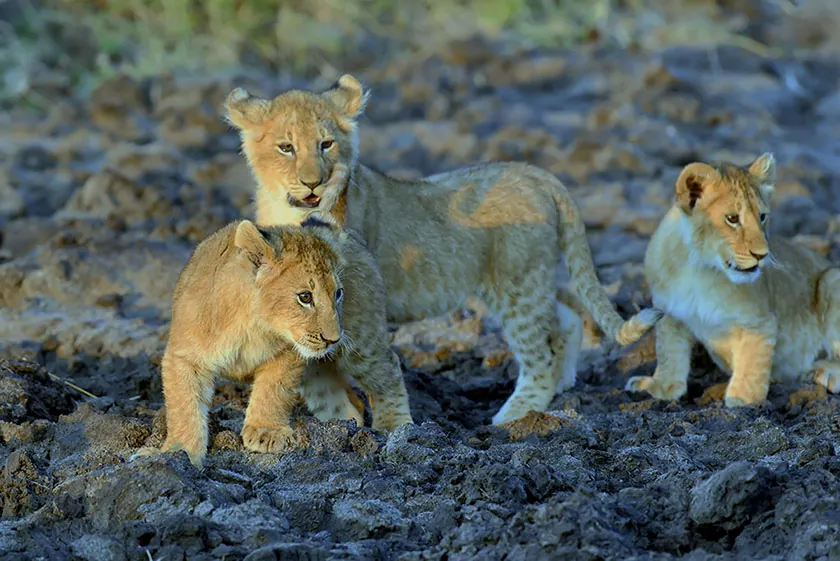
The vehicle is your safe space — wildlife interacts with it as a single large object, not as individual people. Standing through the roof hatch for viewing is fine and encouraged; leaning out of windows or reaching toward animals is not. This rule is non-negotiable.
Quiet observation at sightings
When the guide stops, voices drop to conversational whispers. Sudden loud noises can startle animals (elephants especially) and cut the sighting short. Teach children this as a game — "who can stay quietest to get the closest view?" — it works remarkably well.
Guide instructions first, always
On safari the guide makes all decisions about movement, stops, and proximity. Parents should not override guide decisions in front of children — this undermines the authority structure that keeps everyone safe. Brief children beforehand and trust the guide.
No feeding or attracting animals
Never offer food to wild animals or try to attract their attention. Feeding habituates them to human food, which eventually leads to the animal being destroyed. Children who understand this background tend to be more respectful — explain why the rule exists, not just that it exists.
Practical Family Safari Tips
Book a private vehicle
Non-negotiable with children. Group vehicles run on fixed schedules; children don't. A private vehicle adjusts everything around your family — early returns, extended stops, flexible timing.
Match drives to children's energy
The best pattern for younger children: 06:30 morning drive, return by 10:00–10:30, midday rest (a pool swim), then 15:30 afternoon drive. Avoids the hottest hours and keeps drives under 4 hours.
Choose lodges with pools
A midday swim is one of the best tools for family morale. Most mid-range and luxury lodges in Ngorongoro and the Serengeti have pools, creating a rewarding daily rhythm.
Pack a busy-bag
Wildlife identification cards, drawing pads, age-appropriate books, and a dedicated camera for older children turn slow stretches into activities — the difference between "are we nearly there?" and deep engagement.
Family Safari Checklist
For a budget breakdown and practical packing details, our safari packages and family guides cover the numbers and the gear in depth.
Frequently Asked Questions
Yes, Tanzania safaris are genuinely safe for children when planned carefully. The key variables are the age of your children, your choice of parks, and your operator's experience with family itineraries. The wildlife itself is not a danger as long as everyone stays in the vehicle during game drives and follows the guide's instructions. Reputable operators in Tanzania have excellent safety records with family groups. The main practical risks are health-related (malaria, sun exposure, stomach issues) rather than wildlife-related, and all of these are manageable with proper preparation.
Tanzania National Parks (TANAPA) rules generally do not permit children under 7 in game drive vehicles in most parks. Children aged 7–12 are admitted at park/operator discretion. Always check the specific rules for each park you plan to visit, and confirm with your operator before booking. Some operators have their own minimum ages above the park minimum, particularly for camps in unfenced areas. Ngorongoro Crater is often cited as more flexible for younger children because you descend by vehicle and stay in the vehicle throughout.
Policies vary considerably. Many lodges and camps in fenced or semi-fenced areas welcome children of all ages. Some high-end tented camps in unfenced wilderness areas, where animals can walk through camp at night, set minimum ages of 8 or 12 for safety reasons. Always check with your operator and confirm the specific camp's age policy before booking. Family-friendly lodges often have interconnecting rooms or family tents, child menus, and staff experienced with children.
Private safari is non-negotiable for families with children. On a group (shared) safari, the vehicle follows a fixed schedule, fixed departure times, fixed stops, fixed return to camp. Children don't work like that. They need toilet breaks when they need them, they lose patience at unpredictable moments, and they may need to return to camp earlier than the rest of the group. A private vehicle means your guide adjusts the entire day around your family's rhythm. The price difference between private and group is significant per person, but for families it is money very well spent.
A 5–6 day northern circuit combining Tarangire, Ngorongoro Crater, and the central Serengeti is the strongest option for first-time families. Tarangire's elephant concentrations guarantee exciting sightings quickly. Ngorongoro Crater delivers near-guaranteed Big Five sightings in a compact area with short drives. The central Serengeti (Seronera Valley) adds the drama of lion prides and the open plains without requiring the long drives of the northern crossing zone. This combination provides maximum wildlife density per hour of driving.
Visit a travel health clinic 6–8 weeks before departure. For Tanzania, the key considerations are: malaria prophylaxis (pediatric-appropriate options exist), yellow fever vaccination (recommended and sometimes required depending on your routing), routine vaccines up to date, and hepatitis A. Carry a well-stocked travel health kit including child-safe fever reducer, oral rehydration sachets, antihistamine, antiseptic, and motion sickness medication.
There are no malaria-free safari parks in northern Tanzania. Speak to your travel health clinic about pediatric antimalarials, options include Malarone (atovaquone-proguanil), which is well-tolerated by children and starts just 1–2 days before arrival. DEET-based insect repellent should be applied at dusk and dawn. Cover arms and legs in the evenings. Most safari lodges use mosquito nets and have screened accommodation. AMREF Flying Doctors provides medical evacuation cover for northern Tanzania.
June through September is the best overall window for families. The dry season provides stable, predictable conditions, reliable roads, concentrated wildlife, and no afternoon rain interrupting game drives. The school holiday alignment makes logistics easier. If budget is a priority, November is excellent value: shorter rains only, good wildlife, significantly lower prices, and less crowded parks. Avoid April–May with younger children.
Related Family Safari Guides
Safari with Children: Safety Tips
Detailed family safety guide
Is Tanzania Safe for Solo Female Travelers?
Complete safety guide for women
Is Tanzania Safe for Safari?
The honest 2026 guide to crime, park rules and health
Private vs Group Safari
Which is better for families?
Best Time for a Tanzania Safari
Plan your trip by season
The Big Five in Tanzania
Lion, elephant, rhino & buffalo
What to Take on Safari
Packing lists for every safari style
What I Wish I Knew Before Safari
Insider tips from travellers
Tanzania Safari Packages
Compare 3 to 10-day itineraries
Plan a Family-Safe Safari With Us
Tell us who is travelling and we will tailor drive times, lodge selection, and pacing around your family — with private vehicles and guides experienced with children.
Last updated: September 7, 2026. Family safety guidance based on years of guiding families across Tanzania's northern circuit, referenced against TANAPA park rules and AMREF health standards.