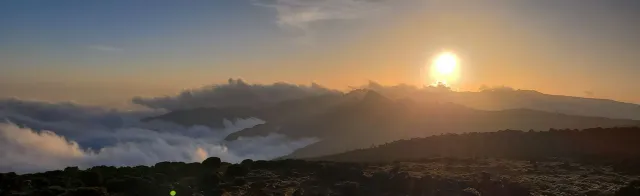
Karibu!
Kilimanjaro International Airport (JRO) is the most popular arrival point for climbers, safari travellers, and anyone heading to the wonders of northern Tanzania. Set on the border of the Kilimanjaro and Arusha regions — just 33 km from Mount Kilimanjaro itself — the airport puts you within easy reach of the mountain, the great national parks, and town comforts. Arrival here is generally smooth and stress-free when planned well.
Quick Facts: JRO at a Glance
IATA Code
JRO — Kilimanjaro International Airport
Region
On the border of the Kilimanjaro and Arusha regions
Mount Kilimanjaro
Only 33 km from the airport itself
Distance to Moshi
40 km (approx. 1 hour by car)
Distance to Arusha
50 km (approx. 1 hour 10 minutes by car)
Masatu Recommendation
We strongly advise arriving 24–48 hours before your climb or safari starts. This gives you time to rest, attend the pre-trek briefing, and check your gear without rushing.
Terminal & Location
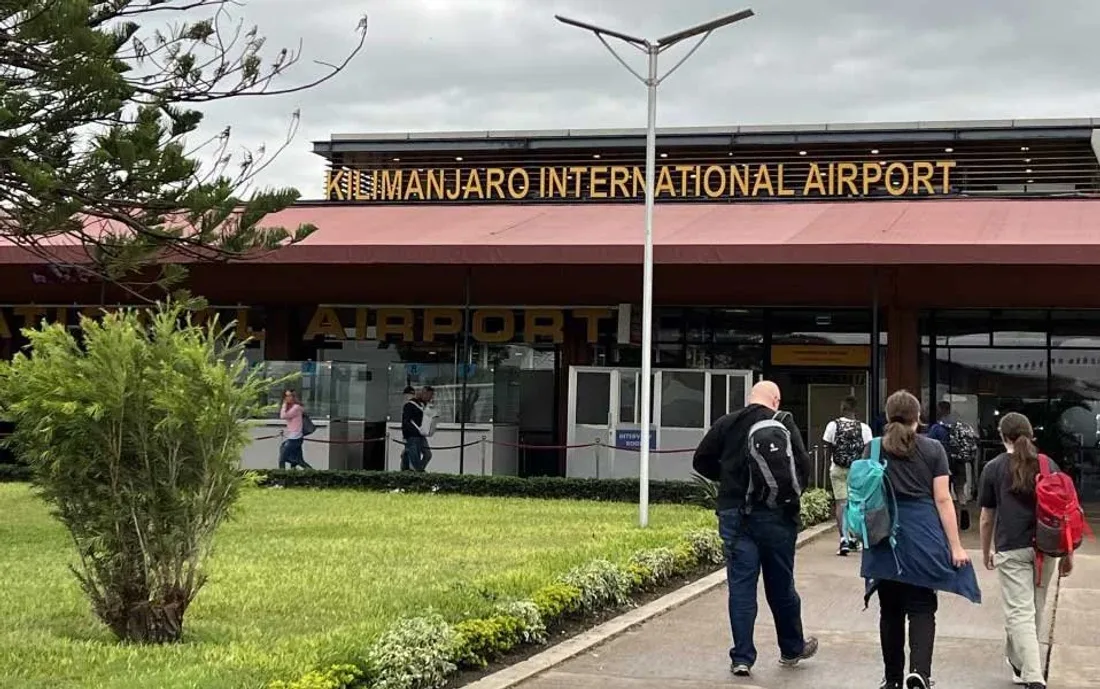
JRO is a compact, single-terminal airport that runs on a simple layout: a ground-level domestic area, an international arrivals zone, and departures on the same level, with a café and restaurant above. Nothing at JRO is far from anything else, which makes it one of the easiest airports in East Africa to navigate on foot.
The airport sits on the border of the Kilimanjaro and Arusha regions, roughly midway between the two towns that anchor northern Tanzania's tourism circuit.

Closest City: Moshi
40 km — about 1 hour by car. The home base for most Kilimanjaro climbs.
Closest City: Arusha
50 km — about 1 hour 10 minutes by car. The safari capital of Tanzania.
Masatu Tip
Driving on the right side: whether you are heading to Moshi or Arusha, account for traffic through the towns in the late afternoon. Your Masatu driver manages the route and timing for you.
International Flights to JRO
JRO is served by a solid line-up of international carriers connecting the airport directly with Europe, the Gulf, and hubs across Africa.
KLM
Amsterdam (AMS)
Daily service from Europe
Turkish Airlines
Istanbul (IST)
Connections from across Asia & Europe
Qatar Airways
Doha (DOH)
Connections from the Gulf & Asia-Pacific
Swiss International Air Lines
Zurich (ZRH)
Direct from Switzerland
Ethiopian Airlines
Addis Ababa (ADD)
Connections from Africa & beyond
Air France
Paris (CDG)
Direct from France
Flying via Nairobi?
Kenya Airways and AirKenya Express connect JRO to Nairobi (Jomo Kenyatta) in about one hour. Kenyan legs are more prone to schedule changes than the main carriers, so keep a buffer in your itinerary. And if you spend more than 12 hours in Kenya (a yellow-fever zone), carry your yellow fever certificate for entry into Tanzania.
From the USA
There are no direct flights from the United States to JRO. Most travellers fly KLM via Amsterdam (AMS); round-trip fares typically start around USD 1,100 depending on season and how far ahead you book.
Domestic Flights & Baggage Limits
A reliable network of domestic carriers links JRO with Dar es Salaam, Zanzibar, Arusha and the safari airstrips — ideal for multi-stop itineraries.
Auric Air Service
Scheduled and charter flights across northern Tanzania
Flightlink
Regional service from Arusha and the coast
Regional Air
Light aircraft network within northern Tanzania
Air Excel
Twin-otters, charters and scheduled routes
Safari Air Link
Light aircraft charters for the safari circuit
As Salaam Air
Connections within the domestic network
What to Expect
Precision Air and Air Tanzania also connect JRO to Dar es Salaam and Zanzibar, though their schedules occasionally slip. Checked baggage on domestic legs is usually limited to 15–20 kg — leave the heavy expedition gear with us instead.
Arrival: Step-by-Step
Five short steps get you from the plane to your driver. Here is exactly how it unfolds at JRO.
Disembark
Many regional and international flights use stairs onto the tarmac, so you may walk a short way to the terminal. Have a hat or umbrella handy for sun or rain.
Immigration
Proceed to the international arrivals zone. If you have an e-visa, use the dedicated visa-holder lane; otherwise you can pay for a visa on the spot. Keep your passport and arrival card ready — a pen speeds things up.
Customs Declaration
Complete the customs declaration as required. Declare cash over USD 10,000 (or equivalent) and any goods that must be entered.
Baggage Reclaim
Collect your luggage. Free carts and free Wi-Fi are available to pass the time. If you cannot show a yellow fever certificate, the terminal clinic (approx. USD 50) can issue one.
Exit to Arrivals
After customs you reach the arrivals area: currency exchange desks and ATMs (Tanzanian shillings only) are here, restrooms sit in a separate building, and drivers wait with name boards outside. Look for the Masatu Tours sign!
Can you see Kilimanjaro from the plane?
Yes! If your arrival is during daylight and the skies are clear, you may be treated to a spectacular view of the roof of Africa as you descend.
 Pro Tip: for the best chance of a view, secure a window seat on the right side of the aircraft.
Passport Validity
Ensure your passport has at least six months' validity remaining and enough blank pages for stamps.
Yellow Fever
If you are transiting through or have spent more than 12 hours in a yellow-fever zone (e.g., Kenya or Ethiopia), you must carry a valid yellow fever vaccination certificate. Officials often check this at entry.
Cash Declaration
If you enter carrying more than USD 10,000 (or equivalent), you must declare it on arrival.
Dive deeper
📚 For more details, read our comprehensive guides: Visa for Tanzania and Immunizations for Tanzania.
Departure, Lounges & VIP Service
Departing JRO is straightforward: international check-in opens about 3 hours ahead, the gate zone has six boarding gates, and a few simple habits keep things smooth.
Arrive Early
International check-in opens about 3 hours before departure. Aim to arrive 3 hours early for international flights and 2 hours for domestic ones.
Flights Can Leave Early
Domestic flights at JRO sometimes depart ahead of schedule — reach your gate promptly and stay close for announcements.
Baggage Wrapping
A baggage-wrapping service in the departures hall protects your luggage for the journey. Paid in cash.
Weight Limits
Domestic legs usually allow 15–20 kg of checked baggage. Onward safari flights are stricter — pack light.
The Plastic Bag Ban Still Matters
Do not pack disposable plastic shopping bags in your checked or hand luggage — Tanzania's plastic bag ban is strictly enforced, including at JRO.
📚 Learn more: Plastic Ban in Tanzania.
JRO Lounges
Standard Lounge
USD 15Comfortable seating, refreshments and Wi-Fi for a few relaxed hours before departure.
Business Lounge
USD 35Food and drinks included — including alcohol — with quieter seating in the departures area.
VIP Lounge
USD 180 arrival / 200 departureHeld in a separate VIP building; staff handle your visa paperwork and luggage for you. Reserve at least 4 days in advance — note it can be cancelled at short notice for government officials.
Shops, Services & Facilities
JRO is a growing international airport. It isn't a massive shopping mall, but it has basic, reliable services designed for inbound tourists.
Restaurant, Bar & Café
On the second floor — the main spot for a meal, snack or coffee before or after your flight.
Toilets & Restrooms
Located on the lower level of the terminal. Small facilities, so time them around queues.
Souvenirs & Bookstore
Small shops sell Tanzanian souvenirs, books and travel essentials.
Jewelry & Tanzanite
Jewelry stores offer Tanzanite — the blue gemstone mined only near Kilimanjaro. A memorable gift.
KIA Lodge
A hotel on the airport grounds — handy if you arrive late or fly out early.
Free Wi-Fi
Free Wi-Fi is advertised in the terminal. Useful, but be ready for intermittent speeds.
Masatu Tip
Currency: airport rates are okay for small amounts. Change only a little here for immediate needs, and use banks or bureaus in Moshi or Arusha for larger sums.
History & Fun Facts
JRO has a surprising story for a regional gateway — everything from rhinos to a rare gemstone is part of its past.
Opened in 1971
Kilimanjaro International Airport has served northern Tanzania for more than 50 years.
KIA = JRO
The airport's initials, KIA, match its IATA code JRO — and locals still call it KIA today.
From Savannah to Runway
The area was open savannah grassland, where rhinos roamed, long before the airport was built.
Tanzanite Country
JRO sits close to the Mererani hills — the world's only source of Tanzanite.
Big Airliners Welcome
The runway is long enough to handle large aircraft, including the Boeing 747-400 and the Antonov An-124.
One of Three Gateways
Tanzania's international airports are JRO, Dar es Salaam (DAR) and Zanzibar (ZNZ) — but only JRO sits at the foot of Kilimanjaro.
Transfers to Moshi / Arusha
Getting from JRO to your hotel is simple, but it helps to book ahead. For a full breakdown of the choices — private transfer, taxi or shared shuttle — see our guide to how to get from Kilimanjaro Airport to Moshi.
Masatu Private TransferRecommended
We meet you in arrivals with a sign, assist with your bags, and drive you to Moshi or Arusha in a comfortable, air-conditioned vehicle (usually a Toyota Alphard). We track flights 24/7, so if you are delayed, we will still be waiting.
Shared Shuttle or Taxi
These are cheaper but can be slower. Always agree on the fare before leaving the airport or book through a reliable company with pre-paid options.
Rental Car
While possible, we generally do not recommend self-driving for first-time visitors due to local road conditions and driving styles.
Staying overnight near JRO?
Many Masatu guests rest at Aishi Machame Hotel (approx. 40 minutes from JRO) — close to the Machame trailhead and perfect for our pre-climb kit checks. For a full rundown of the best places to rest near the trailheads, see our Kilimanjaro hotels guide.
Frequently Asked Questions
Kilimanjaro International Airport has the IATA code JRO. It is located on the border of the Kilimanjaro and Arusha regions in northern Tanzania, roughly 40 km from Moshi and 50 km from Arusha.
JRO is approximately 40 km (about 1 hour) from Moshi town and 50 km (about 1 hour 10 minutes) from Arusha, depending on traffic. Mount Kilimanjaro itself is roughly 33 km from the airport.
Yes. Most nationalities can obtain a single-entry tourist visa on arrival at JRO. Tanzania also offers an e-visa before travel at immigration.go.tz, and visa-holders can use a dedicated lane at immigration.
Yes. ATMs accepting Visa and Mastercard are available in the arrivals area, dispensing Tanzanian shillings only. Currency exchange counters are also present, though rates are often less favourable than town banks or using a card abroad.
International carriers serving JRO include KLM (Amsterdam), Turkish Airlines (Istanbul), Qatar Airways (Doha), Swiss International Air Lines (Zurich), Ethiopian Airlines (Addis Ababa) and Air France (Paris). Kenya Airways and AirKenya Express connect Nairobi in about one hour, and several domestic carriers serve the Tanzanian network.
No. There are no direct flights from the United States to JRO. Most travellers fly KLM via Amsterdam; round-trip fares typically start around USD 1,100 depending on the season and how far ahead you book.
Arrive about 3 hours before international departures and 2 hours before domestic ones, since check-in generally opens 3 hours ahead. Domestic flights can occasionally depart early, so stay close to your gate.
Yes. JRO offers a standard lounge (about USD 15), a business lounge with food and drinks including alcohol (about USD 35), and a VIP lounge (about USD 180 on arrival / USD 200 on departure) in a separate building, reserved at least 4 days in advance.
Masatu Tours arranges private transfers from JRO to your hotel as part of your climb package. Shared shuttles and taxis are available for independent travellers — agree on the fare before leaving the airport.
Report to the airline's baggage desk in arrivals immediately. Most lost luggage on Kilimanjaro routes is forwarded within 24–48 hours. Masatu Tours can lend essential gear in the meantime.
Often yes. On clear mornings, Kilimanjaro is visible during approach — the airport sits just 33 km from the mountain. Sit on the right side of the aircraft when flying in from the north for the best view.
Plan Your Arrival with Masatu
JRO is a compact, friendly international gateway that gets you close to northern Tanzania's highlights. We recommend arriving a day early to let us meet you at the terminal, handle your transfer, and get you settled. Use that extra time to rest, check your kit at our depot, and enjoy your first Tanzanian meal.
The Masatu Checklist for JRO Arrivals
Send Flight Details
Forward your flight number and arrival time to Masatu well before you travel.
Documents
Carry a printed copy of your e-visa confirmation (if you applied online) and a pen for filling out arrival forms.
Cash
Have some small USD/EUR bills (printed post-2009) for tips or initial exchange if needed.
Banking
Notify your home bank about your travel dates and bring two different payment cards in case one fails.
Relax
You are in good hands.
Tell us your flight details — we'll be waiting at JRO to help you start your adventure calm, safe, and well-prepared. Pole pole (slowly, slowly), and welcome to Tanzania.
Helpful Resources
More Tanzania & Kilimanjaro Guides
7 GuidesHow to Get to Kilimanjaro
Airports, transfers and arrival made simple
Visa for Tanzania
Fees, documents and the application process
Money in Tanzania
Currency, ATMs, cards and money tips
Plastic Ban in Tanzania
What travellers cannot bring into the country
Kilimanjaro Packing List
Essential gear for a successful climb
Kilimanjaro Hotels
Best places to rest before the climb
Airport to Moshi Transfers
Private transfer, taxi & shuttle options
Sources & References
- Tanzania Immigration & eVisa Portal – visa on arrival and e-visa rules for JRO.
- Kilimanjaro International Airport Official Site – terminal, flights, lounges and airport services.
- Tanzania Tourism Board – official entry and travel guidance.
Last updated: September 16, 2026. Rules, fees, schedules and facilities can change — always confirm current visa requirements, flight schedules, lounge availability and airport services before your trip.
