It's 11:30 at night, and it feels like someone is holding a hairdryer over your face. Except it's minus 20 degrees, you're wearing every layer you own, and the only light comes from a headlamp bouncing up a black wall of scree ahead. Your lungs are begging for air that simply isn't there. This is summit night on Kilimanjaro, and it is the hardest thing most people will ever voluntarily do.
So is Kilimanjaro difficult? Here's the honest, two-part answer: technically, no — it's a long walk, not a climb. You don't need ropes, crampons, or any mountaineering skills. Physically and mentally, absolutely yes — the altitude at 5,895 m cuts your oxygen by about half, and your body has to adapt on a schedule you can't fully control. This guide walks you through every factor that makes the mountain hard, what your real odds are, and exactly how to stack them in your favour.
Guide's Note
We've run climbs on every route on the mountain, and the difference between people who summit and people who don't is rarely fitness. It's itinerary length, pace, and listening to your guides. Pick a route with enough days, go slowly, and the mountain becomes achievable for most healthy people.
Kilimanjaro Difficulty Quick Facts
Summit Height
5,895 m (19,341 ft)
Technical Difficulty
None — a trek, not a climb
The Real Challenge
Altitude & acclimatization
Duration
5–9 days depending on route
Summit Success
~65% overall; 85–90% on 8+ days
Recommended Training
3–6 months
AMS Risk
~50% of climbers above 3,000 m
Summit Night Cold
-10°C to -25°C
Oxygen at Summit
~50% of sea level
Daily Hiking
4–8 hours, pole pole pace
Total Distance
60–100 km round trip
Summiter Records
Age 7 to 89 years old
What Counts as Difficult?
Most people imagine Kilimanjaro as a vertical wall of ice and rock. It isn't. The standard routes are walked trails, steep in places, rocky in others, but never technically hard. Here's the honest breakdown of what you're actually signing up for.
Hike
Walking on trails with real elevation gain. Kilimanjaro is a hike, a long, relentless, high one.
Trek
A multi-day hike where you camp or sleep in huts and carry only a daypack. This is the category Kilimanjaro lives in.
Climb
Requires ropes, rock skills, and technical equipment. Kilimanjaro does not belong here, and that's exactly why it's climbable by beginners.
The hard part isn't the terrain in front of your feet. It's the air, the cold, the fatigue, and the voice in your head on the third night. Understanding that distinction is the first step to preparing properly.
Who Can Climb Kilimanjaro?
More people than you'd think. Age matters far less than fitness, attitude, and the number of days you allow. Here's how we'd honestly sort most climbers.
Most Likely to Summit
Ages 20–50, decent cardio, no history of serious altitude illness, and mentally prepared to take it slow. Choose a 7–9 day route.
Possible, With Preparation
Ages 50–65, moderate fitness, or anyone with limited training time. Totally doable, but give yourself the longest itinerary and start training early.
High Risk, Check First
Serious cardiac or respiratory disease, a history of HAPE or HACE, or pregnancy. Speak to a doctor who understands high altitude before booking anything.
The 7 Difficulty Factors
Strip away the marketing and the mountain comes down to seven things. Here's each one, honestly explained, in the order they'll hit you.
1. Altitude & Thin Air
At 5,895 m you're breathing about half the oxygen you get at sea level. This is the single biggest factor, and the one you can't out-train. The only fix is time: giving your body days to acclimatize.
2. Steep, Relentless Climbing
Most days involve 800–1,200 m of elevation gain over volcanic rock, scree, and ridgeline trails. Not technical, but unrelenting, and the summit push alone covers over 1,000 m.
3. Multi-Day Endurance
You walk 4–8 hours a day for 5–9 days straight. Each morning your body is a little more tired than it was the day before, and you still have to get up and go again.
4. Unpredictable Weather
Rain, hail, intense UV, and biting wind can all happen in a single afternoon. Summit night adds -10°C to -25°C cold on top of the altitude. Layers are your best friend.
5. Acute Mountain Sickness
Headaches, nausea, and fatigue above 2,500 m are common and usually manageable. The severe forms are rare but real. The rule is simple: symptoms that get worse while resting mean go down.
6. Physical & Mental Strain
Your mind quits before your body, almost every time. Doubt, exhaustion, and a 12-hour night hike will test you in ways a gym never will. It's normal, and it's beatable.
7. Remote, Committed Terrain
Once you're above the rainforest there are no roads and no quick exits. Every day is a commitment, which is exactly why preparation, gear, and a good team matter.
Route Difficulty Compared
Your route is the biggest decision you'll make, because it controls how many days you get to acclimatize. Longer isn't necessarily harder, it's usually the opposite.
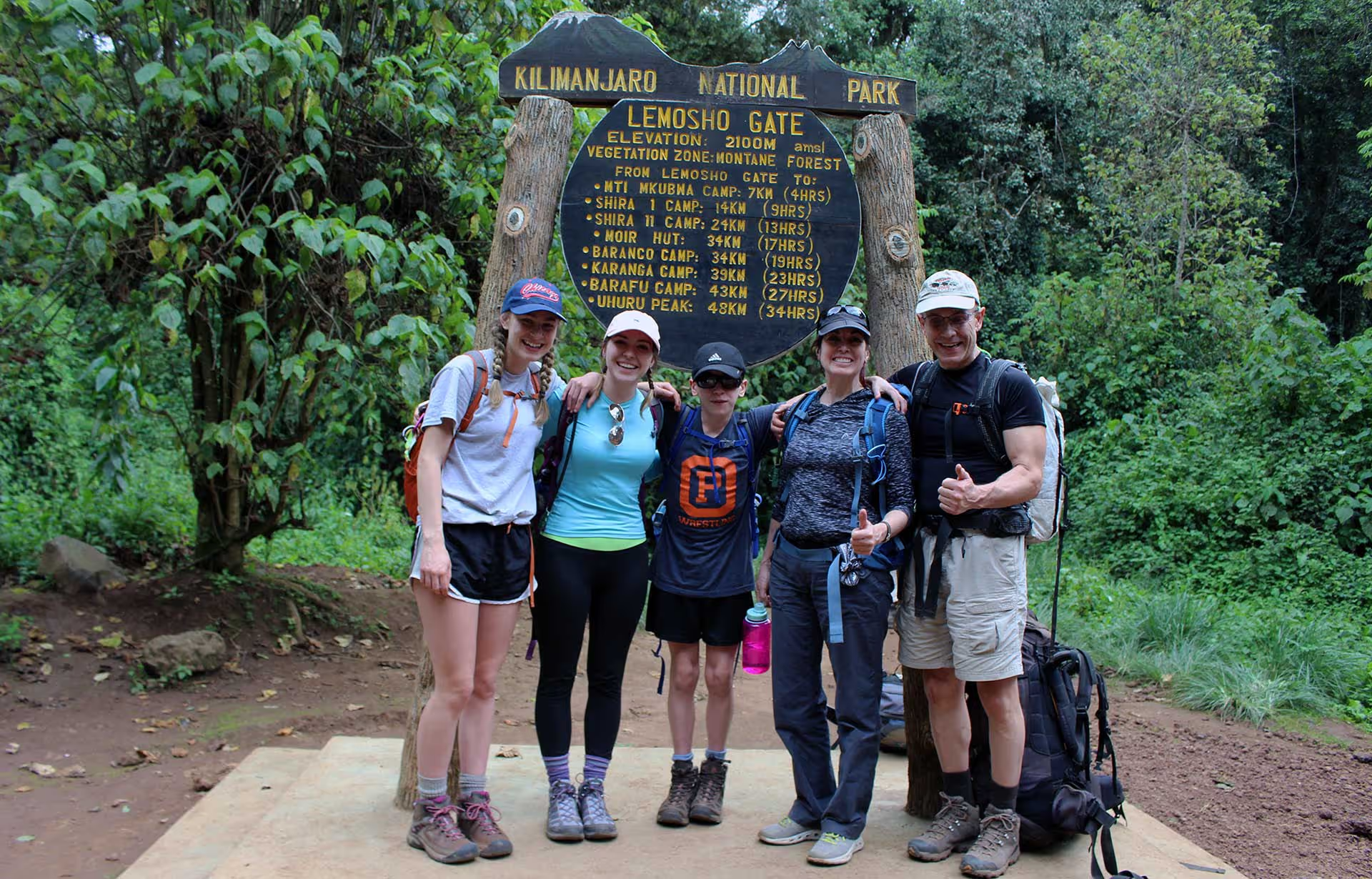
Lemosho
7–9 days (8 recommended)Best all-round choice
Long, gradual western approach with superb scenery and the best acclimatization profile. The highest success rates on the mountain.
Explore the routeMachame
6–8 days (8 recommended)Scenic & popular
Dramatic ridgelines and varied terrain. Very popular, so busier in peak season. A 7–8 day version is far kinder on your body.
Explore the routeMarangu
5–6 daysHut-based 'Coca-Cola' route
The only route with hut sleeping instead of tents, so it feels more comfortable. The short 5-day version is the biggest risk factor.
Explore the routeRongai
6–7 daysQuiet & dry approach
Gentle gradients on the drier northern side, lower traffic. Good choice for the shoulder seasons when the south side is wet.
Explore the routeNorthern Circuit
9–10+ daysBest for acclimatization
Circumnavigates the mountain with the most gradual altitude gain of all. The highest summit odds and plenty of solitude, at the cost of time.
Explore the routeUmbwe
5–7 daysShort & steep, experts only
Spectacular and direct, but it ascends far too fast for comfortable acclimatization. Not a sensible first climb.
Explore the routeHow Many Days Do You Need?
Here's the part most operators won't tell you: the number of days on the mountain is the single strongest predictor of whether you summit. More days equals better acclimatization, period.
5 Days
~40–50% successVery High risk
Only for experienced, well-acclimatized trekkers. The summit odds tell the story.
6 Days
~55–65% successHigh risk
Fast but aggressive. Still a real gamble on acclimatization.
7 Days
~75% successModerate risk
A solid balance of time and adaptation for fit climbers.
8+ Days
~85–90% successLow risk
The sweet spot. Extra days are the cheapest insurance you'll ever buy on the mountain.
Summit Night: The Hardest Part
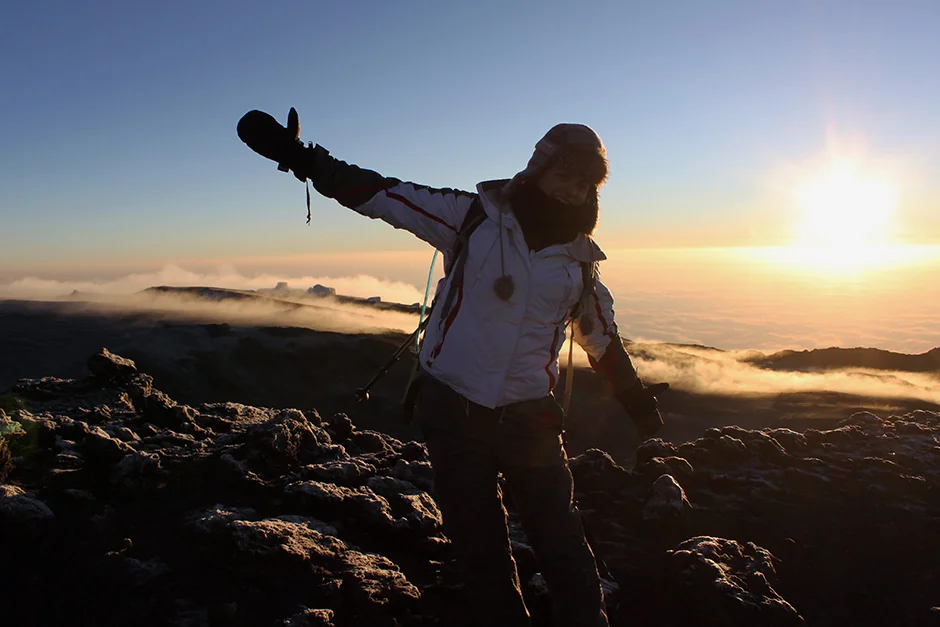
Ask anyone who's done it and they'll name the same moment: summit night. It starts around midnight from Barafu Camp at 4,673 m, in the dark, in the cold, with half the oxygen your body is used to. For the next six to eight hours you take a step, breathe, take another step. That's it. That's the whole strategy.
Midnight Start
You leave Barafu around 11 pm to midnight to reach Uhuru at sunrise, when it's coldest but calmest.
6–8 Hours of Climbing
A 1,200 m slog through scree, ice, and darkness. Progress feels impossibly slow, and that's correct.
The Cold Is Real
-10°C to -25°C, plus wind. Your water can freeze; your hands can go numb. Mittens and a warm liner are worth their weight in gold.
Uhuru Peak at Dawn
Then, suddenly, the sky turns pink over a sea of clouds and you're standing on the roof of Africa. It changes people.
Altitude Sickness: What You Need to Know
Altitude sickness is the number one reason climbs fail, and it's a matter of physiology, not weakness. Understanding the three stages is how you stay safe.
AMS (Acute Mountain Sickness)
Symptoms: Headache, nausea, fatigue, dizziness, poor sleep
Affects roughly half of climbers above 3,000 m. Your guide monitors it constantly. If it gets worse, the answer is always the same: descend.
HACE (Cerebral Edema)
Symptoms: Loss of coordination, confusion, severe headache, behavior change
Fluid builds around the brain. It can escalate fast, and the only real treatment is an urgent descent with oxygen if available.
HAPE (Pulmonary Edema)
Symptoms: Extreme breathlessness at rest, gurgling cough, bluish lips
Fluid gathers in the lungs. Any climber showing these signs is evacuated downhill immediately, day or night.
The Golden Rule
Headache that won't go away with painkillers, vomiting, confusion, or loss of coordination, these mean one thing: go down. The mountain will still be there next year. Your life won't be negotiable. Trust your guide, who has seen this a hundred times, over your own stubbornness.
How to Train for Kilimanjaro
You can't train your body to handle altitude, only your fitness to handle the walking. Here's the plan we give our climbers, in plain language.
Baseline (Months 1–2)
3–4 cardio sessions a week (30–60 min) plus 2 strength sessions for legs and core. Build the habit first; the miles come later.
Build (Months 2–4)
4–5 sessions a week mixing steady-state cardio, intervals, and weekend hikes carrying a loaded pack. Start walking up real hills.
Peak (Months 4–6)
5–6 sessions a week, with long weekend hikes of 15+ km and 800–1,200 m of elevation gain. This is what physically simulates the mountain.
Taper (Final 2 Weeks)
Cut volume in half, stay active but rested, test all your gear, and sort your travel and insurance. Arrive fresh, not fried.
The Single Most Useful Exercise
A long hike with a loaded pack on real hills. Two or three of those a month, with 800–1,200 m of elevation gain, will do more for your summit chances than any gym routine. If you don't have hills, a treadmill on a steep incline is a fine second.
Gear Essentials
You don't need technical climbing equipment, but you do need good gear, because the mountain punishes gaps in your layering. See our full packing list for the complete checklist.
Clothing Layers
- Merino or synthetic base layers
- Fleece or down mid-layer
- Waterproof, windproof shell
- Warm hat, buff, and summit mittens
- Broken-in boots & liner socks
 Altitude & Comfort
- Sleeping bag rated -15°C or colder
- Trekking poles (save your knees)
- Headlamp with spare batteries
- SPF 50+ sunscreen & lip balm
- 3–4 L hydration capacity
Health & Safety
- Diamox if your doctor prescribes it
- Personal first-aid kit & blister care
- Prescription meds and insurance docs
- Water purification tablets
- Warm layers for the summit night
Your Guides & Support Team
A good guide is the difference between a great trip and a dangerous one. The ratio of guides and porters to climbers on Kilimanjaro is unlike any other mountain, and it's there for a reason: to get you up and down safely.
A Great Team Will:
- Monitor you constantly for altitude sickness
- Set a pace slower than you think you need
- Carry oxygen, a first-aid kit, and emergency protocols
- Boost you up when your mind starts quitting
Red Flags to Avoid:
- Pressure to 'push through' altitude symptoms
- Dismissing AMS complaints as 'just nerves'
- No oxygen, no pulse oximeter, no emergency plan
- Uncertified or untrained guides
Kilimanjaro vs Other Famous Treks
"Is Kilimanjaro harder than Machu Picchu?" "Harder than Everest Base Camp?" Here's the honest comparison across the three things that actually matter.
| Trek | Height | Technical | Altitude | Fitness | Days |
|---|---|---|---|---|---|
| Inca Trail (Machu Picchu) | 4,215 m | None | Low | Moderate | 4 |
| Mont Blanc (normal route) | 4,808 m | Crampons/rope | Moderate | High | 2 |
| Everest Base Camp Trek | 5,364 m | None | High | Moderate | 14 |
| Kilimanjaro (Lemosho 8d) | 5,895 m | None | High | Moderate | 8 |
| Mount Kenya (Pt Lenana) | 4,985 m | Basic scramble | Moderate | High | 4–5 |
| Aconcagua (normal route) | 6,961 m | Crampons/rope | Very High | Very High | 18–21 |
| Denali | 6,190 m | Advanced alpine | Extreme | Extreme | 17–21 |
The honest takeaway: Kilimanjaro is the highest summit in the world you can reach without mountaineering skills. It's harder than the Inca Trail or Everest Base Camp because of altitude, but far more accessible than Aconcagua or Denali, which demand technical skills and extreme fitness. With the right itinerary, it sits in a sweet spot very few big summits can offer.
20 Fascinating Kilimanjaro Facts
Kilimanjaro is the world's tallest free-standing mountain, rising about 5,895 m straight from the plains.
It is the highest non-technical summit on Earth, no ropes, crampons, or climbing experience needed.
Tens of thousands of people attempt it every year, which is why guide quality and itinerary choice matter so much.
Overall summit success sits around 65%, but on 8–9 day routes it climbs to 85–90%.
Rushing a 5-day route can cut your success rate in half.
Altitude, not terrain, is the #1 reason people turn around.
About half of all climbers feel some altitude symptoms above 3,000 m.
A typical climb covers 60–100 km depending on the route.
Summit night starts around midnight from Barafu Camp at 4,673 m.
Temperatures at the summit can drop to -25°C.
At Uhuru Peak you're breathing about half the oxygen available at sea level.
The oldest person to summit was 89 years old (Anne Lorimor, 2019).
Children as young as 7 have reached the summit.
'Pole pole' (slowly, slowly) is the golden rule, your guide's pace should feel almost frustratingly slow.
Tanzanian rules limit porter loads to around 15 kg, so your big duffel stays light.
Diamox (acetazolamide) helps some climbers reduce AMS risk, but always ask your doctor first.
'Climb high, sleep low' is the single best acclimatization strategy on the mountain.
HACE and HAPE are rare (around 1% combined) but are the emergencies everyone trains for.
The fastest known summit-to-summit round trip stands at under 7 hours, but almost everyone else takes 5–9 days.
Most summiter will tell you the same thing: summit night is the hardest thing they've ever done, and the sunrise at Uhuru makes it worth every step.
Frequently Asked Questions
The Final Word
So, is Kilimanjaro hard? Yes. Honestly, it's one of the hardest things most people will ever do. And also, honestly, it's achievable for most healthy, determined people. Those two sentences aren't a contradiction, they're the whole point.
Your formula for the summit:
- Pick a 7–9 day route. Extra days are the best investment you'll make.
- Train for 3–6 months. Cardio, legs, and weekend hikes with a pack.
- Go pole pole. Slow and steady is how the mountain is won.
- Listen to your guides. They've done this a hundred times.
- Be ready for the hardest night of your life. And the best sunrise of it.
Standing at Uhuru Peak at sunrise, above a sea of clouds, you'll understand why people keep coming back. It's worth every blister, every doubt, every cold hour. We'd love to help you get there.
Ready to Take on Kilimanjaro?
Talk to our Moshi-based climbing team. We'll help you pick the route that fits your timeline and fitness, answer your questions honestly, and get you a clear quote within hours, no middlemen.
Related Climbing Guides
Which Kilimanjaro Route Should You Choose?
Compare every route side by side
Training for Kilimanjaro
A complete fitness plan
Kilimanjaro Success Rate
Real numbers by route and days
Kilimanjaro Packing List
Gear & essentials checklist
High-Altitude Trekking
How your body adapts to altitude
How Much Does It Cost to Climb?
Honest pricing breakdown
Climbing Kilimanjaro for Beginners
Everything a first-timer needs
Lemosho Route, 8 Days
Our most successful itinerary
Last updated: August 12, 2026. Success-rate figures reflect published averages on the standard routes; your operator should share their own verified numbers.
