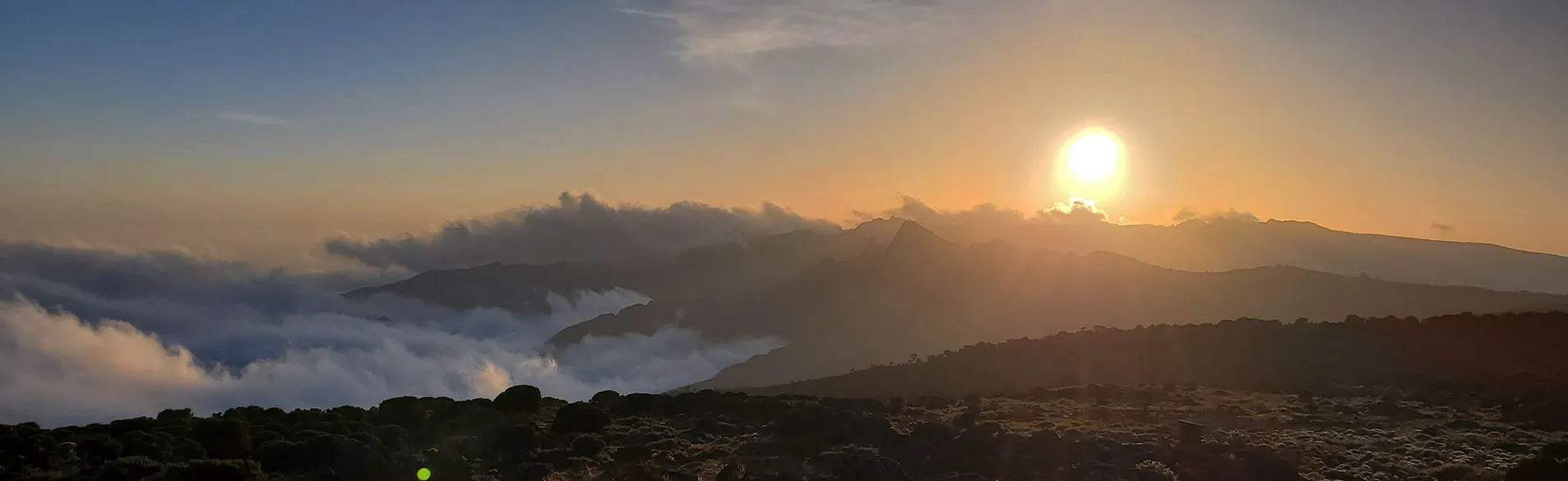
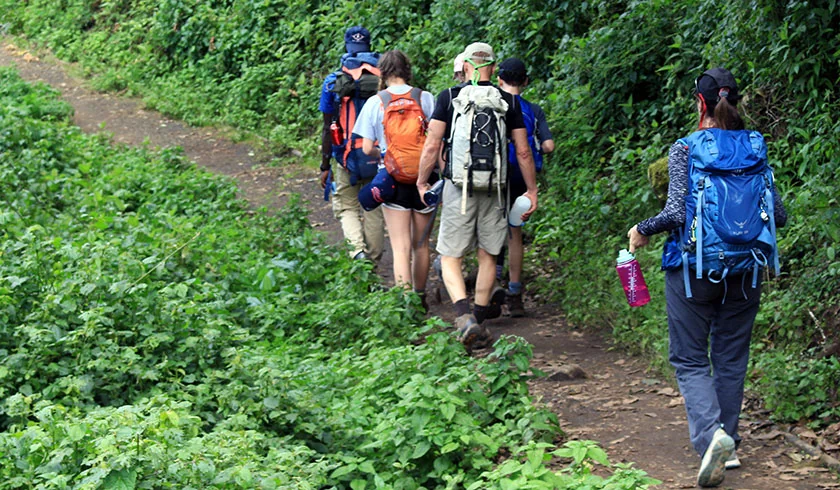
Stand at Machame Gate at 1,800 metres on a January morning and you will likely be stripping off your fleece. The air is warm, the sky is bright, and the rainforest around you steams gently in the sun. Seven days later, at 3 a.m. on summit night, you will be zipped into a down jacket at -20°C, watching your breath freeze on a balaclava while the lights of Moshi twinkle 4,000 metres below. That is the weather story of Kilimanjaro in one breath.
Kilimanjaro is not just tall, it is a climate system of its own. It punches through rainforest, heath, moorland, alpine desert and arctic ice, five worlds stacked on one volcano. The month you choose decides how dry the trails are, how cold summit night gets, how many people you share the mountain with, and how likely you are to see the sunrise from the roof of Africa.
Guide's Note
The short version: aim for January, February, or June through October for the driest trails and clearest summit mornings. February is our guides' favourite month. If you can only travel in the wetter months, choose Rongai, pack seriously for rain, and go in with honest expectations.
Kilimanjaro Weather Quick Facts
Best Months
January–February & June–October
Driest Month
February, then January
Wettest Months
April–May (long rains)
Coldest Months
July–September
Summit Night
-20°C to -25°C (Jul–Sep), -10°C to -18°C (Jan–Feb)
Base (Moshi)
20–30°C daytime, all year
Climate Zones
Five, from rainforest to arctic
Temperature Rule
Drops ~6.5°C per 1,000 m climbed
Rain Shadow
North & east (Rongai) are driest
Summit Snow
Ice fields & snow year-round
Peak Crowds
July–August
Two Rainy Seasons
Long rains Mar–May, short rains Nov
Two Seasons, One Mountain
Kilimanjaro sits almost exactly on the equator, which means it does not get a summer and winter the way Europe or North America does. Instead, the sun's annual journey over the equator pulls the rain belts north and south, and the mountain feels two rainy seasons and two dry seasons each year.
Dry Seasons, Recommended
January to February and June to October. Firm trails, clearer summit views, and the best chance of a clean summit morning. The June to October window is colder at altitude, while January and February are warmer and, in February's case, driest of all. Expect more climbers in July and August.
Wet Seasons, Approach Carefully
March to May is the long rains, with April the wettest month. November brings the shorter, softer rains, usually afternoon showers with clearer mornings. December is transitional. You can still climb in these months, especially via the drier Rongai route, but the trails are muddier and summit views less certain.
The Mountain Makes Its Own Weather
Even on a "wet" month, mornings are often clear and summit pushes happen before dawn, frequently above the cloud line. And even in the driest February, the rainforest belt can give you a proper soaking. Expect variety, prepare for all of it, and treat every month's forecast as a starting point, not a promise.
Month-by-Month Breakdown
Twelve months, twelve honest verdicts. These are the conditions we actually see on the mountain, season after season, not just the averages.
January
January is one of the two best months on the mountain, and the quieter one. The long rains have long since cleared, conditions are stable, and summit nights of -10°C to -18°C feel positively mild compared with July. Trails are firm, views are often crystal clear, and you will share the mountain with far fewer people than you would in the peak summer window. If you want reliable conditions without peak-season pressure, January is a beautiful choice.
A strong pick for a first climb. Lighter crowds than July and August.
February
Ask our guides for their favourite climbing month and most will say February. It is the driest month of the year, the warmest at altitude during the dry season, and summit visibility is outstanding. Success rates trend at their highest in January and February. The only real drawbacks are that February is busier than January and international flights to Kilimanjaro tend to cost more. If you can choose freely, this is the month to lock in.
The optimal month. Book early, flights and operators fill up fast.
March
March is a month of two halves. The first two weeks can still deliver superb climbing weather, dry, clear and warm. From mid-month the long rains begin arriving, bringing cloud, mud and reduced visibility above 4,000 m. If your dates fall in March, check rainfall patterns for your exact week, pack for wet conditions no matter what, and build some flexibility into your summit-day expectations. Early March climbers often enjoy a nearly empty mountain.
Early March is viable; late March is a gamble. Carry rain gear either way.
April
April is the heart of the long rains. Trails are wet and slippery, especially through the rainforest and moorland, and cloud tends to sit low above 4,000 m, hiding the summit for much of the day. The upside is a very quiet mountain and sometimes lower operator prices. The price is mud, damp gear, and the real possibility of a summit morning with no view. We do not recommend April for first-time climbers expecting clear conditions.
Avoid unless you are experienced and fully kitted out for wet conditions.
May
May is still very much the wet season, though the rains usually begin to ease toward the end of the month. Conditions mirror April until mid-May. Then something lovely can happen: the skies thin, the trails start to firm up, and the mountain begins its shift toward the dry season. Some experienced climbers deliberately target late May for quieter trails and lower prices, and they are often rewarded. It demands full waterproof kit and a flexible mindset.
Late May only, with a complete wet-weather system and realistic expectations.
June
June brings the dry season back. Trails are recovering from the rains, skies are clearing, and conditions become reliably good by mid-month. The lower slopes are intensely green from the long rains, which gives the forest camps a vivid, jungle-like atmosphere. Temperatures at altitude begin their slide toward the cold mid-year months. June crowds are lighter than July and August, making it a smart, under-the-radar choice.
A great value month with improving conditions and light crowds.
July
July is one of the most popular months on the mountain, and for good reason: dry trails, sharp visibility, and clear summit mornings on most days. The catch is the cold. July is one of the coldest months at altitude, with summit nights regularly at -20°C to -25°C, and the Marangu and Machame routes are busy. Bring serious cold-weather insulation, a four-season sleeping bag, and book your operator and flights several months ahead.
Excellent conditions. Pack for extreme cold and book very early.
August
August is very like July in weather terms: dry, cold, excellent visibility, and busy. Because the European summer holidays peak in July, some climbers find August slightly less congested while keeping the same superb weather. Summit temperatures remain extreme, -20°C to -25°C on the harder nights. This is the month that asks the most of your cold-weather gear, so do not skip the down jacket, summit gloves, or a warm sleeping bag.
Similar to July but slightly less crowded. Still demands full cold-weather kit.
September
September is arguably the best compromise on the whole calendar. Temperatures are recovering from the July and August lows, so summit nights sit around -15°C to -20°C rather than -25°C, while visibility stays excellent and trails stay dry. Crowds ease noticeably compared with the summer peak. For climbers with flexibility who want great conditions without the rush, September is a quiet hero.
The sweet spot between peak summer crowds and the year's best conditions.
October
October is the last full month of the dry season, and it is good value. Temperatures at altitude are warmer than in July and August, making the climb physically more comfortable, and crowds are lighter than peak season. From late October the first short-rain showers may begin to appear, usually brief afternoon affairs. Operator prices can be marginally lower, and the conditions remain reliable for most of the month.
Good-value month. Carry rain gear for the final week just in case.
November
November brings the short rains: afternoon showers and lower cloud on most days, but mornings are often clear, and a well-timed summit push in the small hours can still catch superb conditions. Experienced climbers who move efficiently can have genuinely excellent November climbs, on quieter trails and sometimes at reduced prices. First-timers hoping for wall-to-wall clear skies should aim for a drier month instead.
Viable for experienced climbers with full rain kit. Not ideal for first-timers.
December
December opens with the tail of the short rains, so conditions are unpredictable early in the month. From mid-December the weather usually improves, and the festive season brings a genuinely special atmosphere, big international groups, Christmas dinner in camp, and a celebratory energy many climbers love. The real challenge is logistics: flights, hotels and operators fill quickly for Christmas and New Year. Book much earlier than you think you need to.
Book very early. Conditions improve through the month. Festive atmosphere.
Cold by Altitude: Kilimanjaro's Five Zones
Here is the rule that explains everything: temperatures drop by roughly 6.5°C for every 1,000 metres you climb. Start at 25°C at the gate, rise 3,900 metres to Barafu Camp, and you are mathematically at around -15°C, before wind chill. That is why you carry everything from a t-shirt to a -20°C down jacket on the same climb.
| Zone | Altitude | Daytime | Night minimum |
|---|---|---|---|
| Rainforest | 1,800–2,800m | 15–25°C | 5–12°C |
| Heath & Moorland | 2,800–4,000m | 5–15°C | 0–5°C |
| Alpine Desert | 4,000–5,000m | -5 to 10°C | -10 to -15°C |
| Summit | 5,895m | -5 to 5°C | -15 to -25°C* |
* Summit night in July–September. January–February nights are typically -10°C to -18°C at the summit.
5
Climate zones on one climb
6.5°C
Cooler per 1,000 m gained
-25°C
Worst summit-night cold
30°C
Typical base daytime high
Summit Night: What the Cold Really Feels Like
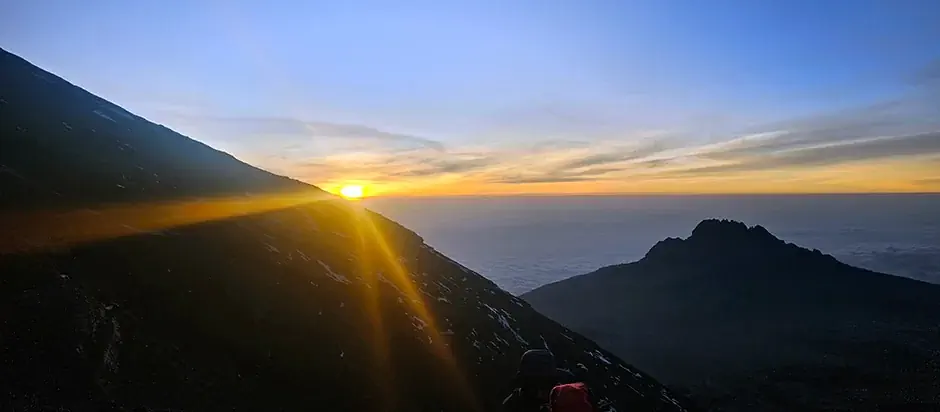
Every route saves its hardest weather for the last night. Around midnight you leave Barafu Camp at 4,600 metres, headlamps on, walking single file into the dark. Within two hours you are above 5,000 metres, and the cold is unlike anything most people have experienced.
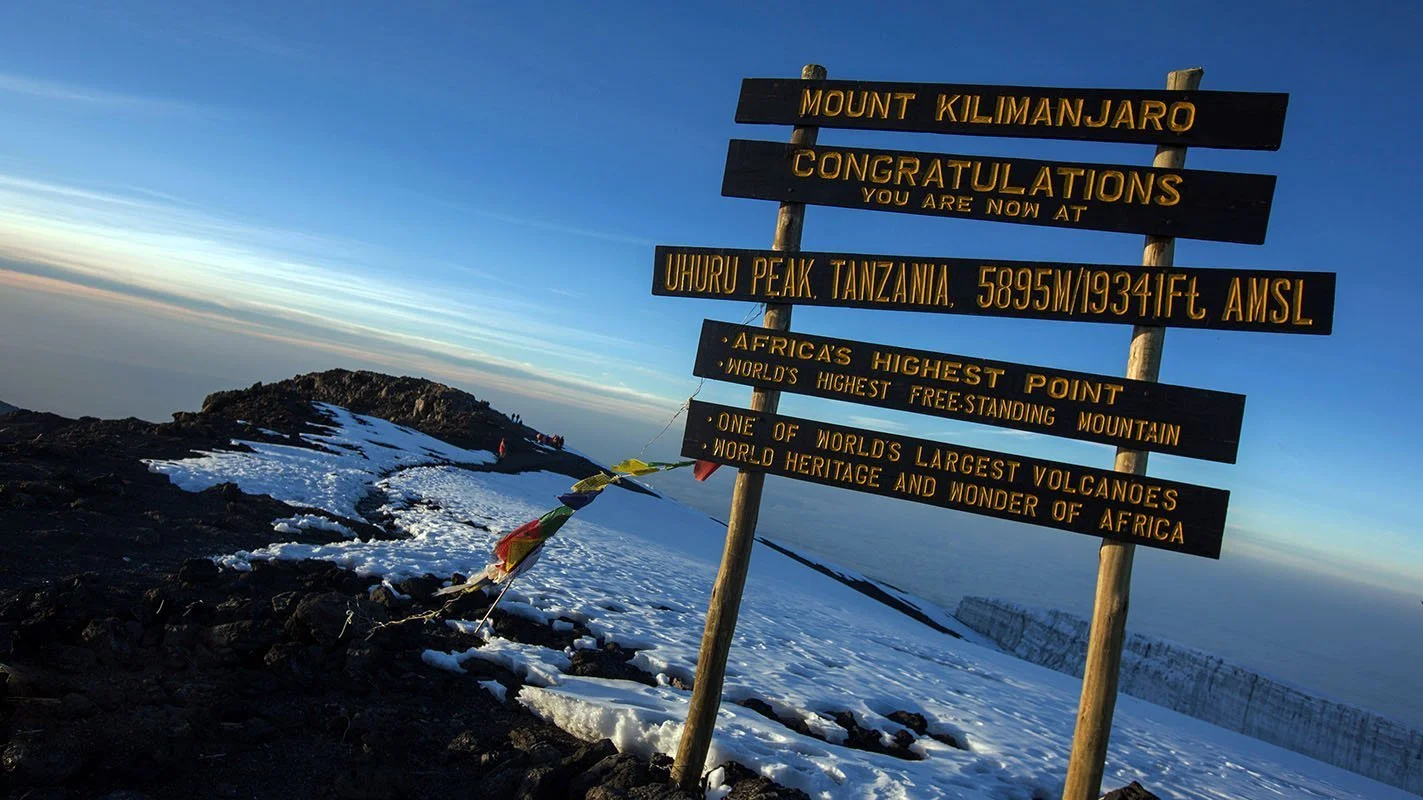
It is not just the thermometer. The wind at altitude strips warmth from skin in seconds, and the slow, switchbacking pace means your body produces little heat. Your toes will go cold even in insulated boots. Your fingers need chemical warmers inside summit gloves. But here is the secret the guides know: it is manageable, thousands of people do it every month, and the cold dissolves the moment the sun rises over Mawenzi and the summit sign appears in front of you.
The Cold
-20°C to -25°C with wind chill in July–September; -10°C to -18°C in January–February. Cold enough to freeze a water bottle solid in your pack.
The Wind
The summit cone is exposed from every direction. On the final switchbacks, wind makes the air feel 10°C colder. A windproof shell over your down is essential.
The Sunrise
Then, around 6:30 a.m., the sky turns pink over the ice fields and every frozen hour becomes worth it. This is the moment people talk about for the rest of their lives.
Guide's Note on Gear
Cold feet end more summit attempts than altitude does. Insulated mountaineering boots, a warm sleeping bag rated to at least -15°C, and chemical hand warmers cost little and can make the difference between standing at Uhuru Peak and turning back at Stella Point.
What to Pack by Season
The weather decides two things for your packing: how much cold-weather gear you need, and how serious your rain system must be. The full Kilimanjaro packing list has everything; here is what the seasons change.
Dry-Season Additions
June–October (coldest), January–February (warmer but still cold at summit)
- Down jacket rated to -15°C or colder
- Balaclava or heavyweight fleece hat covering ears
- Summit gloves, insulated with a windproof shell
- Insulated trekking boots, four-season rated for July–August
- Chemical hand warmers for summit-night pockets
- Four-season sleeping bag, -15°C comfort rating minimum
Wet-Season Additions
March–May and November; light prep for October and December
- Full waterproof rain jacket, seam-sealed, 20,000 mm+ rating
- Waterproof trousers for all-day hiking in rain
- Gaiters for the muddy lower trail sections
- Dry bags for electronics, camera and documents
- Trekking poles with rubber tips for grip on slippery ground
- Extra dry socks, at least one pair per day in your pack
The Golden Rule of Kilimanjaro Packing
Pack for the worst weather your month can throw at you, then be pleasantly surprised. A wet-season climber still needs a warm sleeping bag, and a February climber still needs a rain jacket. Layering is the whole game: thin baselayers, insulating mid-layers, and a weatherproof shell for every temperature between 30°C and -25°C.
How Weather Should Shape Your Route Choice
In the dry season, weather barely factors into route choice. Every route is viable, so pick based on acclimatization profile, days available, and budget. Lemosho and Machame give the best acclimatization; Marangu is the hut route; Rongai approaches from the northeast. All of them work beautifully in dry conditions.
Wet Season: Choose Rongai
The Rongai route approaches from the drier northeast side of the mountain and consistently receives far less rain than the western and southern routes. Climbers committed to a wet-season attempt report noticeably better trail conditions on Rongai. The trade-off is a slightly less dramatic scenery profile, but dry boots beat dramatic clouds on day three.
Northern Circuit: Watch the Wind
The Northern Circuit is the one route where weather matters even in the dry season. Its northern traverse is more exposed to wind than the sheltered southern camps, which can feel significant in July, August and early September. Not a problem, just something to know before you pack and expect.
Kilimanjaro Weather FAQs
Conclusion
Kilimanjaro's weather is the mountain's personality. It is what makes the rainforest steamy, the alpine desert silent, and the summit ice fields blue and eternal. The month you choose shapes your whole experience, from the firmness of the trail under your boots to the temperature reading on your watch at 3 a.m. on summit night.
The honest summary: February is the pick of the year, January and June through October are all excellent, and the wetter months are climbable for the prepared and the experienced. Whichever month you choose, pack for everything, trust your guides, and know that the sunrise from Uhuru Peak forgives every frozen finger.
Ready to Pick Your Month?
Tell us your preferred dates and we will recommend the best route and gear plan for that window, with a transparent quote. Our guides climb the mountain year-round and know exactly what each month brings.
Continue Planning Your Climb
Best Time to Climb Kilimanjaro
The extended guide to timing your climb
Kilimanjaro Packing List
Complete gear checklist with seasonal adjustments
Full Moon Summit Dates
Calendar and best routes for full moon climbs
Which Route Should You Choose?
Acclimatization, scenery, and crowds compared
Summit Success Rate, Real Chances
Route-by-route chances and how to improve yours
The Barranco Wall, Explained
What the famous scramble really feels like
Lemosho Route 7 & 8 Days
Our recommended route for acclimatization
Get a Free Climb Quote
Dates, routes, and transparent pricing
Last updated: August 13, 2026. Conditions based on our guides' field records and Tanzania Meteorological Authority climate data.