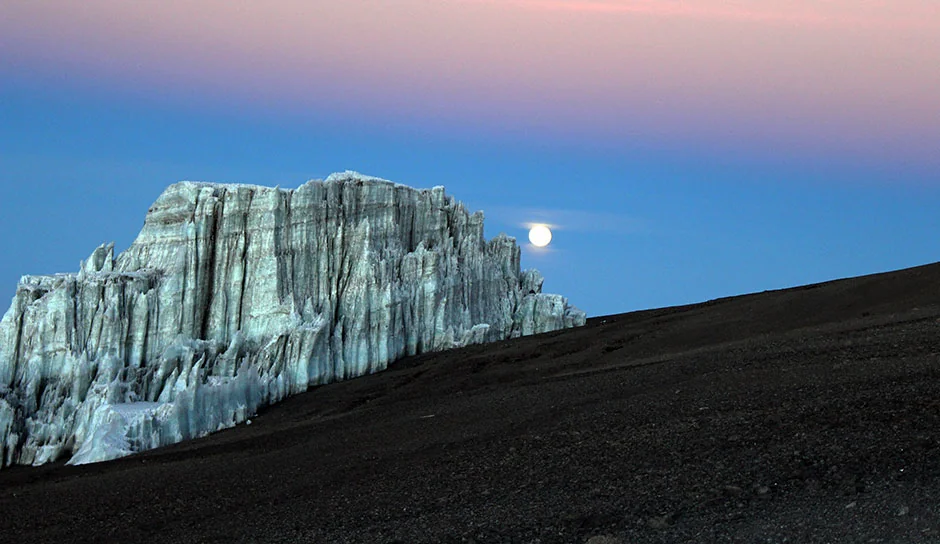
The single best thing you can do for your Kilimanjaro summit night costs nothing at all: pick the date the moon is full. Most first-timers spend months obsessing over routes, gear lists, and fitness plans — and almost none of them think about the sky. But ask any guide which departures they secretly look forward to, and the answer is the same every time: the full moon weeks.
Here is why. On a normal summit night you leave Barafu Camp at midnight into total darkness, and the world shrinks to the circle of your headlamp and the boots of the climber in front of you. On a full moon night the mountain turns silver. The glaciers glow against a black sky, the scree path reads like a pale ribbon, and the crater rim is visible for hours before sunrise. It is the same climb — same altitude, same effort, same cold — but the experience is completely different. Calmer. Stranger. Unforgettable.
This guide is your honest planning tool: the exact full moon dates through March 2027, the months when the sky is actually clear, which routes line up best with the moon, what the midnight push really feels like, and the questions our clients ask us every single day. Karibu — welcome to climbing Kilimanjaro at the best possible time of the month.
Climbing Guide's Note
The moon is not a luxury — it is a strategy. A well-lit summit night keeps climbers calm, steady, and confident, which is exactly the mental state that gets people to Uhuru Peak. If you can, plan your dates around the calendar below. Your body will be happier and so will your camera roll.
Full Moon Climb Quick Facts
Full Moons
12 windows each year
Best Months
Jun–Oct & Jan–Feb
Summit Departure
Midnight from Barafu
Summit Altitude
Uhuru Peak, 5,895 m
Night Temps
−10°C to −20°C
Summit Push
~1,200 m in 6–8 hrs
Top Routes
Lemosho 8-Day / Machame 7-Day
Rainy-Season Pick
Rongai 7-Day
Success Rate
85–90% in dry season
Book Ahead
6–9 months
Crowds
Peak moons busiest
Combine With
Serengeti / Ngorongoro safari
Why the Full Moon Matters
Plenty of people climb Kilimanjaro on a moonless night and reach the summit just fine. So why do we keep telling you to chase the moon? Because the difference is not in the record books — it is in how the night feels, and how you climb it.
You See the Mountain
The glaciers, the crater rim, the whole silver amphitheatre above you — instead of a narrow circle of headlamp light and blackness on every side.
You Climb More Steadily
Climbing in near-darkness makes people tense and jittery. In clear moonlight you can see the path ahead, settle into a rhythm, and breathe — which is the whole secret of high-altitude walking.
Photos You Can't Fake
Moonlit glaciers and a dawn summit at Uhuru are the images your friends will actually ask about. The light does the work for you.
There is also a quieter, practical reason. On summit night, thousands of climbers move up the same ridge from Barafu, and a full moon spreads everyone out — groups can see each other coming, pass cleanly, and keep their own pace. Less congestion, less stress, fewer people stopping dead in the dark.
What Summit Night Feels Like
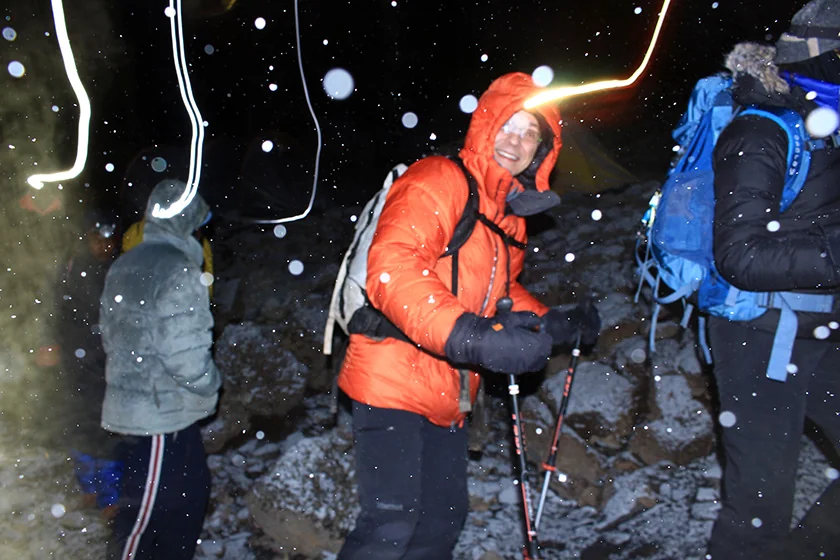
To understand why the moon matters, you need the shape of summit night. It is a short, brutal, magical arc:
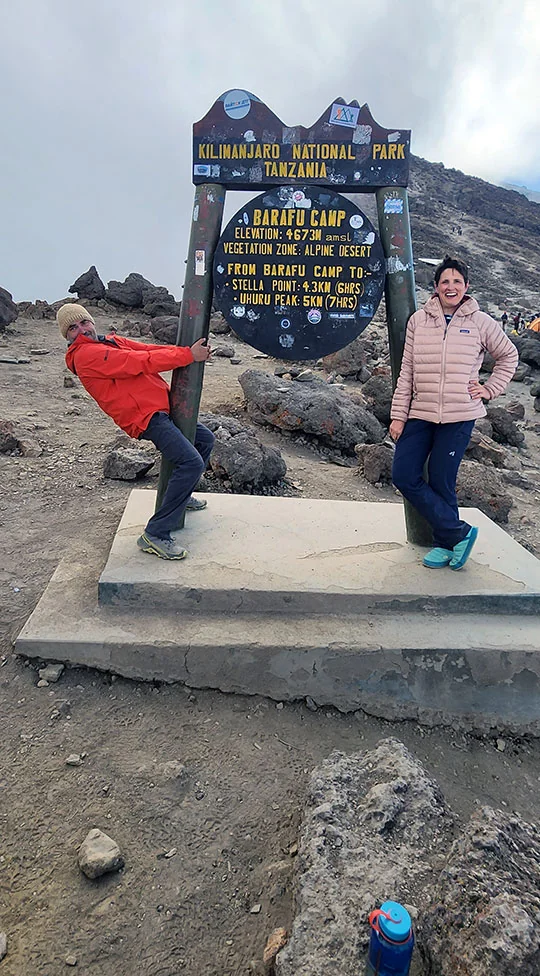
Early evening at Barafu Camp (4,673 m)
Dinner at six, gear check at seven, lights out at eight — though nobody really sleeps. The whole camp hums with quiet nervous energy.
11:30 pm — wake-up call
Sweet tea, porridge, and the serious business of layering up while it is still warm inside the tent. Everything on before you step out.
Midnight — the climb begins
Barafu Camp, 4,673 m → into the moonlight and up the crater rim. Slow, steady switchbacks at a pace that feels absurdly patient.
2–4 am — the coldest hour
−10°C to −20°C, thin air, and the long grind across the crater rim. This is where the moon earns its keep — the path ahead is lit, and you keep moving.
Dawn — Stella Point (5,756 m)
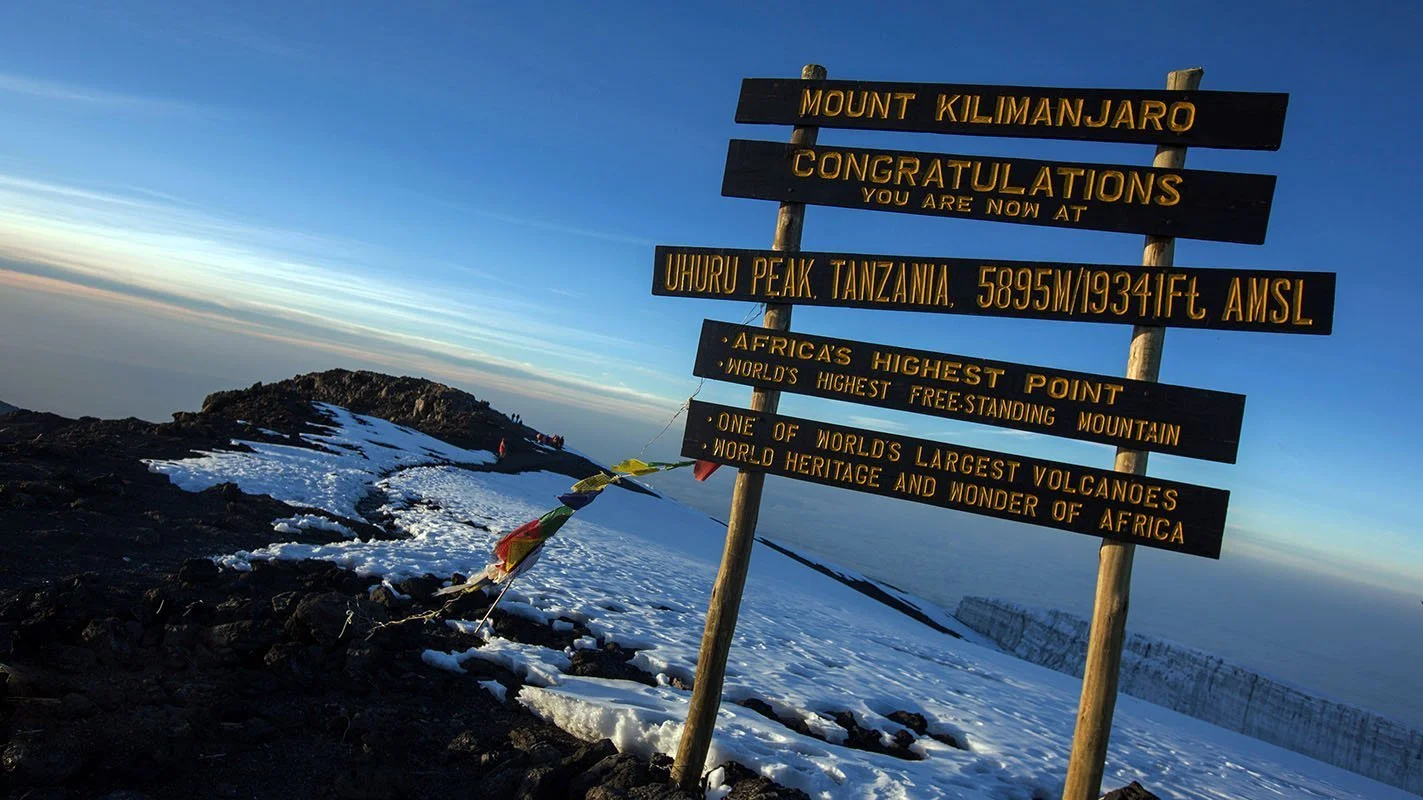
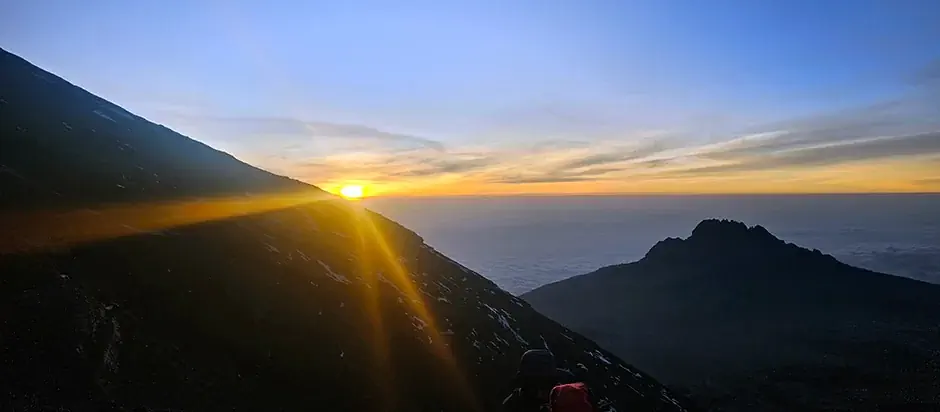
The first pale light turns the eastern sky orange, and suddenly the whole crater is laid out beneath you. Then the final push to the summit.
Sunrise — Uhuru Peak (5,895 m)
The highest point in Africa at the most beautiful hour of the day. This is the photograph you came for.
"On a moonless night you meet the mountain one headlamp beam at a time. On a full moon night you meet the whole mountain at once — and it is one of the most beautiful things a human being can see."— Masatu Tours head guide, Barafu Camp
2026–2027 Full Moon Calendar
Here is every full moon window from April 2026 through March 2027, with the route we recommend for each one. The "strong moonlight window" is the week around the full moon when the sky is bright enough to make a real difference on summit night — plan your summit date to fall inside it. The full moon date itself is the middle, brightest night.
| Month | Full Moon Date | Strong Moonlight Window | Suggested Route | Season |
|---|---|---|---|---|
| April 2026 | April 1 | March 25 – April 1 | Lemosho 8-Day | Shoulder |
| May 2026 | May 1 | April 24 – May 1 | Rongai 7-Day | Wet |
| June 2026 | May 31 | May 24 – May 31 | Machame 7-Day | Dry |
| July 2026 | June 29 | June 22 – June 29 | Lemosho 8-Day | Dry |
| August 2026 | July 29 | July 22 – July 29 | Machame 7-Day | Dry |
| September 2026 | August 28 | August 21 – August 28 | Lemosho 8-Day | Dry |
| October 2026 | September 26 | Sep 19 – Sep 26 | Machame 7-Day | Dry |
| November 2026 | October 26 | October 19 – October 26 | Rongai 7-Day | Short Rains |
| December 2026 | November 24 | Nov 17 – Nov 24 | Lemosho 8-Day | Short Rains |
| January 2027 | December 24 | Dec 17 – Dec 24 | Machame 7-Day | Dry |
| February 2027 | January 22 | January 15 – January 22 | Lemosho 8-Day | Dry |
| March 2027 | February 20 | Feb 13 – Feb 20 | Machame 7-Day | Dry |
The dates above follow the astronomical full moon. The strongest windows are the dry-season rows — June through October 2026 and January through March 2027 — because that is when the sky above the crater is most likely to stay clear all night.
The Best Months for a Full Moon Climb
A full moon is only magical if you can see it. Matching your moon date with a dry month is the real trick — two weather systems meet at Kilimanjaro, and their names decide your summit-night view.
June – October 2026
The classic climbing season and the busiest moon dates of the year. Cool, stable, clear nights on the crater — the highest odds of a visible full moon anywhere on the calendar.
Best pick for first-timers
January – March 2027
The warm dry season, right after the short rains. Slightly quieter than the summer, brilliant morning light, and the same clear skies over the summit. Our guides rate these moons very highly.
Best pick for quieter trails
The rainy-season warning
The long rains (March–May) and short rains (November) bring clouds and snow to the summit more often than not — a full moon behind a ceiling of cloud is a beautiful nothing. If your dates are fixed in the rains, switch to the Rongai route on the northern side, which sits in a partial rain shadow and gives you the best odds. Full detail in our Kilimanjaro rainy season guide.
The Best Routes for a Full Moon Climb
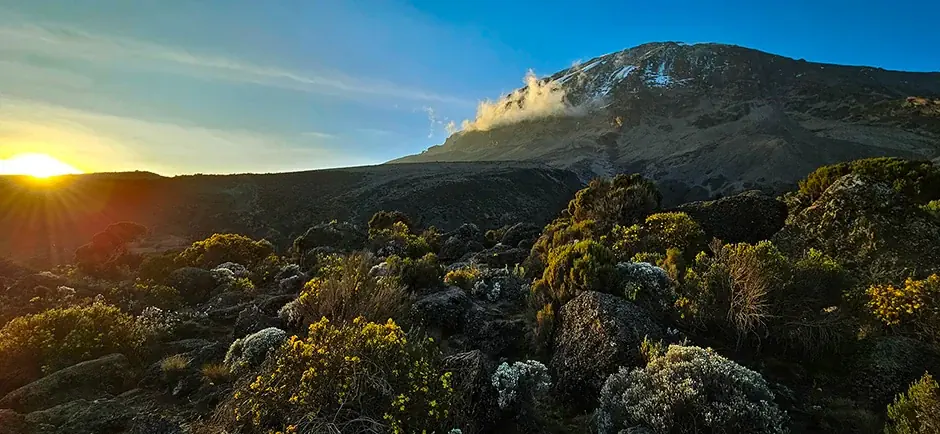
Every route on Kilimanjaro funnels to the same summit approach — the moon waits for you at Barafu or Kibo no matter which trail you take. But the southern and western routes earn their keep with open, moonlit views of the glaciers on the way up. Here is how we match the three favourites to a full moon.
Lemosho 8-Day
Our most recommended
The long western approach and our default pick for full moon windows. Eight days means the best acclimatisation in the business, stunning moonlit views of the Western Breach and glaciers, and your summit night landing right inside the window when you start seven days before the moon.
Machame 7-Day
The popular favourite
The Whiskey Route from the south. A day shorter than Lemosho and a little tougher, but the southern face gives you wide-open views of the moonlit ice on summit night. Start six days before the full moon so your summit push lands in the brightest window.
Rongai 7-Day
The rainy-season pick
The only route starting from the dry northern side, in the partial rain shadow of the mountain. If your full moon date falls in the rains, Rongai is the smart choice — same moon, far better odds of seeing it. A little less dramatic scenery, a lot more reliable weather.
Rongai Route DetailsCompare every option in our full Kilimanjaro routes guide and see which one fits your moon date best.
How to Plan Your Full Moon Climb
Pick your moon window
Choose a full moon date from the calendar below — then decide whether you want the clearest skies (dry season) or the quietest trail (shoulder season).
Match the route to the season
Lemosho or Machame for dry-season moons, Rongai if your date falls in the rains. All routes meet the moon at Barafu or Kibo on summit night.
Book 6–9 months ahead
Dry-season full moons are the most requested dates on the mountain. Early booking locks in the guides, campsites, and your preferred itinerary.
Train for the midnight push
The moon changes the scenery, not the effort. Build long weekend hikes and stair-climbs so 6–8 hours of steady uphill feels familiar.
Plan your reward
A few days on safari after the summit is the perfect recovery — and the easiest part of the whole trip to book with us in the same itinerary.
Pro tip: work backwards
Start from the full moon date and count backwards — six days for Machame, seven for Lemosho and Rongai — so your summit night lands inside the strong moonlight window. Tell us the moon you want and we will build the itinerary around it, not the other way around.
The full budget picture matters too. A full moon climb costs the same as any Kilimanjaro climb — the moon is free, the park fees are not. See our Kilimanjaro cost guide for the complete breakdown, and start your physical preparation with our training plan so the midnight push feels familiar by the time you arrive.
Packing for a Full Moon Summit Night
The moonlight is spectacular, but at −15°C it is also spectacularly cold. The full moon changes none of your summit-night packing — every item below earns its weight on the crater rim. Here is the summit-night kit, the stuff you carry in your daypack from Barafu:
Thermal base layers
Wool or synthetic against the skin — the foundation of your summit-night warmth
Insulated down jacket
Rated to −20°C for the coldest hour around 2–4 am
Headlamp + spare batteries
Mandatory even at full moon; clouds and crater shadows stay dark
Trekking poles
Save your knees on the scree descent from Stella Point
Insulated gloves & warm hat
Fingers and ears go first at −15°C in wind
Balaclava / neck gaiter
Breathe warm air and shield your face from the summit wind
Waterproof hiking boots
Broken-in boots with ankle support you have worn for months
Cold-rated camera
The moonlit glaciers are the shot — keep batteries warm in your pocket
The complete mountain kit — duffel, layers, boots, everything — is in our Kilimanjaro packing list. Rent or borrow, never buy brand-new and untested.
Summit Night Tips from Our Guides
After hundreds of full moon summit nights, these are the six habits that separate the people who make Uhuru from the people who turn around at Stella Point:
Pace Yourself, Pole Pole
"Pole pole" means slowly, slowly in Swahili. Match your guide's pace exactly — the moon is not a race and the mountain is not going anywhere.
Drink, Then Drink Again
At altitude your body forgets to feel thirsty. Force a few sips every 20–30 minutes; dehydration is the fastest way to kill a summit bid.
Eat Small, Eat Often
Energy bars, nuts, chocolate in your pocket. Your appetite will vanish at 5,000 m — eat anyway, in tiny bites, all night long.
Dress Before You Leave
Layer up fully at Barafu before the door of the tent. The first hour is the coldest, and fiddling with zips at −15°C is a mistake you feel for hours.
Watch the Moon, Not the Watch
Stop obsessing over the hour. Turn around once in a while and look at the crater glowing behind you — that moment is the whole point of a full moon climb.
Trust Your Guide
Your guide has walked this trail two hundred times or more. When they say rest, rest. When they say the summit is 40 minutes away, it is 40 minutes away.
Want the honest numbers behind all this advice? Our Kilimanjaro success rate guide breaks down how route choice and season — including dry-season full moons — move your odds from roughly two-thirds up to 90 percent and beyond.
Combine a Full Moon Climb with a Safari
There is a reason this is the most-booked combination in Tanzanian travel: a week above 4,000 metres and then the plains. The lowland air, the lion sunrises, and the long roads of the Serengeti are the perfect recovery for a body that just conquered a volcano. And the full moon works for wildlife too — big cats hunt brighter nights.
Serengeti
The Great Migration, the big cats, and grasslands that go to the horizon. The classic safari follow-up to any climb.
Serengeti GuideNgorongoro Crater
A dense, enclosed wildlife bowl with a permanent population of rhino and lion — one of the most reliable game drives in Africa.
Ngorongoro GuideBuild the whole trip in one itinerary — climb, crater, and a few days of savanna — so the transfer back down to Arusha flows straight into the safari truck. Our 5-day safari and 7-day safari itineraries pair cleanly with any of the moon-aligned climbs above.
Full Moon Climb FAQs
Conclusion
A full moon Kilimanjaro climb is not a different mountain — it is the same mountain, lit better, and that changes everything. The midnight push from Barafu becomes a walk through a silver crater under a sky full of stars; the hardest night of the trek turns into the one your group talks about for years. The glaciers glow, the path reads clearly ahead of you, and when the sun finally catches the summit sign at Uhuru, you have watched the whole night change around you.
The dates are in the calendar above, the best months and routes are mapped, and the midnight tips are from guides who have done this two hundred times each. The one thing left is the choice — pick your moon, book it early, and let the mountain do the rest.
Come Climb Under the Full Moon
Tell us which moon window you are dreaming of and we will build the itinerary around it — route, dates, guides, gear, and the safari that follows. Karibu Masatu Tours.
Related Kilimanjaro Guides
Best Time to Climb Kilimanjaro
Match your dates to the clearest skies
Kilimanjaro Cost Guide 2026–2027
What a full moon climb really costs
Kilimanjaro Rainy Season
Why clouds can hide the moon
Kilimanjaro Packing List
Every layer for summit night
Kilimanjaro Success Rate
Your real chances of reaching Uhuru
Training for Kilimanjaro
Build the legs for the midnight push
How Hard Is Kilimanjaro?
An honest difficulty breakdown
All Kilimanjaro Routes
Compare the full route menu
Last updated: August 13, 2026. Written by the Masatu Tours team from years of guiding climbers under full moon skies on the Lemosho, Machame, and Rongai routes of Kilimanjaro.