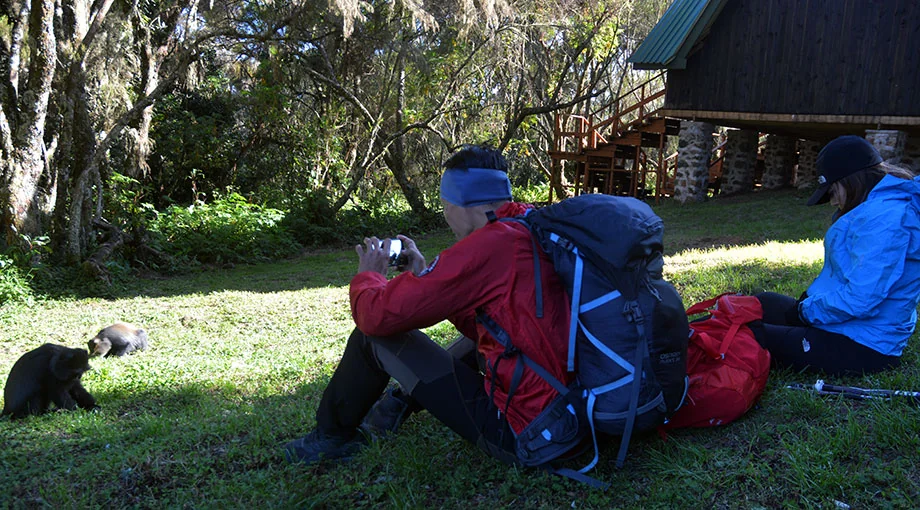
Picture day one on Marangu. You start at the gate in the rainforest, warm and shaded, colobus monkeys moving through the canopy above you, the trail wide and well trodden. Five days later you are at 3 a.m. on the summit cone, headlamp on, ice crusting your gloves, watching the lights of Moshi flicker 4,000 metres below. That is Marangu: the gentle-sounding route that still ends on the roof of Africa.
Marangu has been the standard tourist route since the 1930s. Its nickname, the Coca-Cola Route, comes from the days when it was the most developed path on the mountain, the one where you could buy a cold drink and sleep in a bed. The huts are still there today, and they are a genuinely comfortable way to climb, but the schedule that goes with them is more compressed than most people expect. On summit night, Marangu climbers reach the crater rim at Gilman's Point (5,685 m) before the rim walk to Uhuru Peak - the summit point named for Clement Gillman, who first reached the crater in 1921.
Guide's Note
Marangu is the right route when you dislike camping, when your budget is tight, or when you only have six days. It is not the route to pick if you want the highest possible summit odds, because its 6-day profile gives your body less time to acclimatize than Lemosho or Machame 7-day. Comfortable, not easy, is the honest summary.
Dry Season, Recommended
January to February and June to October give firm trails, clearer views and the best chance of a clean summit morning. February is the driest month of the year. July and August are excellent but cold at altitude and busy with climbers.
Wet Season, Manageable
March to May and November are wetter, muddier and less certain, but climbable with a full waterproof system and honest expectations. Marangu's forest section in particular holds mud through any rain. More detail in our month-by-month weather guide.
Marangu 6-Day Quick Facts
Best Months
January–February & June–October
Typical Price
$1,900–$3,500+ per person
Duration
6 days / 5 nights on the mountain
Success Rate
50–65% on the 6-day format
Highest Point
Uhuru Peak, 5,895 m
Accommodation
Mountain huts, the only hut route
Sleeping Jump
3,720 m → 4,700 m in one step
Summit Night
-10°C to -20°C with wind
Hut Fee
~$100–$200 extra vs camping routes
Longest Day
Day 2: 12 km to Horombo
Nickname
"Coca-Cola Route"
Certificate
Gilman's Point or Uhuru Peak
The Huts: What to Actually Expect
Marangu is the only route on Kilimanjaro with permanent hut accommodation, and that is its defining feature. None of the huts are alpine lodges. They are mountain facilities built for functional shelter at altitude, and going in with that expectation is half the battle.
Mandara Hut (2,720 m)
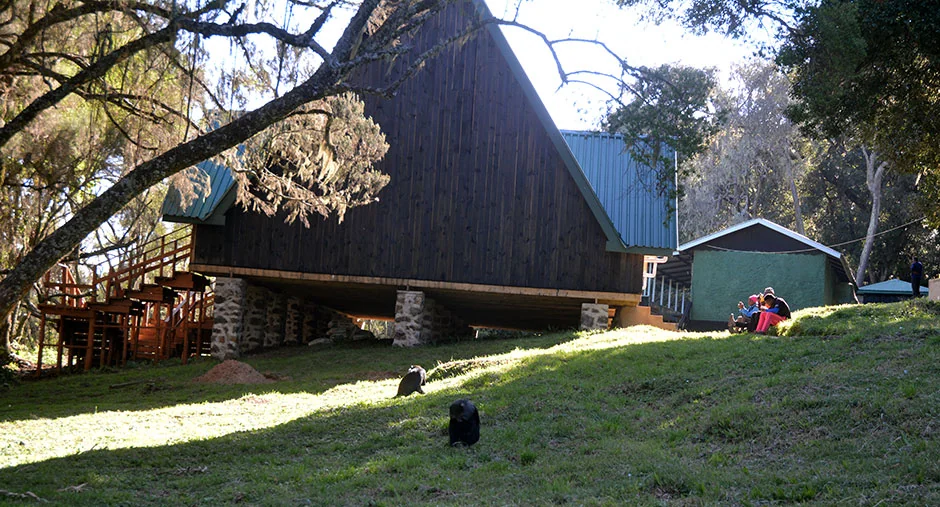
The first stop and arguably the most pleasant. Sleeping is in small A-frame timber chalets, four to eight people each, clustered around a central dining hall, still inside the forest belt where temperatures stay mild. Running water is available and the facilities are well maintained.
Horombo Hut (3,720 m)
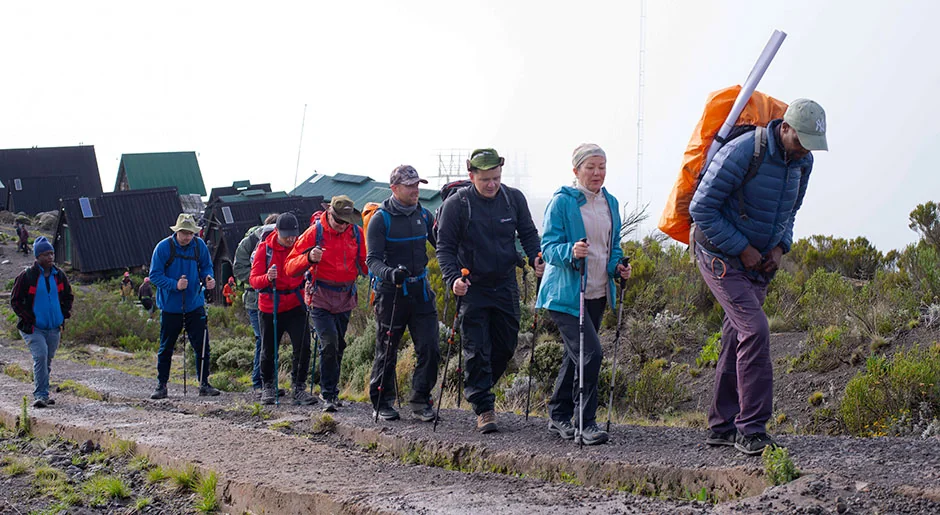
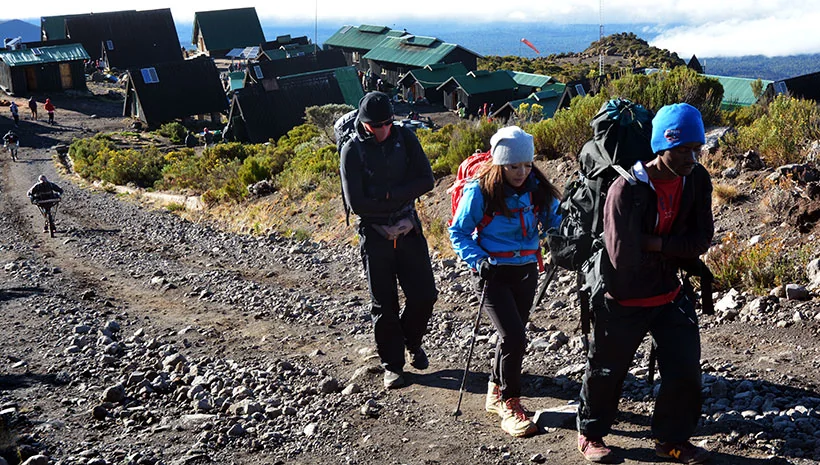
The largest complex on the mountain, with multiple sleeping buildings, a proper dining hall and a genuine base-camp atmosphere. You stay here twice, once going up and once coming down, so you will get to know it. The nights are noticeably colder than Mandara.
Kibo Hut (4,700 m)
The stark one: a stone refuge near the base of the summit cone with dormitory-style bunks and minimal warmth. You arrive in the afternoon, try to sleep from early evening, and leave for the summit around 23:00. There are no charging points anywhere on the mountain, so bring a power bank for phones and cameras.
Guide's Note on Sleeping Bags
Some huts provide blankets, but availability is inconsistent and they are never adequate for Kibo Hut temperatures. Bring a sleeping bag rated to -10°C or colder regardless. A liner alone is not sufficient. See the full packing list for the rest.
Day-by-Day Itinerary
Day 1: Marangu Gate → Mandara Hut
The Marangu Gate sits less than 90 minutes from Moshi by road, and the first day is the gentlest opening of any Kilimanjaro route. The trail is a wide, well-maintained track through montane rainforest, shaded and cool, with colobus monkeys regularly moving through the canopy. If you arrive early, take the 30-minute detour just above Mandara to Maundi Crater for views back over the plains and down to Moshi. Then eat a full dinner and sleep early. The A-frame chalets are snug but functional.
Day 2: Mandara Hut → Horombo Hut
This is the longest walking day of the route and the one most climbers underestimate. The trail climbs steadily out of the forest into heather and moorland, and the landscape opens up dramatically. Giant groundsel, senecio kilimanjari, appear on the upper slopes, prehistoric-looking and otherworldly, while the jagged silhouette of Mawenzi comes into view to the east. Start by 07:00, drink consistently, and do not rush the final approach. Horombo is a large, well-established complex and will feel almost civilised compared with what follows.
Day 3: Horombo Hut → Kibo Hut
The trail leaves Horombo and crosses the Saddle, the wide, desolate plateau between Mawenzi and Kibo where the mountain moves into the alpine desert. Vegetation thins, then vanishes almost entirely. The air is noticeably thinner, and the landscape feels lunar. Kibo Hut itself is a stark stone refuge near the base of the summit cone, cold and crowded on busy dates. Try to sleep between arrival and the midnight summit departure. Altitude usually disrupts sleep here, but rest matters even if deep sleep does not come. Lay out your summit gear before you lie down.
Day 4: Kibo Hut → Uhuru Peak → Horombo Hut
Departure is around 23:00. The first hours are a slow, grinding ascent up steep scree in cold darkness, temperatures between -10°C and -20°C with wind. Gilman's Point on the crater rim (5,685 m) is the first named milestone, usually reached near first light after five to seven hours. From Gilman's, the trail follows the rim for another hour and a half to Uhuru Peak (5,895 m). The summit is exposed, cold and usually windy. Take your photographs, let the moment register, then follow your guide's timing on the descent. The long walk down to Horombo the same day is hard on tired legs but puts you back below 4,000 m, where recovery begins.
Day 5: Horombo Hut → Mandara Hut
The legs are heavy but the spirits lift noticeably. The trail back through moorland and into forest is familiar now, and the warmth and oxygen that return with lower altitude feel almost physical. The giant senecios fall behind you and the forest closes in again. Most climbers arrive at Mandara feeling a mixture of exhaustion and relief, eat a big lunch, and sleep deeply. Tomorrow is the last day.
Day 6: Mandara Hut → Marangu Gate
A short, easy descent through the rainforest to collect your summit certificate. TANAPA issues certificates at Marangu Gate for both Gilman's Point and Uhuru Peak, so bring your summit record. Then transfer back to Moshi, usually arriving by midday, with most operators arranging a celebratory lunch. Six days after entering this gate, you are done.
Why Marangu's Success Rate Is Lower
The compressed acclimatization profile is the main reason. On the 6-day schedule you spend only one night at Horombo (3,720 m) before moving directly to Kibo Hut (4,700 m) and attempting the summit that same night. That is a gain of almost 1,000 metres of sleeping altitude in a single step, followed immediately by a 1,195-metre summit push.
Compare that with the Lemosho 8-day, where climbers spend three nights at or above 3,840 m before the summit push, including a deliberate climb to 4,630 m at Lava Tower before descending to sleep lower. On Lemosho, your body has days to adjust to thinner air. On Marangu 6-day, that process is truncated, and success rates reflect it.
The Cold
Summit night runs -10°C to -20°C with wind, the coldest hours of the whole climb. Windchill on the exposed final cone makes it feel colder still.
The Wind
The summit cone is open to every direction. On the last switchbacks the wind drains heat fast, which is why a windproof shell over your down is not optional.
The Push
Gilman's Point (5,685 m) usually comes near first light, then the rim walk to Uhuru (5,895 m) takes another hour and a half. Slow and steady wins it.
50–65%
Marangu 6-day success rate
70 km
Total walking over 6 days
1,195 m
Summit push from Kibo Hut
-20°C
Worst summit-night readings
The Margin Is Smaller, Not Zero
Climbers who arrive physically fit, take altitude adjustment seriously in the weeks before, and pace themselves correctly still summit at good rates on Marangu. You are not doomed to fail by choosing it. You are simply walking with less room for error. Know that going in, prepare accordingly, and the numbers are on your side. For a deeper look, read our honest success-rate guide.
Who Marangu Actually Suits Well
Marangu is not the right choice for everyone, but for the right person it is a very good one. If you recognise yourself in any of these four profiles, it deserves a serious look.
Climbers who dislike camping
The huts are not luxury, but they are warmer and more sheltered than tents at altitude. If the thought of sleeping in a tent on a mountain genuinely puts you off, Marangu removes that barrier. Shared sleeping arrangements mean limited privacy, but most climbers find the trade-off worthwhile.
Budget-conscious climbers
Marangu is typically $200 to $500 per person cheaper than comparable-duration camping routes. If your budget is a real constraint and the choice is a good operator on Marangu versus a poor operator on a longer route, take Marangu with the better operator.
Repeat visitors with altitude experience
Climbers who have spent time above 4,000 m before, on Kilimanjaro or elsewhere, carry a physiological advantage on the compressed Marangu schedule. Recent high-altitude exposure reduces the risk the shortened profile creates.
Climbers with limited time
Six days is the minimum viable Kilimanjaro schedule. If your travel window genuinely cannot fit seven or eight days on the mountain and you understand the trade-off, Marangu 6-day is a legitimate option. Go in fit, informed, and with a reputable operator.
Cost Breakdown for 2026 & 2027
Marangu pricing reflects the extra TANAPA conservation fee charged for hut use, a small but real addition to the base park fees. Here is how the market breaks down in practice. Our full cost guide covers the wider picture.
Value
$1,900–$2,400
Smaller operators, shared vehicle transfers, and basic but functional mountain meals. Food quality and crew experience vary more at this level, so research carefully and confirm crew wages meet industry standards before booking.
Mid-RangeRecommended
$2,400–$3,000
Reputable operators with private transfers, quality mountain food, experienced licensed guides, and reliable safety equipment including supplemental oxygen and pulse oximeters. This is the tier where the service matches what the mountain demands.
Premium
$3,000–$3,500+
Enhanced crew ratios, better hut room management with pre-reserved sleeping assignments, improved meals, and a more attentive overall service. Worth it if you want minimal logistical friction on an already demanding route.
Hut Conservation Fee Note
TANAPA charges a dedicated overnight conservation fee for Marangu's hut infrastructure, roughly $100 to $200 per person more than camping routes. Reputable operators build this into their quote, so when comparing prices, ask explicitly whether the hut fee is included.
What Is Included and What Is Not
Included in a standard Marangu package
- TANAPA park, rescue and hut conservation fees
- Licensed lead guide, assistant guide(s), cook and porters
- All mountain meals: breakfast, lunch and dinner
- Hut accommodation for all nights on the mountain
- Safety equipment: supplemental oxygen, pulse oximeter, first-aid kit
- Moshi–Marangu Gate–Moshi transfers
- Summit certificate at Marangu Gate
Not included, budget separately
- Personal gear (sleeping bag, boots, clothing) or gear rental
- Crew tips, $20–$30 per day total for the whole crew is standard
- International flights and Tanzania visa ($50–$100)
- Travel insurance with high-altitude medical evacuation cover
- Pre/post-climb hotel nights in Moshi
- Snacks, personal medications, power bank for charging
5 Practical Tips for Marangu Climbers
The compressed schedule changes what matters. Preparation, not route, decides more of your summit chances on Marangu, so start with these five. Pair them with our training guide and packing list.
Arrive with a real fitness base; the margin is smaller here
The compressed schedule means fitness does more of the work than on a longer route like Lemosho. You cannot rely on extra days to compensate for a weak aerobic base. Consistent hiking and cardio in the eight to twelve weeks before your climb pays direct dividends on summit night.
Pack a sleeping bag even though blankets are sometimes provided
Hut blanket availability is inconsistent, especially at Kibo during peak season when the huts are full, and temperatures there drop well below -10°C. A bag rated to -10°C or colder is not optional gear, it is the right tool for the conditions. Moshi rental shops can supply one if you do not own a suitable bag.
Day 2 to Horombo is longer than it looks on the map; start early
The 12-kilometre walk from Mandara to Horombo is the longest day of the route and often catches people off guard. It takes four to six hours through thinning air. Start by 07:00, drink continuously, and do not push the pace. Arriving at Horombo exhausted with a headache sets a poor tone for the days ahead.
At Kibo Hut, rest even if you cannot sleep
Most climbers sleep badly at Kibo Hut. The altitude (4,700 m), the cold, the noise of the building, and summit-night anxiety combine against deep sleep. Rest anyway. Lie down with your eyes closed, eat dinner and drink water even if appetite and thirst feel suppressed. The physical rest matters even without sleep.
Communicate openly with your guide on summit night
Marangu's compressed profile means some climbers feel altitude more acutely on summit night than they would on a longer route. If something feels genuinely wrong, not just normal discomfort, tell your guide immediately. A managed turnaround at 5,000 or 5,500 m is far better than a medical evacuation, and your guides are experienced at making that call without judgment.
Marangu Route FAQs
Conclusion
Marangu is Kilimanjaro's classic for a reason. It has history, real huts, genuine comfort for climbers who dread camping, and a price that usually undercuts the longer routes. But the six-day schedule is more compressed than its reputation suggests, and the summit rate reflects it. Choose it with clear eyes, prepare like it matters, and you give yourself a fair chance at the sunrise from Uhuru Peak.
Still weighing options? Marangu suits some climbers perfectly, while others are better served by the higher success rates of Lemosho or Machame. Compare all routes on our route comparison page and be honest with yourself about which profile matches. The mountain will reward the honest choice.
Ready to Plan Your Marangu Climb?
Get a transparent line-by-line quote with all inclusions, park fees, hut fees and crew wages confirmed before you book. Tell us your dates and we will recommend the right route and preparation plan.
Continue Planning Your Climb
Summit Success Rate, Real Chances
Route-by-route chances and how to improve yours
Which Route Should You Choose?
Acclimatization, scenery, and comfort compared
Kilimanjaro Cost Guide 2026–2027
Full cost breakdown including park fees and crew
Kilimanjaro Packing List
Complete gear checklist including hut-route specifics
Kilimanjaro Weather by Month
Best months and what each one really brings
Best Time to Climb Kilimanjaro
The extended guide to timing your climb
Lemosho Route 7 & 8 Days
Our recommended route for acclimatization
Get a Free Climb Quote
Dates, routes, and transparent pricing
Last updated: August 13, 2026. Prices and park fees based on current TANAPA schedules and our 2026–2027 booking data.