Key Facts
The Anglo-Zanzibar War was fought in Stone Town, Zanzibar, on 27 August 1896, between the British and the forces of Khalid bin Barghash, a self-styled Sultan who had seized the palace three days earlier. A Royal Navy squadron bombardment reduced the palace to rubble in 38 to 45 minutes, making it the shortest war in recorded history. Around 500 Zanzibari died; a single British sailor was injured, and accidentally.
38-45 min
Length of the war
First shell at 9:02 am, surrender at 9:37-9:45 am on 27 August 1896
~500
Zanzibari dead
Mostly artillery crews and palace defenders caught in the open
1
British casualty
A single sailor, accidentally injured rather than hit by enemy fire
Where Is Zanzibar?
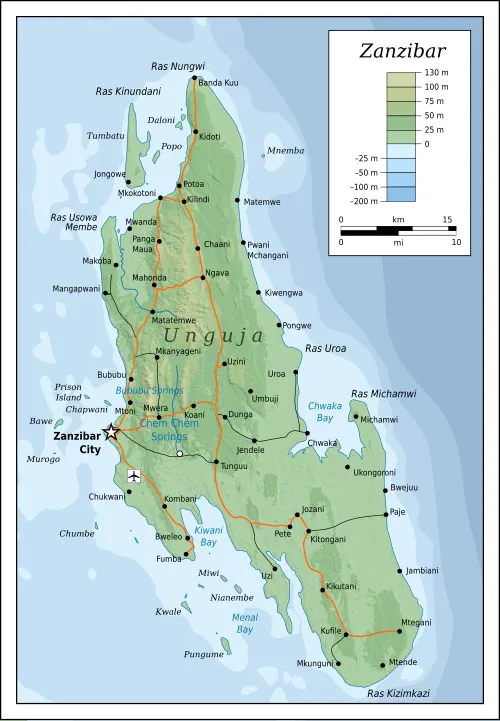
Zanzibar is an archipelago in the turquoise waters of the Indian Ocean, just off the East African coast of modern-day Tanzania. Zanzibar Island, officially Unguja, is the second largest island in the group, second only to Pemba. The islands are a hilly tropical landscape of dhow harbours and spice plantations, with an average annual temperature of around 25.7°C.
The fighting took place in Stone Town, the old quarter on the western side of Unguja, where the Sultan's Palace faces the harbour. It is a short walk from the beaches we list in our guide to the top 10 beaches in Zanzibar, which is why most travellers meet this history within a day of arriving.
Why this matters for travellers
Stone Town is not just a base for a Zanzibar beach holiday - it is the shortest war's entire battlefield, and it is compact enough to explore in a single morning.
Omani Zanzibar Before the British Influence
In 1498 the Portuguese explorer Vasco da Gama was the first European to set foot on Zanzibar, and within a few years the island became part of the Portuguese Empire. The Portuguese established the governing system of Sultans in Zanzibar, who were Swahili merchants from the local elite.
In the early 18th century the Portuguese were driven out by the Omani Empire, which controlled much of the East African coast from Mogadishu to Kilwa. Zanzibar became an integral part of that empire, ruled by hakims - local governors - under the Sultan in Muscat.
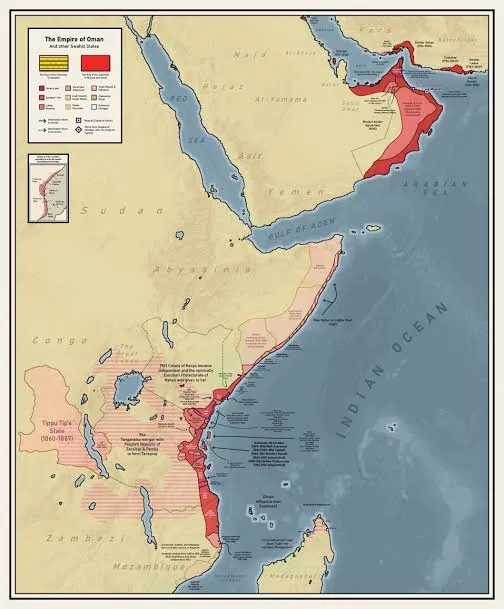
The sultans and hakims represented the interests of the local population, while the colonizers were interested mainly in resource consumption and trade. That mismatch, in the form of governors ruling on behalf of an empire thousands of miles away, would produce a succession crisis with colonial consequences.
Zanzibar's Colonial Economy
The 19th century was a period of real prosperity for Zanzibar. The Omani Empire moved its capital to Stone Town in 1840, and the island's warm, sunny climate did wonders for clove, spice and other agricultural exports.
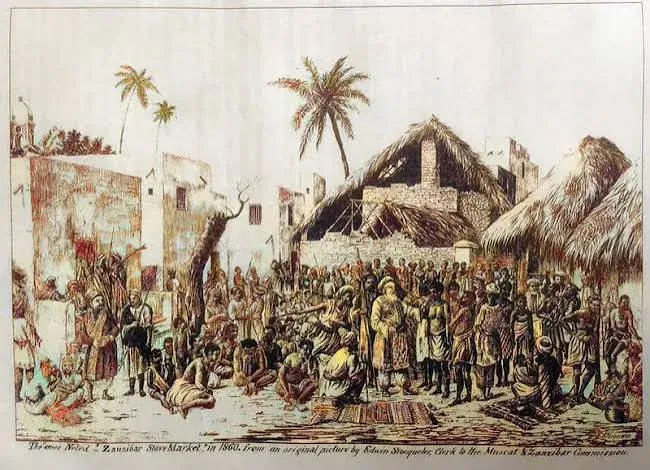
The clove plantation boom relied on slave labour and produced one of the largest slave markets of the era. Zanzibar's position at the meeting point of shipping routes from the Middle East, India and Southeast Asia was perfect for that trade: merchants and caravans arrived from across the world seeking slaves and raw materials prized by European consumers, and the island slid into the first truly globalised economy.
Building on that success, Zanzibar became independent of Muscat and Oman in 1861 under its first Sultan, Majid bin Said. The revenue from cloves and the slave trade gave the Sultanate the wealth that made Stone Town's palace - and the fight over who controlled it - worth fighting over.
The British Empire on Zanzibar
Preceded by the United States, which established a consulate on the island in 1838, Britain marked its official interest in Zanzibar in 1841. The French and Germans followed, but only Great Britain kept the closest relationship with the Sultans between 1870 and 1890. During that period Sultan Barghash bin Said and his successor Khalifa bin Said built infrastructure - roads, a harbour, the Anglican cathedral at the anchorage - and took the first real steps to restrict the slave trade.
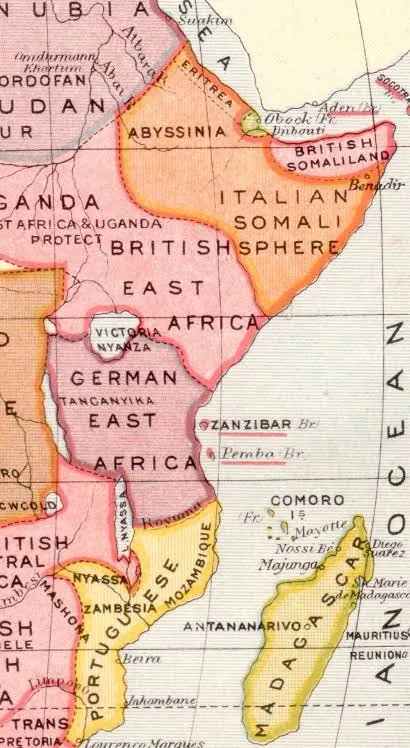
British influence was informal at first: no colony, no governor, just a consul with a veto over who sat on the throne. The Sultanate of Zanzibar remained nominally sovereign, and that ambiguity is exactly what made the succession of 1896 so brittle.
What Was the British Interest in Zanzibar?
Britain had several reasons for wanting a permanent presence on the island, and they were commercial as much as strategic.
- Cloves and trade. Controlling Zanzibar meant a near-monopoly on the global clove trade, the valuable spice used in food, medicine and perfumery, alongside other island exports.
- A naval base. Zanzibar commanded the East African coast and the western Indian Ocean, the perfect anchorage for projecting British sea power into both.
- British subjects. London wanted to protect British Indian traders and other subjects drawn into the illegal slave trade that still operated out of the island's ports.
- Germany. Holding the crossroads of the East African trade routes - and denying the same to Germany - made the island a strategic counterweight to German expansion in the region.
An empire of advisors
By 1896 Britain did not formally govern Zanzibar at all. It governed it through influence: a consul who chose sultans, a resident who lived in the palace, and gunboats that made those preferences stick.
The Anglo-German Treaties in East Africa
Zanzibar's formal transformation into a British colony stemmed from the Heligoland-Zanzibar Treaty of 1890. Official colonization coincided with a new imperial ideology, and Britain increasingly imagined itself a civilising power across the globe. The treaty marked the emergence of a conflict of interest between local elites and British colonial policy, laying the groundwork for unrest.
The Heligoland-Zanzibar Treaty followed the Anglo-German Agreement of 1886, which established the two spheres of influence in East Africa. Both powers agreed not to interfere in each other's spheres: Britain supported the leased territories of Dar es Salaam and Pangani, controlled by Sultan Barghash bin Said, and in return Germany agreed to recognise Zanzibar's sovereignty.
Before formal colonization, Zanzibar held the status of a British protectorate. Most importantly, the British consul was given the right to veto candidates for the Sultan throne - a power the British would use, days after the shooting stopped, to decide who governed Zanzibar.
How Did the War Begin?
The war was caused by a succession struggle. The pro-British Sultan of Zanzibar, Hamad bin Thuwaini, died on 25 August 1896, widely believed to have been poisoned, with Khalid bin Barghash - his cousin and a candidate for the throne - often blamed. The British authorities intervened and vetoed Khalid's candidacy: they feared an alliance with the Germans and his openly pro-slavery position.
The British diplomatic agent Arthur Hardinge insisted that Hamoud bin Muhammed become the new Sultan. Khalid instead seized power without British approval: he announced himself Sultan of Zanzibar and captured the Sultan's palace and harem, with the support of about 1,000 armed men loyal to the late Sultan.
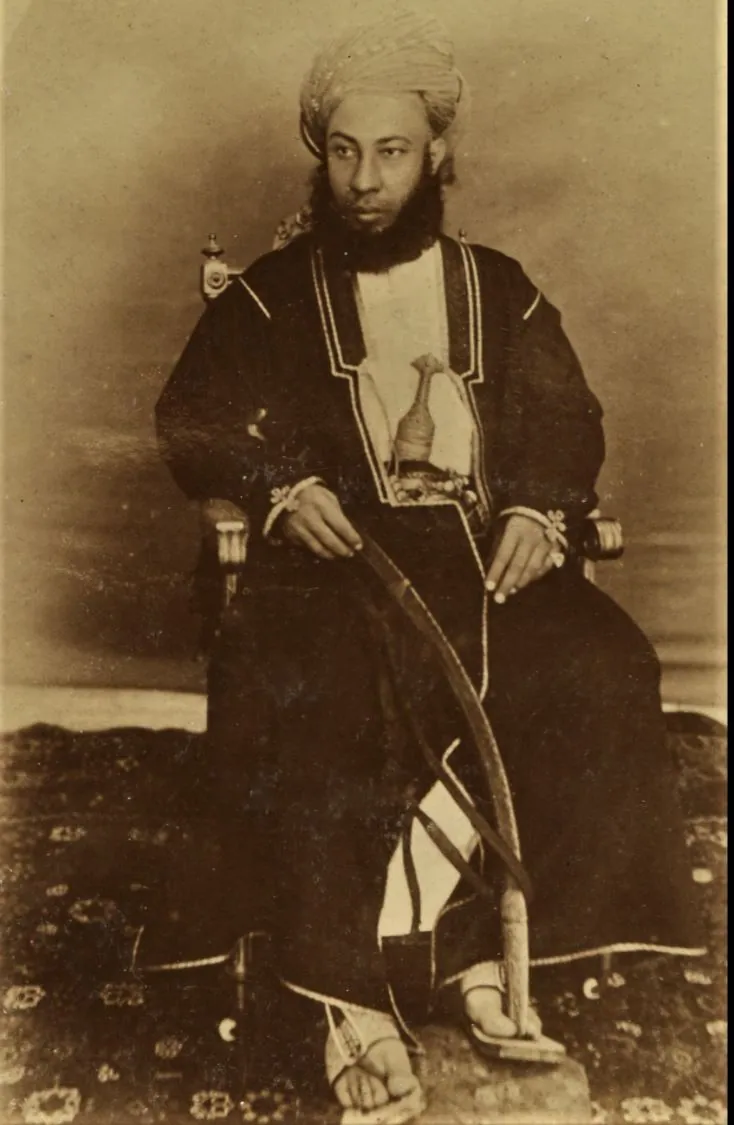
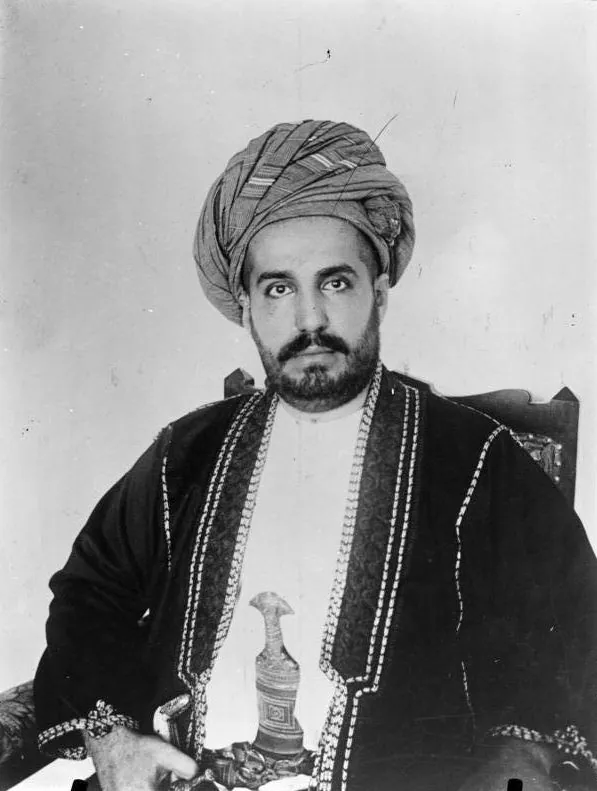
Khalid became the symbol of resistance to European interference. Representatives of the Arab ruling class who opposed abolishing the slave trade backed him, and parts of the Zanzibari population rallied to him as a defence of local traditions, politics and culture.
The Diplomatic Failure: A Peaceful Solution That Did Not Work
In the late 19th century Great Britain stood as the worldwide hub of trade and finance, and the Royal Navy was the largest in the world. With unparalleled maritime dominance, Britain was among the first states to use gunboat diplomacy to pursue national interests - and on Zanzibar it had already run out of patience.
To use British forces against the usurper, Consul Basil Cave needed authorisation from London, which arrived by telegraph. Khalid received several ultimatums ordering him to leave the Sultan's Palace. All were rejected. The final ultimatum expired at 9:00 on 27 August, and Stone Town was about to witness the shortest war in recorded history.
"We have no intention of hauling down our flag and we do not believe you would open fire on us," said Khalid bin Barghash in his message to the Consul.
"We do not want to open fire, but unless you do as you are told, we shall certainly do so," replied Basil Cave.
Six words of consequence
Cave's reply is the whole war in miniature: two imperial systems, one palace, and no shared language for anything other than force.
British Forces vs the Sultan's People
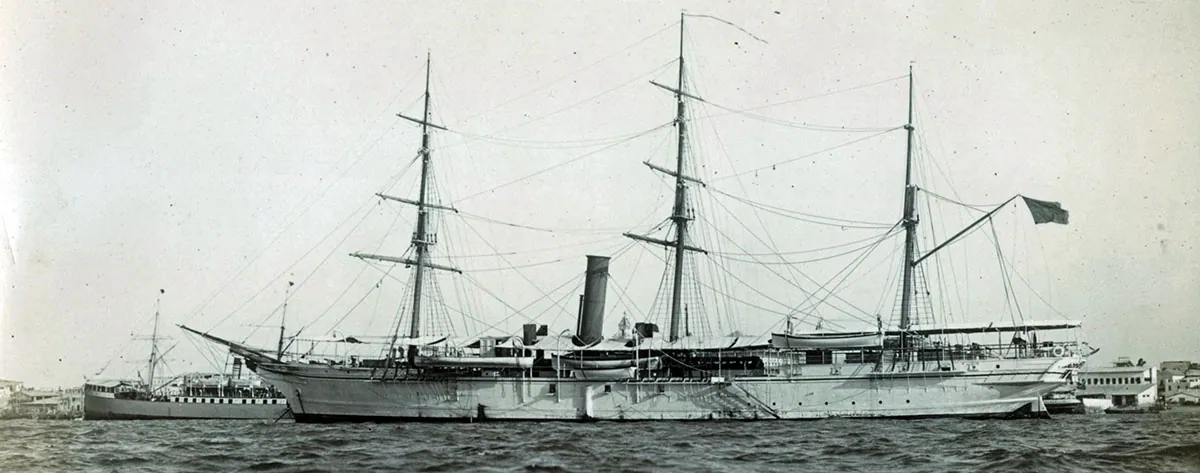
The British naval force was commanded by Rear Admiral Harry Rawson, Brigadier-General Lloyd Mathews and Lieutenant Arthur Edward Harington Raikes. Around 150 British marines and sailors served aboard five warships: the corvettes HMS Philomel and HMS St George, and the gunboats HMS Raccoon, HMS Thrush and HMS Sparrow. They were joined by some 900 loyal Zanzibari askari warriors, who had chosen the pro-British Sultan over Khalid.
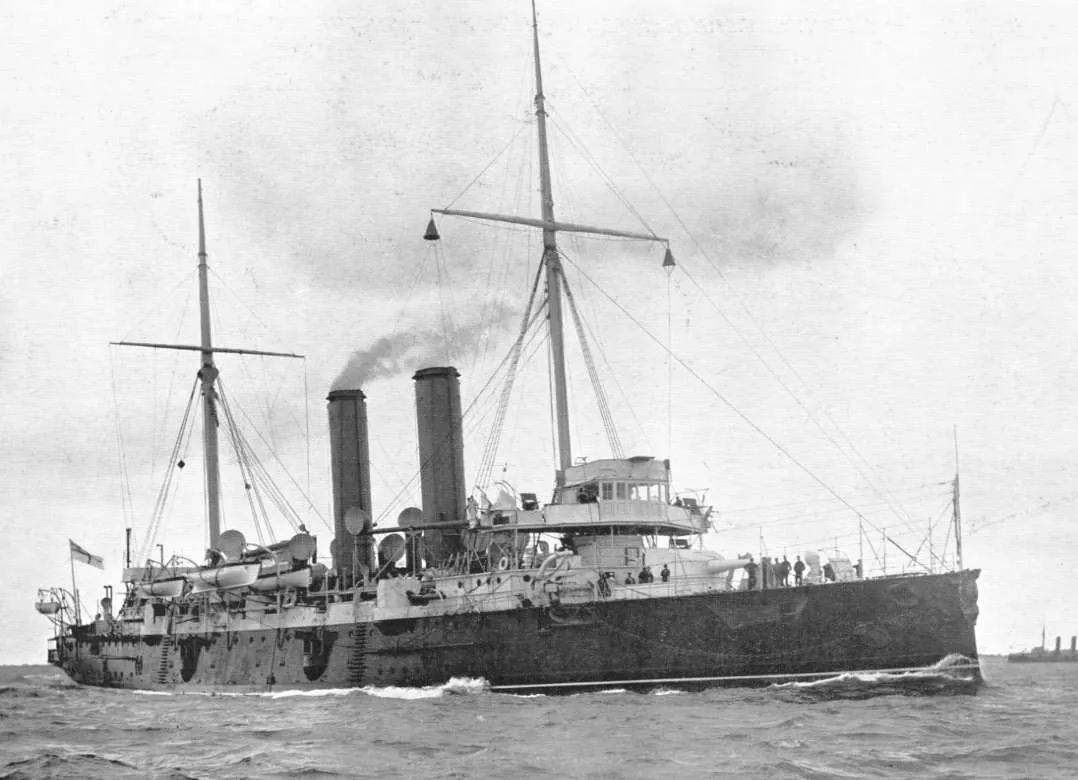
Khalid's forces were headed by himself, with around 2,800 men carrying outdated rifles and muskets and some 700 askari soldiers guarding the palace. His artillery consisted mostly of gifts from foreign states: four artillery pieces, a shore battery, several Maxim machine guns, a Gatling gun, a 17th-century bronze cannon and two 12-pounder field guns. The rebels even had a navy: the flagship HHS Glasgow, gifted by Queen Victoria and built in 1878, plus two boats and a wooden sloop.
| British Royal Navy | Khalid's Zanzibari forces | |
|---|---|---|
| Ships | 2 corvettes (HMS Philomel, HMS St George) and 3 gunboats (HMS Raccoon, HMS Thrush, HMS Sparrow) | 1 ironclad, HHS Glasgow, gifted by Queen Victoria in 1878, plus 2 boats and a wooden sloop |
| Troops | ~150 British marines and sailors, plus ~900 loyal Zanzibari askari warriors | ~2,800 men with outdated rifles and muskets, plus ~700 askari |
| Artillery | Naval heavy guns on five warships | 4 artillery pieces, a shore battery, several Maxim machine guns, a Gatling gun, a 17th-century bronze cannon and two 12-pounder field guns |
| Rounds fired | ~500 shells, ~4,100 machine-gun rounds and ~1,000 rifle rounds in minutes | Returned fire that sank one ironclad before it was silenced |
How Did the Shortest War in History Unfold?
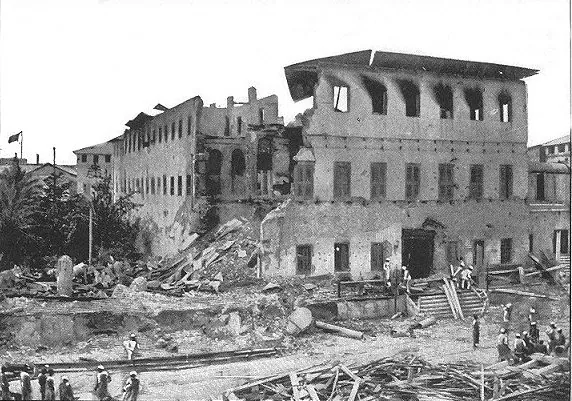
Khalid barricaded himself and his forces inside the palace. Captain Saleh, of the palace guard, placed artillery and machine guns facing the British ships. The moment the ultimatum expired at 09:00, the heavy bombardment with high-explosive shells opened at 9:02. Within minutes the Royal Navy unleashed around 500 shells, 4,100 machine-gun rounds and 1,000 rifle rounds at the Royal Palace and Harem.
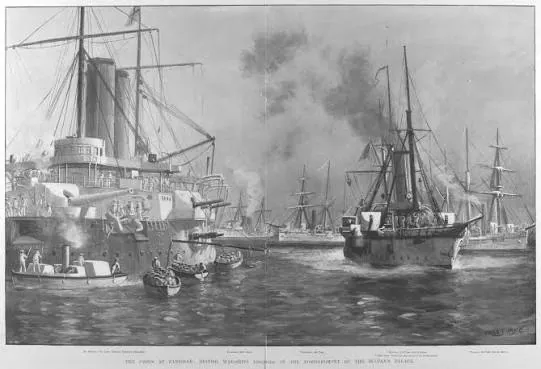
The defending artillery was disabled, HHS Glasgow was destroyed by return fire from HMS St George, and the palace was gutted. At approximately 9:37 to 9:45 Khalid bin Barghash surrendered. His forces suffered around 500 casualties, against a single British sailor injured by accident. The disparity is not hard to explain: some Zanzibari defenders rode into battle on bicycles.
| Time | What happened |
|---|---|
| 25 Aug 1896 | Sultan Hamad bin Thuwaini dies. Khalid bin Barghash, his cousin, seizes the palace and proclaims himself Sultan. |
| 26 Aug 1896 | The British consul general vetoes Khalid's succession and insists on Hamoud bin Mohammed. Khalid refuses to leave the palace. |
| 9:00 am, 27 Aug | The final British ultimatum expires after several messages between Khalid and Consul Basil Cave. Neither side will back down. |
| 9:02 am | HMS Philomel and HMS St George open fire with heavy shells from the harbour. The gunboats join in. |
| 9:07 am | The defenders return fire. The Sultan's own ironclad, HHS Glasgow, is hit and destroyed. |
| 9:37-9:45 am | With the palace in ruins and its guns silenced, Khalid bin Barghash surrenders. The war is over in under an hour. |
Aftermath of the War
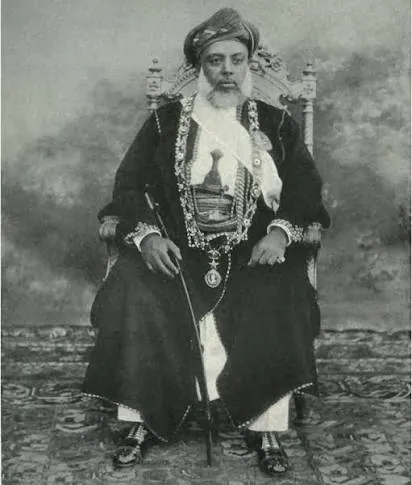
The luckless usurper fled and sought refuge in the German Consulate, which did not take in political prisoners. German authorities were afraid of violating diplomatic protocol, so troops of the Imperial German Navy carried him out by boat, ensuring he never set foot on British soil. The consulate accomplished a mission impossible: Khalid was exiled to Dar es Salaam on the mainland, and he never came back.
Meanwhile the pro-British Hamoud bin Mohammed ascended the Zanzibari throne as the sixth Sultan. He abolished slavery and began a slow but positive process of emancipation - a story that continues in the festival calendar of modern Tanzania, where Zanzibar still keeps national days of its own.
Read the island's modern calendar
Zanzibar's own holidays, including the January Revolution Day that replaced the Sultan's authority, are covered in our guide to Tanzania's public holidays and festivals.
Significance of the War
Historically, a conflict this short holds little significance beyond its symbolic value as the shortest war in history. But it demonstrated several things that mattered far beyond Zanzibar.
- Sea power. The Royal Navy could reduce a fortified Arab palace to rubble in minutes - the clearest possible advertisement for gunboat diplomacy.
- Technology. The gap between industrialised Europe and the colonised African states was suddenly visible in a single morning.
- Politics. Using brute force to suppress a movement for independence stirred anti-colonial debate and organising across the continent.
- Economics. The economic structures Britain imposed on Zanzibar planted seeds of the inequality and underdevelopment that shaped the struggle for postcolonial sovereignty.
- Society. Most important of all, abolition of slavery brought real degrees of freedom to Zanzibaris.
Nyerere's later argument that the colonial economies left Africa underdeveloped starts in places like Zanzibar: a clove economy built on enslaved labour, then converted into a colonial supply chain. Understanding that chain is the same story told on the human fossil record of Olduvai Gorge - how Africa shaped the modern world long before Europe arrived to administer it.
The Anglo-Zanzibar War: A Minor Chapter in the Scramble for Africa
The Berlin Conference of 1884 to 1885 gathered the imperial powers to end slavery and establish spheres of influence in Africa - the so-called Treaty System. The scramble for African territory by the British, French, German, Belgian, Spanish, Portuguese and Italian empires was driven by a global recession and rising protectionism. All of them wanted new markets and land to supply raw materials for industry.
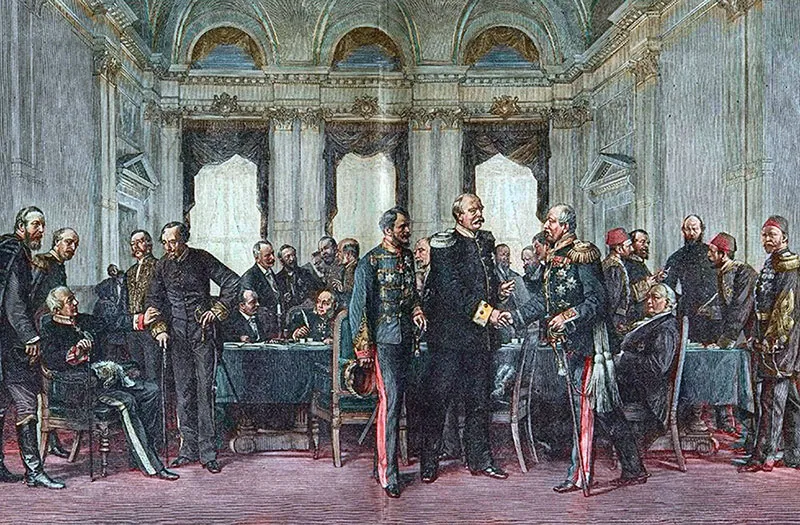
As a result, around 10,000 kingdoms in Africa were divided between the European powers. Lord Salisbury best characterised the Scramble for Africa as drawing lines. Only Ethiopia and Liberia remained independent, both thanks to special relations with the United States.
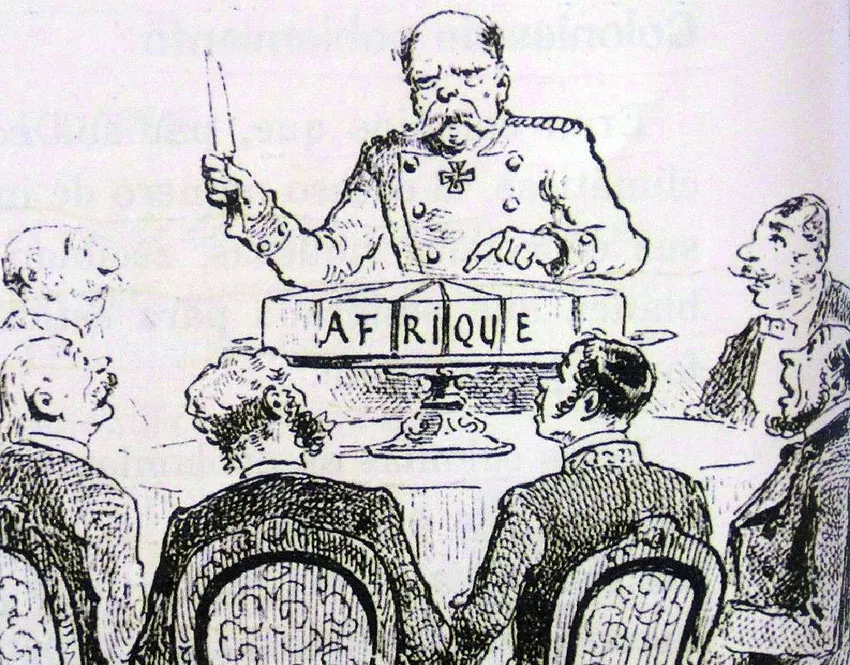
The Anglo-Zanzibar War is not a major chapter of the Scramble for Africa, but even a war this short shows the dynamics of European imperialism at work: British demands were purely imperial, they provoked the conflict, and the island's local elites were left with independence as the only defence they had.
In the Footsteps of the Zanzibar War of 1896
Planning to stand on the site of the shortest war in history? These are the five places worth your time, and all of them sit within a short drive or boat ride of the coast.
Stone Town
Stone Town, Unguja
The epicentre of the war and a UNESCO World Heritage Site today. Narrow lanes, carved doors and shell marks from the bombardment.
House of Wonders
The waterfront, Stone Town
The former Sultan's Palace, rebuilt after the shelling and now the National Museum, with artefacts and weapons from the conflict.
Peace Memorial Museum
Former British Consulate, Stone Town
A thorough account of the war - photographs, telegrams and documents - housed in the very building where the ultimatum was sent.
Chumbe Island
Off the west coast of Unguja
A protected marine reserve where the British ran a signal station in 1896. Today it is one of Zanzibar's best diving and snorkelling spots.
Sultan Khalid's Tomb
Matondoni, east coast of Unguja
The tomb of Khalid bin Barghash in the village where his family held land, and the quietest place to end a visit to this corner of the island's history.
Stone Town and the House of Wonders are the essentials; add the Peace Memorial Museum for documents and the Chumbe Island signal station if you are a diver. If you are choosing an island for a beach holiday, our comparison of Zanzibar, Pemba, Mafia and Thanda explains how far each one sits from Stone Town.
Frequently Asked Questions
Between 38 and 45 minutes, depending on the source you read. The bombardment of the Sultan's Palace in Stone Town began at about 9:02 am on 27 August 1896 and Khalid bin Barghash surrendered at roughly 9:37 to 9:45 am. It remains the shortest war in recorded history.
Because the entire conflict - from the first shell to the surrender - was over inside a single morning, less than an hour in total. No other war in recorded history has been shorter, which is why it is studied in military academies as a case study in naval firepower overwhelming a defender.
The British force won decisively. A Royal Navy squadron under Rear Admiral Harry Rawson bombarded the palace with heavy shells from two corvettes and three gunboats while Khalid bin Barghash and roughly 3,500 of his defenders were inside. Around 500 Zanzibari were killed; only one British sailor was injured, accidentally.
A succession dispute. Sultan Hamad bin Thuwaini died on 25 August 1896, widely believed to have been poisoned. His cousin Khalid bin Barghash seized the palace, but the British consul general vetoed his candidacy and insisted on Hamoud bin Mohammed. Britain demanded the palace be surrendered; Khalid refused, and the ultimatum expired at 9:00 am.
He escaped and took refuge in the German Consulate in Stone Town, which did not admit political prisoners. Fearing a breach of diplomatic protocol, German naval officers carried him out to Dar es Salaam, exile from Zanzibar. He died in Germany later that year, still insisting he had been the rightful Sultan.
The war did not abolish slavery by itself, but it cleared the way for its abolition. The pro-British Hamoud bin Mohammed was installed as Sultan within days and promptly abolished the slave trade and slavery, beginning a gradual emancipation that transformed Zanzibari society over the following decades.
Estimates put Zanzibari dead at around 500, most of them artillery crew and palace defenders. Only one British sailor was wounded, by an accident rather than by enemy fire. Several Zanzibari defenders reportedly rode into the fire on bicycles, a detail repeated in nearly every account.
Yes. The Palace Museum (the House of Wonders) and the British Consulate building that houses the Peace Memorial Museum both stand on the Stone Town waterfront where the action happened, and shell marks are still visible in nearby walls. Add the two to a Zanzibar beach holiday with our Stone Town and beach tour.
Ready? Plan Your Zanzibar Trip
Stone Town is at its calmest early in the morning, which is exactly when the bombardment happened - the same hours, the same light, the same harbour. Tell us your travel dates and we'll build the Zanzibar leg of your trip around the history and the coastline, whether you are coming for the beaches, the diving or the story.
More Zanzibar & History Guides
GuidesTop 10 Beaches in Zanzibar
Nungwi, Paje and the rest of the coast
Best Time to Visit Zanzibar
Weather month by month and the two rainy seasons
Tanzania's Holidays and Festivals
17 public holidays and the festivals to plan around
Olduvai Gorge
The Cradle of Mankind, explained
Safari From Zanzibar
How to link the islands with the mainland
Which Island to Choose?
Zanzibar, Pemba, Mafia and Thanda compared
Last updated: October 3, 2026. Casualty figures and timings follow the most widely cited accounts of the 27 August 1896 bombardment.
