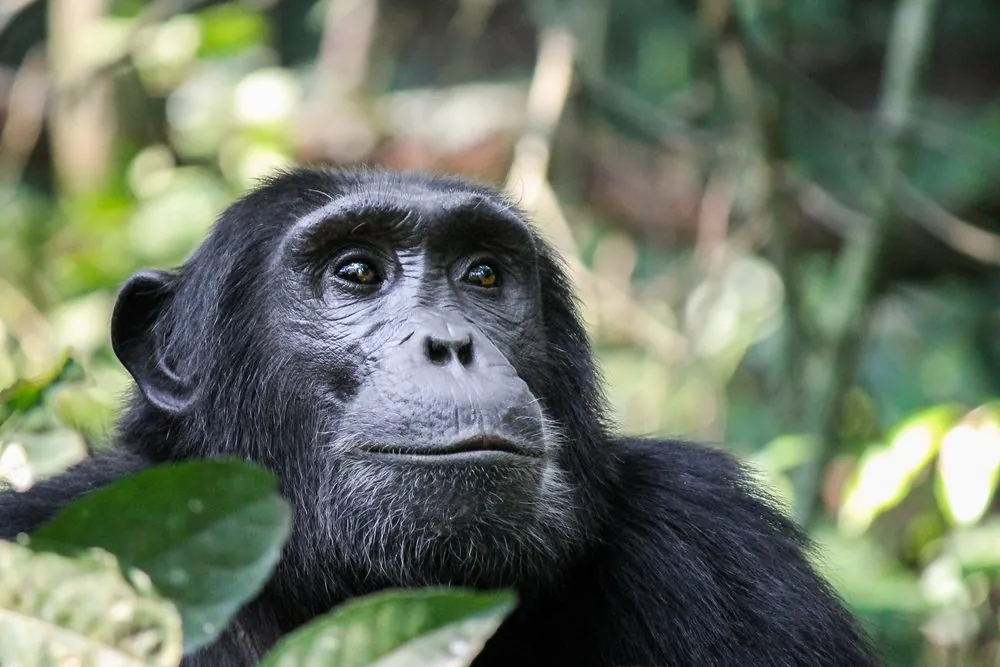
Imagine a hiking trail that winds along the shores of Africa's oldest and deepest lake, through forested hills where the canopy rustles with the calls of over two hundred bird species. Somewhere ahead, hidden among the trees, a group of chimpanzees is building sleeping nests for the night. This is not a fantasy. This is Gombe Stream National Park, one of the most remarkable wildlife destinations on the planet.
Tucked away in western Tanzania on the eastern shores of Lake Tanganyika, Gombe is where Jane Goodall began her groundbreaking study of wild chimpanzees in 1960, a study that continues to this day and fundamentally changed how we understand our closest living relatives. At just 71 square kilometers, it is one of Tanzania's smallest parks, but its contribution to science and conservation is immeasurable. Beyond the chimps, Gombe offers hiking through mountain meadows, kayaking on crystal-clear water, sport fishing, and a chance to walk in the footsteps of one of the world's most influential scientists.
Safari Guide's Note
Gombe is not the easiest park to reach in Tanzania. You must take a boat across Lake Tanganyika, and the chimpanzees are not guaranteed on any given day. But for those who make the journey, the reward is one of the most intimate and meaningful wildlife experiences in East Africa. There are no crowds here, no vehicle queues, no competing with other safari groups. Just you, the forest, and the chimps.
Where Is Gombe Stream National Park?
Gombe Stream National Park sits 16 kilometers north of the lakeside town of Kigoma, in western Tanzania, right on the shores of Lake Tanganyika. The park stretches as a narrow strip of forested hills along the coast, covering just 71 square kilometers. It is one of Tanzania's smallest national parks, Saanane Island is the only one smaller, yet it packs an extraordinary amount of biodiversity into its compact footprint.
The park occupies a unique ecological position at the junction of three distinct ecosystems: the montane forest of the highlands, the groundwater forest along the streams, and the open savannah grasslands scattered between. Thirteen streams cut through the forested hills, their waters feeding into Lake Tanganyika. The highest point in the park reaches 1,606 meters, creating a mosaic of habitats that include dense forest, meadows, and bushy valleys. This unusual combination of ecosystems is what makes Gombe so attractive to primatologists and nature lovers alike.
71 km²
Total park area
16 km
North of Kigoma town
13
Streams flowing through the park
1,606 m
Highest point in the park
Location at a Glance
Gombe Stream is in the Kigoma Region of western Tanzania, on the eastern shore of Lake Tanganyika. To the south lies Mahale Mountains National Park, another chimpanzee habitat. Lake Tanganyika itself is the world's longest freshwater lake and home to hundreds of endemic fish species found nowhere else on Earth. The town of Kigoma is the gateway to both parks.
Animals of Gombe Stream
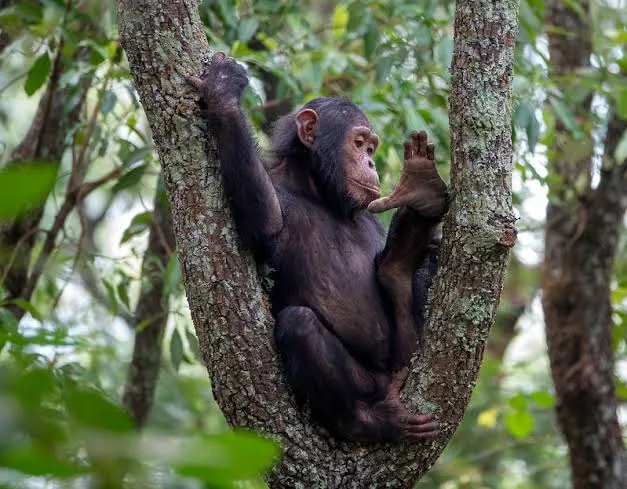
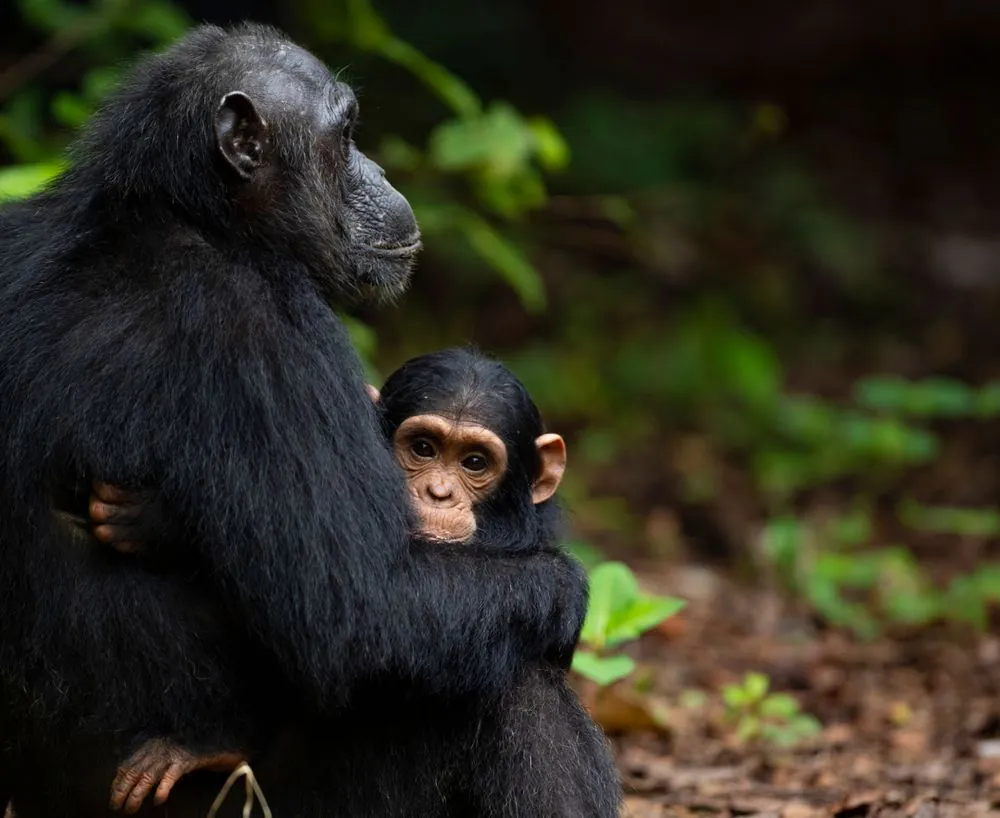
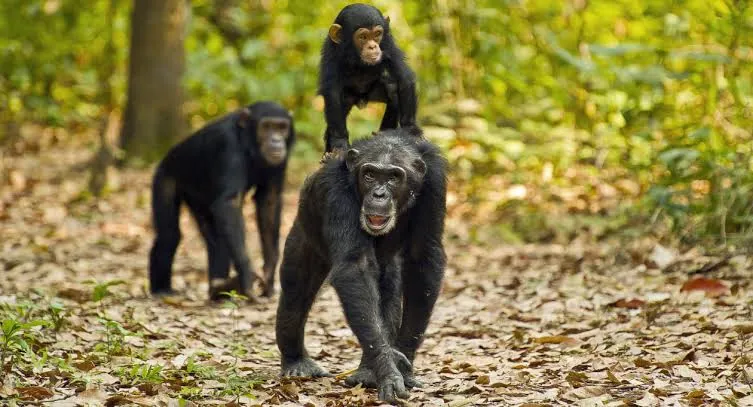
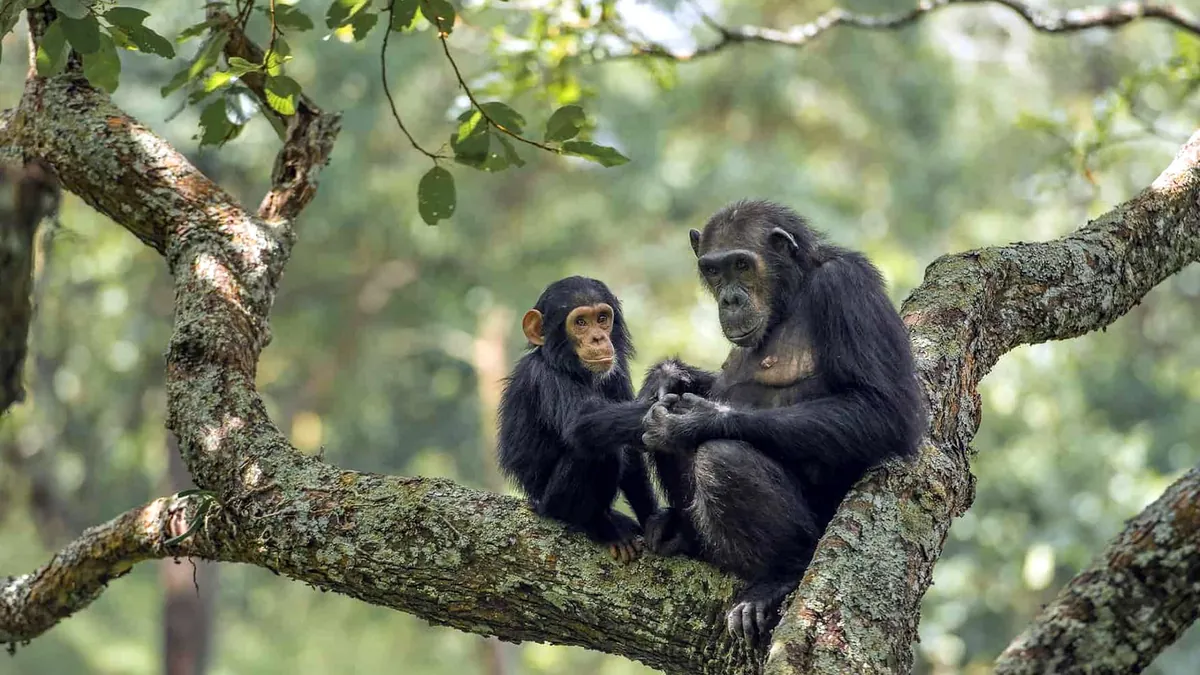
Chimpanzees are the undisputed stars of Gombe Stream. The park is home to approximately 100 chimpanzees living in several isolated groups that roam the forested hillsides. These are not tame or habituated in the way of some other parks. Gombe's chimps are studied as wild animals, and seeing them requires patience, a good guide, and a willingness to trek through sometimes steep and slippery forest trails. When you find them, the experience is unforgettable: watching a mother groom her infant, a young male practicing his display, or an alpha asserting his authority across a ridge.
Beyond the chimps, Gombe's forests support a surprising variety of primates. Red-tailed monkeys and blue monkeys swing through the canopy, while olive baboons forage along the forest floor. Bush babies, also known as galagos, are active at night, their large eyes reflecting torchlight as they leap between branches. Red colobus monkeys, increasingly rare in Tanzania, find refuge in Gombe's dense forest. The park is also home to leopards, bushpigs, hippos in the lake shallows, pythons, bush vipers, and a remarkable array of gecko species.
~100
Wild chimpanzees
200+
Bird species
250
Cichlid fish species
500
Butterfly species
Lake Tanganyika itself is a world within a world. The lake is home to over 250 species of cichlid fish, many of which are endemic, found nowhere else on the planet. The clear waters teem with life, from tiny algae grazers to large predatory species. Above the waterline, more than 200 bird species have been recorded in the park, including the palm-nut vulture, a rare raptor that feeds almost exclusively on the fruit of the raphia palm. The park also supports over 500 butterfly species, making it one of the most colorful destinations in East Africa. Many of these species are endemic to the Lake Tanganyika region, a testament to the lake's role as an evolutionary hotspot.
Jane Goodall's Legacy
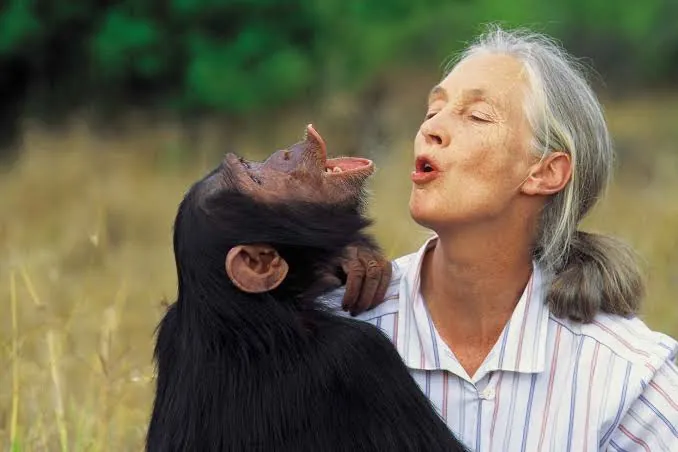
In July 1960, a 26-year-old British woman named Jane Goodall arrived at the shores of Lake Tanganyika with little more than a childhood dream and a letter of introduction from the renowned paleoanthropologist Louis Leakey. She had no university degree, no formal training in primatology, and no idea that the next fifteen years of her life would fundamentally reshape our understanding of what it means to be human. She called herself "a strange white ape" among the chimpanzees of Gombe.
Goodall's early days in Gombe were marked by frustration. The chimpanzees fled at her approach, and for months she could only observe them from a distance through binoculars. But gradually, she earned their trust. She began to do something revolutionary: she gave the chimps names instead of numbers. David Greybeard, Flo, Fifi, Frodo. This was considered unscientific at the time, but Goodall understood what the academic establishment did not: that these were individuals, each with a distinct personality, emotions, and social relationships.
Her discoveries were earth-shattering. In 1964, she observed David Greybeard stripping leaves from a twig and using it to fish for termites. Chimpanzees made and used tools. This single observation forced scientists to redefine what separated humans from animals. She later documented chimps hunting and eating meat, overturning the long-held belief that they were strict vegetarians. She witnessed wars between chimp groups, acts of compassion, deception, and grief. In 1965, she became the first person to earn a PhD from Cambridge University without first holding a bachelor's degree, based entirely on her field observations at Gombe.
Key Discoveries at Gombe
Chimpanzees make and use tools, overturning the definition of humans as the only tool makers. They are not strict vegetarians; they hunt and eat meat. They live in complex societies with politics, alliances, and betrayals. Each individual has a unique personality. These findings, published in journals including Nature and National Geographic, revolutionized primatology and forced a rethinking of what makes us human.
Goodall spent 15 years living full-time at Gombe, studying the chimps day and night. In 1975, the Tanzanian government officially established Gombe Stream as a national park, partly due to the international attention her work had drawn. The park opened to visitors in 1978, allowing others to witness the chimpanzees that had made Gombe famous. Goodall eventually moved on to global conservation advocacy, but the research she began continues through the Jane Goodall Institute and its team of Tanzanian researchers who remain in Gombe to this day.
Following in Her Footsteps
The main attraction for most visitors to Gombe is tracking and observing the chimpanzees in their natural habitat. This is not a zoo encounter. You hike through the forest with a trained park guide who knows the terrain and the individual chimps by sight. When the group is located, you spend up to an hour observing them as they feed, groom, play, and interact, always keeping a respectful distance. The experience is raw, unpredictable, and deeply moving.
The chimpanzees of Gombe have been popularized through decades of National Geographic documentaries and BBC wildlife films. These programs have inspired thousands of visitors to make the journey to western Tanzania. If you want a preview before your trip, watch the 2017 biographical film "Jane," directed by Brett Morgen. The film uses restored footage from the early years of Goodall's research, filmed by her then-husband Hugo van Lawick, and includes breathtaking scenes not just of Gombe but also of the Serengeti, with elephants, giraffes, zebras, and stunning African sunsets. It provides essential context for anyone visiting Gombe.
Before You Go
Watching the 2017 documentary "Jane" by Brett Morgen will deepen your appreciation of Gombe enormously. The film uses Hugo van Lawick's extraordinary original footage and gives you a window into what it was like during those early years of research. You will recognize the same hills, the same lake, and the same forest when you arrive.
Hiking & Trails
Beyond the chimpanzee treks, Gombe offers some of the most spectacular hiking in western Tanzania. The park's trail system winds through mountain meadows, open woodlands, streams, and bushy valleys, offering panoramic views of Lake Tanganyika that will stop you in your tracks. The terrain is varied and sometimes challenging, with steep sections that demand reasonable physical fitness.
Walking through Gombe is a sensory experience unlike any other. The forest canopy filters sunlight into dappled patterns on the trail. The sounds of birds, monkeys, and insects surround you. The air is thick with the scent of tropical vegetation. Your guide will point out signs of chimpanzee activity, nests in the trees, chewed branches, vocalizations in the distance. The trails follow the thirteen streams that give the park its name, each one cutting through the forested hills on its way to the lake below.
Fitness Level
The hiking in Gombe ranges from moderate to strenuous. The chimpanzee treks can involve steep climbs through dense forest on uneven ground. A reasonable level of physical fitness is recommended. Bring sturdy hiking boots, plenty of water, and insect repellent.
Searching for Waterfalls
Two waterfalls are the highlights of Gombe's hiking trails: Kakombe and Mkenke. Both are reached by following streams that cut through the park's forested hills. The Kakombe waterfall is the more accessible of the two, located along a well-established trail that passes through dense forest before opening up at the falls. Mkenke requires a longer hike but rewards with a more dramatic cascade and a secluded setting.
The waterfalls are at their most spectacular during and after the rainy season, from November to April, when the streams swell with rainwater and the surrounding vegetation is at its most lush. During the dry season, the falls may reduce to a trickle, but the surrounding forest remains beautiful and the trails are easier to navigate. Many visitors combine a waterfall hike with a chimpanzee trek, making for a full and rewarding day in the park.
Birds & Butterflies
Gombe is a paradise for birdwatchers and butterfly enthusiasts. Over 200 bird species have been recorded in the park, ranging from tiny sunbirds that hover at flower heads to the imposing palm-nut vulture that soars above the canopy. The park's location at the intersection of three ecosystems means that forest, savannah, and lakeside species all overlap here, creating an unusually rich avifauna.
The palm-nut vulture deserves special mention. This large raptor feeds almost exclusively on the fruit of the raphia palm, a dietary specialization shared by no other bird of prey. It is one of the few raptors in the world that is primarily vegetarian. Seeing one perched in a palm tree or gliding over the forest canopy is a highlight of any Gombe visit. The park also hosts over 500 butterfly species, many of which are endemic to the Lake Tanganyika region. During the rainy season, the forest comes alive with color as dozens of species flutter along the trails and stream banks.
200+
Bird species recorded
500
Butterfly species
Many
Endemic to Lake Tanganyika
1
Palm-nut vulture colony
Kayaking on Lake Tanganyika
Gombe's location on the shores of Lake Tanganyika opens up opportunities that few other Tanzanian parks can offer. Kayaking along the lake's coastline is one of the most rewarding activities in the park. Paddle through crystal-clear water, along cliffs and forested shoreline, with the mountains of the Democratic Republic of Congo visible on the far side of the lake. The scenery is magnificent, and the experience is both energizing and deeply peaceful.
From the water, you gain a completely different perspective on the park. The forested hills rise steeply from the shoreline, and if you are lucky, you may spot chimpanzees coming down to drink or hippos surfacing in the shallows. Kayaking trips can be arranged through your lodge or through park guides. No experience is necessary, and guides provide all equipment and instruction.
Diving & Fish of Lake Tanganyika
Lake Tanganyika is not just deep, it is ancient. Formed roughly nine million years ago as the African continent began to split apart, it is the oldest lake in Africa and the second deepest in the world after Lake Baikal in Siberia. This isolation and age have created a closed evolutionary system in which over 250 species of cichlid fish have evolved, most of them found nowhere else on Earth. The lake's clear waters offer extraordinary underwater visibility, making it a world-class destination for diving and snorkeling.
Diving and snorkeling trips are organized from Kigoma city and can be combined with a visit to Gombe. The cichlids are stunningly colorful, with species displaying electric blues, fiery reds, and intricate patterns. Many species are algae grazers that dart among the rocks in the shallows, while larger predatory species patrol deeper waters. The underwater landscape of Lake Tanganyika is unlike anything you will find in the ocean, a freshwater world shaped by millions of years of isolated evolution.
Lake Tanganyika by the Numbers
Over 250 endemic cichlid fish species. 1,470 meters deep. 673 kilometers long. Nine million years old. The lake's isolation has produced one of the most remarkable examples of adaptive radiation on Earth, rivaling the Galapagos Islands and Lake Malawi in its scientific importance.
Sport Fishing
Lake Tanganyika has been a vital source of food for the people of western Tanzania for centuries. Fish is a dietary staple in the Kigoma region, and the lake supports both subsistence and commercial fishing communities. For visitors, sport fishing offers a chance to experience this relationship with the lake in a structured and sustainable way.
Sport fishing in the Gombe area follows a strict catch-and-release policy. Trips are organized from Kigoma and include competitive and big-predator fishing options. All equipment is provided, and experienced local guides know exactly where the large Nile perch and other predator species patrol the deeper waters. Whether you are an experienced angler or trying your hand at it for the first time, the fishing on Lake Tanganyika is exciting and the scenery is unbeatable.
Mwamgongo Village
Near the gates of Gombe Stream lies Mwamgongo, a small fishing village that offers visitors a glimpse into the local culture and daily life of the communities living alongside the park. The village is known for its vibrant folk traditions, including traditional dancing and music that reflect the heritage of the Wasukuma and other ethnic groups of the region.
Mwamgongo is also known for its handicrafts. Local artisans weave intricate hats, baskets, and mats from reeds and palm fibers using techniques passed down through generations. These make beautiful and meaningful souvenirs, and purchasing them directly supports the village economy. A visit to Mwamgongo adds a cultural dimension to any Gombe trip, connecting the wildlife experience with the living communities that share the landscape with the chimpanzees.
Jane Goodall's House
One of the most poignant stops on a visit to Gombe is Jane Goodall's former house, where she lived during her years of research. The house has been preserved and is open to visitors as a kind of museum and pilgrimage site. It sits within the forest, surrounded by the same trees and streams that Goodall watched every day.
Perhaps the most famous detail of the house is the cage where Goodall kept her young son Grub safe while she was working in the forest. The small enclosure, visible through the window, is a powerful reminder of the extraordinary circumstances under which Goodall conducted her work, a young mother living alone in the African bush, raising a child while making discoveries that would change science. For fans of Goodall's work, standing in that house is an emotional experience, a tangible connection to one of the great stories of modern conservation.
Where to Stay
Accommodation in and around Gombe Stream is more modest than what you will find in Tanzania's larger safari parks, but that is part of the charm. The park offers guest lodges and campsites that place you close to nature, with the sounds of the forest as your nighttime soundtrack. The facilities are comfortable without being extravagant, and the location more than makes up for any lack of luxury.
The standout option is Mbali Mbali Gombe Lodge, which sits on a private beach along Lake Tanganyika. The lodge offers comfortable chalets, excellent meals, and direct access to both the forest trails and the lake. It is the most convenient base for chimpanzee trekking and other park activities. One significant advantage of Gombe over its neighbor Mahale Mountains is cost: Gombe accommodation is noticeably lighter on the wallet while still providing a memorable and comfortable stay.
Budget-Friendly Alternative
Gombe is considerably more affordable than Mahale Mountains, which lies to the south on the same lake. Both parks offer chimpanzee tracking, but Gombe's lower accommodation costs and easier access make it the better choice for travelers who want the chimp experience without the luxury price tag.
How to Get There
There is no road access to Gombe Stream National Park. The only way to reach it is by boat from the town of Kigoma, which serves as the gateway to both Gombe and Mahale Mountains. This inaccessibility is part of what has protected the park's chimpanzees and preserved its wild character.
Lake taxis operate from Kigoma to Gombe and take between three and four hours, traveling at a leisurely pace along the lake's shoreline. These boats are basic but functional, and the journey itself is scenic, with the forested hills of Gombe gradually appearing on the horizon. For those in a hurry, high-speed boats make the trip in approximately one hour and offer a more direct and thrilling approach to the park.
Getting to Kigoma is straightforward. Regular flights operate from Arusha and Dar es Salaam, making it possible to reach Gombe in a single day from Tanzania's major safari hubs. For the more adventurous, there are bus and train connections from Dar es Salaam, though the train journey takes two days and is described by those who have taken it as an experience in itself, part travel, part cultural immersion.
By Boat
Lake taxis from Kigoma take 3–4 hours. High-speed boats take approximately one hour. Both options depart from Kigoma harbor. Boats are arranged by your lodge or tour operator.
By Air
Fly to Kigoma from Arusha or Dar es Salaam. Multiple daily flights operate on these routes. From Kigoma airport, transfer to the harbor for the boat to Gombe.
The Exotic Option
For a truly memorable journey, take the train or bus from Dar es Salaam to Kigoma. The train takes two days and winds through the Tanzanian interior, passing through villages, farmland, and wilderness. It is not the fastest way to get there, but it is an adventure in itself and offers a side of Tanzania that most visitors never see.
Best Time to Visit
The dry season, from May to October, is the best time to visit Gombe Stream National Park. During these months, the chimpanzees tend to stay at lower elevations and closer to the shore, making them easier to find and observe. The forest trails are more comfortable under foot, with less mud and fewer leeches. Visibility through the canopy is better, and the chances of a successful chimp encounter are at their highest.
The rainy season, from November to April, brings a different kind of beauty to Gombe. The forest is at its most lush and green, the waterfalls are at full flow, and the butterfly population explodes with color. Chimpanzee tracking can be more challenging during the rains, as the chimps range further and the vegetation is denser, but the rewards for those who make the trip include fewer visitors and a park at its most wild and verdant. Birdwatching is also excellent during the wet season, with migratory species adding to the resident population.
Dry Season (May–October)
- Chimpanzees closer to shore, easier to track
- More comfortable hiking trails
- Best visibility through forest canopy
- Peak season for visitors
Rainy Season (November–April)
- Lush, green forest at its most beautiful
- Waterfalls at full flow
- Butterfly population at its peak
- Fewer visitors, more solitude
Frequently Asked Questions
Conclusion
Gombe Stream National Park offers something that no other park in Africa can match: the chance to walk in the footsteps of Jane Goodall, to observe wild chimpanzees in the forest where our understanding of them was born, and to do it all against the backdrop of Lake Tanganyika, one of the most extraordinary bodies of water on Earth. It is a small park with a giant legacy.
Whether you come for the chimpanzees, the hiking, the kayaking, the diving, or simply to stand in the house where a young woman with no degree changed the world, Gombe delivers an experience that is intimate, meaningful, and unlike anything else in the Tanzanian safari circuit. It is not the easiest park to reach, but that is precisely what makes it special. The effort of getting there is part of the reward.
Plan Your Gombe Adventure
Ready to track chimpanzees along the shores of Lake Tanganyika and explore one of Africa's most storied national parks? Our expert guides will take you to Gombe and beyond, crafting an unforgettable western Tanzania experience. Talk to a safari expert today.
Talk to a Safari ExpertRelated Safari Guides
Where Do Chimpanzees Live?
Chimpanzee habitats from Mahale to Rubondo Island
Serengeti National Park Guide
Explore the world's most famous ecosystem
Honey Badger, Complete Safari Guide
Africa's most fearless animal
Animals on Mount Kilimanjaro
Wildlife on the roof of Africa
Serengeti vs Masai Mara
Which park is better for your safari?
Amazing Facts About Serengeti
100+ incredible facts
Serval Cat Guide
Africa's long-legged wild cat
Tanzania Safari Packages
Plan your dream wildlife safari
Serval Wildlife Sanctuary
Meet servals ethically near Arusha
Last updated: August 18, 2026. All facts verified against current wildlife research and park records.
