Why Distances and Driving Times Matter
Plan the day, not just the park list
A Tanzania safari can look compact on a map and still involve long days on the road. The gap between parks determines how much time you have for game drives, how early you leave, and whether an afternoon arrival is realistic.
Distances also affect the order of the trip. A short transfer between Tarangire and Lake Manyara is very different from driving from Arusha to Central Serengeti, which can take most of a day. Knowing the difference before you book helps you avoid a route that looks good on paper but feels rushed in practice.
Every figure in this guide is a planning range. Roads, gates, weather, wildlife stops and the exact lodge or campsite all change the final timing. Use the table as a starting point, then ask your operator to confirm the route for your dates in writing.
For the wider planning picture, see our safari itinerary guide and pre-booking checklist.
Read the numbers carefully
Arusha to Tarangire National Park
A manageable first leg
Route
Arusha town to Tarangire main gate, Kwa Kuchinja
Distance
115–130 km / 71–81 mi
Driving time
2–3 hours
Tarangire is one of the easiest national parks to reach from Arusha, which is why it often appears on the first full day of a northern-circuit safari. The drive is long enough to feel like a real transfer, but short enough to leave time for an afternoon game drive.
The figures below assume a start in Arusha town. If you are collecting from Kilimanjaro International Airport or arriving from Moshi, add time for the extra road section and for any delay at the airport.
- The route is mostly tarmac on the A104 towards Makuyuni, followed by the shorter park access road into the main gate.
- Use 2.5 hours as a practical planning figure before gate paperwork, lunch or wildlife stops.
- The final gravel section and the gate queue can add time, especially when several vehicles arrive together.
- Tarangire pairs naturally with Lake Manyara or Ngorongoro, so it is rarely worth treating this as an isolated route.
For more detail, see Tarangire safari guide and first-safari planning guide.
Planning note
Tarangire to Lake Manyara
A short transfer that still uses a morning
Route
Tarangire main gate to Lake Manyara main gate
Distance
70–100 km / 43–62 mi
Driving time
1.5–2.5 hours
Tarangire and Lake Manyara are often combined because the road between them is comparatively short. Most of the run is on tarmac via Makuyuni, and it is usually treated as a morning transfer after a morning game drive in Tarangire.
Published figures vary more than travellers expect. The difference normally comes from the exact gate, lodge or campsite used as the start and finish, and from whether the estimate allows for a clear run or a normal safari pace.
- Plan around two hours of driving, then add time for checkpoint formalities and entry at Lake Manyara.
- A stop in Mto wa Mbu for lunch or supplies is useful, but it turns a short transfer into a fuller day.
- Wildlife sightings on the road are not guaranteed, but a slow drive can still take longer than the map suggests.
- Leaving Tarangire after a long morning game drive means you should not expect to arrive at Lake Manyara with a full afternoon remaining.
For more detail, see Lake Manyara safari guide and Serengeti vs Tarangire comparison.
Planning note
Lake Manyara to Ngorongoro
Know whether you mean the gate or the rim
Route
Lake Manyara main gate to Loduare Gate or the Ngorongoro rim
Distance
40–60 km to Loduare; 60–80 km to the rim
Driving time
1–1.5 hours to the gate; 1.5–2.5 hours to the rim
This leg is short on the map but involves a noticeable climb from the Rift Valley floor towards Karatu and the highlands. Many quoted times stop at Loduare Gate, while others continue to a lodge on the crater rim. Those are not the same journey.
The road to the conservation-area gate is largely tarmac. After the gate, tracks to individual lodges and the crater rim can be gravel, and the final approach depends on where you are staying.
- Loduare Gate is the common entry point for the Ngorongoro Conservation Area.
- A crater-rim lodge can add another stretch of driving after the gate, especially in poor light or wet weather.
- The drive does not include the descent to the crater floor or a crater game drive; those need a separate allocation of time.
- The escarpment road is scenic, so allow room for stops without turning every viewpoint into a scheduled delay.
For more detail, see Ngorongoro Conservation Area guide and Ngorongoro vs Serengeti.
Planning note
Ngorongoro to Central Serengeti
A transfer that is also game viewing
Route
Ngorongoro rim or Loduare Gate via Naabi Hill Gate to Seronera
Distance
145–160 km / 90–99 mi
Driving time
3–4.5 hours direct; 5–7 hours with stops
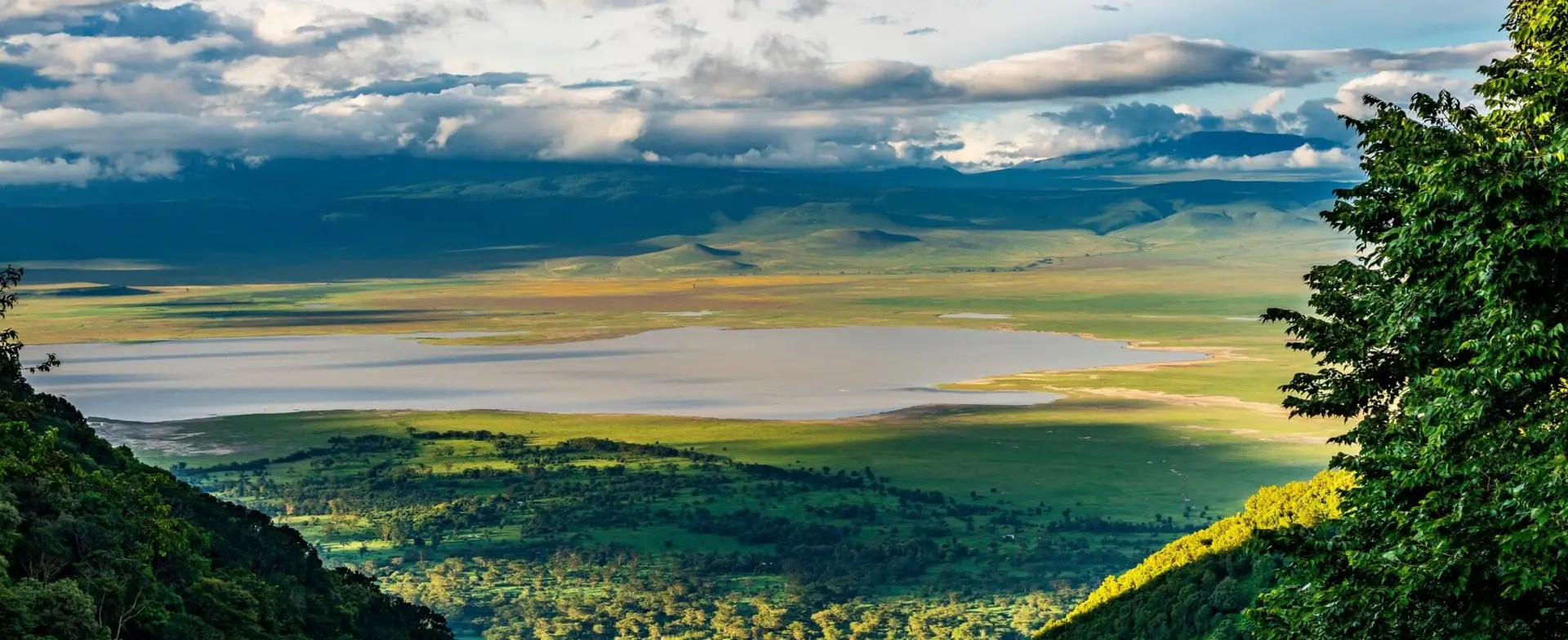
The road from the Ngorongoro highlands to Central Serengeti is one of the most important transfer legs on a northern safari. It crosses the conservation-area plains, passes Naabi Hill Gate and continues towards Seronera, the hub of the central Serengeti.
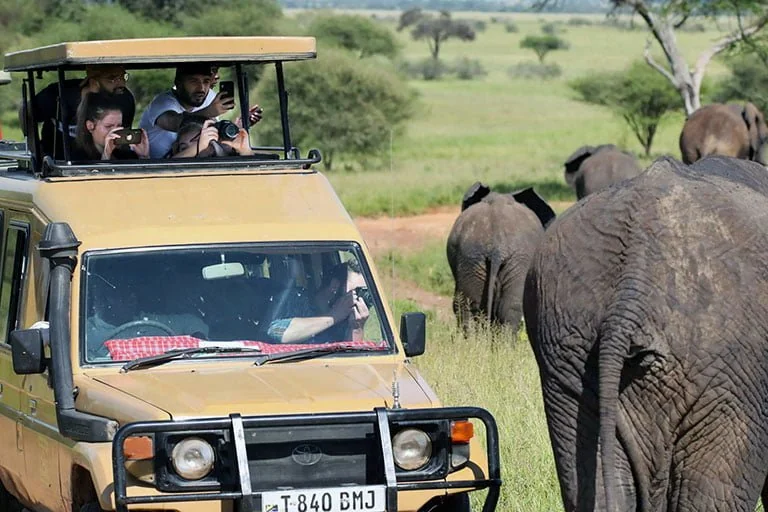
This is not simply transport between two parks. Much of the route runs through wildlife habitat, and a direct three-to-four hour estimate assumes you do not stop for animals, photographs or checkpoint queues.
- Expect gravel roads and a more remote feel once you leave the highlands behind.
- A 4x4 is strongly recommended, and official conservation-area guidance treats it as essential away from main roads.
- Facilities between Olduvai and Naabi Hill are limited, so plan fuel, water and rest stops in advance.
- A crater-floor game drive, a visit to Olduvai or a long wildlife stop should be counted separately from the transfer time.
For more detail, see Serengeti safari guide and five-day Serengeti itinerary.
Planning note
Arusha to Serengeti
A full travel day, or a short flight
Route
Arusha town to Central Serengeti, Seronera
Distance
300–330 km / 186–205 mi
Driving time
7–8.5 hours direct; often 8–10 hours with stops
Driving from Arusha all the way to Seronera is possible, but it should be planned as a full travel day. The route uses the northern-circuit corridor and usually includes Ngorongoro. It is a different journey from stopping at the southern Serengeti entry near Naabi Hill, which is significantly closer.
Some itineraries break the drive with Tarangire, Lake Manyara or Ngorongoro. Others fly from Arusha to a Serengeti airstrip and continue by road to camp. The right choice depends on your dates, budget and how much of the journey you want to spend on the road.
- To Naabi Hill or the southern entry area, plan roughly 225–275 km and 5.5–7 hours, depending on the exact endpoint.
- To Seronera, use 300–330 km and a full day. Brief fuel or toilet stops are normal; a long lunch or game viewing adds more time.
- A light-aircraft transfer from Arusha to a Serengeti airstrip is often around one hour in the air, followed by a road transfer to camp.
- If you arrive late in the day, arrange an overnight outside the park rather than trying to reach a distant camp after gate closing.
For more detail, see Tanzania safari itineraries and how many days a safari needs and safari routes from Zanzibar.
Planning note
Other Useful Routes Between Safari Destinations
Useful when you reverse or extend the circuit
Route
Reverse legs and optional additions
Distance
See table below
Driving time
Depends on endpoint and season
Northern-circuit safaris do not always run in one direction. Many private itineraries reverse the route, start from Zanzibar, or add a flight to reach northern Serengeti. The same distance rules apply: always name the exact start and finish point.
The figures below are planning ranges, not guarantees. They help you see which legs are short transfers and which ones will take most of a day.
- Seronera to Ngorongoro is roughly the reverse of the Ngorongoro-to-Seronera leg: 145–160 km and 3–4.5 hours direct.
- Ngorongoro to Tarangire is highly endpoint-sensitive: about 100–130 km to Loduare Gate, or 130–180 km if starting from a crater-rim lodge.
- Arusha to Lake Manyara is about 115–125 km and usually 2–2.5 hours under normal conditions.
- Seronera to Lake Manyara is a longer return leg of roughly 190–210 km and often 5–7 hours.
For more detail, see Tanzania safari from Zanzibar and northern vs southern safari routes.
Planning note
Approximate Distance and Driving-Time Table
A quick comparison for the northern circuit
This table brings the main legs together. Distances are road kilometres, not straight-line distances. Times assume a normal safari vehicle and no long stops unless stated.
| Route | Approx. road distance | Direct driving time | Note |
|---|---|---|---|
| Arusha town → Tarangire main gate | 115–130 km / 71–81 mi | 2–3 hours | Mostly tarmac; allow for gate formalities. |
| Tarangire main gate → Lake Manyara main gate | 70–100 km / 43–62 mi | 1.5–2.5 hours | Via Makuyuni; endpoint choice changes the figure. |
| Lake Manyara main gate → Loduare Gate | 40–60 km / 25–37 mi | 1–1.5 hours | Ends at the conservation-area gate. |
| Lake Manyara main gate → Ngorongoro rim | 60–80 km / 37–50 mi | 1.5–2.5 hours | Includes the climb and rim access. |
| Ngorongoro rim / Loduare → Seronera | 145–160 km / 90–99 mi | 3–4.5 hours direct | Allow 5–7 hours with wildlife or Olduvai stops. |
| Arusha town → Naabi / southern Serengeti | 225–275 km / 140–171 mi | 5.5–7 hours | Depends on whether the endpoint is a gate or camp. |
| Arusha town → Seronera, Central Serengeti | 300–330 km / 186–205 mi | 7–8.5 hours direct | Often 8–10 hours with normal stops. |
| Seronera → Lake Manyara | 190–210 km / 118–130 mi | 5–7 hours | Return leg via the Ngorongoro highlands. |
How to use this table
Road Conditions, Gates, Stops and Other Factors
Why a transfer can take longer than expected
Driving times are estimates, not promises. These are the details that most often change a safari transfer, especially on the longer legs through Ngorongoro and Serengeti.
Road surface
Arusha, Tarangire and Lake Manyara are linked mainly by tarmac. The Ngorongoro plains and much of the Serengeti route are gravel, dustier in the dry season and slower after heavy rain.
Gates and rules
Park gates, checkpoints and conservation-area rules shape the day. The Ngorongoro Conservation Area publishes 06:00–18:00 gate hours and specific crater-route rules; confirm current timings for your date.
Wildlife stops
A transfer through Tarangire, the Ngorongoro plains or the Serengeti may slow down for animals. A direct driving estimate does not include long photographic stops.
Season and weather
The wet season, especially around April and May, can make dirt roads slower. Dry-season dust and peak-season checkpoint queues can also extend a journey.
Flights and connections
Flights can replace the longest road legs, but they add airport transfers, baggage limits and schedule dependencies. A safari vehicle normally meets the aircraft on arrival.
Endpoints
“Ngorongoro” may mean a gate, Karatu, a rim lodge or the crater floor. “Serengeti” may mean Naabi Hill, Ndutu, Seronera or Lobo. Always write the exact point into the itinerary.
Sources behind these planning ranges
Figures were cross-checked against route guides from SafariBookings Tarangire, SafariBookings Ngorongoro, SafariBookings Serengeti and Safaris Tanzania. Gate and driving rules were checked against the Ngorongoro Conservation Area visitor information and official regulations. General park information is available from TANAPA. Confirm current rules and timings for your travel date.
How to Plan a Comfortable Safari Itinerary
Practical choices that protect your time
The most comfortable safari is not always the one with the most parks. It is the one where the transfers fit the number of days, and where the best wildlife areas get enough time.
- Count travel days first. Mark the long legs before adding extra parks. Arusha to Seronera is a full day; Tarangire to Lake Manyara is not.
- Protect the crater morning. Do not rush a Ngorongoro crater drive so you can reach Serengeti by evening. Give each experience its own window.
- Use flights where they help. Flying into Serengeti saves a long road day, but it adds transfer times and baggage rules. Compare door-to-door time, not just flight time.
- Name exact endpoints. Ask whether the driver collects you in Arusha, Moshi or at the airport, and whether the day ends at a gate, a camp or a rim lodge.
- Build in an arrival night. If you land late, sleep in Arusha before starting the northern circuit. The first game drive is better with a rested start.
- Ask what is excluded. Long transfers can still include park fees or conservation fees. Confirm these costs with your operator before comparing prices.
If you are still deciding how many days to allow, read how many days a Tanzania safari needs, then compare the routes in our itinerary guide. Seasonal road changes are explained in our dry vs green season guide.
Frequently Asked Questions
Short answers for common route questions
From Arusha town to Tarangire main gate, plan roughly 115–130 km and 2–3 hours. Most of the route is tarmac, with a shorter final access road and gate formalities. Airport or Moshi pickups take longer.
The drive from Tarangire main gate to Lake Manyara main gate is usually quoted at 70–100 km and 1.5–2.5 hours. Around two hours is a sensible planning figure before lunch, stops or entry paperwork.
Lake Manyara main gate to Loduare Gate is about 40–60 km and 1–1.5 hours. Continuing to the crater rim is closer to 60–80 km and 1.5–2.5 hours. The crater descent is a separate activity.
From the Ngorongoro rim or Loduare Gate to Seronera, allow 145–160 km and 3–4.5 hours for a direct drive. With wildlife stops, Olduvai or checkpoint queues, five to seven hours is more realistic.
Driving to Seronera takes most of a day. A flight to a Serengeti airstrip is often around one hour in the air, followed by a road transfer to camp. Driving is better if you want to visit parks en route; flying saves time if Serengeti is the priority.
Yes. Gates, checkpoints and park rules affect when you can enter, leave and drive inside a conservation area. Confirm current hours and route rules with your operator, because they can change and vary between parks.
No. They are planning ranges based on common route endpoints and published operator estimates. The exact distance changes with the lodge, gate, road choice and whether a crater or wildlife stop is included.
Yes, but it is a long day. A short crater visit and then a drive to Seronera is possible; a full crater-floor game drive followed by the same transfer is much tighter. Your operator should set the timing in writing.
Plan the Route With Masatu Tours
A realistic route starts with your dates
Send us your travel dates, arrival point, group size and the parks you most want to visit. We will suggest a route with realistic transfer days and explain where a flight saves time, and where a road journey is part of the safari.
We will confirm the exact start and end points, estimated driving times, park fees and the written itinerary before you commit. That way, the distances on the page match the days you will actually travel.
One last check
More Safari Planning Guides
Safari Itineraries
Compare route lengths and park combinations
Read GuideHow Many Days?
Match the safari length to your route
Read GuideFive-Day Serengeti Route
See how the main legs fit into a short trip
Read GuideDry vs Green Season
Understand how season changes road conditions
Read GuideBefore You Book
Check the written details before paying
Read GuideSafari From Zanzibar
Plan connections from the coast
Read GuideThis article is a general editorial guide. Distances and driving times are approximate; confirm current road conditions, park rules and booking terms directly with the operator.
