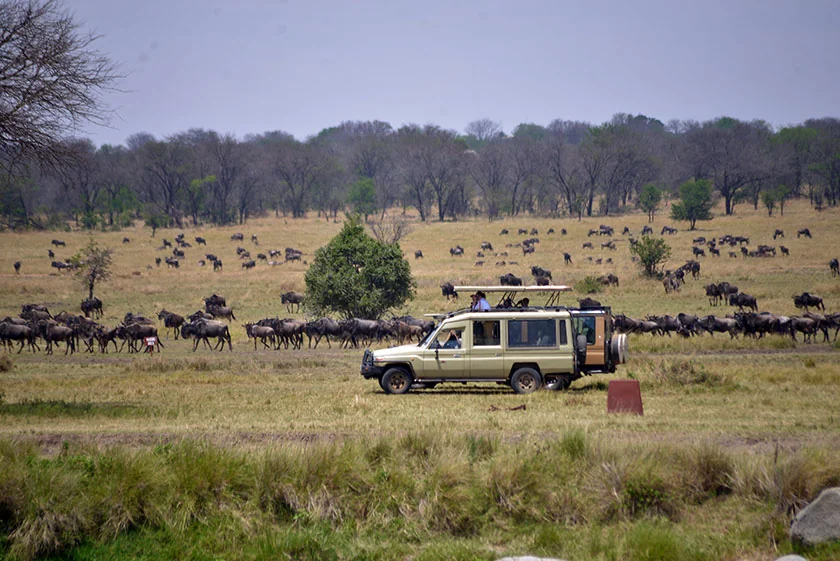
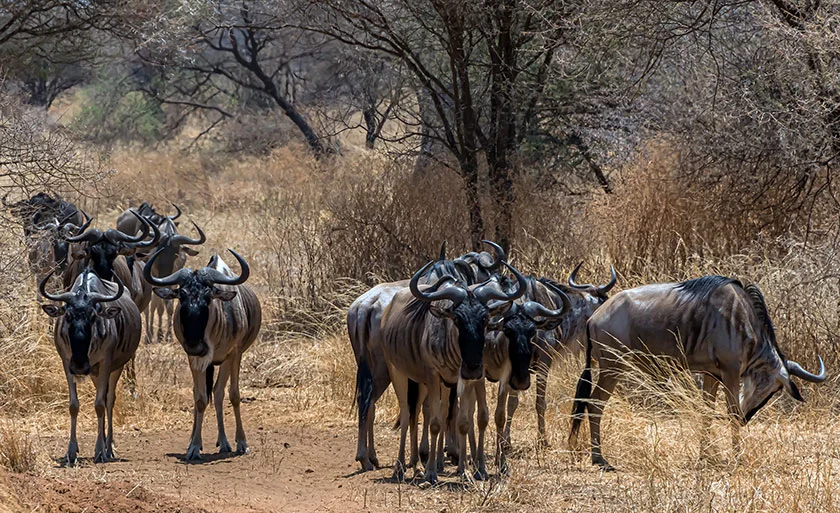
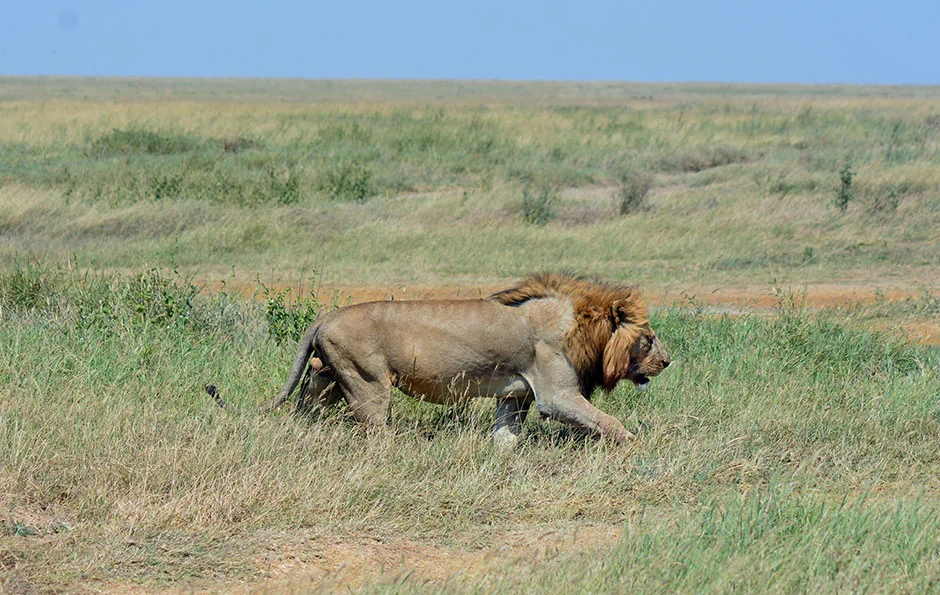
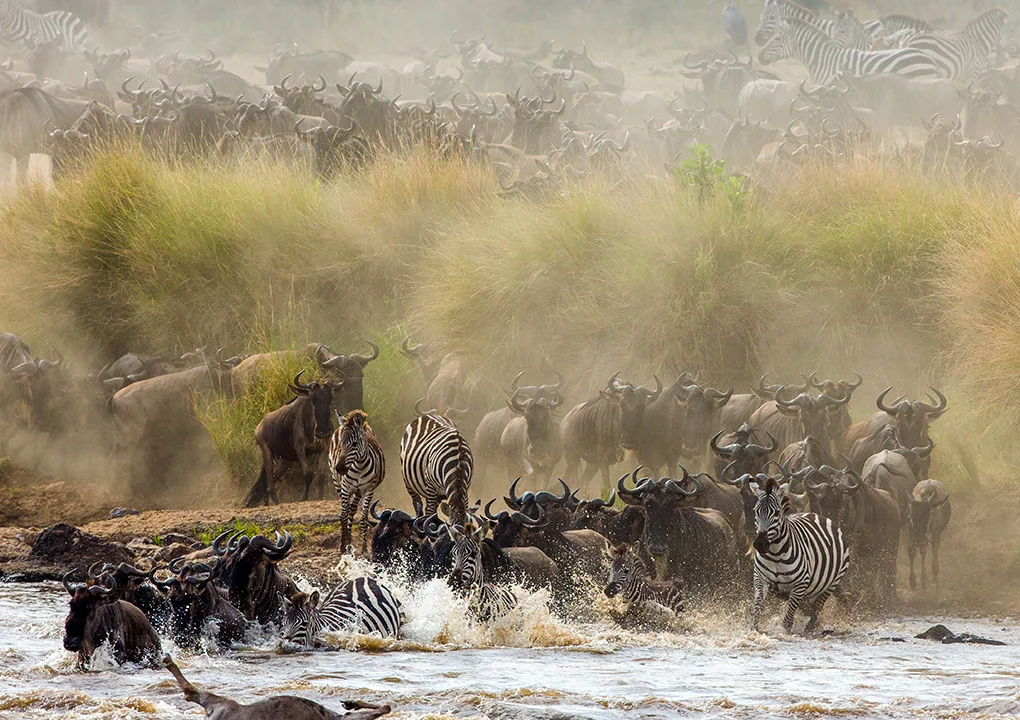
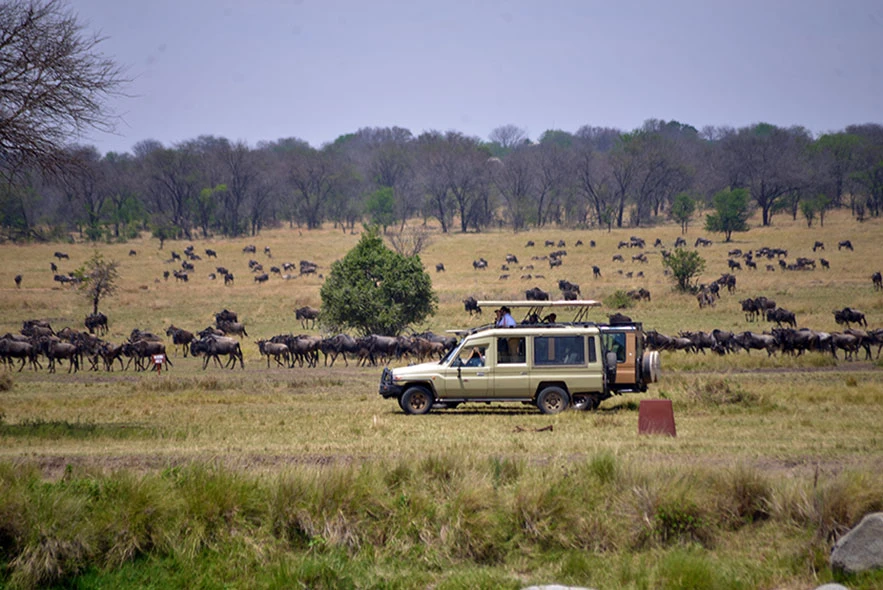
Wildebeest migration across the Serengeti plains
    Safari · Migration specialist

    7-Day Great Migration Safari

    Three Serengeti nights in Mara River crossing country — Tarangire · Serengeti · Ngorongoro · Manyara

    Depart dates Jul – Oct for crossings 7 days · 6 nights Private safari, your party only
    from$2,925per person

    Overview

    The Great Migration, three nights deep in the Serengeti

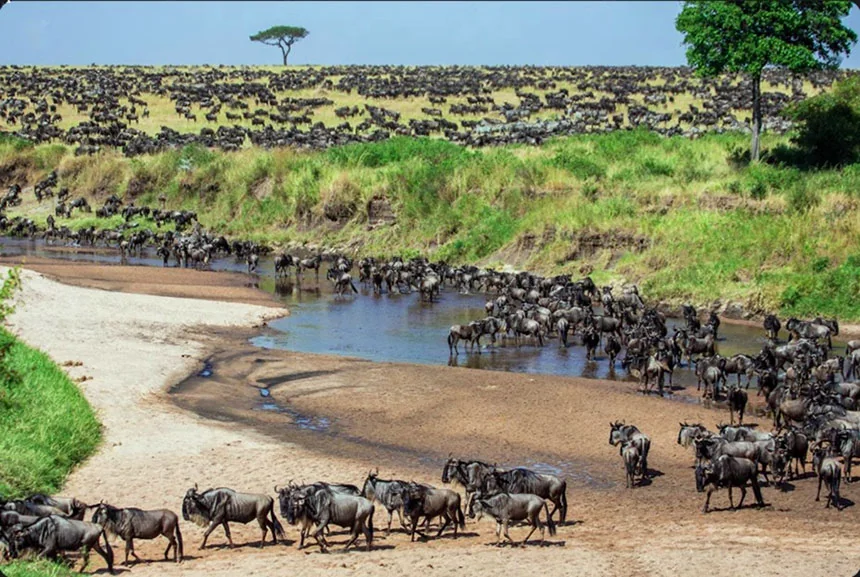
    This 7-day migration safari is built around one of the largest movements of land animals on Earth. Each year more than a million wildebeest and hundreds of thousands of zebra travel a circular route through the Serengeti in search of rain and fresh grass, and from roughly July to October the herds mass in the north at the Mara River.

    A standard northern-circuit safari gives the Serengeti a single night. This one gives it three, including time in the Kogatende and Lamai crossing sectors, so you are not chasing the herds from a distant camp. It closes with a full morning in the Ngorongoro Crater and a final day at Lake Manyara. Everything runs privately on your own schedule.

    Not sure which season suits your dates? Our guide to the Great Wildebeest Migration sets out where the herds are month by month.

    Duration

    7 Days

    6 nights on safari

    Group

    Private

    Your party only

    Vehicle

    4×4

    Pop-up roof

    Park fees

    Included

    All listed parks

    Itinerary

    Day by day

    Seven days, six nights, and the migration corridor from Tarangire to the Mara River.

    Arrival Day

    Kilimanjaro International Airport → Arusha

    A relaxed start to your migration safari

    Your driver-guide meets you in the arrivals hall at Kilimanjaro International Airport and drives you to your hotel in Arusha. After your journey you have the rest of the day to relax, swim and settle in before the safari begins.

    Your guide calls by in the evening to brief you on the route ahead — which river-crossing sectors he is watching, and how the herds are moving this season. Dinner is served at the hotel, and the safari itself kicks off early the next morning.

    Trip essentials

    Accommodation
    Mount Meru Hotel
    Accommodation type
    Mid-range hotel in Arusha
    Meals
    Dinner
    Transfer duration
    About 1 hour (Kilimanjaro International Airport → Arusha)
    Day 1

    Arusha → Tarangire National Park

    Home of the giants

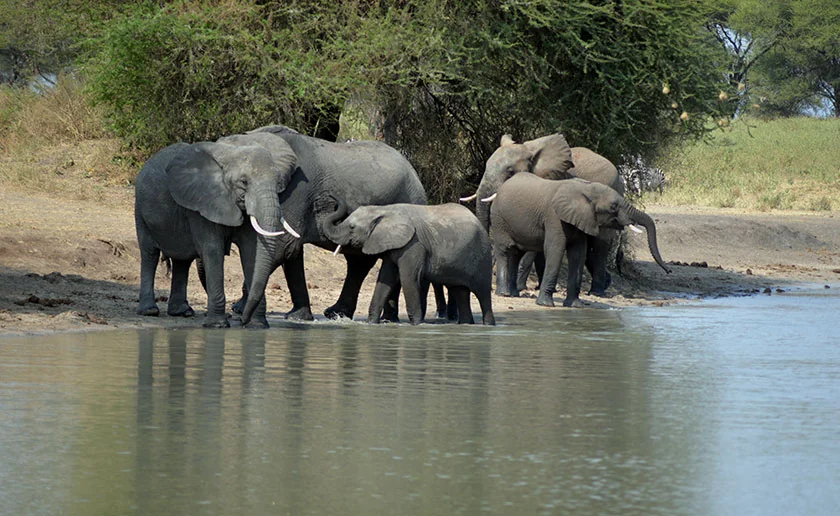
    Elephant herds gathered at the Tarangire River in Tarangire National Park
    Elephant herds at the Tarangire River
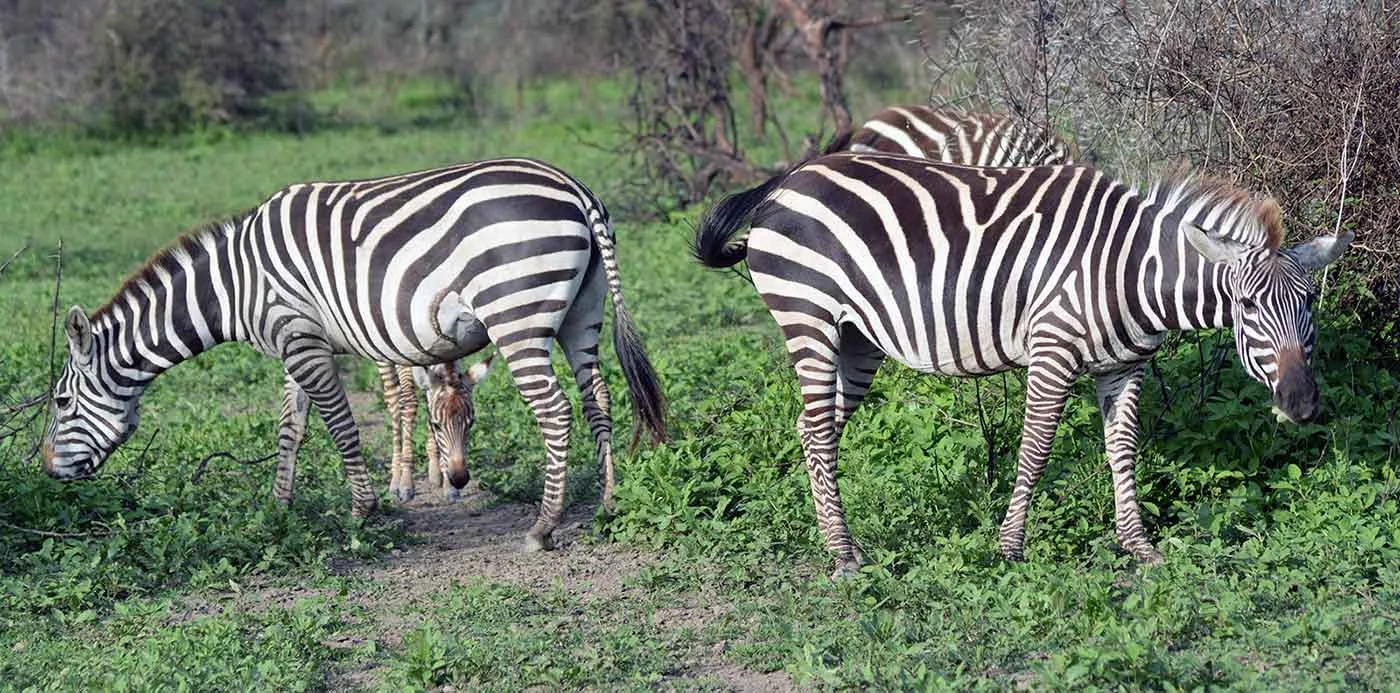
    Zebra grazing on the open savannah of Tarangire National Park
    Zebra on the Tarangire savannah

    After breakfast you drive to Tarangire National Park. It is named after the river that runs through it, which in the dry season is the only permanent water for miles and draws wildlife in from the surrounding country.

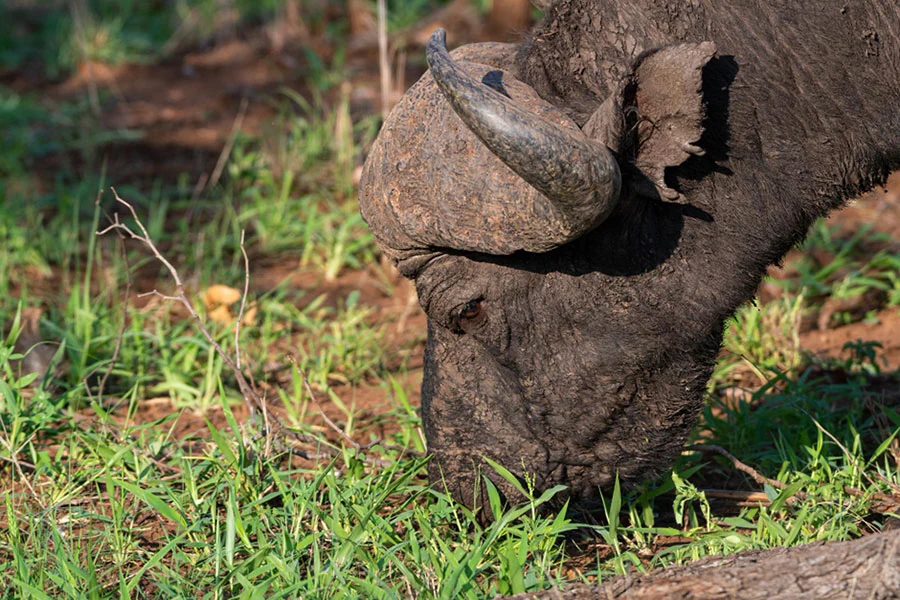
    Tarangire is known above all for its elephant herds, sometimes hundreds strong along the river, and for the ancient baobabs that stand across the park. Giraffe, zebra, wildebeest, buffalo and hartebeest are all common, and the park holds more breeding bird species than anywhere else on the planet.

    After an extensive game drive you continue to your lodge near Karatu for dinner and overnight.

    Trip essentials

    Accommodation
    Karatu Simba Lodge
    Accommodation type
    Mid-range lodge or tented camp
    Meal plan
    Full board (breakfast, lunch and dinner)
    Mode of transport
    Private 4×4 Land Cruiser with pop-up roof
    Transfer duration
    About 2.5 hours (Arusha → Tarangire Gate)
    Game drive duration
    Full day, with a picnic lunch in the park
    Activity
    Full-day game drive, Tarangire National Park
    Day 2

    Karatu → Central Serengeti, Seronera Valley

    Into the endless plains

    A large herd of wildebeest moving across the grassy Serengeti plains
    Wildebeest spreading across the plains
    A lion pride gathering at a Serengeti waterhole
    Lion pride at a Seronera waterhole

    You leave after breakfast and climb through the Ngorongoro Conservation Area highlands to the gates of the Serengeti. The name comes from the Maasai for 'endless plains', and the park covers more than 14,000 square kilometres of grassland, woodland and riverine forest.

    Your first afternoon is spent in the Seronera Valley, the central Serengeti, which holds wildlife year-round because the Seronera River keeps water in the landscape. It is one of the most reliable places in Africa for big cats — lion prides on the kopjes, leopards in the sausage trees — along with large herds of buffalo.

    You reach your camp or lodge in time for dinner and overnight.

    Trip essentials

    Accommodation type
    Mid-range tented camp in the Serengeti
    Meal plan
    Full board (breakfast, lunch and dinner)
    Mode of transport
    Private 4×4 Land Cruiser with pop-up roof
    Transfer duration
    About 5 – 6 hours including game viewing en route
    Game drive duration
    Afternoon game drive
    Activity
    Game drive, Seronera Valley, Central Serengeti
    Day 3

    Northern Serengeti → Mara River crossing country

    The day the migration safari is built around

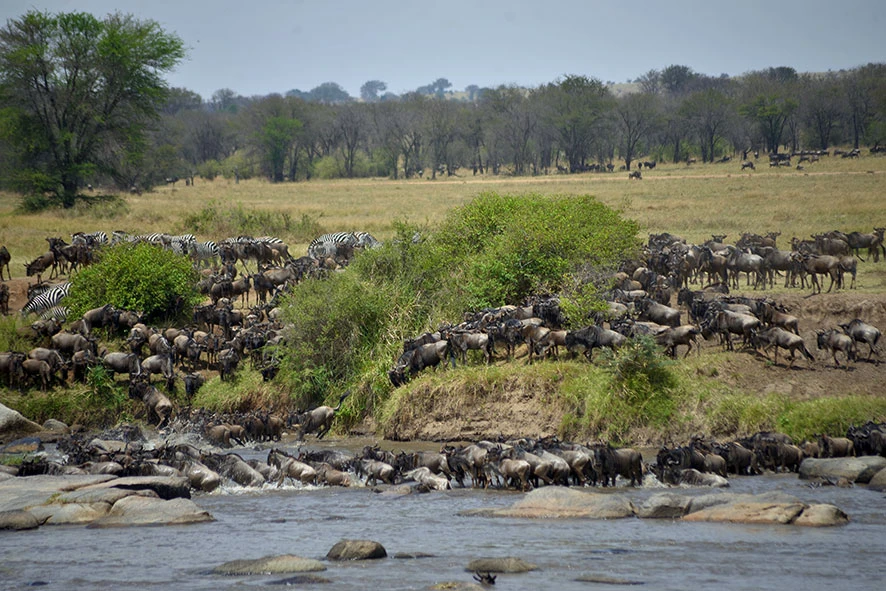
    Wildebeest crossing the Mara River in the northern Serengeti
    Wildebeest massing at the Mara River
    Migration herds in the northern Serengeti
    Herds moving through the northern Serengeti

    Today you drive north towards the Kogatende and Lamai sectors, close to the Kenyan border, where the Mara River runs through the Serengeti. From roughly July to October this is where the herds gather, and it is the setting for the migration's most famous moment.

    Wildebeest and zebra build up on the banks in their thousands before crossing. A crossing can be over in minutes or hold you for hours — it depends entirely on the herds — so your guide reads the morning and positions the vehicle accordingly. Even between crossings the northern Serengeti is exceptional: big herds, hippo pools along the river, and predators shadowing the movement.

    You overnight in the north to keep you close to the herds rather than driving back and forth each day.

    Trip essentials

    Accommodation
    Embalakai Camp
    Accommodation type
    Mid-range tented camp in the northern Serengeti
    Meal plan
    Full board (breakfast, lunch and dinner)
    Mode of transport
    Private 4×4 Land Cruiser with pop-up roof
    Game drive duration
    Full day, positioned on the river
    Activity
    Mara River crossing country, northern Serengeti
    Day 4

    Northern Serengeti → Central Serengeti

    A second day with the herds

    Wildebeest crossing the Mara River during the Great Migration in July
    A crossing under way at the Mara River
    Serengeti plains at golden hour with warm light on the savannah
    Golden hour on the Serengeti plains

    A full day in the Serengeti to work the parts of the ecosystem you have not reached yet. With three nights in the park there is time to follow the herds rather than the clock, and your guide can cross to a different sector if the movement has shifted overnight.

    This is the day for the sightings that need patience — a cheetah hunting in the golden hours, a leopard draped in a tree, or a river of wildebeest stretching to the horizon. A picnic lunch is served in the bush.

    Optional upgrade: a hot-air balloon safari at dawn, floating over the plains followed by a bush breakfast — ask us for current rates.

    Trip essentials

    Accommodation type
    Mid-range tented camp in the Serengeti
    Meal plan
    Full board (breakfast, lunch and dinner)
    Mode of transport
    Private 4×4 Land Cruiser with pop-up roof
    Game drive duration
    Full day, with a picnic lunch
    Activity
    Full-day game drive, Serengeti National Park
    Day 5

    Serengeti → Ngorongoro Crater

    A collapsed volcano full of wildlife

    A black rhino grazing on the plains in Tanzania
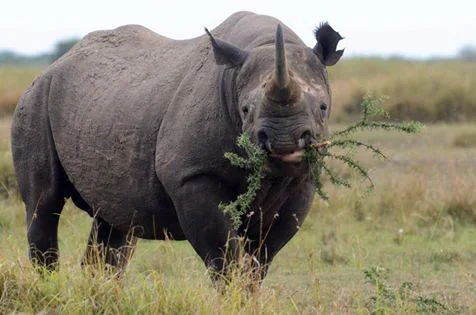
    Black rhino — the crater's rarest resident
    Open savannah landscape in northern Tanzania
    Savannah country on the crater highlands

    You leave the Serengeti and drive east for a full morning inside the Ngorongoro Crater, a UNESCO World Heritage Site and the world's largest intact volcanic caldera. The crater floor is a mosaic of grassland, swamp, forest and soda lake, with walls rising some 600 metres around it.

    This is the most reliable place in Tanzania for black rhino, and because the wildlife is resident rather than migratory you have a genuine chance of the entire Big Five in a single morning. Lion, elephant, buffalo, hippo and huge flocks of flamingos on Lake Magadi are all commonly seen.

    After a picnic lunch you ascend the crater rim to your lodge for dinner and overnight.

    Trip essentials

    Accommodation type
    Mid-range lodge near the crater highlands
    Meal plan
    Full board (breakfast, picnic lunch and dinner)
    Mode of transport
    Private 4×4 Land Cruiser with pop-up roof
    Transfer duration
    About 3.5 hours (Serengeti → Ngorongoro rim)
    Game drive duration
    5 – 6 hours inside the crater
    Activity
    Full morning game drive inside Ngorongoro Crater
    Day 6

    Ngorongoro → Lake Manyara → Arusha or Kilimanjaro Airport

    Flamingos, tree-climbing lions, and the journey home

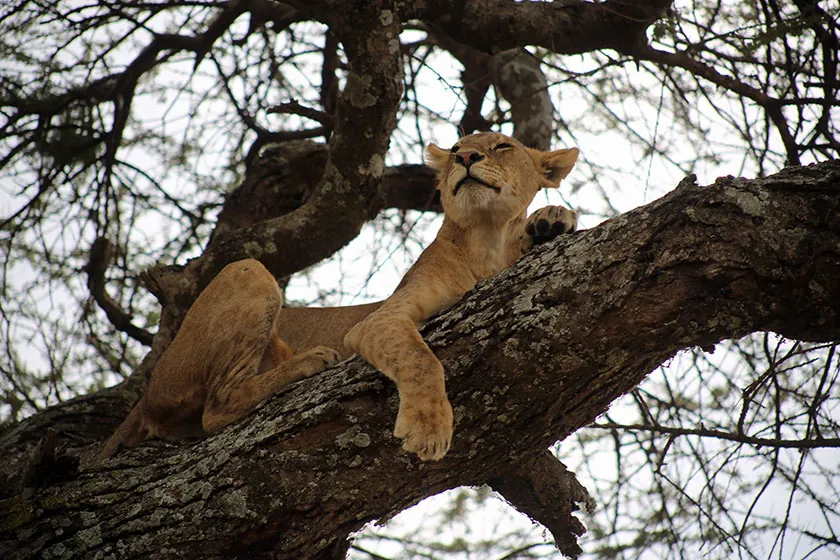
    A lion resting in a tree in Lake Manyara National Park
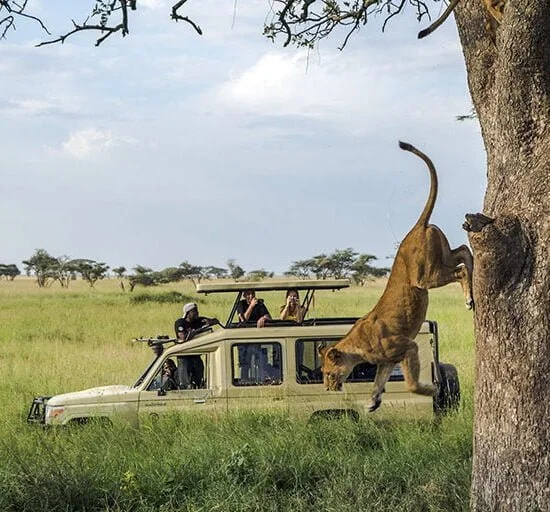
    Manyara's tree-climbing lions
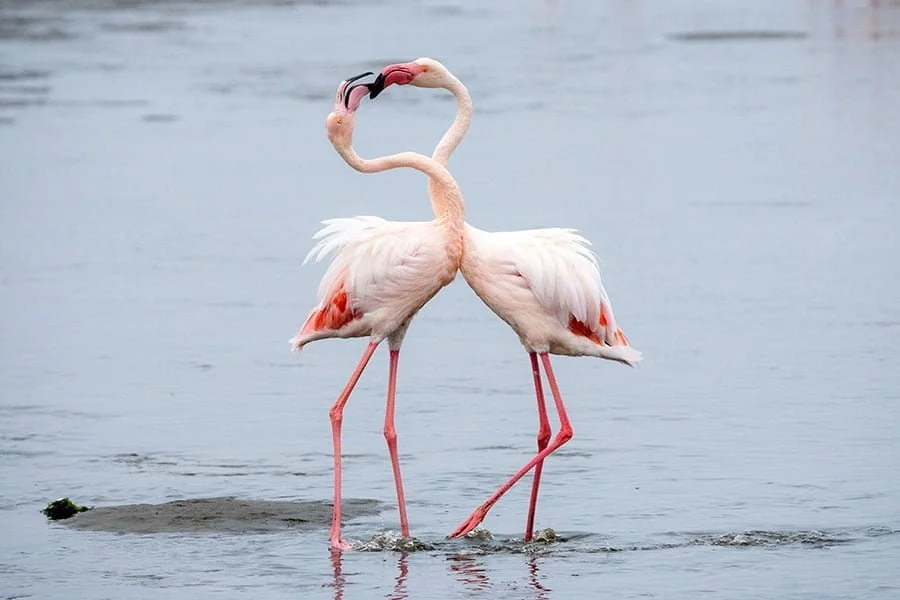
    Flamingos on the shore of Lake Manyara with the Rift Valley escarpment behind
    Flamingos below the Rift Valley escarpment

    After breakfast you drive down from the highlands to Lake Manyara National Park, a narrow strip of forest, escarpment and shoreline beneath the Rift Valley wall. The alkaline lake draws thousands of flamingos, which colour the shallows pink at the right time of year.

    Manyara is best known for its tree-climbing lions, a behaviour rarely seen elsewhere, alongside large troops of baboons, blue monkeys, giraffe, elephant and hippo. More than 400 bird species have been recorded in the park.

    After an extensive game drive you continue to Arusha, or straight to Kilimanjaro International Airport for your departure, bringing the safari to a close.

    Trip essentials

    Accommodation
    None — this is your departure day
    Meal plan
    Breakfast and picnic lunch
    Mode of transport
    Private 4×4 Land Cruiser with pop-up roof
    Transfer duration
    About 4 hours (Lake Manyara → Arusha / Kilimanjaro International Airport)
    Game drive duration
    2 – 3 hours in Lake Manyara National Park
    Activity
    Game drive, Lake Manyara National Park

    Pricing per person

    What the migration safari costs

    All-inclusive on the ground. The price per person comes down as your group grows.

    7-day Great Migration safari price per person by group size
    Group sizePrice per person
    1 person$6,075
    2 people$3,954
    3 people$3,424
    4 people$3,065
    5 or moreBest value$2,925

    Spread across the seven days on safari, that is about $418 per person, per day for a group of five or more — the unit most safari quotes are given in, and the fairest way to compare us with anyone else.

    Prices are per person and exclude international flights. Children under 16 receive a discount on request, and festive dates (Christmas, New Year and Easter) may carry a supplement. Send us your dates and group size and we will confirm an exact price.

    Cost guide

    What shapes the price

    Four things decide what this safari costs: the government park fees, the size of your group, the season you travel in and the standard of lodge you choose. The prices above are our mid-range tier — comfortable lodges and tented camps with en-suite rooms and full board.

    Park and crater fees

    Every park entry, and every night spent inside a park, is charged by the government. All of it is already in your price. Seven days cross four protected areas — Tarangire, Lake Manyara, the Serengeti and the Ngorongoro Conservation Area — and the extra Serengeti nights are what make this route dearer than a shorter safari. The descent into the Ngorongoro Crater carries its own fee on top of the conservation-area entry. These fees are set by the Tanzania National Parks Authority and the Ngorongoro Conservation Area Authority, not by us, so we quote them at the rate in force on your travel dates.
    The size of your group

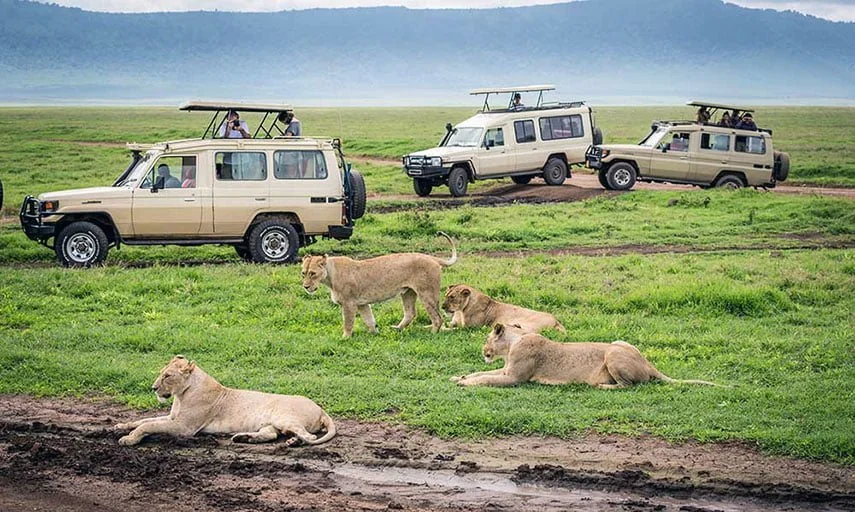
    You are not buying a seat on a shared bus — you are paying for the whole 4×4, the guide and the fuel between you. That is why the per-person price falls so sharply as your group grows: $6,075 for a solo traveller, $3,954 each for two, and $2,925 each once you are five or more. Travelling alone works the same way in reverse: lodges price their rooms for two people sharing, so a solo traveller also pays a single supplement.

    The season you travel in

    Lodge rates are highest from July to October and over the festive period, while the published park fees also fall by roughly 10 – 15% outside the high season. For a migration safari the season is not only about cost: the herds are in the northern Serengeti and at the Mara River from roughly July to October, which is exactly when demand peaks, so this is the one trip worth booking well ahead.

    The standard of your lodge

    Accommodation is the part of the price you have most control over — the parks, the vehicle and the guide stay the same. The prices above use mid-range lodges and tented camps. If you would rather camp under canvas, our budget safari uses public campsites instead and brings the cost down further.

    What the government fees are

    Park fees are the largest fixed cost in any Tanzanian safari, and they are identical for every operator — you pay the same whether you book with us or with anyone else. These are the published rates for the parks on this route.

    Government park and crater fees for the parks on this 7-day migration safari
    FeeRate
    Tarangire National Park entry$59 per adult, per day
    Lake Manyara National Park entry$53.80 per adult, per day
    Serengeti National Park entry$82.60 per adult, per day
    Ngorongoro Conservation Area entry$70.80 per adult, per day
    Ngorongoro Crater service fee$295 per vehicle, per descent

    The crater fee is the one charge levied on the vehicle rather than on you, so it is split between whoever shares that vehicle — which makes it the clearest example of how group size moves your price:

    Two travellers

    $148 per person

    Four travellers

    $74 per person

    Six travellers

    $49 per person

    Rates fall by roughly 10 – 15% outside the high season, and children aged 5 to 15 pay a reduced rate. We confirm the rate in force on your travel dates before you book.

    How to keep the cost down

    • Come as a group of five or more: the per-person price falls from $6,075 for a solo traveller to $2,925 each.
    • Travel in the green season rather than peak. Lodge rates drop outside July to October, though that is also when the Mara crossings happen.
    • Book early for July to October, which fills up first for the migration.
    • Ask about the children's discount if you are travelling with under-16s.
    • Add the optional extras only on the days you really want them.

    One thing worth adding to your budget: tips for your guide are not part of the price. Tipping is optional but customary, and $25 – 45 per day per vehicle is the usual range. International flights, the Tanzania visa and travel insurance also sit outside the safari price — the full inclusion list is just below.

    What's included

    Everything covered on the ground

    The trip cost includes

    • All mentioned safari activities and game drives
    • Air ambulance service by AMREF Flying Doctors
    • Airport pick-up and drop-off transfers
    • Lodge or tented camp accommodation as per the itinerary
    • Private 4×4 Land Cruiser with pop-up roof
    • All national park, conservation area and crater fees

    The trip cost excludes

    • International and domestic air tickets
    • Tanzania visa fees
    • Travel insurance (strongly recommended)
    • Tips to your safari guide ($25 – 45 per day per vehicle)

    Safari FAQs

    The questions travellers ask most

    Prices start from $2,925 per person for a group of five or more, $3,065 each for four, $3,424 for three and $3,954 for two. A solo traveller pays $6,075 because the vehicle, guide and fuel are not shared. The price covers all park, conservation and crater fees, the 4×4 vehicle, an English-speaking guide, accommodation, meals and airport transfers, so there are no hidden extras on the ground.

    Have a question about the migration safari?

    Send us your dates and group size and a Tanzania-based expert will reply within 24 hours with a personalised itinerary, pricing for your group and answers to anything you would like to know.

    • No deposit required for a quote
    • Free date and itinerary changes
    • A reply from a real person, never a bot

    0 / 1000

    Or message us on WhatsApp.

    We reply within 24 hours. We never share your details with anyone else. Prefer a longer form with more trip options? Request a full quote.

    Deborah - Travel Expert
    Personal Travel Expert

    Ready to plan your dream adventure?

    Reply in 3hrs
    Free consultation