Key Facts
Masatu Tours is a KPAP-certified partner operator, TANAPA licensed, and led by Wilderness First Responder-certified guides. We have led 350+ climbs and safaris with a 98% summit success rate and a 4.8/5 TripAdvisor rating. Every climb follows a maximum 1:4 guide ratio, porters carry no more than 20 kg of group gear (verified by bag weighing at the gate), and all crew receive medical insurance, three meals a day, and proper mountain gear. Customary tips: USD 10-15 per porter per day, USD 15-20 per cook per day, USD 20-30 per guide per day (distributed at the formal tipping ceremony on descent).
Why Ethical Climbing Matters
Every year, over 50,000 climbers attempt Kilimanjaro, supported by more than 35,000 porters, guides, and cooks. These mountain workers are the backbone of Tanzania's tourism industry, supporting families and entire communities in Moshi, Marangu, and across the Kilimanjaro region. To understand who these workers are and how their role differs from Himalayan Sherpas, see our guide on Sherpas vs Kilimanjaro Porters.
Your choice of operator directly determines whether mountain workers receive fair wages, proper gear, medical insurance, adequate food, and humane treatment. Choosing an unethical operator means choosing a system where porters are underpaid, overloaded, and denied basic care. Choosing an ethical operator means every dollar you spend supports a family, a school, and a community.
Fair wages
Living income that supports families, not exploitation for poverty wages.
Safe conditions
20 kg load limit, warm gear, medical insurance, and emergency evacuation.
Community impact
Education funds, healthcare access, and long-term development in Moshi and Marangu.
Environmental care
Leave No Trace practices, plastic waste reduction, and sustainable camp management.
KPAP Certification: The Gold Standard
The Kilimanjaro Porters Assistance Project (KPAP) is an independent non-profit that monitors and certifies ethical tour operators. KPAP does not take money from operators - it simply verifies that porter welfare standards are met, and publishes the results. Currently over 130 partner operators are listed on the KPAP register, monitoring more than 30,000 registered porters working on the mountain.
KPAP certification means an operator has been audited and verified on: fair daily wages, a maximum 20 kg load limit per porter, adequate sleeping gear, three meals a day, rest days between climbs, medical and evacuation insurance, and humane treatment. To verify any operator - including Masatu Tours - visit kilimanjaroporter.org/partners.
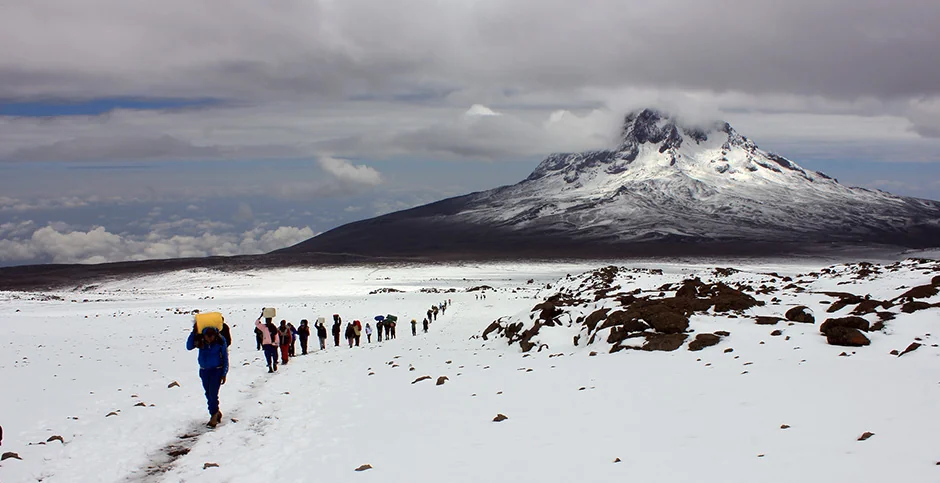
How to Check Certification
Ask any operator for their KPAP partner number and verify it on the official list. Unethical operators will be vague, avoid the question, or claim certification without a number. Legitimate operators are proud to share their KPAP status.
Crew Wages & Working Conditions
A typical ethical climb has a crew of 6 to 8 people per climber: a lead guide, an assistant guide, a cook, and 2 to 4 porters (plus a waiter on larger groups). Below are the minimum daily wage guidelines for KPAP-certified operators, along with a worked example for a typical 7-day climb.
| Role | Min. Daily Wage | Typical Total (7 days) |
|---|---|---|
| Lead Guide | USD 20 - 30 | USD 140 - 210 |
| Assistant Guide | USD 15 - 25 | USD 105 - 175 |
| Cook | USD 15 - 20 | USD 105 - 140 |
| Waiter / Assistant | USD 10 - 15 | USD 70 - 105 |
| Each Porter | USD 10 - 15 | USD 70 - 105 |
Working conditions matter as much as pay. KPAP-certified operators must provide:
- Maximum 20 kg (44 lbs) of group gear per porter, plus a personal bag up to 5 kg
- Sleeping bags rated to at least minus 10 degrees Celsius, rain gear, warm jackets, and proper boots
- Three nutritious meals daily plus snacks and hot drinks
- Medical insurance and emergency evacuation cover for every crew member
- Formal employment contracts and rest days between climbs
- Bag weighing at the Kilimanjaro National Park gate to enforce load limits
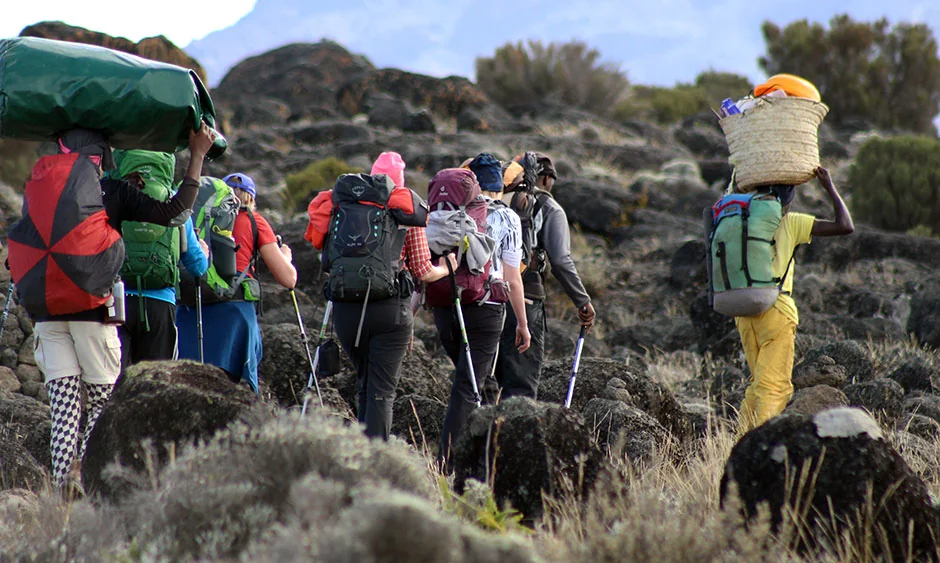
Porter Life on the Mountain
Most porters come from the towns and villages around Moshi and Marangu, at the base of Kilimanjaro. Many have families to support - children in school, elderly parents, siblings relying on them. For many, a climb is the primary source of income for weeks at a time.
On a typical day, porters wake before dawn, cook their own breakfast, and begin carrying loads from camp to camp - often in the dark, on steep scree, wearing headlamps. They carry tents, sleeping bags, cooking fuel, food, and sometimes the climber's own personal gear. When they reach the next camp, they set up the tents, and the cook prepares meals for the clients. At night, porters sleep in thin tents in temperatures that can drop well below freezing at higher camps.
Why It Matters
Porters make Kilimanjaro possible. Without them, no one climbs. When operators cut corners on porter wages, gear, or food, the people bearing the greatest physical burden receive the least care. Ethical climbing is not optional - it is the baseline every climber should demand.
The tipping ceremony at the end of the climb is more than a financial transaction. It is a formal, culturally significant moment where climbers thank each crew member individually - by name - with envelopes of cash. This is a moment of real human connection, and the reason many porters say they love their work despite the physical demands.
Red Flags: Spotting Unethical Operators
These warning signs indicate an operator may be cutting corners on crew welfare. If you see any of them, walk away.
Suspiciously low prices
Offers below USD 1,500 per person are red flags. Ethical operations have fixed costs for fair wages, park fees, quality gear, and insurance. Corners are always cut somewhere - usually crew welfare.
No KPAP certification
Not listed on kilimanjaroporter.org/partners or unable to provide proof of certification. No independent oversight means no guarantee of fair treatment.
Poor crew reviews
Recent climber reviews mention tired, poorly-equipped staff, crew complaints, or unprofessional behavior - a clear sign of overwork and underpayment.
Only short itineraries offered
Pushing only 5-day routes to maximize volume over safety and acclimatization. Profit is prioritized over both climber AND crew wellbeing.
Vague about crew wages
Unable or unwilling to provide clear information about porter wages, benefits, or working conditions. This usually indicates exploitative practices being hidden.
No tipping guidance
Does not mention tipping or suggests very low amounts under USD 200 total. Crew relies on tips but the operator does not educate its clients.
Your Ethical Climbing Checklist
Before booking, verify these essential points. Ethical operators will answer every one of them happily and without hesitation.
KPAP Certified
Verifiable on kilimanjaroporter.org/partners
6-8 Day Routes
Better acclimatization, safer for crew and climbers
Transparent Wages
Clear breakdown of crew compensation on request
20 kg Max Load
Enforced by bag weighing at the park gate
Proper Crew Gear
Sleeping bags, rain gear, warm jackets, boots provided
Medical Insurance
Crew evacuation coverage for every team member
Three Meals Daily
Nutritious food for crew, not just clients
Clear Tipping Guidance
Recommended amounts shared before the climb
Questions to Ask Before Booking
Don't be shy. Ethical operators will answer these questions gladly and will appreciate your concern for crew welfare. If an operator resists or deflects, that is itself a red flag.
Are you KPAP certified? Can I see your partner number?
Ethical answer: Yes, here is our certificate and partner number, verifiable on kilimanjaroporter.org.
What are the daily wages for guides, porters, and cooks?
Ethical answer: A clear breakdown showing USD 10-30 per day depending on role, above KPAP minimums.
What is the maximum weight each porter carries?
Ethical answer: 20 kg maximum, strictly enforced with weigh-ins at the Kilimanjaro National Park gate.
Do porters have medical insurance and evacuation coverage?
Ethical answer: Yes, all crew are covered. We also carry a Wilderness First Responder on every climb.
What gear do porters receive?
Ethical answer: Full gear including sleeping bags rated to -10 degrees Celsius, rain gear, warm jackets, and proper boots.
How many meals do crew members receive daily?
Ethical answer: Three full, nutritious meals plus snacks and hot drinks - the same standard as clients.
What is the recommended tipping amount for the crew?
Ethical answer: USD 10-15 per porter/day, 15-20 per cook/day, 20-30 per guide/day. Distributed at the tipping ceremony.
Tipping Guide
Tips are not optional - they are a significant portion of every crew member's income. Below are Masatu Tours' recommended per-day tipping rates, plus a worked example budget for a typical climb.
| Role | Customary Per-Day Tip | Example Total (7 days) |
|---|---|---|
| Lead Guide | USD 20 - 30 | USD 140 - 210 |
| Assistant Guide | USD 15 - 20 | USD 105 - 140 |
| Cook | USD 15 - 20 | USD 105 - 140 |
| Waiter / Assistant | USD 10 - 15 | USD 70 - 105 |
| Each Porter | USD 10 - 15 | USD 70 - 105 |
Worked Example: 7-Day Climb with 1 Guide + 1 Assistant + 1 Cook + 4 Porters
Guide: USD 140-210. Assistant: USD 105-140. Cook: USD 105-140. Porters x4: USD 280-420. Total: USD 630-910 per climber for tips alone. Budget for this in advance and bring USD cash in clean, small-denomination bills.
Best practices: bring USD cash in small denominations; prepare individual envelopes for each crew member before the ceremony; tip at the formal ceremony on descent day (usually Mweka Camp or the gate); tip more for exceptional service; and do not hand out tips casually on the trail - the ceremony ensures dignity and fairness.
Sustainable Trekking: Leave No Trace
Ethical climbing extends beyond crew welfare. Kilimanjaro is a UNESCO World Heritage Site and one of the most fragile alpine ecosystems on Earth. Every climber shares responsibility for keeping it pristine.
Tanzania banned single-use plastic bags in all national parks in 2019. Ethical operators go further: using biodegradable soap, carrying waste back to Moshi for proper disposal, using fuel-efficient camp stoves, and never leaving anything behind at camp. Masatu Tours follows strict Leave No Trace principles on every climb.
- Bring a reusable water bottle - Masatu provides water purification at every camp, eliminating single-use plastic bottles
- Carry a waste bag and bring all non-biodegradable waste back down the mountain
- Use biodegradable soap and avoid washing directly in rivers or streams
- Stay on marked trails to protect fragile alpine vegetation
- Never feed or approach wildlife - this includes hyraxes, sunbirds, and colobus monkeys
- Consider offsetting your flight carbon - Masatu can advise on reputable offset programmes
Frequently Asked Questions
Climbing Kilimanjaro ethically means choosing an operator that guarantees fair wages, safe working conditions, proper gear, medical insurance, and humane treatment for every porter, guide, and cook on your mountain crew. It also means respecting the environment through sustainable, Leave No Trace practices.
The Kilimanjaro Porters Assistance Project (KPAP) is an independent NGO (kilimanjaroporter.org) that monitors and certifies tour operators who meet strict standards for porter wages, load limits, equipment, food, medical care, and overall working conditions on Kilimanjaro. Masatu Tours is a certified KPAP partner operator.
Masatu recommends USD 20-30 per day for the lead guide, USD 15-20 per day for a cook, and USD 10-15 per day for each porter. Tips are distributed at the formal tipping ceremony on descent day, typically at Mweka Camp or at the gate.
Any operator quoting below USD 1,800 for an 8-day climb almost certainly cuts corners on crew wages, gear, or insurance. Expect to pay USD 2,000-3,500 for a responsible, fully inclusive package with a KPAP-certified operator.
A typical ethical ratio is 3-4 crew per climber: one lead guide, one assistant guide, one cook, and 2-3 porters. This ensures no individual porter is overloaded and everyone receives adequate food, gear, and rest.
KPAP guidelines set a maximum of 20 kg (44 lbs) of group gear per porter, plus a small personal bag of up to 5 kg. Ethical operators conduct bag weighing at the Kilimanjaro National Park gate to enforce this limit.
Visit kilimanjaroporter.org and check the official Partner Operator list. Masatu Tours is listed and undergoes regular KPAP audits to ensure ongoing compliance with porter welfare standards.
KPAP-certified operators must provide medical insurance and emergency evacuation coverage for all mountain crew. Evacuation can be by stretcher, porter-assisted carry, or helicopter rescue from high camps. Masatu Tours also employs a Wilderness First Responder-certified guide on every climb.
Ready? Plan Your Ethical Climb
When you climb with Masatu Tours, you climb with a team that is fairly paid, properly equipped, and fully insured. Every guide is Wilderness First Responder certified. Every porter is KPAP-registered. Every climb follows the highest ethical and safety standards on the mountain. Tell us your preferred dates and we will match you with the right itinerary and crew.
More Kilimanjaro Guides
GuidesKilimanjaro Tipping Guide
Recommended amounts, etiquette, and the tipping ceremony explained
Sherpas vs Kilimanjaro Porters
The biological and practical differences, and why terminology matters
Kilimanjaro Cost 2026-2027
Full pricing breakdown - park fees, crew, gear, and what you pay for
Kilimanjaro Routes Compared
All seven routes, difficulty, success rates, and our recommendations
Preparing for the Climb
Training, fitness, packing, and mental preparation
Kilimanjaro Success Rates
Route-by-route summit odds and how to maximise yours
Last updated: September 14, 2026. Wage figures verified against current KPAP standards and Masatu Tours crew guidelines.
