Quick Answer
July is the month that draws more safari travelers to Tanzania than any other, and the reasons are specific. The Mara River crossings in the Northern Serengeti are at their most reliable, July is when hundreds of thousands of wildebeest and zebra reach the northern boundary of the Serengeti and begin crossing back and forth across the river into Kenya's Masai Mara. The Serengeti is completely dry, the plains are golden, and sightlines stretch for kilometers. Predator activity is at its annual peak. But July is also the most expensive month and the most crowded. The best camps in the crossing hotspots (Kogatende, Lamai Wedge) need to be booked 9–12 months in advance. If you can navigate the logistics, July rewards you with the best overall game-viewing conditions of the year. If the migration is your primary reason for visiting, no other month comes close.
Why July Is So Popular
Mara River Crossings Peak
Driest Month, Best Visibility
Predators Are Extremely Active
Tarangire Elephant Mega-Herds
Wildlife in July
The Mara River crossing experience. Understanding what actually happens helps you make the most of it. The wildebeest (usually accompanied by zebra) accumulate on the south bank over hours, sometimes days, before a crossing. They gather in a dense, nervous mass, often retreating multiple times before committing. When the trigger comes, often a single animal making a move the others follow, the herd enters the water in a churning rush. The Mara has steep banks in many places and animals fall, stumble, and trample each other in the chaos. Nile crocodiles, some of them over 4 meters long, take position in the deep water. On the north bank, lions and hyenas wait for weakened animals. The whole event is visceral, overwhelming, and nothing like the controlled wildlife viewing of a standard game drive. Some crossings involve 5,000 animals; others involve 50,000 in a single surge. Multiple crossings can happen in different directions on the same day as the herds move back and forth. Your guide monitors radio reports from other vehicles to intercept the best action.
Ngorongoro Crater in July. The crater is excellent but the cold requires planning. The crater rim at night in July can drop to 0–5°C, this is serious cold, not inconvenient chill. The crater floor is warmer at 18–22°C and the wildlife concentration there is exceptional. The resident wildebeest and zebra populations (the crater has a non-migratory population that stays year-round) are joined by buffalo herds and the usual complement of lions and hyenas. The black rhino population is most reliably seen in early morning along the Lerai Forest and Mandusi Swamp, July's low vegetation means rhinos are more visible than at any other time of year. Ngorongoro is the most reliable place in East Africa for black rhino sightings. A full crater day (descending at first light, ascending at the afternoon limit) gives the best chance of seeing rhino, lion, and cheetah on the same day.
Lake Manyara in July. While most July visitors focus entirely on the Serengeti, Lake Manyara offers something genuinely different. Flamingo concentrations on the lake in July can number in the tens of thousands, a pink haze stretching across the shallows that is one of Tanzania's most visually striking sights. The park's tree-climbing lions are best observed in July when lower grass makes them easier to spot in the acacia trees along the lake shore. Ground hornbills, lilac-breasted rollers, and a huge diversity of waterbirds make Manyara a strong half-day or full-day addition to a July Northern Circuit itinerary.
Species highlights by location. Serengeti plains: cheetah (open grassland specialist), lion (especially around crossing areas), spotted hyena (in very large numbers following migration). Tarangire: elephant (mega-herds at the river), leopard (look for them in the granite kopjes in the northern section of the park), greater kudu, gerenuk. Ngorongoro: black rhino (most reliable in Africa), lion, hyena, flamingo, crowned crane. The buffalo herds in Ngorongoro in July can exceed 1,000 animals in a single group.
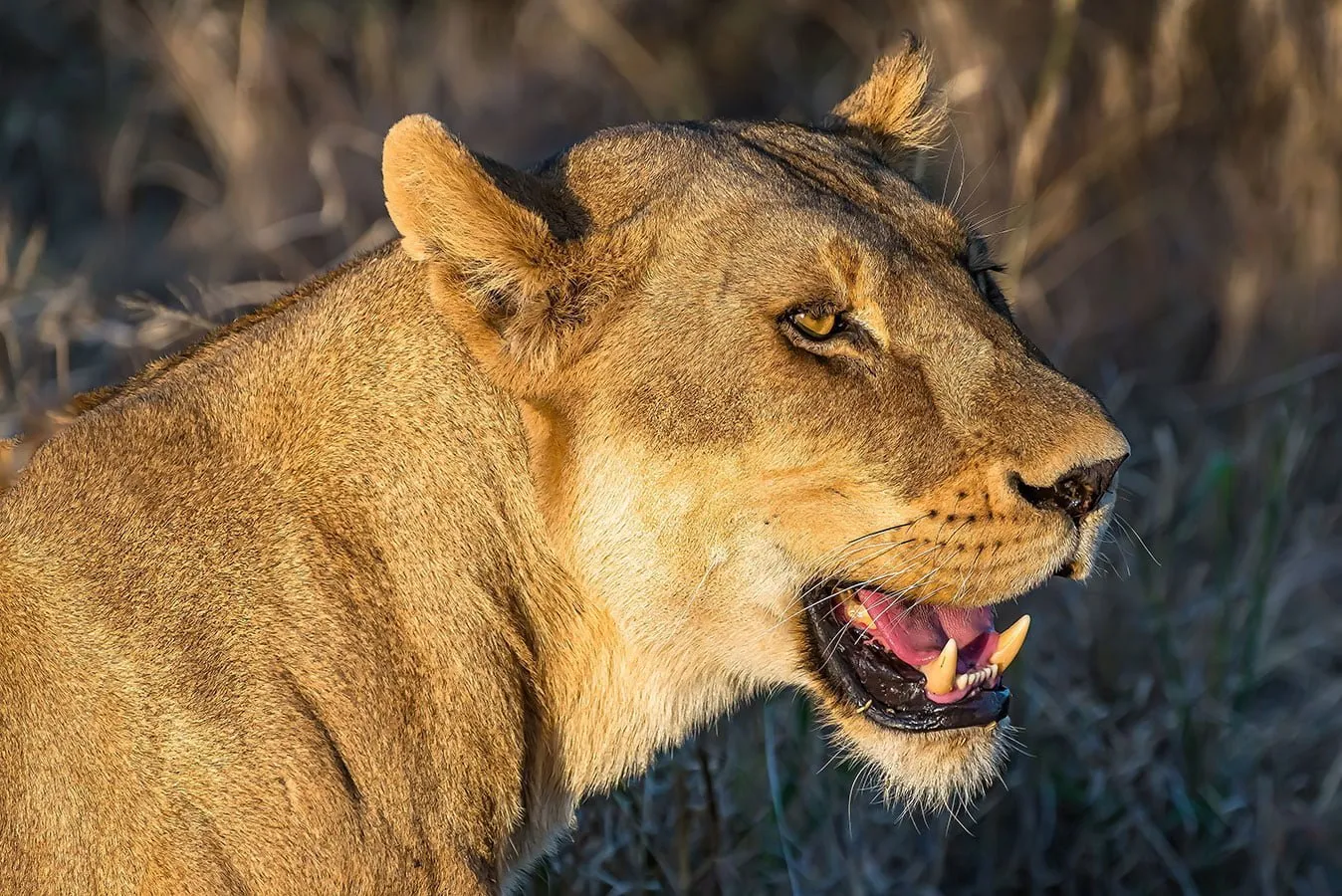
July's thin vegetation and golden grass make predator sightings like this more frequent and visible than any other month.
Weather & Game Drive Conditions
Temperature Reality
July is Tanzania's coldest month, and the cold is real, not just "a bit chilly." Morning game drives at 06:00 on the Serengeti plains feel cold: 8–12°C on a still morning, colder with vehicle wind chill at driving speed. Experienced guides always have a blanket or two in the vehicle for early drives. Midday warms to 20–25°C which is comfortable for game viewing.
Ngorongoro Crater rim is a different category. At 2,300 meters elevation, nights in July drop to 3–8°C. Some mornings approach freezing. If you are staying in a rim lodge, pack a warm jacket you would be comfortable wearing hiking in the Alps in autumn, not just a fleece, but something windproof with proper insulation. Gloves are worth bringing for the dawn crater descent.
Dust Conditions
By July the Serengeti roads are very dusty. On popular routes vehicles drive in loose convoy, and dust from the lead vehicle coats everything in the second and third vehicles. This is unavoidable, it is simply how the dry season works. Bring a lens cloth or small brush for your camera and lens filters. A lightweight buff worn loosely around your neck can be pulled up over your nose and mouth during extended drives on dusty tracks. Sunglasses are essential.
The dust does reduce long-distance photography quality slightly, the atmospheric haze makes distant backgrounds less crisp than in June. For close-range animal photography it makes no difference.
Photography in July
Costs & Booking Strategy for July
July Price Brackets
July sits firmly in peak season across all properties. Expect:
Per person rates based on double occupancy, all-inclusive. Park fees, game drives, and most meals typically included.
The reason for the premium is simple: July is when European and American school summer holidays coincide with the peak migration event. Demand for the Northern Serengeti camps with river access vastly exceeds supply, and prices reflect that. The camps themselves are not gouging, they are selling a genuinely scarce and extraordinary product.
Booking Strategy
For Northern Serengeti river-frontage camps in the Kogatende area and Lamai Wedge, 9–12 months advance booking is genuinely necessary. The camps with direct access to the best crossing points have a small number of tents (typically 8–16 tents) and they fill in order of inquiry, the best positions go to the earliest confirmed bookings.
For Central Serengeti (Seronera), Ngorongoro, and Tarangire properties, 6 months is usually sufficient for mid-range options. Luxury properties everywhere require more lead time.
Internal flights on the Kilimanjaro–Kogatende route are also capacity-constrained in July. Small aircraft seat 6–12 passengers and the schedule is fixed. Book internal flights at the same time you confirm your accommodation, do not leave them for later.
If you miss the window for the best Northern Serengeti camps, ask about mobile camps. Some operators run seasonal mobile camps that position close to the river and have better availability than fixed lodges, with the added experience of sleeping within earshot of the migration.
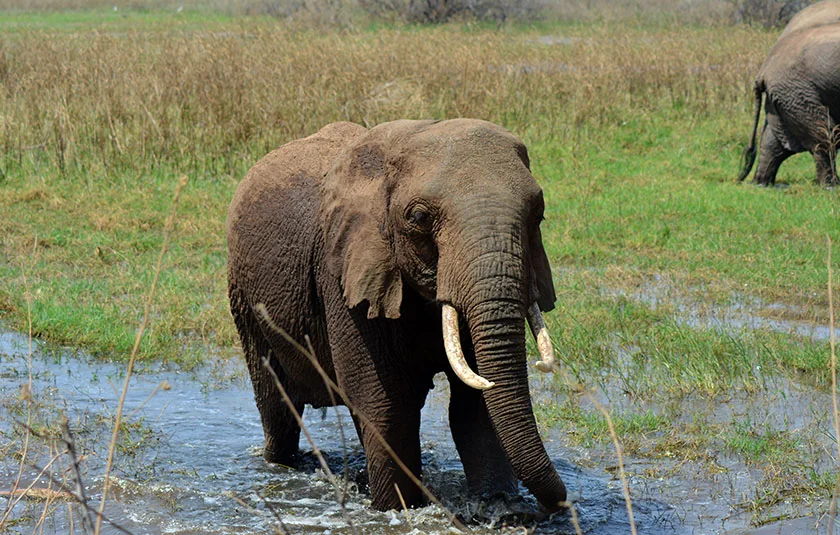
July's dry conditions concentrate elephants at permanent water sources like Ngorongoro Crater, sightings are frequent and prolonged.
Packing Tips for July
Warm jacket (windproof, not just a fleece): July mornings at 06:00 in an open game drive vehicle feel genuinely cold. A fleece is a starting point but a windproof outer layer makes a real difference. Think of it as the equivalent of standing on a hilltop in 10°C, which is exactly what an open vehicle at speed feels like.
Gloves for Ngorongoro: The crater rim in July mornings can approach 3–5°C. Light hiking gloves or thin wool gloves are worth adding if your itinerary includes Ngorongoro overnight.
Dustproof camera protection: A rain cover (which doubles as a dust cover) for your camera bag and a spare lens cloth for every day of the trip. Dust in July is constant on popular roads.
Sun cream and lip balm: The equatorial sun combined with dry July air is harsh on skin and lips. SPF 50 minimum for face and hands. The altitude of the Serengeti (1,500m) and Ngorongoro rim (2,300m) intensifies UV exposure.
Buff or lightweight scarf: For pulling up over nose and mouth during dusty drives. A lightweight buff weighs nothing and makes long dusty game drives significantly more comfortable.
Binoculars: More important in July than any other month because the long sightlines mean animals are often spotted at 300–500 meters before they can be approached. 8x42 or 10x42 are ideal.
Neutral-colored clothing: Khaki, olive, tan. July is not a month to wear bright colors, not for any superstitious reason, but because your guide needs to approach animals closely and high-contrast clothing can spook nervous prey species.
Book internal flights early: Book your Kilimanjaro–Kogatende (or Kilimanjaro–Seronera) flights at the same time as your main package. These small aircraft have 6–12 seats and they fill as fast as the camps do in July.